
American-born singer-songwriter Wang Leehom has once again placed himself at the center of global pop culture discourse, not through a chart-topping release or a film role, but by redefining what a live concert can look like in the age of artificial intelligence. During a recent stop on his ongoing Best Place Tour, Wang delivered a performance that merged music, choreography and cutting-edge robotics in a way rarely seen on a mainstream concert stage.
The show, held at Chengdu Dong’an Lake Sports Park Multifunctional Gymnasium, quickly became a viral sensation after clips of robot backup dancers performing seamlessly alongside human dancers flooded social media platforms. With audiences and commentators alike hailing the moment as a glimpse into the future of live entertainment, the concert underscored Wang Leehom’s long-standing reputation as an artist willing to experiment boldly at the intersection of culture and technology.
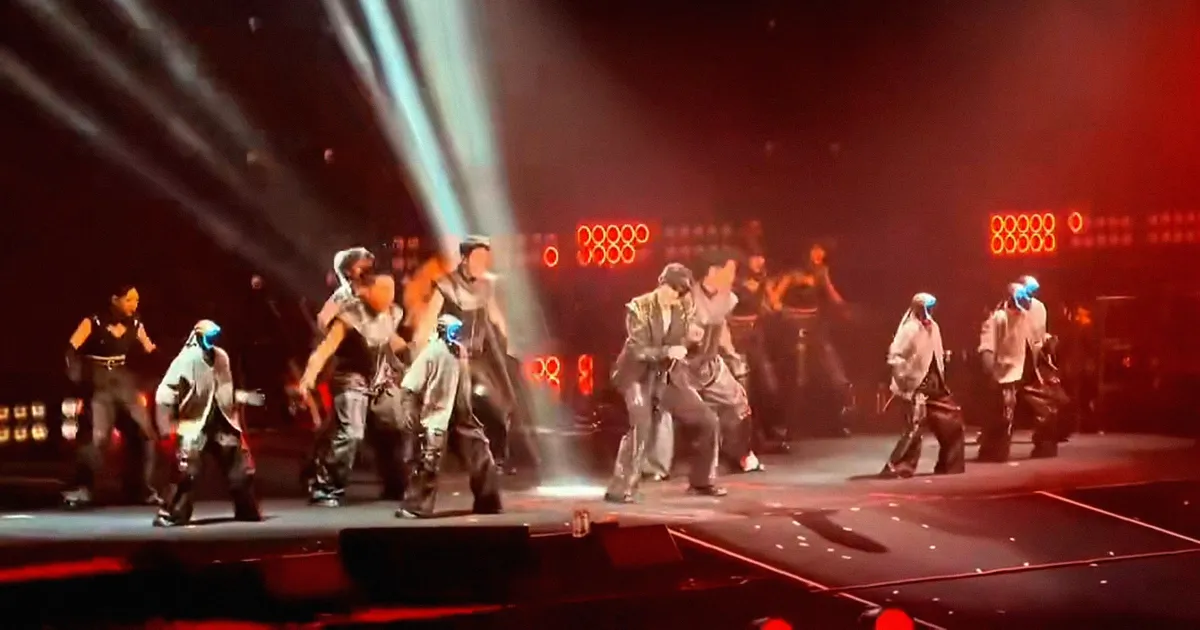
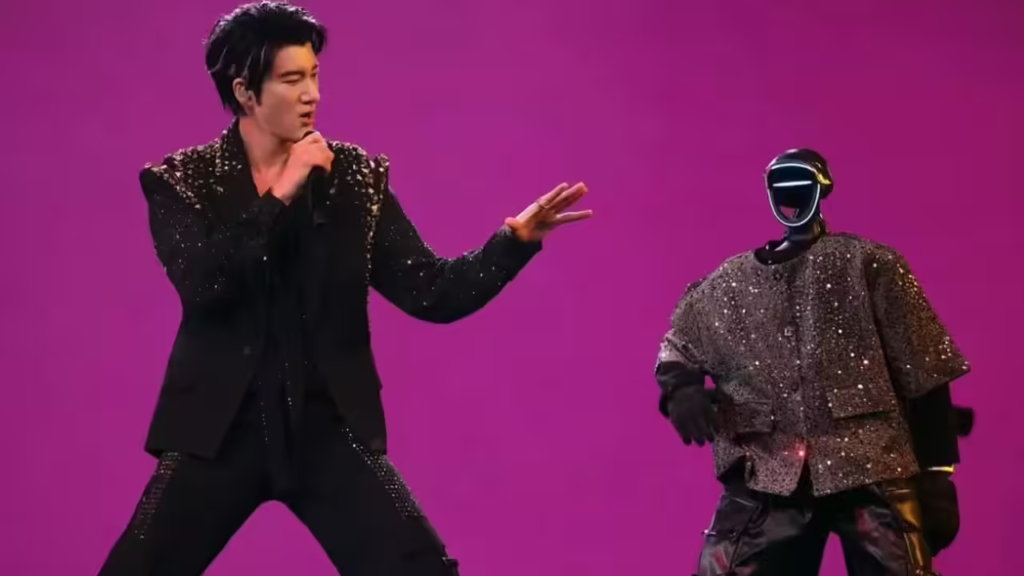
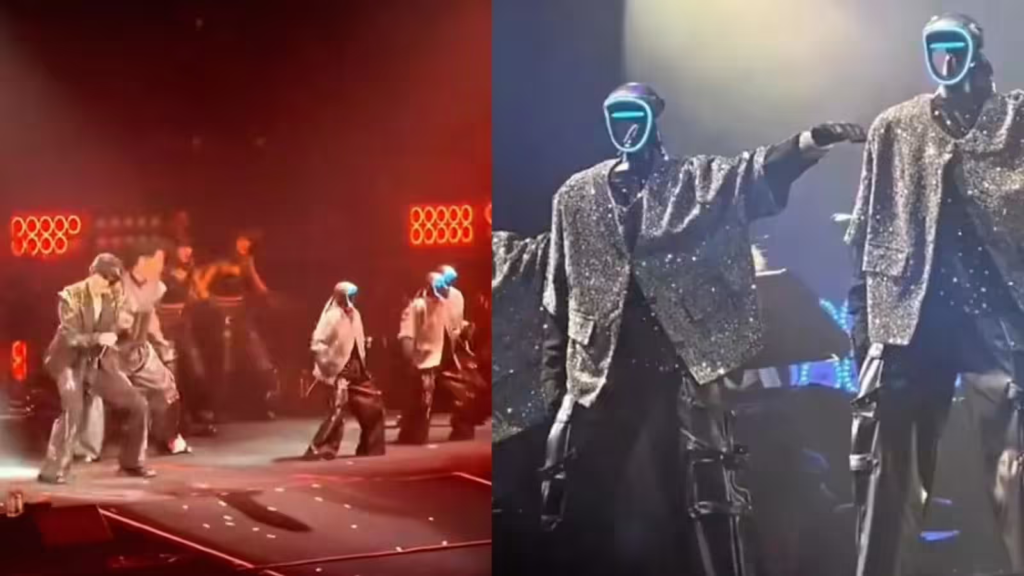
The viral clips, widely shared and discussed online, show an army of humanoid robots dressed in baggy pants and shimmering shirts, moving in precise synchronization with Wang and his human dance crew. Far from appearing stiff or novelty-driven, the robots executed complex dance routines with surprising fluidity, blending into the ensemble to the point where, at a glance, it became difficult to distinguish machine from human.
The performance did not merely serve as a spectacle but raised broader questions about how emerging technologies might reshape live performance, labor in the entertainment industry, and audience expectations in the years to come. As reported by WION, the Chengdu concert has become a landmark moment, widely cited as one of the most striking examples yet of robots being integrated meaningfully into a live pop music setting.
Robots Take the Stage: Inside the Chengdu Concert Spectacle
The performance unfolded dramatically as the opening notes of Wang Leehom’s song “Open Fire” echoed through the Chengdu venue. As the music built, the robots emerged onto the stage alongside human dancers, immediately capturing the audience’s attention. Identified by online users as Unitree G1 robots, these machines are known for their advanced mobility and balance, capabilities that were fully on display during the concert. The robots mirrored the choreography of the human performers, executing sharp movements, coordinated steps and rhythmic gestures that matched the tempo and energy of the music.
What made the moment particularly striking was not just the novelty of robots dancing, but the level of integration achieved. The robots were not positioned as a separate act or a gimmick introduced briefly for shock value. Instead, they functioned as full-fledged members of the dance ensemble, occupying the same stage space, following the same cues and contributing to the overall visual narrative of the performance. Their costumes, designed to match the aesthetic of the show, further reinforced the illusion of unity between human and machine.
Audience reactions, both in the venue and online, reflected a mix of amazement, curiosity and humor. Social media comment sections quickly filled with remarks praising the “effective use of robots” and marveling at how rapidly technology is advancing. Some users jokingly suggested that such robots should be deployed for everyday tasks like traffic management, while others speculated about the cost-saving implications for large-scale productions. One widely shared comment quipped that robotic dancers might be “a lot cheaper than hiring real dancers,” a remark that, while humorous, also hinted at deeper conversations about automation and employment in creative industries.
Robots performing at Taiwanese-American singer Wang Leehom’s concert in Chengdu. pic.twitter.com/j5tCYhPyUB
— TaraBull (@TaraBull) December 20, 2025
The performance attracted attention beyond music and entertainment circles. Elon Musk, one of the world’s most prominent technology entrepreneurs, reacted to a post on X that highlighted the robots’ dance abilities and their appearance at Wang Leehom’s concert. Re-sharing the post, Musk described the performance simply as “Impressive,” a brief endorsement that nonetheless amplified global interest in the event. His reaction underscored how the concert resonated not only as a musical milestone but also as a technological showcase with implications for robotics research and public perception of AI-driven machines.
In a statement released on Wang Leehom’s official website, the singer described the Chengdu performance as a deliberate attempt to create a “truly unforgettable moment.” The statement emphasized that dancing live with robotic performers represented a rare example of advanced technology being blended with powerful live music in a concert setting. By framing the robots as collaborators rather than replacements, Wang positioned the performance as an artistic experiment rather than a commentary on automation alone. This approach aligned with his broader career, which has consistently emphasized fusion, whether between musical genres, cultural traditions or now, human creativity and machine precision.
Technology, Pop Culture and the Future of Live Entertainment
The Chengdu concert has sparked broader discussions about the evolving relationship between technology and live entertainment. Over the past decade, concerts have increasingly incorporated digital elements, from elaborate LED stages and augmented reality visuals to holographic projections of performers. Wang Leehom’s use of robotic dancers represents a further step along this trajectory, moving from digital augmentation to physical, autonomous performers sharing the stage with humans.
From a technological standpoint, the robots’ performance highlighted significant advances in robotics, particularly in balance, coordination and real-time responsiveness. Dancing requires a complex combination of precise motor control, spatial awareness and timing, challenges that have historically been difficult for humanoid robots to overcome. The ability of the Unitree G1 robots to perform synchronized choreography in a live environment, with music and human movement as variables, suggests a level of sophistication that was once confined to research laboratories and controlled demonstrations.
Read : IShowSpeed Sued for Assaulting Gay Robot During Livestream
Culturally, the performance tapped into longstanding themes within pop music and science fiction, where robots often symbolize both progress and unease. By presenting robots not as cold, mechanical entities but as expressive performers clad in fashionable costumes, the concert softened these associations and invited audiences to view technology as an extension of human creativity. The visual of robots dancing to a pop song alongside a global music star blurred the line between tool and collaborator, reinforcing the idea that technology can enhance artistic expression rather than diminish it.
At the same time, the reactions online revealed an undercurrent of concern and skepticism. Comments about robots replacing human dancers, even when made jokingly, reflect anxieties about automation’s impact on jobs traditionally considered safe from technological disruption. While Wang Leehom’s performance did not replace human dancers but complemented them, it nonetheless served as a reminder that the entertainment industry, like many others, is not immune to the broader forces of technological change.
Industry observers have noted that such performances could influence future concert production, particularly for large-scale tours where consistency and precision are paramount. Robots do not tire, do not require breaks and can theoretically reproduce choreography perfectly night after night. However, they also lack the spontaneity, emotional nuance and improvisational qualities that human performers bring to the stage. The Chengdu concert demonstrated that, at least for now, the most compelling results emerge when technology is used to augment rather than supplant human talent.
By choosing to debut such a performance during his Best Place Tour, Wang Leehom signaled an awareness of these dynamics. The tour itself has been positioned as a celebration of music, innovation and global connectivity, making it an apt platform for experimenting with robotic performers. Rather than framing the robots as a threat or novelty, the concert presented them as part of a broader artistic vision that embraces the possibilities of the future while remaining grounded in live, communal experience.
Who Is Wang Leehom: A Career Built on Fusion and Innovation
To understand why Wang Leehom’s Chengdu performance resonated so strongly, it is essential to consider the artist’s background and career trajectory. Born to a Taiwanese American family, Wang made his debut in the music industry in 1995 and has since released 25 albums, establishing himself as one of the most influential figures in Mandopop. His music is widely recognized for its fusion of hip-hop and R&B with traditional Chinese musical elements, a style that has earned him both critical acclaim and a devoted global fan base.
Read : Alarming! AI-Powered Robot Shoots YouTuber During Safety Experiment
Beyond music, Wang Leehom has built a multifaceted career as an actor, producer and film director. He has appeared in a range of films, including Ang Lee’s “Lust, Caution,” Jackie Chan’s “Little Big Soldier” and Michael Mann’s “Blackhat,” demonstrating a versatility that extends beyond the recording studio. His performance in cinema earned him the Best Actor award at the 2018 Macau Film Festival, further cementing his reputation as a cross-disciplinary artist.
Wang’s contributions to music and culture have also been recognized in academic and institutional settings. He holds honorary doctoral degrees from Williams College and Berklee College of Music, reflecting both his technical proficiency and his influence as a cultural innovator. In 2019, the Asia Society presented him with the Game Changer Award at the U.S.-Asia Entertainment Summit, acknowledging his role in bridging Eastern and Western musical traditions.
Awards and accolades have followed him throughout his career. Wang is a four-time winner and 19-time nominee of the Golden Melody Awards, one of the most prestigious honors in the Chinese-language music industry. His sold-out concert at the Beijing National Stadium on April 14, 2012, marked another milestone, as it was the first solo pop concert ever held at the iconic venue. Each of these achievements reflects a consistent pattern: Wang Leehom has repeatedly sought to push boundaries, whether by blending genres, crossing cultural divides or experimenting with new forms of performance.
The Chengdu concert fits squarely within this narrative. By performing alongside robotic dancers, Wang did not abandon the human elements that define live music but expanded the canvas on which they operate. The performance drew on his long-standing interest in innovation and fusion, translating it into a visual and technological language that resonates with contemporary audiences.
As the viral clips continue to circulate and discussions unfold across social media and news platforms, the Chengdu concert is likely to be remembered as more than a viral moment. It stands as an example of how established artists can engage thoughtfully with emerging technologies, using them to enhance rather than overshadow their craft. For Wang Leehom, the performance reaffirmed his status not just as a pop star, but as an artist attuned to the cultural and technological currents shaping the future of entertainment.
I like this web site very much so much superb info .