
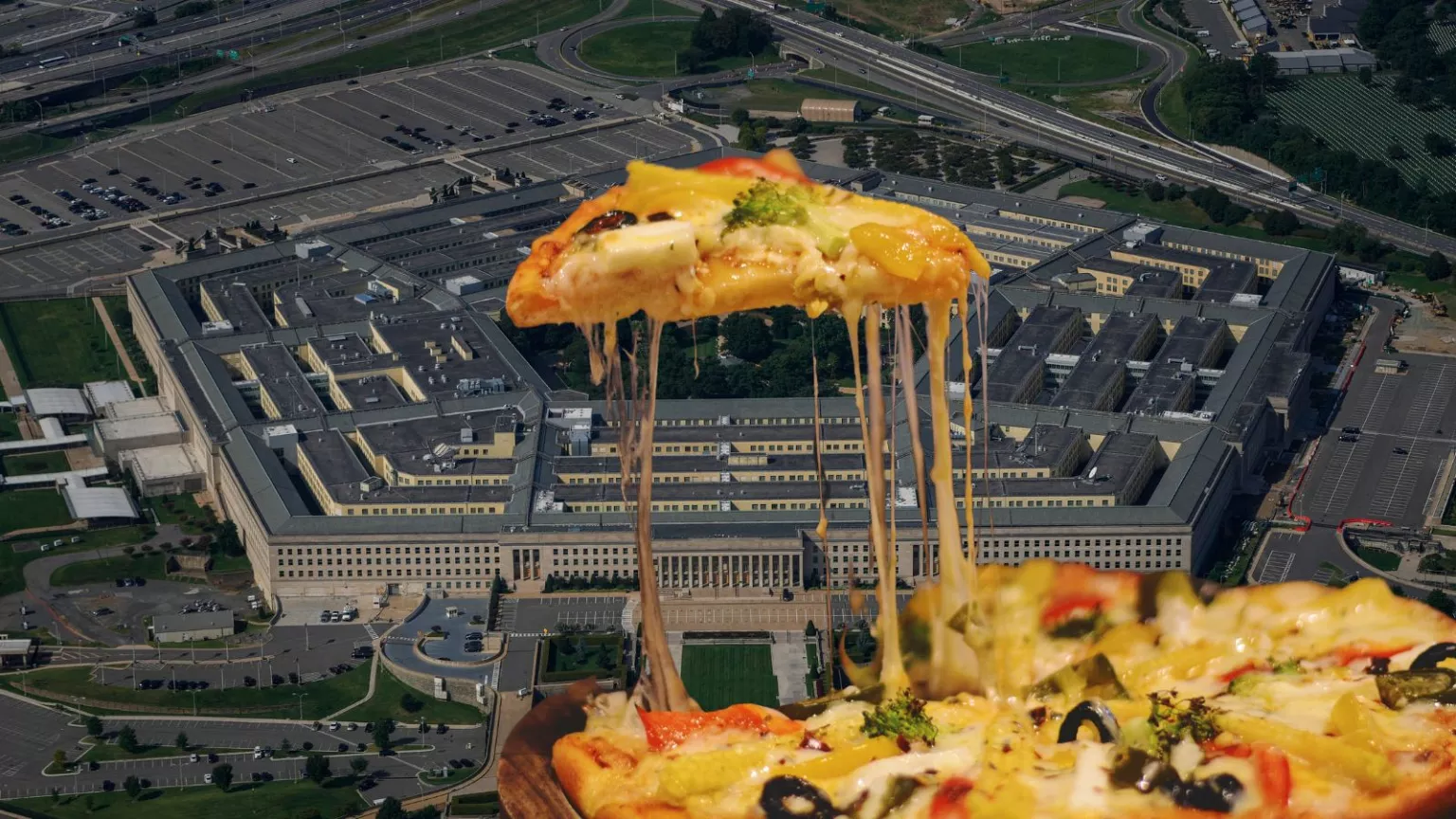
As tensions escalated between Israel and Iran in June 2025, an unusual but increasingly observed pattern unfolded in Arlington, Virginia—specifically around the Pentagon. On the nights of June 12 and 13, local pizza outlets witnessed a dramatic surge in orders and foot traffic.
While this might seem like a coincidence or even a curious footnote, analysts and open-source intelligence (OSINT) enthusiasts were quick to note its significance. The spike in pizza demand wasn’t merely about a busy dinner hour—it was a potential harbinger of military action.
This trend, now popularly referred to as the “Pentagon Pizza Index,” refers to observable increases in pizza orders near the U.S. Department of Defense headquarters that often precede major international crises or military operations. What makes this index particularly interesting is its connection to real-time intelligence gathering, the Cold War’s espionage tactics, and, in this case, Israel’s coordinated airstrikes on Iranian nuclear facilities.
A New-Age OSINT Tool Rooted in Cold War Practices
The Pentagon Pizza Index is not some tongue-in-cheek internet meme—it has historical precedent and roots in serious intelligence work. The story goes back to the Cold War, when Soviet operatives in Washington monitored American activity to glean any sign of imminent military moves.
Among their tools was the observation of food delivery patterns. If late-night pizza orders increased at places like the Pentagon or the CIA, it was often seen as an indicator that something critical was brewing. Soviet analysts would alert Moscow accordingly, suspecting covert meetings or war preparations.
One of the earliest recorded examples was on August 1, 1990, when a Domino’s franchisee near Washington noticed an unusual surge in deliveries to the CIA. Just a day later, Saddam Hussein invaded Kuwait. The following year, before Operation Desert Storm, a similar spike in pizza orders was recorded. Though dismissed by some as mere coincidence, these instances laid the foundation for a theory that would later resurface in the digital age.
As of 6:59pm ET nearly all pizza establishments nearby the Pentagon have experienced a HUGE surge in activity. pic.twitter.com/ZUfvQ1JBYM
— Pentagon Pizza Report (@PenPizzaReport) June 12, 2025
Fast forward to 2025, the monitoring of this data has become more structured and accessible. Social media accounts like @PenPizzaReport on X (formerly Twitter) now track and publish live updates about traffic and order surges around critical locations, particularly near the Pentagon.
Using OSINT tools, such as Google Maps, restaurant traffic data, and location-based analytics, these accounts can highlight anomalies—often before official news breaks. The idea is simple: if a large number of military or intelligence personnel are suddenly working late, meetings are likely taking place, and decisions of strategic importance are being made.
The Israel-Iran Conflict and the Surge in Pizza Traffic
In the most recent case of the Pentagon Pizza Index proving itself relevant, the timeline of events leading up to Israel’s Operation Lion aligned remarkably well with unusual activity around the Pentagon.
On June 12 at 6:59 PM Eastern Time, just hours before reports emerged of Israeli jets striking Iranian targets, local pizzerias in Arlington experienced what was described as a “HUGE surge in activity.” This wasn’t an isolated incident. By late evening on June 13, the second-closest Domino’s to the Pentagon was still witnessing extraordinarily high traffic.
Read : Suicide Pod Advocate Dr Florian Willet Dies by Assisted Suicide
These patterns, recorded by the Pentagon Pizza Report account, immediately caught the attention of those tracking geopolitical developments. The spike happened before any media outlet had broken the story of Israel’s military move. For analysts and enthusiasts who follow patterns in military logistics, it was a clear sign that something serious was underway.
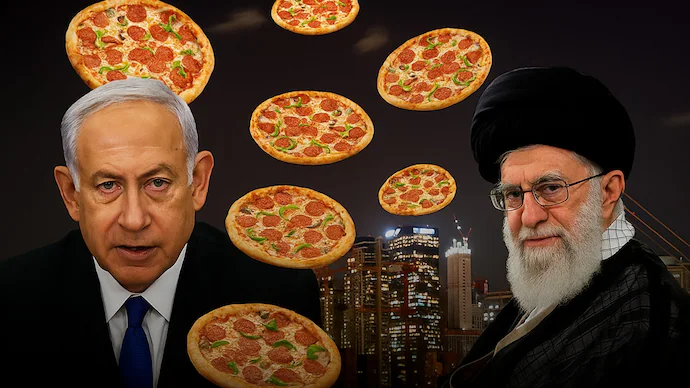
Indeed, Israel’s operation was substantial. The airstrikes targeted Iran’s key military and nuclear facilities and resulted in the deaths of several high-ranking Iranian military officials, including Hossein Salami, the chief of the Revolutionary Guards.
The operation was meant to neutralize Iran’s nuclear threat, following growing concerns about Tehran’s enrichment activities and its increased aggression toward Israeli interests. The rapid and deadly nature of the attack suggests meticulous planning—likely involving coordination or at least briefing with American officials, hence the activity spike at U.S. defense installations.
From Pizzas to Bomb Shelters: The Fallout of Retaliation
The Pentagon Pizza Index did not just predict the Israeli action—it also indirectly foreshadowed Iran’s retaliation. On Friday night and into Saturday morning, Iran launched missiles targeting Israel’s largest cities, including Tel Aviv and Jerusalem. Air raid sirens blared, and civilians scrambled to bomb shelters. Israel’s Iron Dome and other defense systems intercepted many of the projectiles, but the psychological impact of the counterstrike was significant.
This tit-for-tat escalation marked a dangerous turn in the Israel-Iran conflict, raising alarms in international circles about a potential full-scale war. For observers tracking military tensions through indirect signals like pizza orders and late-night food traffic, the Pentagon Pizza Index had once again proven itself a strange but useful early-warning system.
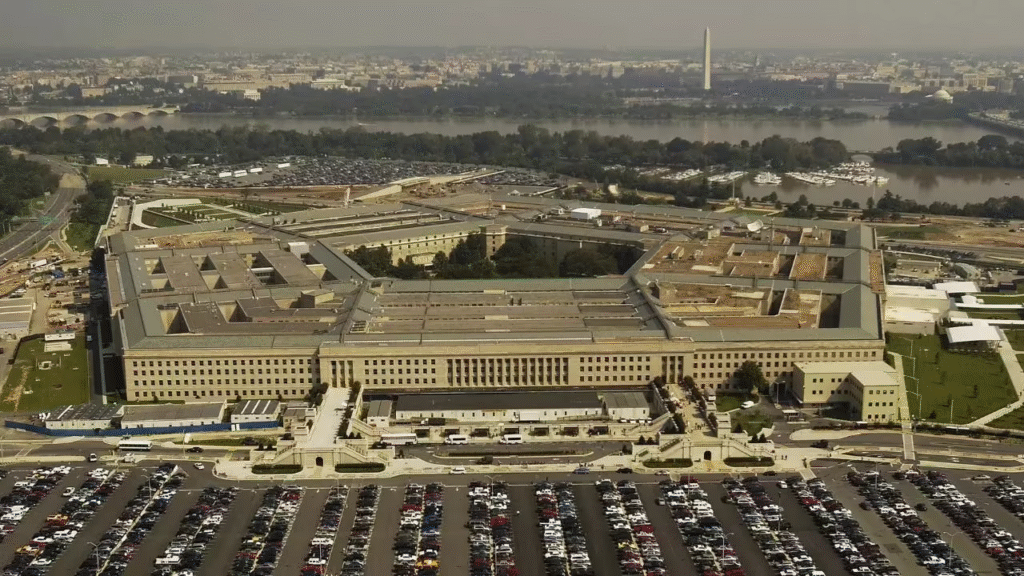
What’s more, this method of intelligence gathering has become a part of the wider OSINT (open-source intelligence) movement, where enthusiasts and professionals alike piece together public data to form comprehensive geopolitical insights. Whether it’s airplane tracking, ship movements, satellite imagery, or pizza orders, the new age of real-time civilian intelligence is here—and sometimes, it’s found in the most unlikely of places.
The existence of such a predictive model challenges traditional notions of intelligence gathering. No longer is high-stakes surveillance the sole domain of governments and spy agencies. With digital tools and real-time analytics, even casual observers can spot patterns that point to bigger moves on the global chessboard.
In this case, a curious spike in pizza traffic tipped off those in the know that something big was coming—and within hours, the world watched as Israel’s jets bombarded Iranian sites.
A Slice of the Future: Intelligence in the Age of Information
While the Pentagon Pizza Index may sound quirky, its implications are far-reaching. It reflects a world where every data point, no matter how mundane, can be a signal. Food deliveries, especially in government-heavy regions like Washington, D.C., are no longer just about convenience—they’re indicators of human behavior during high-pressure scenarios.
More importantly, it illustrates the democratization of intelligence. In the past, only top-level analysts with access to classified information could speculate on looming geopolitical events. Today, an individual monitoring Google traffic data for a Domino’s store might have a better real-time read on global tensions than a traditional news outlet.
Of course, this method isn’t foolproof. Not every pizza surge equates to war. But when combined with other indicators—military aircraft movements, alerts on encrypted radio channels, sudden changes in personnel deployments—the Pentagon Pizza Index becomes one part of a broader toolkit for understanding global affairs.
In the end, what started as a Cold War anecdote has become a modern-day method of tracking war preparations. As military operations become increasingly covert and information warfare intensifies, looking at what people are ordering for dinner might remain a surprisingly sharp lens into the machinery of war. Whether it’s Israel bombing Iranian nuclear sites or another global flashpoint waiting to erupt, sometimes the first clue is a surge in mozzarella and pepperoni near the Pentagon.