
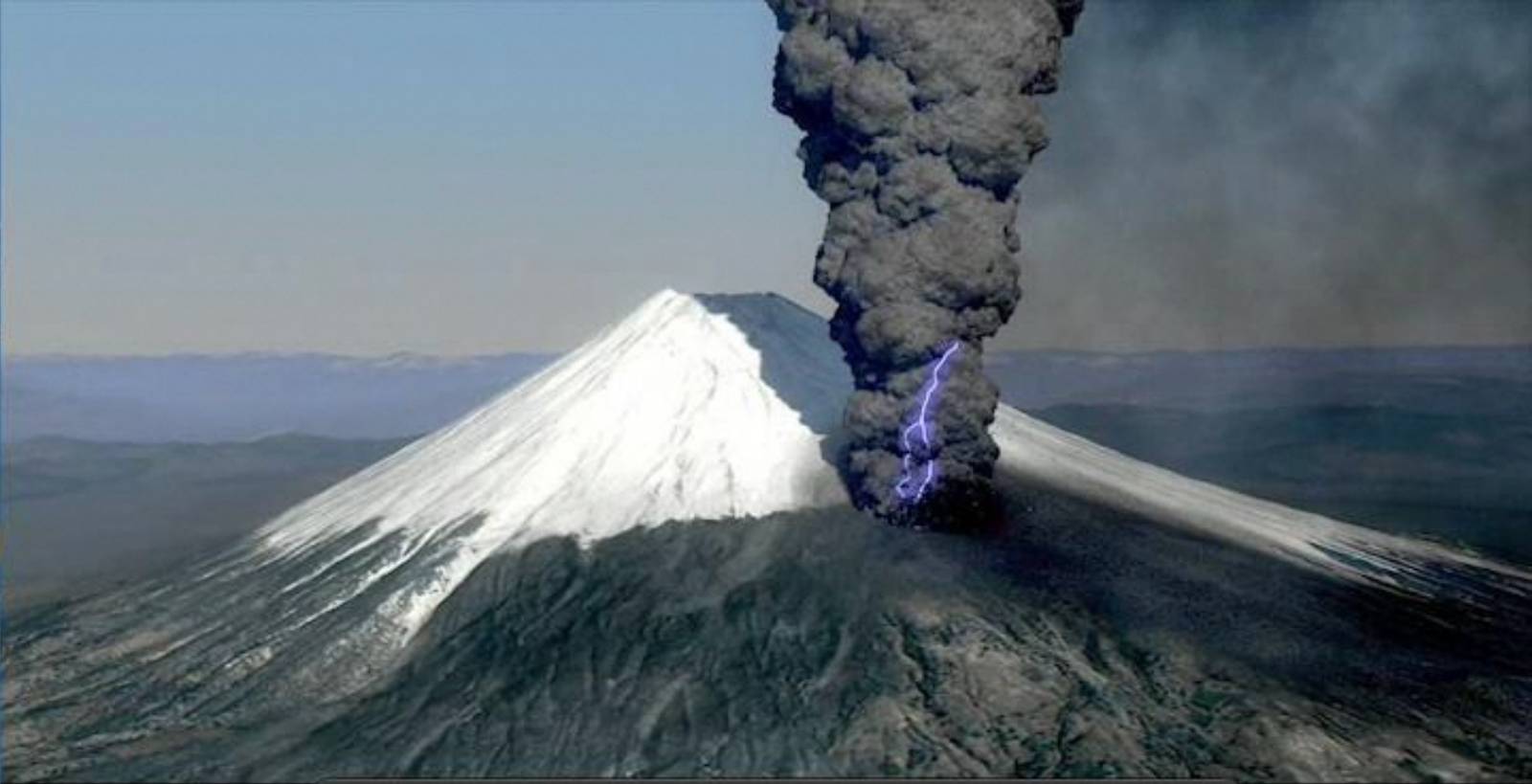
On August 25, 2025, the Tokyo Metropolitan Government released a groundbreaking AI-generated video to raise awareness about the potential consequences of a Mount Fuji eruption. This three-minute simulation, a first-of-its-kind initiative by Japanese authorities, vividly depicts the catastrophic impact such an event could have on Tokyo, a bustling metropolis of over 20 million residents.
The video, released to mark Volcanic Disaster Preparedness Day, serves as a stark reminder of the ever-present natural risks in Japan, a country situated along the volatile Pacific Ring of Fire. While Mount Fuji shows no immediate signs of erupting, the video underscores the importance of preparedness for a disaster that could strike “at any moment, without warning.”
The AI Simulation: A Glimpse into a Volcanic Catastrophe
The AI-generated video, produced by the Tokyo Metropolitan Government’s Disaster Prevention Division, paints a chilling picture of what could unfold if Mount Fuji, located approximately 100 kilometers southwest of Tokyo, were to erupt. The simulation begins with a dramatic scene: a woman on a busy Tokyo street receives an emergency alert on her phone, signaling the volcano’s eruption. The narration warns, “The moment may arrive without any warning,” setting the tone for the dire scenario that follows.
The video then transitions to visuals of massive grey plumes of smoke and ash billowing from Mount Fuji, rapidly spreading toward the capital. Within one to two hours of the eruption, the simulation shows volcanic ash blanketing Tokyo, shrouding iconic districts like Shibuya in a thick layer of grey dust. The sky darkens, plunging urban areas into an eerie, daytime darkness.
The video highlights the unique properties of volcanic ash, describing it as “fine, jagged particles” that pose significant health and societal hazards. According to the simulation, ash accumulation is expected to range from 2 to 10 centimeters across central Tokyo, with western parts of the city potentially seeing up to 30 centimeters. This ashfall would have far-reaching consequences, disrupting daily life and infrastructure in one of the world’s largest cities.
The video emphasizes the speed and scale of the potential disaster. A large-scale eruption could produce an estimated 1.7 billion cubic meters of volcanic ash, with approximately 490 million cubic meters settling on roads, buildings, and other infrastructure, requiring extensive disposal efforts.
🌋 Tokyo releases AI-generated video of Mount Fuji erupting..
— Global𝕏 (@GlobaltrekX) August 26, 2025
It is all part of an artificial intelligence-generated video the Tokyo Metropolitan Government released last week to raise awareness of what could happen to the capital if Mount Fuji erupted. 🌋 pic.twitter.com/PFKKT2Rcu4
The economic toll is staggering, with potential losses estimated at up to 2.5 trillion yen (approximately $16.6 billion). The simulation also depicts a family stocking their pantry with canned food and a first-aid kit, urging residents to prepare for disruptions in food, power, and transportation systems. This vivid portrayal serves as both a warning and a call to action, encouraging Tokyoites to visualize and prepare for such an emergency.
Impacts on Tokyo: Health, Infrastructure, and Economic Challenges
The AI-generated video outlines several critical impacts that a Mount Fuji eruption could have on Tokyo. One of the most immediate concerns is the health hazard posed by volcanic ash. Composed of tiny, jagged fragments of melted rock resembling fine glass powder, ash can cause respiratory issues, particularly for vulnerable populations such as children, the elderly, and those with pre-existing conditions. The video warns that inhaling these particles could lead to long-term respiratory problems, making protective measures like masks and indoor sheltering essential.
Transportation systems would face severe disruptions. Even a small amount of ash— as little as a few millimeters—could halt trains by covering tracks and runways, grounding airplanes and paralyzing public transit. If rainfall occurs, ash accumulation exceeding 3 centimeters could render roads impassable for vehicles due to reduced visibility and slippery conditions.
Read : Japan’s Iconic Mount Fuji Snowless in October for the First Time
The video illustrates this chaos, showing Tokyo’s bustling streets grinding to a halt as ash blankets vehicles and infrastructure. Logistics networks would also be severely affected, leading to shortages of essential goods like food and medical supplies. The simulation advises residents to stockpile at least three days’ worth of essentials, with earlier government guidelines recommending a two-week supply.

The structural integrity of buildings is another major concern. The weight of accumulated ash, particularly if wet, could cause wooden houses with low load-bearing capacity to collapse. This risk is especially pronounced in areas closer to Mount Fuji, where ashfall could exceed 30 centimeters, necessitating evacuation. Power outages are also a significant threat, as the weight of ash could damage power lines, leaving swathes of the city without electricity.
This would be particularly challenging during Japan’s swelteringly humid summers, as highlighted by an X user named Suu, who noted the difficulty of enduring power outages in high temperatures. The economic ramifications are equally daunting. The estimated 2.5 trillion yen in losses would stem from disruptions to transportation, logistics, and infrastructure, as well as the costs of ash removal and recovery efforts.
Experts suggest that ash could be repurposed for construction or disposed of in landfills or the ocean, but the sheer volume—490 million cubic meters—presents a logistical nightmare. The video’s portrayal of Tokyo’s skyline engulfed in smog and ash serves as a sobering reminder of the scale of disruption a Mount Fuji eruption could cause, urging both residents and authorities to prioritize preparedness.
Public Reaction and the Broader Context of Disaster Preparedness
The release of the AI-generated video has sparked a range of reactions among Tokyo residents and observers. Some, like X user Mayotan, expressed fear at the prospect of “transportation chaos” in the metropolitan area, reflecting the anxiety the simulation has evoked. Others, such as Shinichiro Kariya, a 57-year-old hospital employee, questioned the timing and necessity of the video, asking, “Are there actually any signs of eruption?”
Hiromi Ooki, a resident of Mishima City with a clear view of Mount Fuji, acknowledged the video’s impact, stating she planned to purchase emergency supplies the following day. She added, “Nature’s power is so great that maybe it’s better if it scares us a little.” However, not all reactions were positive. Some residents and experts, including Professor Kimiro Meguro of the University of Tokyo, have criticized the video as “alarmist,” arguing that it depicts a worst-case scenario unlikely to occur under normal conditions.
Meguro suggested that the simulation assumes specific, low-probability conditions, potentially exaggerating the threat. Others have expressed concern that such warnings could deter tourists, a vital part of Japan’s economy, especially in the wake of similar disaster preparedness campaigns. For instance, an X user with the handle shomin_consul argued that the government’s approach “tends to be used to stir up a sense of crisis and fear.”
The video comes in the context of heightened disaster awareness in Japan, a nation no stranger to natural calamities. Situated on the Pacific Ring of Fire, Japan experiences frequent earthquakes and volcanic activity. Earlier in 2025, the government warned of an 80% chance of a severe earthquake striking the Nankai Trough within the next 30 years, a prediction that has itself drawn skepticism from some seismologists.
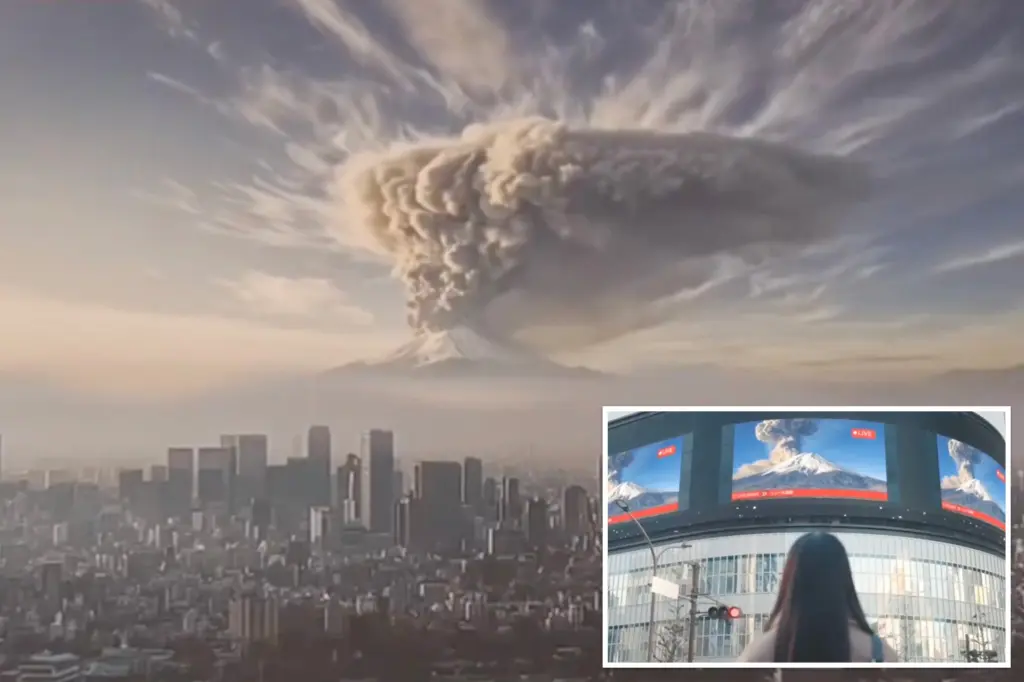
The Mount Fuji simulation builds on earlier guidelines issued in March 2025, which advised residents near the volcano to maintain a two-week supply of essentials and to shelter in place unless ash accumulation exceeds 30 centimeters. These guidelines, developed by a government expert panel, represent the first detailed recommendations for residents in the event of a Mount Fuji eruption.
The use of AI in this simulation marks a novel approach to disaster preparedness, leveraging technology to create a visceral, relatable depiction of a potential catastrophe. University of Tokyo risk communication expert Naoya Sekiya noted that while the government has long modeled volcanic and earthquake scenarios, the AI-generated video is a pioneering effort to engage the public emotionally and practically. The Tokyo Metropolitan Government and Japan’s Cabinet Office Disaster Prevention Division have reported no formal complaints about the video, suggesting broad acceptance of its intent, if not its tone.
Mount Fuji, Japan’s tallest peak and a cultural icon, last erupted in 1707 during the Hoei eruption, which expelled 850 million cubic meters of volcanic material over 16 days. While it has been dormant for over three centuries, its status as an active volcano necessitates vigilance. The government closely monitors Fuji for geological activity, and experts like Professor Takeshi Sagiya of Nagoya University emphasize the unpredictable nature of volcanic ash, which can cause unforeseen problems due to its abrasive, glass-like composition.
In conclusion, the AI-generated video released by the Tokyo Metropolitan Government serves as a powerful tool for disaster preparedness, vividly illustrating the potential consequences of a Mount Fuji eruption. By depicting the rapid spread of volcanic ash, disruptions to transportation and infrastructure, and the economic and health challenges that would follow, the simulation urges Tokyo’s residents to take proactive measures.
While some criticize its alarmist tone, the video has sparked important conversations about preparedness in a country prone to natural disasters. As Japan continues to navigate its geologically active landscape, initiatives like this highlight the critical role of awareness and readiness in protecting lives and livelihoods.