

The ongoing conflict between Russia and Ukraine has drawn global attention not only for the geopolitical stakes involved but also for the individual stories of people caught in the crossfire. One such story is that of Oscar Jenkins, a 33-year-old Australian who was sentenced by a Russian-controlled court in eastern Ukraine to 13 years in a maximum-security prison.
This case has stirred diplomatic tensions and highlighted complex issues related to foreign volunteers in conflict zones, the laws governing mercenaries, and the harsh realities faced by those who choose to take up arms far from home.
The Background of Oscar Jenkins and His Involvement in Ukraine
Oscar Jenkins, originally from Melbourne, Australia, became widely known following his capture by Russian forces in December last year. According to Russian prosecutors, Jenkins fought alongside Ukrainian forces between March and December of the previous year.
His involvement was reportedly as part of an international brigade within the Ukrainian military ranks, a common phenomenon during the conflict as foreign volunteers have traveled to Ukraine to support its defense efforts.
Before the conflict, Jenkins led a life far removed from warzones. He is described as a teacher working in China and a student residing in Australia. His decision to join the Ukrainian cause marked a significant turning point in his life, shifting from civilian pursuits to active combat in one of the most dangerous and politically charged conflicts of recent times.
This personal transformation reflects a broader trend where foreign nationals, motivated by ideological beliefs or a sense of justice, have taken up arms in Ukraine. However, this involvement has come with severe risks, especially when captured by Russian or Russian-aligned forces.
Read : Six Bulgarians Convicted of Spying for Russia in Britain Jailed at Old Bailey
The Russian authorities have labeled Jenkins a mercenary, accusing him of receiving a monthly payment between $7,400 and $10,000 to fight against Russian troops.
Read : Ukrainians Treated Better Than Other Refugees: Council of Europe
This classification is crucial in the eyes of Russian law and international law interpretations applied by Russia, as mercenaries are often denied protections afforded to regular combatants under the Geneva Conventions. For Russia, this status means Jenkins is subject to criminal prosecution rather than prisoner-of-war treatment.
The Trial and Sentencing in Russian-Controlled Eastern Ukraine
Jenkins was tried in Luhansk, a region in eastern Ukraine under Russian control since the conflict escalated. The court found him guilty of participating in an armed conflict as a mercenary, a charge that carries heavy penalties under Russian law. The sentencing to 13 years in a maximum-security penal colony reflects the gravity with which Russian authorities view foreign fighters in Ukraine.
The trial has been widely condemned by Australia and other international observers as a “sham trial,” with serious concerns about its fairness and adherence to international legal standards. Australian Foreign Minister Penny Wong publicly expressed her government’s dismay and outrage, emphasizing that Jenkins must be treated according to international humanitarian law.
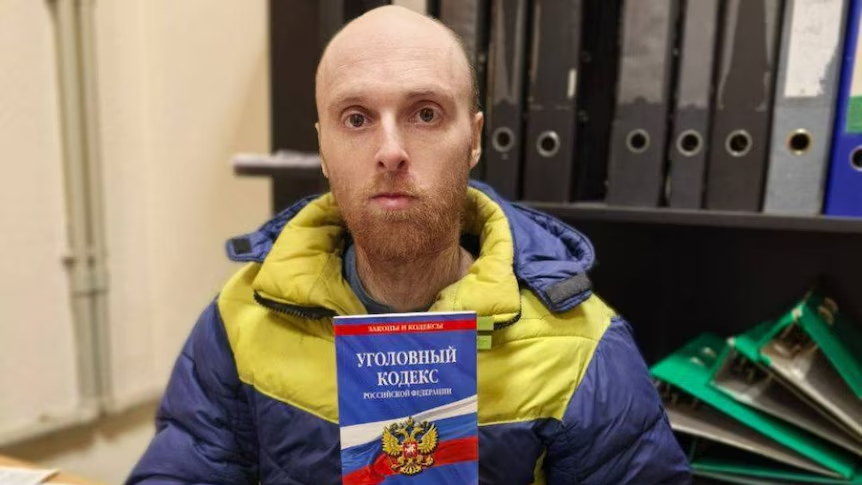
Australia has been actively advocating for Jenkins’ welfare and release through diplomatic channels and international partners, including the International Committee of the Red Cross. Photos and video footage that surfaced shortly after Jenkins’ capture showed him confined in a glass cage during the court proceedings, underscoring the harsh conditions he faces.
Additionally, earlier video evidence depicted Jenkins in captivity, with his hands tightly bound and visibly distressed, struggling with questions posed in Russian and subjected to physical abuse. These images have intensified calls for his protection and humane treatment.
The case has also intensified diplomatic strains between Australia and Russia. Canberra has summoned the Russian ambassador multiple times, with Prime Minister Anthony Albanese vowing to take the “strongest action” should any harm come to Jenkins.
Australia’s firm stance is part of its broader condemnation of Russia’s invasion of Ukraine and its ongoing support for Kyiv, which includes nearly $1 billion in aid and military training for Ukrainian forces.
The Broader Context: Foreign Fighters, Mercenary Status, and International Law
Oscar Jenkins’ case is emblematic of a larger and more complex issue surrounding foreign nationals fighting in Ukraine. Since the outbreak of the conflict, thousands of volunteers from around the world have traveled to Ukraine, joining the fight against Russian aggression. These individuals come from various backgrounds, including military veterans, students, professionals, and ordinary citizens driven by personal convictions or political beliefs.
The distinction between lawful combatants and mercenaries is a contentious and legally significant one. Under international law, lawful combatants—typically members of regular armed forces or recognized militias—are entitled to prisoner-of-war protections if captured. Mercenaries, however, are often excluded from these protections because they fight primarily for personal gain rather than political or ideological reasons.
Russia’s labeling of Jenkins as a mercenary hinges on the accusation that he received payment for his service. This classification allows Russian authorities to prosecute him under their criminal laws rather than treat him as a prisoner of war.

However, this approach is disputed internationally. Many legal experts argue that the definition of a mercenary is narrow and difficult to apply to many foreign volunteers in Ukraine, who often fight out of ideological support rather than financial motivation.
The implications of this legal ambiguity are severe for foreign fighters. Those captured by Russian or Russian-aligned forces face trials with questionable fairness, long prison sentences, and harsh conditions. Jenkins’ 13-year sentence is one of the most prominent cases highlighting these risks. It raises important questions about the rights of foreign fighters, the responsibilities of their home countries, and the complexities of international law in modern conflicts.
Moreover, Jenkins’ case shines a light on the human cost of the Ukraine conflict beyond the battlefield. It illustrates how individuals far from the conflict zone become embroiled in geopolitical struggles and the dangers they face when caught in hostile legal and military environments.
Oscar Jenkins’ story is a powerful reminder of the personal sacrifices and dangers faced by foreign nationals who decide to join conflicts abroad. His sentencing to 13 years in a Russian-controlled prison has sparked diplomatic efforts, raised legal debates about mercenary status, and drawn international attention to the plight of those fighting for Ukraine.
As Australia continues to advocate for his release and fair treatment, Jenkins’ case remains a poignant symbol of the broader human and legal challenges that the war in Ukraine presents to the global community.