

The final rites and ceremonies following the death of Pope Francis have drawn the world’s attention to the Vatican, where preparations are underway for his funeral and burial. Among the cardinals chosen to play ceremonial roles in this sacred occasion is Cardinal Roger Mahony, a retired American prelate whose inclusion has sparked deep controversy.
Once the Archbishop of Los Angeles and a towering figure in the U.S. Catholic Church, Mahony’s legacy has been permanently stained by his role in covering up widespread clerical child sex abuse.
As the Church prepares to say goodbye to Pope Francis with a funeral Mass at St. Peter’s Square, understanding who Cardinal Mahony is—and why his participation is drawing backlash—is essential to grasp the significance of this moment and the tensions it has reignited within the global Catholic community.
The Rise and Fall of Cardinal Roger Mahony
Cardinal Roger Mahony was born on February 27, 1936, in Hollywood, California. He was ordained a priest in 1962 and quickly ascended the Church hierarchy, becoming the Bishop of Stockton in 1980 and then the Archbishop of Los Angeles in 1985. In 1991, Pope John Paul II elevated him to the College of Cardinals, placing him among the most powerful voices in the American Catholic Church.
During his 25 years as Archbishop of Los Angeles, Mahony gained both praise and criticism. He was known for his advocacy on immigration, interfaith dialogue, and support for the poor. However, as the decades passed, Mahony’s name became more synonymous with the darkest scandal in modern Church history—the widespread cover-up of sexual abuse by clergy.
Documents released in 2013 revealed that Mahony actively worked behind the scenes to shield priests accused of sexual abuse from law enforcement and public scrutiny.
Rather than reporting alleged abusers, Mahony often reassigned them to different parishes or sent them for psychological treatment, allowing them to return to ministry and, in many cases, abuse again. His actions were not isolated incidents but part of a broader effort to protect the Church’s reputation at the cost of children’s safety.
Read : Pope Francis Gives Approval to Blessed Maria Carmen Rendiles to Be Venezuela’s First Female Saint
One of the most notorious cases involved Father Michael Baker, who confessed to Mahony in 1986 that he had molested two boys over several years. Rather than removing him from ministry, Mahony sent Baker to treatment and later reassigned him to multiple parishes. Baker continued to have contact with children and was not removed until 2000. He was later convicted of child molestation in 2007.
The Pope has entered St. Peter’s Basilica for the last time, where he will lie in state until the day of his funeral. pic.twitter.com/63o5ngYn9y
— ROME REPORTS (@romereports) April 23, 2025
In the same year, the Archdiocese of Los Angeles reached a record-breaking $660 million settlement with more than 500 victims of clergy abuse. The settlement included the release of thousands of pages of internal Church documents, many of which detailed Mahony’s efforts to conceal abuse.
Cardinal Mahony’s Role in Pope Francis’ Burial
Despite being stripped of his administrative and public duties in January 2013 by his successor, Archbishop José Gomez, Cardinal Mahony remains technically a cardinal in “good standing,” according to the Archdiocese of Los Angeles. This status has paved the way for his involvement in the most high-profile liturgical act since Pope Francis’ death.
The Vatican announced that Mahony, now 89 years old, is one of nine cardinals chosen to take part in the closing of Pope Francis’ coffin on Friday, ahead of the funeral Mass scheduled for Saturday morning in St. Peter’s Square.
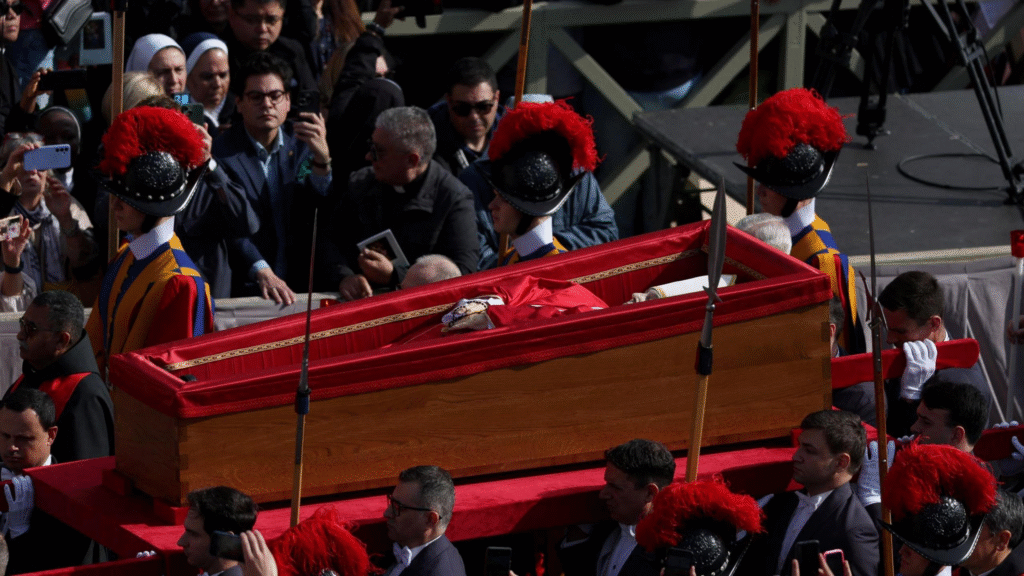
This rite includes the sealing of the coffin with traditional items such as papal vestments, coins, and a copy of the papal record. It is a sacred and deeply symbolic moment in Catholic liturgy, marking the Church’s final farewell to the pope.
In addition to helping seal the coffin, Mahony will also play a role in overseeing the late pope’s interment at the Basilica of Saint Mary Major, a significant Marian shrine in Rome closely associated with Pope Francis’ papacy.
The Vatican said Mahony’s inclusion was based on his seniority as a cardinal. While this explanation follows protocol, it has not stopped a wave of public criticism and backlash.
Outrage and Backlash Over Mahony’s Involvement
News of Mahony’s participation in Pope Francis’ final rites has drawn strong condemnation from survivors of clergy abuse, Catholic watchdog groups, and even ordinary faithful who view his presence as an insult to victims and a blemish on the integrity of the funeral.
“Shame on him for participating in the public rite for Pope Francis, and shame on the College of Cardinals for allowing him to do so,” said Anne Barrett Doyle of Bishop Accountability, a group that has monitored clergy abuse for decades. The statement encapsulates the outrage felt by many who believe Mahony’s involvement undermines the Church’s public stance on accountability and justice for abuse victims.
The optics of a cardinal who played a central role in one of the Church’s worst scandals now leading one of its most sacred rites have not gone unnoticed. Critics argue that while Mahony may be in “good standing” by canonical standards, his moral authority has long been forfeited.
The defense put forward by the Los Angeles Archdiocese—that Mahony has not held any administrative duties since his retirement in 2011—has done little to quell public anger. Many see his continued ceremonial involvement as evidence that the Church, despite its promises of reform, still falls short of meaningful accountability.
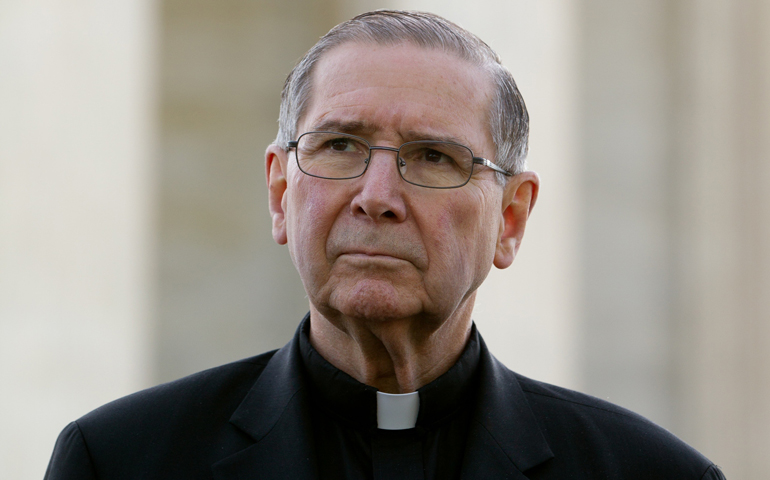
For survivors, especially those in Los Angeles who suffered directly under Mahony’s leadership, this moment reopens deep wounds. It also reinforces the perception that Church leaders continue to protect their own, even in moments that should be defined by humility and justice.
The inclusion of Cardinal Roger Mahony among the cardinals tasked with sealing Pope Francis’ coffin marks a deeply controversial chapter in the final farewell to a pontiff known for his attempts to reform the Church.
While Mahony’s presence may follow ecclesiastical protocol based on his seniority, it clashes sharply with the Church’s stated commitment to healing, justice, and transparency.
For many Catholics and observers, the moment is bittersweet. It is a chance to honor the life and legacy of Pope Francis—a pope who emphasized mercy, inclusion, and compassion—but also a reminder of the unresolved pain and systemic failures that continue to haunt the Church.
Cardinal Mahony’s involvement casts a long shadow over what should have been a purely solemn and dignified ceremony, highlighting once again the tensions between tradition and the urgent call for accountability.
As the world gathers for Pope Francis’ funeral in St. Peter’s Square, led by top Vatican officials and attended by global leaders including U.S. President Donald Trump and Ukrainian President Volodymyr Zelensky, the Church stands at a crossroads. How it chooses to honor its past—and who it chooses to represent it—will continue to shape its credibility and moral authority for generations to come.
На этом сайте собрана увлекательная и ценная информация по разным направлениям.
Пользователи могут обнаружить подсказки на актуальные проблемы.
Контент пополняются постоянно, чтобы вы каждый могли изучать свежую подборку.
Удобная навигация сайта способствует быстро выбрать нужные разделы.
гидра
Разнообразие рубрикаторов делает ресурс полезным для разных посетителей.
Каждый сможет выбрать советы, которые подходят именно вам.
Существование понятных советов делает сайт особенно ценным.
Таким образом, этот ресурс — это интересный источник полезной информации для широкого круга пользователей.
Mindful play is an essential part of a safe entertainment experience.
It helps players to maintain balance while enjoying interactive activities.
Setting limits reduces risks.
Responsible play also promotes thoughtful choices.
gameplay strategies
By managing time and budget, players can reduce pressure.
This approach supports a positive long-term experience.
Understanding of personal habits plays a major role.
In the end, responsible gaming helps preserve fun for everyone.
Responsible play plays an important role of a balanced entertainment experience.
It allows people to stay in control while enjoying interactive activities.
Defining boundaries reduces risks.
Responsible play also supports better decision-making.
https://dosweeps.com/casinos
By tracking personal limits, players can avoid stress.
This approach creates a sustainable long-term experience.
Understanding of personal habits is very important.
As a result, responsible gaming ensures a positive atmosphere for everyone.