
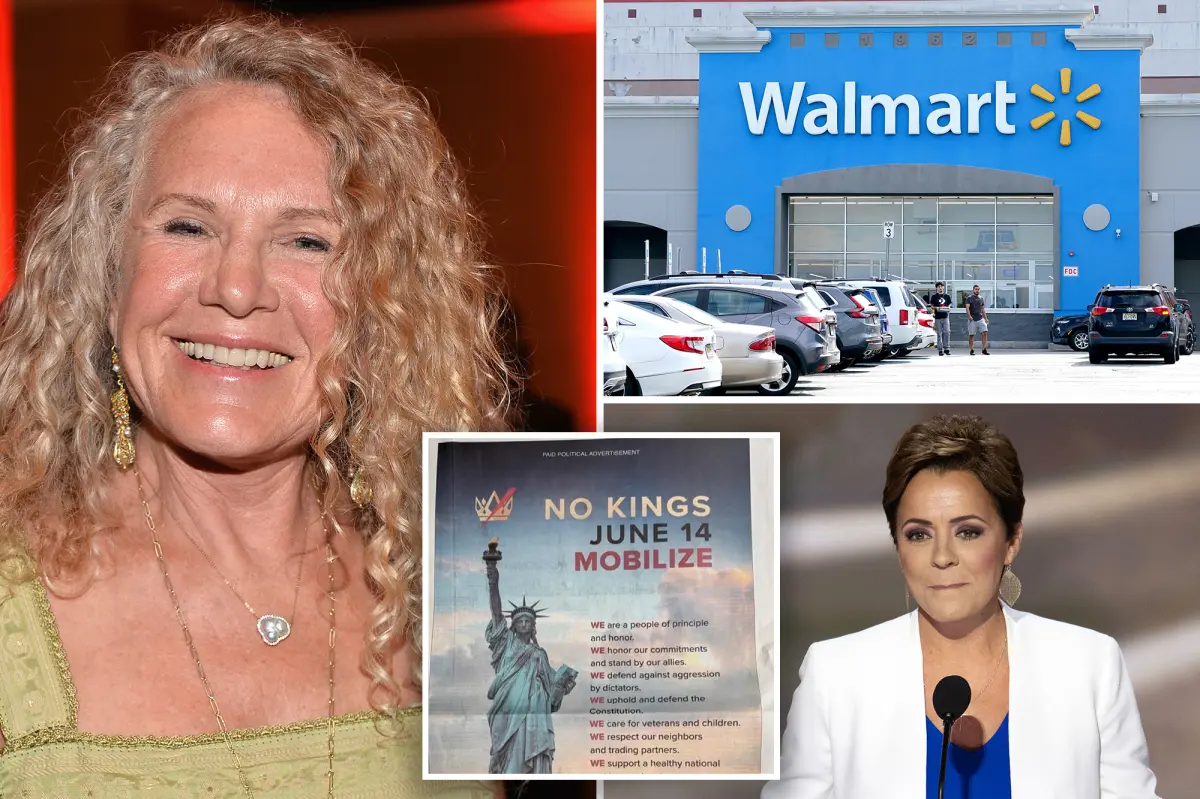
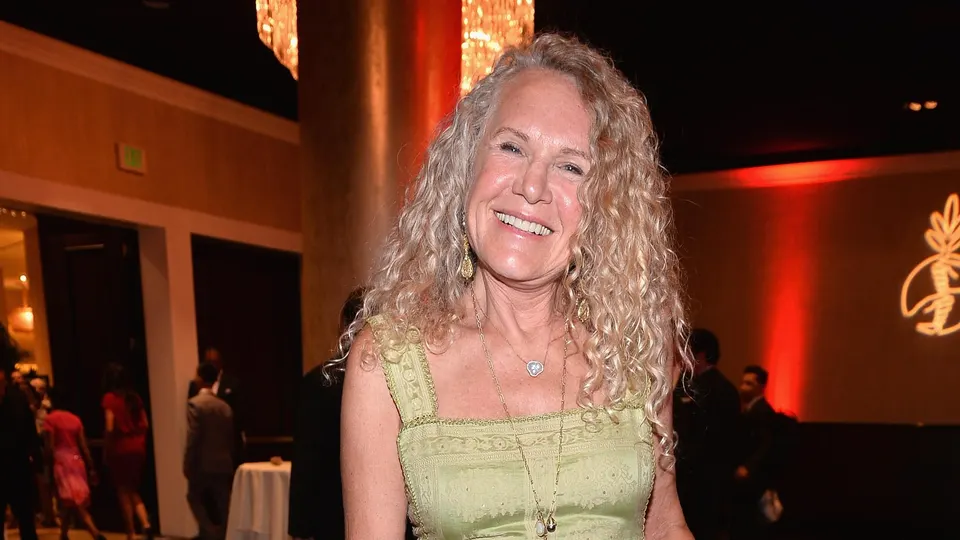
Christy Walton, a billionaire philanthropist and one of the most private members of the Walmart fortune’s extended family, has unexpectedly become the center of a political storm. Her name, until recently, was mostly associated with charity, art patronage, and family legacy—not with public political discourse.
That changed with a full-page ad she placed in The New York Times, promoting civic engagement and democratic values under the symbolic title, “No Kings Day.” While the ad made no explicit mention of former President Donald Trump or his political movement, many of his supporters interpreted it as a pointed critique of his administration’s “America First” policies and broader MAGA rhetoric.
This subtle but powerful message has ignited fresh backlash, not only toward Christy Walton herself but also toward Walmart, even though the company officially distanced itself from the statement. The incident underscores the volatile intersection between wealth, free speech, and partisan politics in modern America.
Christy Walton: The Quiet Billionaire Behind the Fortune
Despite being the richest woman in the world at one point, Christy Walton has long lived in relative obscurity. She became a billionaire after the tragic 2005 death of her husband, John T. Walton, who perished in a plane crash. John, a former Green Beret and Vietnam War veteran, was known for his independent nature and philanthropic interests. Christy inherited his Walmart shares, making her one of the wealthiest women on the planet practically overnight. But she did not use this wealth to chase headlines.
Instead, she focused on causes close to her heart: education, sustainability, and cultural preservation. She has donated to various initiatives through the Walton Family Foundation and other outlets. She also funded independent films, supported the arts, and maintained a relatively reclusive lifestyle compared to her more publicly engaged family members. That’s why her recent public political message, splashed boldly across one of America’s most influential newspapers, has come as a surprise to many.
Do you shop at Walmart?⤵️ https://t.co/UrArfwIdWY
— Kari Lake (@KariLake) June 10, 2025
This deviation from her usual silence has amplified the message’s impact. Coming from someone who rarely voices political opinions, the “No Kings Day” ad resonated strongly—both positively and negatively—with Americans across the political spectrum.
The Meaning Behind ‘No Kings Day’: A Call to Civic Duty
At first glance, the ad titled “No Kings Day” seems like a straightforward appeal for civic participation. Published on July 4, the symbolism could hardly be more pointed. Independence Day, after all, commemorates the United States’ break from monarchy and its embrace of democratic ideals. The ad’s text urged Americans to engage in political discourse respectfully, attend local town halls, protect democratic institutions, and honor commitments to allies.
While the message did not name any individuals or political parties, it referenced values and issues that have become deeply politicized in recent years. For instance, its call to “respect trade partnerships” and “protect against dictators” was widely interpreted as a subtle rebuke of Donald Trump’s foreign policy decisions.
Read : ‘Cutthroat Cowboys’ Arrested for Riding Horses Through Walmart in Baker
His withdrawal from international agreements, frequent criticism of global allies, and praise of authoritarian leaders have all been hotly debated. Therefore, it didn’t take long for commentators to link the ad’s sentiments with an implied critique of the Trump-era worldview.
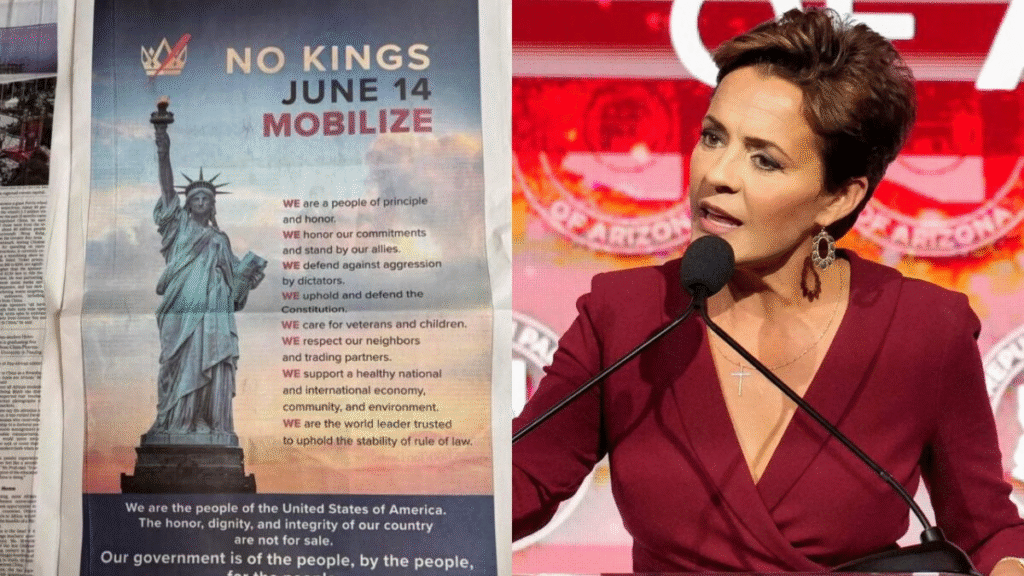
The message concluded with the line: “The honor, dignity and integrity of our country is not for sale. Show up, attend your town halls, be civil.” It was signed clearly as the opinion of Christy Walton, not Walmart or the Walton family at large. Despite that distinction, many Trump supporters saw the ad as an affront to their beliefs, and Walmart as complicit by association.
The MAGA Backlash and Walmart’s Unwanted Spotlight
Shortly after the ad’s publication, prominent conservative voices began to express outrage. Kari Lake, a vocal Trump supporter and former Trump administration official, took to X (formerly known as Twitter) to post a photo of the ad, captioning it with a direct challenge: “Do you shop at Walmart?” The underlying message was clear—those aligned with Trump’s political ideology should consider boycotting the retail giant.
Lake’s post quickly gained traction, sparking similar sentiments across conservative social media spaces. Users shared screenshots of the ad with accusatory comments, calling Walton’s message elitist, subversive, or unpatriotic. Some accused her of undermining the principles of free speech and democratic choice by allegedly targeting Trump voters. Others expanded the attack to Walmart itself, threatening boycotts and demanding the company respond.
Despite this pressure, Walmart has remained officially silent. The company did not publish the ad, had no apparent involvement in its messaging, and has offered no public support or condemnation of Christy Walton’s actions. It’s a tricky position for any corporation to be in. On one hand, remaining neutral may help Walmart avoid further inflaming the situation. On the other, its lack of public response has not shielded it from the heat of the controversy.
This episode has highlighted the complex nature of family-controlled businesses when individual members make public statements. Even though Christy Walton holds no active executive role in Walmart, her name—and fortune—are deeply entwined with the company’s identity.
The Real Question: Can Wealth Be Separated From Politics?
At the heart of the issue is a broader cultural question: Should billionaires have a say in shaping political discourse? Critics argue that massive personal wealth gives people like Christy Walton an unfair platform, one inaccessible to ordinary citizens. A full-page ad in The New York Times is expensive, influential, and far-reaching—something only the wealthy can afford.
Supporters, however, argue that Walton used her platform responsibly. She didn’t call for boycotts, didn’t name political adversaries, and didn’t promote a specific party or candidate. Her ad was a call for civility, democratic participation, and national integrity. In an age where political dialogue often devolves into attacks and misinformation, some see her message as a refreshing appeal to American values.
Yet, because it indirectly touched on issues central to the Trump movement—nationalism, foreign policy, trade, and political discourse—her message was inevitably politicized. And perhaps that was unavoidable. In today’s America, even calls for unity and civility can be seen through partisan lenses.
A Moment That May Define Christy Walton’s Public Legacy
Whether or not Christy Walton anticipated the backlash, her ad has left a lasting impression. It marked a turning point in her public life: from silent heiress to civic commentator. While the controversy may eventually fade, it has opened a broader conversation about the role of wealthy individuals in shaping national dialogue.
More importantly, it reveals the growing sensitivity within the American public to any perceived slight against their political identity. That a non-partisan call for democratic values could be met with boycott threats reflects a divided landscape where even indirect statements are subject to intense scrutiny.
For Walmart, the situation is delicate. It must balance a large, politically diverse customer base while maintaining distance from family members’ personal beliefs. For Christy Walton, the decision to speak out may encourage others in similar positions to use their platforms for causes they believe in—regardless of the consequences.
Her ad may not have named any political figure, but its implications have reverberated across party lines, igniting debates about democracy, speech, wealth, and accountability. Whether intended or not, Christy Walton has become a figure in America’s ongoing conversation about who gets to speak—and how their words are interpreted.