
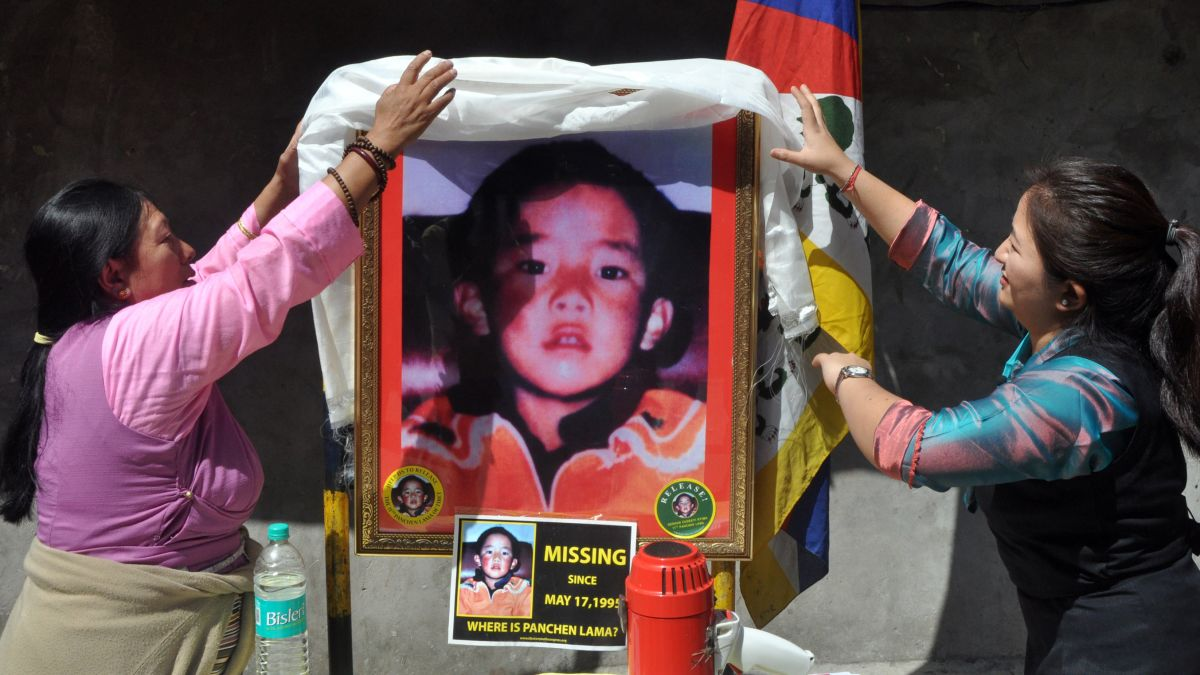
On May 17, 1995, a six-year-old boy named Gedhun Choekyi Nyima was abducted by Chinese authorities, just days after being recognized by His Holiness the 14th Dalai Lama as the 11th Panchen Lama, the second-highest spiritual authority in Tibetan Buddhism. Now, 30 years later, his whereabouts remain unknown, making him one of the world’s longest-held political prisoners.
His enforced disappearance has drawn global condemnation, with renewed calls for his release marking the 30th anniversary of this grave human rights violation. On May 19, 2025, U.S. Secretary of State Marco Rubio joined the chorus, urging China to release Gedhun Choekyi Nyima, highlighting Beijing’s ongoing efforts to control Tibetan Buddhism.
The Significance of the Panchen Lama in Tibetan Buddhism
The Panchen Lama holds a pivotal role in Tibetan Buddhism, particularly within the Gelug school, as the second-most important spiritual leader after the Dalai Lama. Historically based at Tashilhunpo Monastery in Shigatse, Tibet’s second-largest city, the Panchen Lama is revered for his spiritual authority and plays a critical role in the recognition of the Dalai Lama’s reincarnation, just as the Dalai Lama identifies the Panchen Lama’s reincarnation.
This reciprocal relationship underscores the deep interdependence between the two figures, ensuring the continuity of Tibetan Buddhist leadership. Gedhun Choekyi Nyima was born on April 25, 1989, in Lhari County, Tibet. In 1995, following the death of the 10th Panchen Lama in 1989, the Dalai Lama led a traditional search process to identify his reincarnation.
After a meticulous selection involving spiritual rituals and consultations, the Dalai Lama formally recognized six-year-old Gedhun as the 11th Panchen Lama on May 14, 1995. This announcement, however, was met with swift retaliation from the Chinese government, which viewed the Dalai Lama’s authority as a threat to its control over Tibet.
The Chinese Communist Party (CCP) has long sought to suppress Tibetan religious and cultural identity, viewing it as a challenge to its political dominance. The recognition of the Panchen Lama by the Dalai Lama, who has been in exile since 1959, was seen as an act of defiance against Beijing’s attempts to regulate Tibetan Buddhist institutions.
By abducting Gedhun and his family, China aimed to undermine the traditional process of reincarnation recognition, asserting its authority over one of Tibet’s most sacred institutions.
The Enforced Disappearance and China’s Replacement Panchen Lama
On May 17, 1995, just three days after his recognition, Gedhun Choekyi Nyima, along with his parents and teacher, was taken into custody by Chinese authorities. Since then, no credible information about their whereabouts or well-being has been released, despite decades of appeals from the United Nations, human rights organizations, and global leaders.
The Chinese government has occasionally claimed that Gedhun is “living a normal life” and does not wish to be disturbed, but these statements lack evidence and have been widely dismissed as propaganda. Human Rights Watch has described Gedhun’s case as one of the longest-standing enforced disappearances in modern history, noting that he has spent the majority of his life—now 36 years—in detention at an undisclosed location.
In a clear attempt to exert control over Tibetan Buddhism, China appointed its own Panchen Lama, Gyaltsen Norbu, in 1996. Norbu, reportedly the son of Communist Party members, has been promoted by Beijing as the “official” Panchen Lama, but he lacks spiritual legitimacy among most Tibetans and international observers.
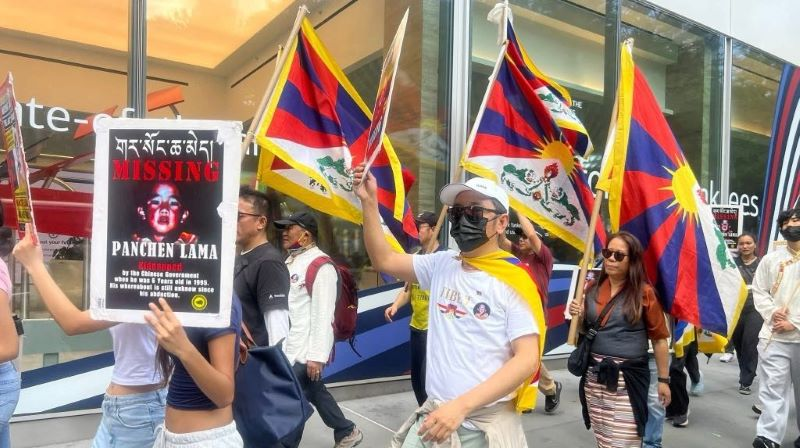
Many Tibetans view him as a state-appointed figure, installed to serve China’s political agenda, particularly its desire to influence the selection of the next Dalai Lama. The Dalai Lama has stated that his reincarnation will be born in a free world, rejecting China’s claims over the process.
The abduction of Gedhun and the installation of Norbu reflect Beijing’s broader strategy to control Tibetan religious leadership. In 2007, China introduced regulations granting the state ultimate authority to recognize reincarnate lamas, further tightening its grip on monasteries and religious practices in Tibet.
Human rights organizations, including the Central Tibetan Administration (CTA), have condemned these measures as violations of religious freedom and international human rights laws, such as the Universal Declaration of Human Rights and the United Nations Declaration on the Protection of All Persons from Enforced Disappearances.
The disappearance of Gedhun Choekyi Nyima has not only deprived Tibetans of a key spiritual leader but also symbolizes the broader oppression of Tibetan culture and religion. His absence has left a void in the spiritual lives of millions of Tibetans, who continue to revere him as the true 11th Panchen Lama.
Protests, such as those organized by the Tibetan Youth Congress in Dharamshala on May 17, 2025, and gatherings in Zurich attended by over 200 Tibetans and human rights advocates, demonstrate the enduring global demand for justice and transparency.
Global Calls for Justice and Marco Rubio’s Statement
The 30th anniversary of Gedhun Choekyi Nyima’s disappearance, marked on May 17, 2025, prompted a wave of international condemnation and renewed calls for his release. Political leaders, human rights organizations, and Tibetan advocacy groups across the globe urged China to disclose his whereabouts and ensure his freedom.
The CTA launched a month-long awareness campaign, running from Gedhun’s 36th birthday on April 25 to May 17, to highlight the unprecedented three-decade absence of the Panchen Lama. Events included lectures, protests, and an elocution contest in Dharamshala, aimed at educating younger generations about the legacy of the Panchen Lama and the circumstances of Gedhun’s abduction.
Gedhun Choekyi Nyima was only six years old when Chinese authorities abducted him 30 years ago. The Panchen Lama should be released immediately.
— Secretary Marco Rubio (@SecRubio) May 18, 2025
U.S. Secretary of State Marco Rubio joined these efforts on May 19, 2025, issuing a powerful statement calling for Gedhun’s immediate release. In a post on X, Rubio stated, “Gedhun Choekyi Nyima was only six years old when Chinese authorities abducted him 30 years ago.
The Panchen Lama should be released immediately.” His remarks underscored Beijing’s policy of exerting control over Tibetan Buddhism, particularly through its interference in the recognition of spiritual leaders. Rubio’s statement echoed sentiments expressed by U.S. Senators Jim Risch and Jeanne Shaheen, who, as chairman and ranking member of the Senate Foreign Relations Committee, condemned China’s actions ahead of the anniversary.
International leaders also voiced their concerns. Italian Senator Andrea De Priamo, President of the Italian Tibet Interparliamentary Group, described Gedhun’s case as a serious violation of human rights and religious freedom, urging China to respect the rights of the Tibetan people.
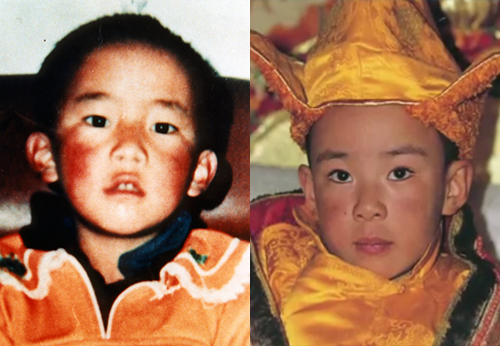
Swiss parliamentarians from the Swiss Parliamentary Group for Tibet issued a strongly worded statement, criticizing China’s interference in Tibetan religious succession and calling for Gedhun’s immediate release. Frank Schwabe, Germany’s Federal Government Commissioner for Freedom of Religion or Belief, and Anouar El Anouni, spokesperson for the European Union, similarly demanded transparency and justice.
Human Rights Watch, in a May 15, 2025, statement, called on governments, particularly those with significant Buddhist populations like Japan, South Korea, and India, to mark the anniversary by asserting the rights of Tibetans to exercise their religious freedom. The organization expressed disappointment over China’s lack of response to repeated international appeals, including from the United Nations and the European Parliament.
The CTA’s President Penpa Tsering condemned China’s actions, emphasizing that Gedhun’s disappearance represents not only an individual violation but also an attack on the Tibetan people’s right to choose their religious leaders.
The global outcry reflects the broader implications of Gedhun’s case for human rights and religious freedom. His enforced disappearance is seen as part of China’s systematic efforts to suppress Tibetan identity, including restrictions on language, cultural expression, and religious practices.
The Chinese government’s refusal to provide verifiable information about Gedhun’s status has fueled accusations of gross human rights violations, with many observers believing that his detention is linked to Beijing’s strategy to control the future selection of the Dalai Lama.
Gedhun Choekyi Nyima’s enforced disappearance at the age of six remains a stark reminder of the Chinese government’s efforts to suppress Tibetan Buddhism and control its spiritual leadership.
Recognized by the Dalai Lama as the 11th Panchen Lama, Gedhun’s abduction 30 years ago and the subsequent appointment of a state-selected (Gedhun Choekyi Nyima was only six years old when Chinese authorities abducted him 30 years ago. The Panchen Lama should be released immediately,” Rubio said in a statement on the social media platform ‘X’ (formerly Twitter).
The international community’s persistent calls for Gedhun’s release, including Marco Rubio’s recent statement, underscore the urgency of addressing this decades-long injustice.
As Tibetans and their supporters worldwide continue to demand justice, Gedhun Choekyi Nyima remains a symbol of resilience and the enduring struggle for religious freedom and human rights in Tibet.