

In an age where symbolism, social activism, and state power frequently clash, Greta Thunberg, the iconic Swedish environmentalist, has once again found herself in the eye of a geopolitical storm. Known globally for her unrelenting climate advocacy, Thunberg has now extended her activist reach into the war-ravaged terrain of Gaza, a decision that has made headlines far beyond environmental circles.
Her participation in a recent aid mission to Gaza, which ended in the Israeli navy intercepting the vessel she was on, has reignited debates not only about humanitarian access to Gaza but also about how state actors deal with global activists who threaten their narratives.
The yacht Madleen, carrying Thunberg and a group of international activists, was intercepted in international waters by Israeli forces and escorted to the port of Ashdod. The Israeli government swiftly downplayed the mission as nothing more than a “publicity stunt,” ridiculing the activists and especially Thunberg, whose reputation preceded her.
But behind the derision and diplomatic coldness lies a broader story—one about state control, global advocacy, and the ongoing humanitarian crisis in Gaza. The incident, dramatic in its execution and polarizing in its reception, exposes the tensions between activism and state interests in one of the most hotly contested regions on Earth.
Greta Thunberg: From Climate Strikes to Global Voice for Justice
Greta Thunberg emerged in 2018 as a teenage protester outside the Swedish Parliament, demanding more aggressive action on climate change. At just 15 years old, her solo protest sparked a global movement now known as “Fridays for Future.” Since then, Thunberg has addressed world leaders at the United Nations, clashed with fossil fuel executives, and become a powerful figurehead for a generation demanding change in the face of environmental collapse.
Despite her young age, Thunberg’s rhetoric has often been fearless and uncompromising. She has condemned world leaders for what she sees as their failure to act on climate change with phrases that have since become iconic, such as “How dare you!” Her unwavering commitment to the cause has earned her both widespread praise and fierce criticism, especially from powerful political figures and corporate interests. Over time, she expanded her focus beyond the environment, addressing interrelated issues like economic inequality, indigenous rights, and now, the Palestinian humanitarian crisis.
Reporter: “Why do you think so many countries and governments around the world are just ignoring what’s happening in Gaza?”
— Furkan Gözükara (@GozukaraFurkan) June 10, 2025
Greta Thunberg: “Because of racism.” pic.twitter.com/JVNA0nvota
Her evolution into a broader human rights advocate has been evident in her vocal support for the Palestinian people, particularly as Israel’s military campaign in Gaza escalated in late 2023. Through social media, public appearances, and now direct action, Thunberg has made it clear that she views climate justice and human rights as deeply intertwined.
Seized at Sea: The Gaza Aid Mission and Israeli Backlash
The mission that led to her seizure by Israeli forces was both symbolic and practical. The Madleen, a small British-flagged yacht, set sail from Catania, Sicily, on June 1, 2025. Aboard were twelve individuals including French politician Rima Hassan, medics, journalists, and civil society members, all intent on delivering essential supplies to Gaza: baby formula, rice, solar panels, medical kits, and prosthetic limbs. More than cargo, however, they carried a message—that global citizens refuse to remain silent in the face of what humanitarian organizations describe as a deepening crisis.
The yacht was intercepted roughly 115 miles from Gaza by Shayetet 13, Israel’s elite naval commandos. The vessel was escorted to Ashdod port, where the activists were taken into custody. While Israeli officials insisted the group would be “processed and repatriated,” the act of seizing a vessel in international waters ignited accusations of maritime law violations and even “kidnapping” from the mission’s organizers.
Thunberg, in a pre-recorded video meant to be released if the mission was interrupted, stated: “If you see this video, we have been intercepted and kidnapped in international waters by the Israeli occupational forces, or forces that support Israel.” Her framing of the incident as an act of political suppression aligns with broader criticisms of Israel’s blockade of Gaza and its handling of humanitarian aid.
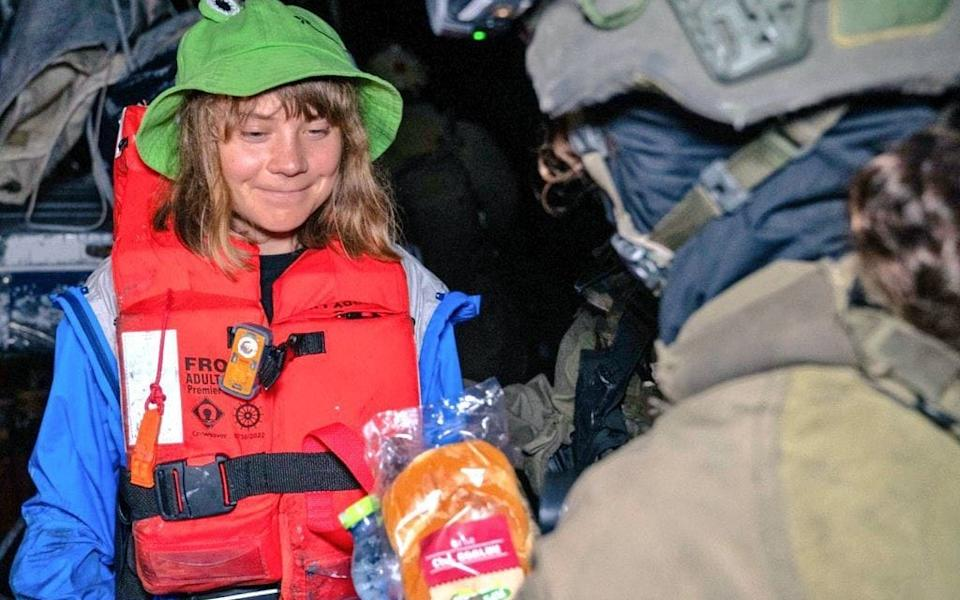
The response from Israel was swift and mocking. The official Israeli Foreign Ministry referred to the mission as a “selfie yacht” and posted an image of Thunberg being handed a sandwich on board, framing the event as an unserious media stunt. Defense Minister Israel Katz went further, labeling the activists as “Hamas propagandists” and saying they would be shown footage of the October 7, 2023, Hamas attack on Israel during their detention “so they understand what Hamas is.”
Adding to the ridicule, FC Ashdod, an Israeli soccer club, published a parody post showing Greta Thunberg as a fictional soccer player signing with their team, citing her “achievements” in recycling and composting. While humorous in tone, these posts signal Israel’s strategy of using social media mockery to undercut the credibility of high-profile critics and shape the global narrative around Gaza.
A Battle of Narratives: Humanitarian Crisis and Political Image Wars
The Gaza mission and the reaction it provoked underscore a larger, more profound battle: the fight over who controls the narrative in conflict zones. Israel insists it is allowing aid into Gaza through official channels and accuses activists of acting as pawns in a broader propaganda war. However, international aid organizations paint a far bleaker picture, citing a growing humanitarian disaster in Gaza, where food, clean water, and medical supplies are in critical shortage.
Since the onset of Israel’s military campaign following the Hamas attacks of October 2023, over 54,000 Palestinians have reportedly been killed, according to Hamas-run health authorities. On the Israeli side, the toll from the initial Hamas attack stood at around 1,200 killed, with more than 200 taken hostage. These staggering numbers reflect the extreme toll of the conflict, yet the humanitarian discourse is often overshadowed by the political calculations of state actors.
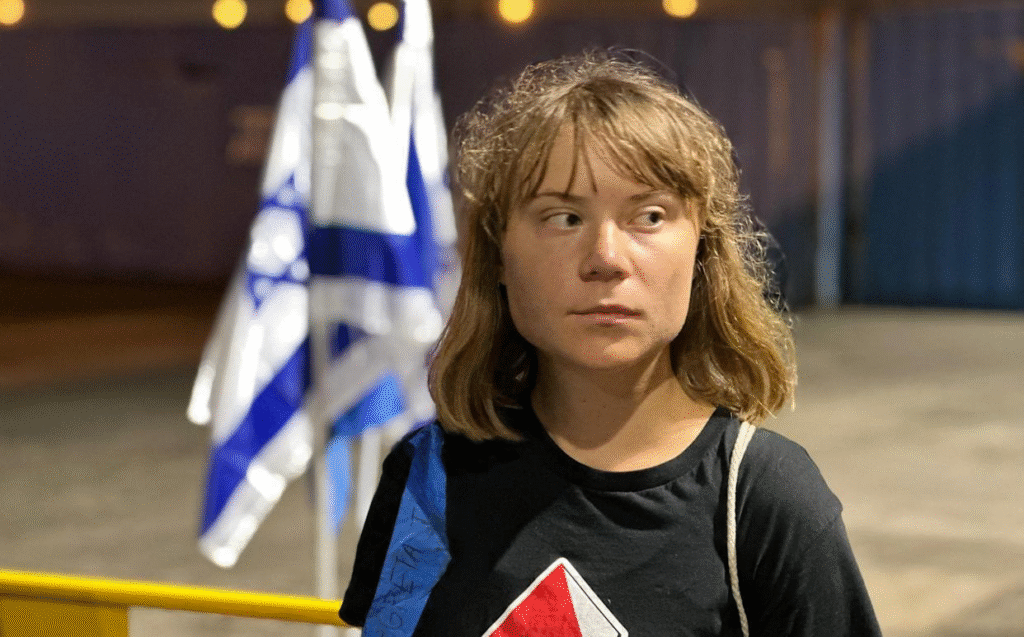
In this environment, figures like Greta Thunberg become symbols—both for those advocating justice and those defending national security interests. Her presence on the Madleen was never just about delivering aid; it was about challenging the status quo and drawing global attention to a crisis that many feel is being overlooked or deliberately obfuscated.
The harsh Israeli response to her actions speaks volumes about the power of visibility. Thunberg’s involvement guaranteed media coverage, and with it, scrutiny. Her detention, while temporary, has already sparked global conversations about not only Gaza but also the lengths to which governments will go to suppress dissenting voices, especially when those voices carry global influence.
In many ways, this event serves as a microcosm of modern activism—a world where symbolism, direct action, and global platforms converge. The Gaza aid mission, however small in scale, carried immense symbolic weight. And by intercepting it, mocking it, and detaining its passengers, Israel may have unintentionally amplified the very message it sought to silence.
As of now, the activists, including Thunberg, are expected to be repatriated. The Israeli government has stated that the aid aboard the vessel will be delivered through “approved” channels, though it remains unclear how much of it will reach its intended recipients in Gaza. For Thunberg, this incident is likely just another chapter in her expanding portfolio of activism—one that is becoming increasingly global, confrontational, and politically charged.
Whether loved or loathed, Greta Thunberg continues to be a figure who forces confrontation—between governments and people, between state narratives and human stories, between the comfort of silence and the risk of action. In daring to deliver aid to Gaza, she did more than provoke a navy; she reignited a global conversation.