
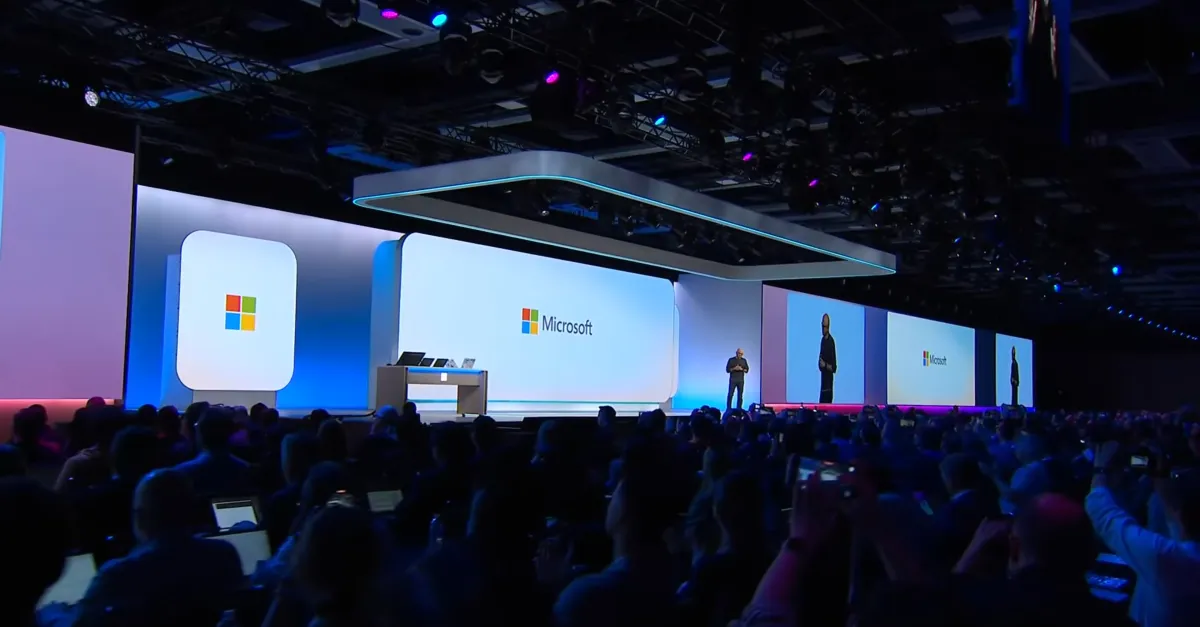
At the annual Microsoft Build developer conference in Seattle, what was expected to be a polished and forward-looking keynote by CEO Satya Nadella took an unexpected turn. A man from the audience stood up and passionately shouted, “Satya, how about you show how Microsoft is killing Palestinians?”
The moment stunned the room, but it was no random outburst—it was a planned protest by none other than Joe Lopez, a Microsoft engineer who has worked directly on Azure, the company’s cloud computing platform. His bold disruption wasn’t just a cry in the dark. It was the culmination of growing unrest among Microsoft employees about the company’s role in facilitating Israeli military operations.
Joe Lopez’s protest, fueled by a deep moral conviction, was tied to his knowledge of how Microsoft’s technology is being employed. As he shouted his message in front of a global audience, security swiftly removed him from the room. But the reverberations of his act are still echoing throughout the tech world, corporate boardrooms, and activist communities alike. Who is Joe Lopez, and what led him to risk his career to speak out in such a dramatic fashion?
Joe Lopez: The Microsoft Engineer Who Took a Stand
Joe Lopez isn’t just a random activist or outsider crashing a corporate event. He is a firmware engineer at Microsoft who worked on critical components of Azure, the company’s highly profitable and influential cloud-computing platform.
Azure is not just a tool for business applications—it has deep ties to military operations and intelligence services around the world, including those of the Israeli Defense Forces (IDF).
According to reports from independent journalists and whistleblower documents, Azure’s infrastructure has been instrumental in enabling Israeli military surveillance and airstrike targeting systems, particularly through the Ofek Unit.
With such intimate knowledge of the product, Lopez knew exactly what he was speaking about. He didn’t make vague accusations. Instead, he referenced concrete concerns about Microsoft’s technology being used to facilitate “Israeli war crimes” and “genocide.”
Read : Who Is Vanya Agarwal Who Shouted at CEO Satya Nadella at Microsoft’s 50th Anniversary Celebration?
He chose to confront Satya Nadella publicly, knowing that internal discussions had led nowhere. In an email to all Microsoft employees following the protest, Joe Lopez explained that this was a last resort, a necessary act to make the world listen.
His email read, “As one of the largest companies in the world, Microsoft has immeasurable power to do the right thing: demand an end to this senseless tragedy, or we will cease our technological support for Israel… If leadership continues to ignore this demand, I promise that it won’t go unnoticed.” He went on to warn that the world is watching and turning against Microsoft’s complicity. The email was later published publicly on Medium, where it drew both praise and criticism.
The No Azure for Apartheid Movement and Rising Internal Dissent
Joe Lopez is not acting alone. His protest aligns with a growing internal movement within Microsoft known as “No Azure for Apartheid” (Noaa). This worker-led campaign has been advocating against the use of Microsoft’s cloud and AI technologies in support of the Israeli government and military since 2024. Their focus has been the role that Azure plays in Israeli military operations, particularly in relation to the ongoing violence in Gaza.
Anna Hattle, another Microsoft employee and an organizer with Noaa, sent a scathing email to company leadership on May 15, just days before the Build conference. She wrote, “We are currently witnessing the same crimes committed 77 years ago with one key difference: now, the Israeli Occupation Forces are carrying out this genocide at a much greater scale thanks to Microsoft cloud and AI technology.”
The date she referred to—May 15—coincides with Nakba Day, a remembrance of the 1948 Palestinian exodus that saw over 750,000 people displaced.
Noaa’s allegations are supported by reports from investigative outlets like +972 Magazine, which documented how Microsoft’s technology has a “footprint in all major military infrastructures” in Israel. Documents revealed that Microsoft Azure powers critical databases used by Israeli air forces, including tools that assist in selecting airstrike targets. Such tools, critics argue, directly contribute to civilian casualties.
Lopez and Noaa believe that Microsoft cannot hide behind plausible deniability or third-party audits anymore. Despite Microsoft’s official stance that an external investigation found “no evidence” of its technology being used to harm civilians, workers within the company have called this a “bold-faced lie.” “We see it live on the internet every day,” Joe Lopez wrote in his email. “We don’t need an internal audit to know that a top Azure customer is committing crimes against humanity.”
The Larger Reckoning in Tech: Ethics, Protest, and Risk
Joe Lopez’s protest at the Seattle event is not an isolated incident. It follows a similar demonstration just over a month earlier when two Microsoft employees, Ibtihal Aboussad and Vaniya Agrawal, disrupted another company event, calling out Microsoft’s AI chief Mustafa Suleyman as a “war profiteer.”
Both were fired shortly after. Similar movements have erupted across other tech giants, notably at Google, where employees protested Project Nimbus—a $1.2 billion AI and cloud contract with the Israeli government.

These protests represent a larger reckoning within the tech industry, where workers are no longer content with remaining silent participants in military-industrial partnerships. From Amazon to Meta, there is a growing trend of engineers, product managers, and developers rejecting the notion that their tools should be used in warfare, surveillance, or systemic oppression.
For Lopez, the personal cost remains unclear. As of now, there is no confirmation on whether he still holds his job at Microsoft. But the moral clarity of his act—and the public attention it has drawn—has placed pressure on the company to respond. Thus far, Microsoft has remained mostly silent regarding the protest, sticking to its earlier defense that its technologies are not used to harm civilians. But the public and media scrutiny is intensifying.
What makes Lopez’s protest particularly striking is the moral authority he carries as someone who knows Azure inside out. His act wasn’t just performative; it was deeply informed and pointed. When he demanded that Microsoft cut its support to the Israeli military, he did so as someone who helped build the infrastructure in question. This level of insider criticism is hard to dismiss, and it suggests that the company’s leadership may be underestimating the level of internal unrest.
It’s also worth noting the timing. The protest occurred just days after Palestinians around the world marked 77 years since the Nakba. In Gaza, a humanitarian catastrophe continues to unfold amid ongoing Israeli military operations. Hundreds of thousands of Palestinians have been displaced or killed. This moment is not just politically charged—it is ethically loaded, and tech workers like Lopez are increasingly unwilling to stay silent.
Whether Lopez’s protest will lead to broader changes within Microsoft remains to be seen. But it has already added fuel to a growing fire. More employees are speaking up, more outside observers are asking hard questions, and the company’s image is beginning to show cracks. This isn’t just about one man’s outburst at a conference—it’s about a global shift in what it means to be responsible in technology.
In many ways, Joe Lopez has become the face of that shift. And in doing so, he has shown that conscience, when paired with courage, can challenge even the most powerful institutions in the world.