

On April 14, 2025, the case of Kilmar Abrego Garcia, a Maryland resident wrongfully deported by the United States to El Salvador’s notorious CECOT prison, gained international attention after El Salvador’s President Nayib Bukele refused to return him.
The announcement, made during a White House meeting with President Donald Trump, defied a U.S. Supreme Court order and sparked a legal and diplomatic firestorm.
Garcia’s Life and Wrongful Deportation
Kilmar Abrego Garcia, a 29-year-old Salvadoran, had built a stable life in Maryland for over a decade. Arriving in the U.S. as a teenager, he was granted “withholding of removal” by an immigration judge in 2019, protecting him from deportation to El Salvador due to credible fears of gang persecution linked to his family’s business. A father of three and married to U.S. citizen Jennifer Vasquez Sura, Garcia had no criminal record in either country and worked to support his family.
On March 12, 2025, Garcia’s life was upended when he was arrested by U.S. immigration authorities. Three days later, on March 15, he was deported to El Salvador’s Terrorism Confinement Center (CECOT), a mega-prison known for its brutal conditions.
The Trump administration later admitted the deportation was an “administrative error,” violating the 2019 court order. U.S. District Judge Paula Xinis called the action “wholly lawless,” revealing that Garcia was falsely labeled an MS-13 gang member based on flimsy evidence, including his Chicago Bulls hat and an unverified informant’s tip.
The U.S. Supreme Court, on April 10, 2025, ruled the deportation illegal and ordered the administration to “facilitate” Garcia’s return, mandating daily updates on efforts to secure his release.
Read : Decorated Army Soldier Jose Barco Living in US Since He Was 4 Faces Deportation
Vasquez Sura, who last spoke to Garcia on March 15, said he feared for his safety in CECOT. Supported by faith leaders, Maryland officials, and advocacy groups, the family has rallied for his return, with Vasquez Sura declaring, “They’re playing politics with my husband’s life.”
Bukele’s Refusal and Trump’s Support
During a White House meeting on April 14, 2025, Bukele rejected calls to return Garcia, calling the request “preposterous” and comparing it to “smuggling a terrorist” into the U.S. He claimed Garcia, whom he labeled a “terrorist,” would remain in CECOT, citing El Salvador’s crackdown on gangs and its status as the “safest country in the Western Hemisphere.”
Bukele’s stance aligns with his hardline policies and a deal with the Trump administration, which pays El Salvador $6 million to detain over 200 deported migrants, mostly alleged gang members, in CECOT.
Read : Germany to Tighten Rules on Deporting Foreigners Who Glorify Terror Acts Amid Gaza War
The Trump administration backed Bukele, despite the Supreme Court’s order. Attorney General Pam Bondi said Garcia’s return was “up to El Salvador,” offering only to “provide a plane” if he were released.

Secretary of State Marco Rubio argued U.S. courts cannot dictate foreign policy, while Deputy Chief of Staff Stephen Miller called it “arrogant” to interfere with El Salvador’s handling of its citizens. The administration has since contradicted its initial “error” claim, asserting without evidence that Garcia is an MS-13 member.
This alignment has raised alarms about judicial defiance. The Justice Department, in an April 14 filing, argued that the Department of Homeland Security cannot “forcibly extract” a person from foreign custody, citing Bukele’s remarks. Critics, including Senator Chris Van Hollen, called the stance “untenable,” accusing both leaders of ignoring the rule of law.
Legal Battle and Public Outcry
The case has ignited a legal and public uproar. Judge Xinis ordered Justice Department officials to testify under oath on April 15, criticizing their inaction and demanding expedited discovery by April 28. Garcia’s attorney, Benjamin Osorio, argued that precedents exist for returning wrongfully deported individuals, accusing both governments of dodging accountability to avoid embarrassment.
Democrats have condemned the Trump-Bukele meeting as a disregard for justice. Senator Van Hollen demanded a meeting with Bukele and threatened to travel to El Salvador if Garcia remains detained.
Representative Linda Sanchez warned, “If they can do this to him, they can do it to anyone.” Representative Ritchie Torres proposed the RESCUE Act to address wrongful deportations, while Illinois Governor JB Pritzker labeled the refusal to comply with the Supreme Court “unconstitutional.”
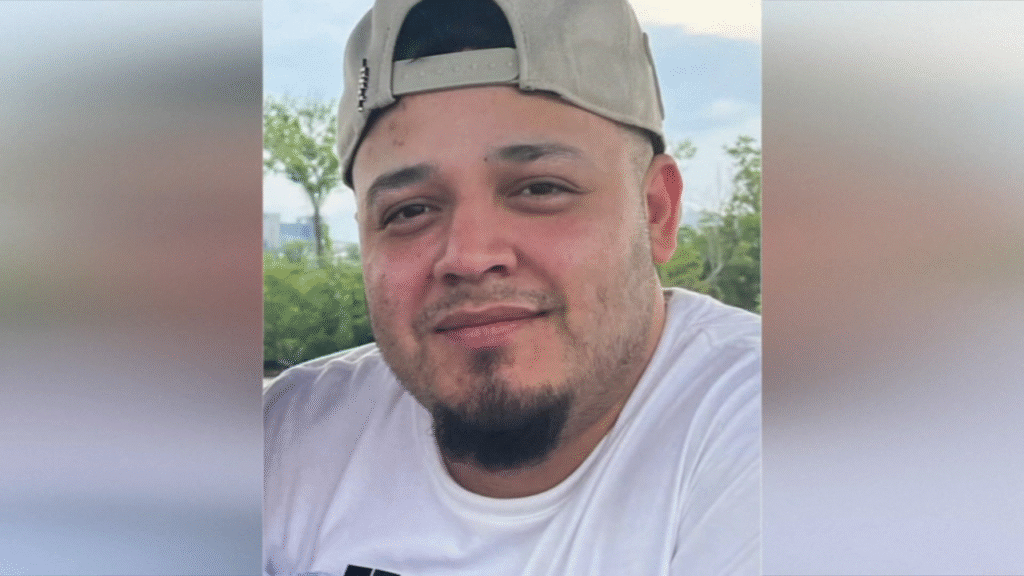
On X, opinions are divided. Some support Bukele, with one user stating, “If Garcia’s family wants him, they can join him in El Salvador.” Others, including advocacy groups, demand his return, citing the court’s ruling and CECOT’s inhumane conditions, where prisoners face 24-hour confinement and minimal exercise. Hashtags like #FreeKilmar have trended, amplifying calls for justice.
Implications for Justice and Immigration
Garcia’s case exposes tensions between executive power, international sovereignty, and judicial authority. The Trump administration’s use of the Alien Enemies Act to deport alleged gang members, often without due process, has drawn scrutiny, with reports suggesting 75% of deportees to CECOT lack criminal records.
Described as “Kafkaesque,” Garcia’s ordeal highlights the dangers of unchecked deportation policies and reliance on foreign prisons like CECOT, where conditions raise serious human rights concerns.
For Garcia’s family, the struggle continues. Vasquez Sura’s Easter plea for her husband’s return underscored the personal toll. As legal proceedings advance, with a hearing set for April 15, the case tests the U.S.’s commitment to due process and El Salvador’s role in supporting Trump’s immigration agenda. Garcia remains in CECOT, caught in a diplomatic impasse with no clear resolution.