

Lucy Guo’s ascent to the top of the billionaire ladder is a testament to the dynamic power of technology, innovation, and risk-taking. At just 30 years old, she has outpaced global icons like Taylor Swift to become the youngest self-made woman billionaire in the world, according to Forbes’ 2025 rankings.
With an estimated net worth of $1.25 billion (KSh 161.9 billion), Guo’s story is anything but ordinary. Her rise is emblematic of a broader trend in which AI and software continue to produce the fastest-growing fortunes in the modern world.
The “self-made” tag attached to her name isn’t merely symbolic—it reflects a path carved by relentless hustle, strategic decisions, and forward-looking investments.
Unlike many women on global rich lists who have inherited wealth or gained it through marriage, Guo built her empire from the ground up, harnessing the immense potential of emerging technologies and creator-driven platforms. Her story is now being compared to iconic tech founders and serves as an inspiration to many young women across the world.
Lucy Guo’s Journey from Dropout to Billionaire Visionary
Lucy Guo was born in 1994 and raised in the United States to Chinese immigrant parents who emphasized academic success and discipline. From a young age, she showed signs of brilliance in mathematics and computing.
As a teenager, she was already competing in coding competitions and creating her own applications. While still in high school, she earned money by designing websites and working freelance gigs, building a portfolio that rivaled seasoned professionals.
She went on to attend Carnegie Mellon University, one of the world’s most prestigious institutions for computer science. However, Guo’s entrepreneurial spirit couldn’t be contained by the classroom.
She left college early to pursue a career in Silicon Valley. Her initial jobs included working as a designer at Quora and Snapchat. These early positions gave her crucial experience in both UI/UX and product development, which later proved vital in her startup ventures.
In 2016, Lucy co-founded Scale AI with Alexandr Wang. The company initially focused on data labeling for machine learning, an essential task for developing artificial intelligence.
Read : 14 Grammy Award Winner Taylor Swift Nominated for 6 Grammy Awards in 2025
Scale AI quickly gained attention in the tech world and received early funding from top-tier investors like Founders Fund and Accel. It soon became a backbone service for AI companies by providing high-quality training data, a niche that was both crucial and highly lucrative.
Read : Taylor Swift Concerts Cause Earthquake-Like Activity in Scotland: Fans Literally Rock the Ground
Although Lucy left Scale AI in 2018, she retained a nearly 5% stake in the company. Today, Scale AI is valued at approximately $25 billion (KSh 3.24 trillion), and her stake alone accounts for a large portion of her fortune. But her story didn’t end there.
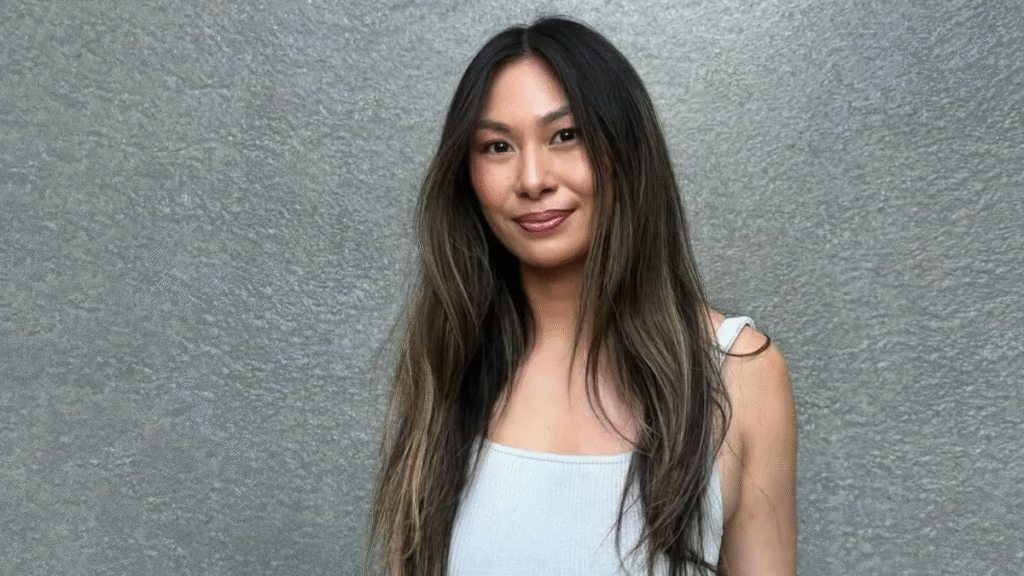
After leaving Scale, Guo co-founded Backend Capital, a venture capital firm focused on early-stage startups, particularly in software and infrastructure. She also launched Passes, a platform designed for content creators to monetize their work directly.
Passes allows creators to build subscription-based revenue streams, offering an alternative to ad-based monetization on platforms like Instagram and TikTok. With the creator economy booming, Passes quickly found its niche.
Guo’s strategic pivot from pure tech infrastructure (Scale AI) to the creator economy (Passes) showed her deep understanding of emerging trends. She also leveraged her connections in Silicon Valley and her background in product design to ensure that the user experience was seamless and attractive for Gen Z and millennial users.
Impact, Investments, and Industry Influence
What makes Lucy Guo truly stand out isn’t just her wealth but her growing influence in the tech industry. Through Backend Capital, she has invested in several fast-growing startups and is considered one of the most influential women in the venture capital space. She is also known for being outspoken about diversity in tech, having often addressed the gender gap and challenges faced by women in Silicon Valley.
Despite operating in a world that has historically marginalized women, especially women of Asian descent, Lucy has carved out a position of power. She advocates for female entrepreneurship and has supported various mentorship programs aimed at getting more women into STEM fields.
Another remarkable aspect of Guo’s success is her command over both engineering and design—a rare combination. Many founders come from strictly technical or business backgrounds, but Lucy bridges the gap between function and form. This is evident in her products, which are not only technically sophisticated but also user-friendly and well-designed.
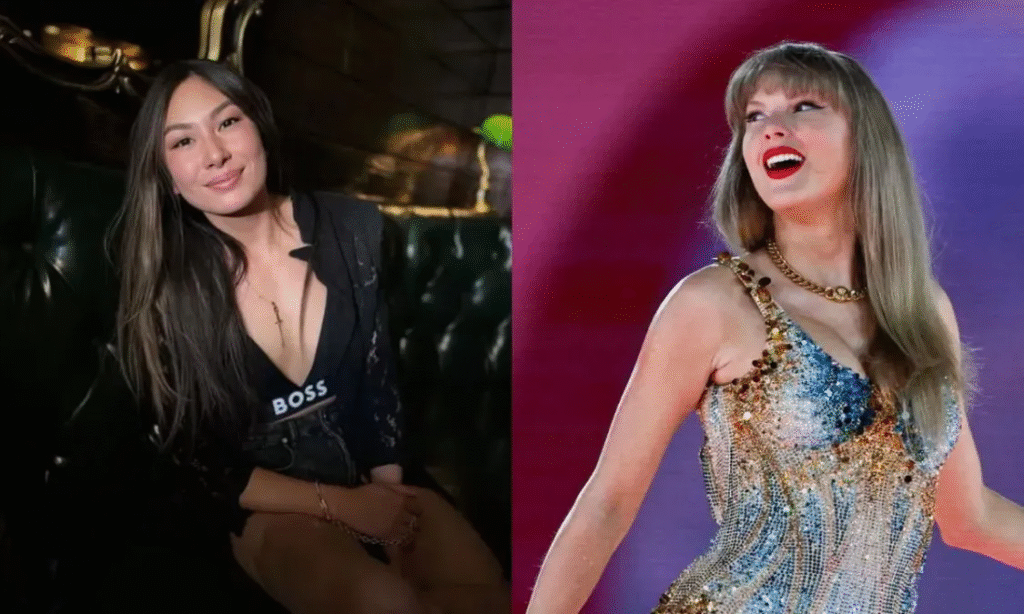
She has also embraced the rise of AI and continues to be involved in conversations around its ethical use and safe deployment. While not directly tied to Anthropic or OpenAI, Guo’s early work in AI infrastructure at Scale AI has left a lasting footprint on the industry. Her foresight in this domain is one of the reasons why investors continue to follow her ventures closely.
Top 10 Youngest Self-Made Women Billionaires in 2025
| Rank | Name | Age | Net Worth (USD) | Country | Industry/Source |
|---|---|---|---|---|---|
| 1 | Lucy Guo | 30 | $1.25 billion | United States | Tech (Scale AI, Passes, Backend Capital) |
| 2 | Taylor Swift | 35 | $1.1 billion | United States | Music, Eras Tour, Merchandise |
| 3 | Shuo Wang | 36 | $1.2 billion | United States | Tech (Deel – HR software) |
| 4 | Rihanna | 37 | $1.4 billion | Barbados/USA | Fenty Beauty, Music |
| 5 | Melanie Perkins | 38 | $5.67 billion | Australia | Canva – Graphic Design Software |
| 6 | Daniela Amodei | 38 | $1.23 billion | United States | Tech (Anthropic – AI Research) |
| 7 | Lu Yiwen | 38 | $1.2 billion | China | Jewelry (DR Corp.) |
This table highlights a dramatic shift in how wealth is being created by young women today. Unlike past generations, where family inheritance played a key role, the modern billionaires are building companies that touch every aspect of our lives—from AI infrastructure to beauty products and music tours.
Lucy Guo stands at the top of this list not just because of her age or wealth, but because of how she redefined success in tech by blending deep technical knowledge with creator-driven business models.
Her story also reveals how the lines between different industries are increasingly blurred. Today, a founder might start in AI and transition into the creator economy, or a pop star might build a billion-dollar beauty brand. In Lucy’s case, her ventures are influencing both how technology is built and how it’s consumed.
As the digital landscape evolves, Lucy Guo remains a symbol of the next generation of builders—fearless, adaptive, and endlessly innovative. With her continued involvement in high-growth startups, VC funding, and platform development, she is set to be a major player for years to come. Whether mentoring the next wave of founders or launching the next unicorn, Lucy Guo’s journey has only just begun.