
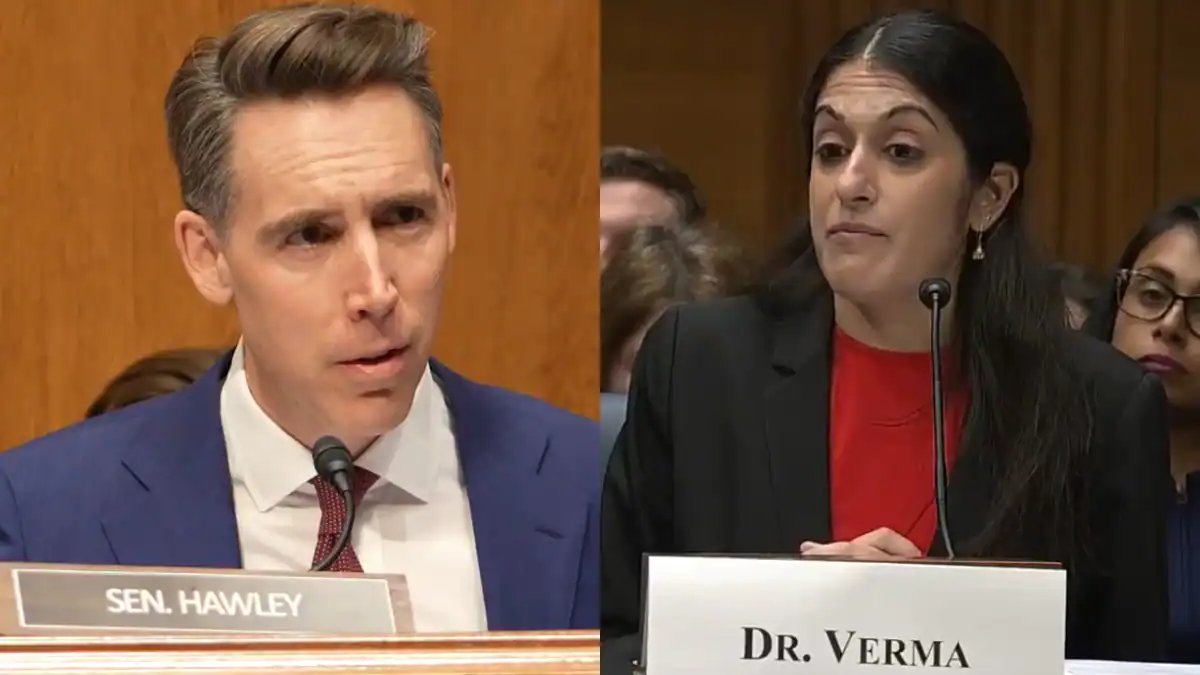
Dr. Nisha Verma, an Indian-origin obstetrician and gynaecologist based in the United States, recently captured international attention after a tense Senate hearing on chemical abortion drugs. During the hearing, Republican Senators Ashley Moody of Florida and Josh Hawley of Missouri asked Verma whether men can become pregnant, prompting her to carefully navigate the politically charged question rather than offering a simple yes or no answer. Her response quickly went viral on social media, sparking widespread debate over the intersection of science, politics, and gender identity in medical discussions.
Background and Education of Dr. Nisha Verma
Nisha Verma was born in North Carolina to Indian immigrant parents and pursued a rigorous academic path that led her to become a double board-certified obstetrician and gynaecologist. She earned her medical degree (MD) from the University of North Carolina, followed by a Master of Public Health (MPH) degree from Emory University. Her academic background also includes a bachelor’s degree in biology and anthropology, reflecting a strong foundation in both the scientific and social dimensions of medicine.
Nisha Verma completed her internship and residency at Beth Israel Deaconess Medical Center, one of the leading teaching hospitals affiliated with Harvard Medical School. She further specialized in complex family planning, gaining expertise in areas such as reproductive health, abortion care, and maternal health. Her professional credentials reflect a combination of clinical expertise and a nuanced understanding of public health, positioning her as a prominent figure in reproductive medicine.
Throughout her career, Verma has been recognized for her work with patients of diverse backgrounds and identities. Her practice emphasizes evidence-based care while taking into account the social, psychological, and cultural factors that influence health outcomes. This holistic approach has shaped both her clinical philosophy and her public communications, which became a focal point during the Senate hearing that propelled her into the spotlight.
The Viral Senate Hearing Incident
The incident that made Dr. Verma a viral sensation occurred during a Senate hearing in the United States focused on chemical abortion drugs. Republican Senators Ashley Moody and Josh Hawley questioned Verma on whether men can get pregnant, pressing her repeatedly for a direct answer. Instead of giving a definitive yes or no response, Verma navigated the question with caution, emphasizing the complexity of medical care for patients with diverse identities.
When first asked by Senator Moody, Verma replied, “I hesitated there… of how the conversation was going or what the goal was,” adding that she cares for patients of different identities. When Hawley pressed her, framing the question as a matter of “biological reality” and insisting on a clear answer, Verma maintained that simple yes-or-no questions can be political tools and that science and evidence should guide medical practice.
Dr. Nisha Verma is an OBGYN. She’s a professor at Emory.
— Brian Lilley (@brianlilley) January 15, 2026
She also could not answer a basic question from Senator Josh Hawley on whether men can get pregnant.
These are the people trying to erase women. Who use terms like people who menstruate.
pic.twitter.com/xWStEUMg87
Her measured response sparked immediate reactions online, with clips of the hearing circulating widely. The exchange drew commentary from political figures, medical professionals, and the general public, highlighting deep divides in how discussions of sex, gender identity, and biology are framed in public policy debates. Elon Musk even weighed in, calling it “absurd that this question is even asked,” which further amplified the attention Nisha Verma received.
Nisha Verma’s approach during the hearing reflects a deliberate strategy to avoid reducing complex medical issues to oversimplified binary answers. While the senators sought a straightforward “yes” or “no,” Verma emphasized the importance of evidence-based medicine and inclusive patient care, a perspective that aligns with her professional commitment to treating patients across the spectrum of gender identities.
Professional Focus and Contributions
Dr. Verma’s work extends beyond the Senate hearing and viral media coverage. As a subspecialist in complex family planning, she is deeply involved in reproductive health services that include contraception, abortion care, and maternal health management. Her practice prioritizes patient-centered care, which often involves navigating sensitive issues related to gender identity, reproductive autonomy, and ethical decision-making.
Her dual expertise in obstetrics and gynaecology, combined with public health knowledge, allows her to approach reproductive health from both clinical and systemic perspectives. This includes addressing disparities in access to care, educating communities about safe reproductive practices, and participating in policy discussions informed by medical evidence. Verma’s holistic approach underscores the importance of integrating science, ethics, and social awareness in medical practice.
Read : 25-Year-Old Indian Medical Student Dies in Road Accident in Kazakhstan’s Oskemen
In addition to her clinical work, Verma has contributed to medical education and research. Her focus on complex family planning and reproductive health has positioned her as an expert in both academic and public forums. The Senate hearing incident, though politically charged, inadvertently highlighted her professional ethos: prioritizing patient safety and evidence-based medicine over simplified political narratives.
Dr. Verma’s Indian heritage and upbringing in North Carolina have also shaped her perspective. Being part of a minority community may have contributed to her awareness of cultural nuances and social determinants of health, which play a significant role in her patient interactions. Her career reflects a balance of rigorous scientific training and an empathetic understanding of the diverse populations she serves.

The viral hearing has not altered Verma’s professional mission but has certainly increased public awareness of her work. While she was thrust into a politically charged spotlight, her statements and approach underscore a commitment to careful, scientifically grounded, and inclusive medical practice, even when navigating contentious questions in highly public forums.
Dr. Nisha Verma represents a generation of medical professionals who are tasked not only with providing high-quality care but also with navigating the broader societal and political implications of health and identity. Her careful handling of the “can men get pregnant” question demonstrates a deliberate focus on medical nuance, patient inclusivity, and evidence-based practice, characteristics that define her career and growing public profile.
This viral moment serves as a case study in the intersection of medicine, identity, and politics, showing how doctors like Verma balance clinical expertise with the broader ethical considerations that shape modern healthcare. It also reflects the challenges faced by healthcare professionals who must communicate complex scientific realities within highly polarized political environments.
Dr. Verma’s story emphasizes the importance of understanding medical issues beyond simplified binaries and highlights the critical role of healthcare professionals in advocating for inclusive, scientifically grounded, and ethically sound practices. Her response during the Senate hearing, rather than being a simple evasion, illustrates a thoughtful consideration of the responsibilities doctors bear when their expertise intersects with public discourse.
In conclusion, Dr. Nisha Verma’s emergence into the viral spotlight is a reflection of both her professional excellence and the contentious social debates surrounding gender, biology, and reproductive health. Her education, experience, and clinical philosophy have shaped a doctor who prioritizes evidence-based, inclusive care, even under intense public scrutiny. While the “can men get pregnant” question became a flashpoint for media coverage and political debate, Verma’s career remains defined by her dedication to her patients and her commitment to navigating complex medical and social issues with care and professionalism.