

The fatal shooting of Renee Nicole Good during a federal immigration enforcement operation in Minneapolis has continued to reverberate far beyond the scene of the incident itself, exposing sharp political, legal, and social tensions around immigration enforcement in the United States. What began as a disputed law-enforcement encounter on January 7 has since expanded into a broader controversy involving public protests, online activism, accusations of doxxing, and the loss of employment for a private citizen whose social media posts drew national attention.
At the centre of this secondary controversy is Sara Larson, a Minnesota massage therapist who was dismissed from her job after posting videos online that allegedly identified the neighbourhood of the federal agent involved in the shooting. Her actions, and the response they provoked, have become part of the wider debate over accountability, protest tactics, and the limits of online speech in emotionally charged cases involving state power and lethal force.
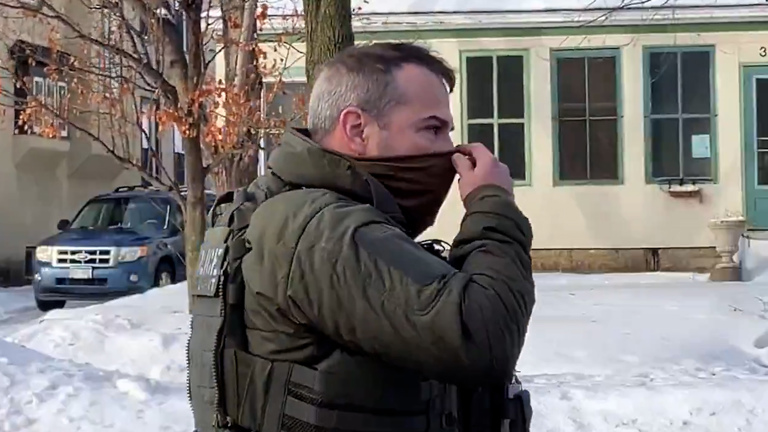
The shooting itself occurred during an Immigration and Customs Enforcement operation in south Minneapolis. According to ICE, agent Jonathan Ross fatally shot Good after she drove her SUV into him, an account the agency says supports a claim of self-defence. Good’s family and supporters dispute this narrative, questioning both the circumstances of the shooting and the official response that followed.
Among the issues raised is a reported three-minute delay before a 911 call was made, a detail that has fuelled further suspicion and anger. As protests intensified and scrutiny of ICE grew, online activism became an increasingly prominent outlet for public frustration. It was in this volatile environment that Larson’s social media posts appeared, shifting attention toward her conduct and its consequences.
The Renee Nicole Good Shooting and the Growing Public Backlash
Renee Nicole Good’s death during an ICE operation immediately ignited concern among local residents and immigration activists, many of whom viewed the incident as emblematic of aggressive federal enforcement tactics. ICE has maintained that its agent acted in self-defence, stating that Good’s vehicle struck Ross during the operation, leaving him with no alternative but to use lethal force.
The agency’s position has remained consistent since the shooting, and federal authorities have stood by the justification provided in initial statements. However, Good’s family has challenged this account, arguing that critical details remain unclear and that the official explanation does not adequately address the sequence of events. Their concerns have been echoed by activists and protest groups who argue that ICE’s version of events should not be accepted without independent scrutiny.
Sara Larson publicly disclosed the address of ICE agent Jonathan Ross, as a result he's had to vacate his house and go into hiding
— @Chicago1Ray 🇺🇸 (@Chicago1Ray) January 19, 2026
She is facing (5) years in federal prison, under law publicly disclosing personal info of a federal official is a crime
Does she deserves the max pic.twitter.com/LkFdybxBuU
The reported delay in contacting emergency services has become a focal point of these criticisms, with opponents suggesting it raises questions about how the incident was handled in its immediate aftermath. As demonstrations took place in Minneapolis and beyond, the case became a flashpoint for broader opposition to immigration enforcement practices.
Protesters framed Good’s death not as an isolated tragedy but as part of a systemic problem involving federal agents operating in civilian neighbourhoods. Online platforms amplified these perspectives, enabling rapid dissemination of commentary, videos, and calls to action. In this environment, individual social media users were able to reach large audiences, sometimes with significant real-world consequences.
Sara Larson’s Social Media Posts and Allegations of Doxxing
Sara Larson emerged into the public spotlight after posting a series of videos on social media in which she claimed to live near Jonathan Ross, the ICE agent involved in the shooting. In the videos, Larson reportedly identified the general residential area where Ross lived and urged others to “circle” the neighbourhood. While she did not publish a specific street address, critics argued that the information she shared could still place Ross and his family at risk by narrowing down his location.
The posts were widely circulated and quickly drew backlash, with many online commentators accusing Larson of attempting to doxx a federal law-enforcement officer. Doxxing, the practice of publicly revealing private or identifying information about an individual without consent, is widely condemned due to the potential for harassment, threats, or physical harm. In cases involving law-enforcement personnel, such actions are often viewed as especially dangerous, given the heightened risk of retaliation.
Read : Who Is Shireen Afkari, the Strava Employee Fired After Viral Altercation With Hazie’s Bartender?
Supporters of Larson argued that her actions were an expression of protest and accountability rather than an attempt to incite harm. They framed her videos as part of a broader effort to confront what they saw as unjustified use of force by ICE. Critics, however, maintained that regardless of intent, encouraging people to focus on a private residential area crossed an ethical and legal line. The intensity of the online response reflected the deep divisions surrounding the Good shooting and the broader immigration debate.
Following the backlash, Larson deleted the videos and appeared to withdraw from social media. Claims circulated online suggesting that she had received threats in response to her posts and had contacted police about her safety. These developments added another layer of complexity to the situation, as the debate shifted from her conduct to the consequences she faced for speaking out.
Job Loss, Employer Response, and Wider Implications
Larson’s online activity soon had tangible professional consequences. She was dismissed from her position at EastWest Acupuncture, where she worked as a certified massage therapist. Her biography, which had noted that she grew up in Chaska and had been practising massage therapy since 2014, was removed from the business’s website shortly after the controversy erupted. The clinic later confirmed her departure in a public statement.
In its statement, EastWest Acupuncture emphasised that it does not condone actions that promote harm, division, or hostility. The business stressed its commitment to respect, professionalism, and thoughtful communication, and stated that Larson’s actions did not reflect its standards or values. It further noted that staff members and their families had experienced threats, harassment, and false online reviews in the wake of the incident, underscoring the collateral impact that online controversies can have on workplaces not directly involved.
The clinic also made clear that it opposes doxxing, harassment, and the sharing of personal information, and said it was documenting events and working with relevant platforms to protect its employees and operations. The tone of the statement suggested an effort to distance the business from the controversy while addressing the practical challenges posed by the online reaction.
Larson’s dismissal has itself become a point of debate, raising questions about free expression, professional responsibility, and the extent to which employers should be held accountable for the off-duty conduct of their staff. Some commentators have argued that her firing represents a form of punishment for political speech, while others contend that employers have a legitimate interest in protecting their reputation and ensuring the safety of their workforce.
More broadly, the episode highlights how rapidly individual actions can escalate in the digital age, particularly when they intersect with polarising political events. The Good shooting remains under scrutiny, with ICE standing by its claim of self-defence and the victim’s family continuing to dispute that account. Against this unresolved backdrop, the fallout surrounding Sara Larson illustrates how secondary actors can become entangled in high-profile controversies, sometimes with lasting personal and professional consequences.
The case continues to reflect the depth of political division over immigration enforcement and the role of federal agents in local communities. It also underscores the challenges of navigating protest, accountability, and online activism in situations where emotions are high and facts are contested. As investigations and public debate around Renee Nicole Good’s death persist, the story of Sara Larson remains a cautionary example of how digital actions can reverberate far beyond their original intent.
Hiya! Quick question that’s totally off topic. Do you know how to make your site mobile friendly? My web site looks weird when browsing from my apple iphone. I’m trying to find a theme or plugin that might be able to resolve this problem. If you have any suggestions, please share. Appreciate it!