
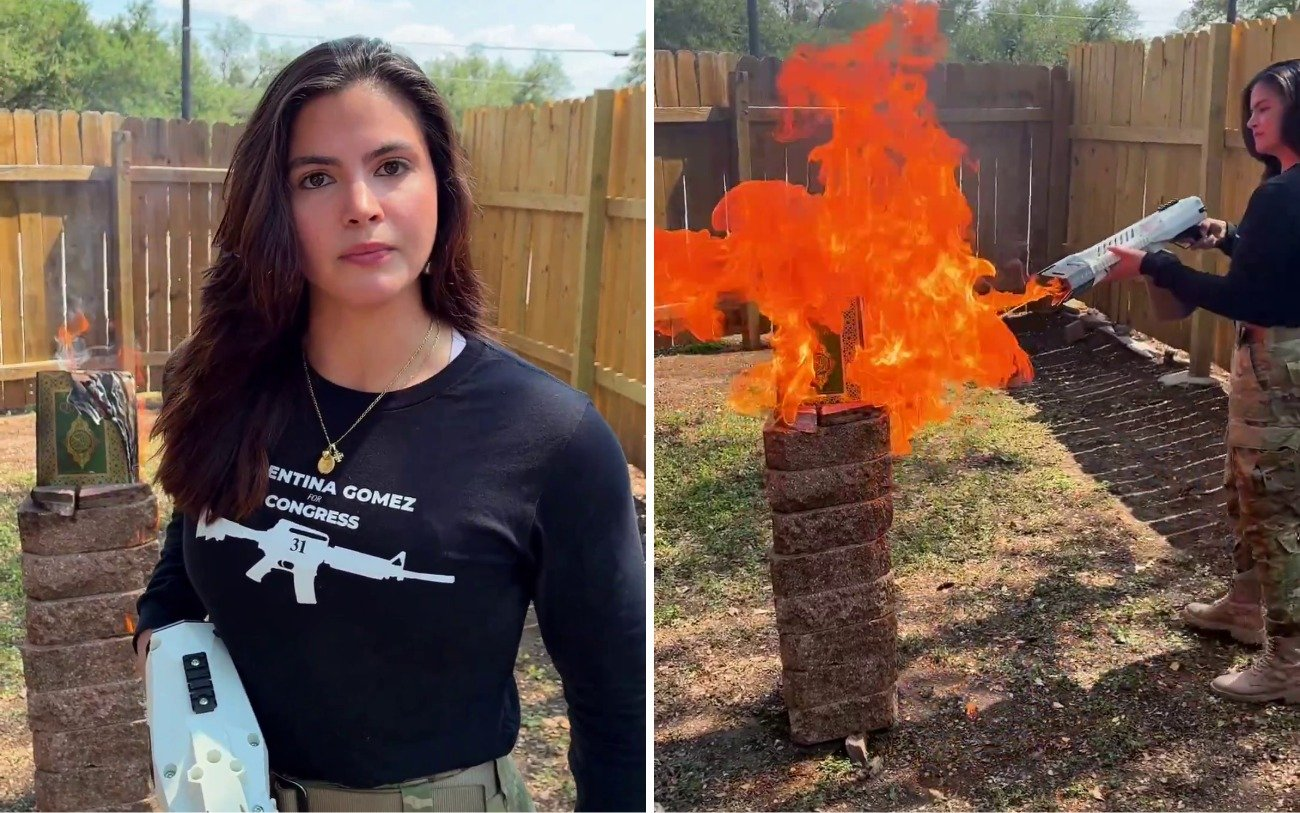
In the ever-polarized landscape of American politics, few figures have stirred as much controversy in recent days as Valentina Gomez. A far-right Republican candidate running for Texas’ 31st Congressional District, Gomez has made headlines for a provocative campaign advertisement in which she is seen burning a copy of the Quran, the holy book of Islam, using a flamethrower.
This act, captured in a video released on August 26, 2025, has sparked widespread outrage, condemnation from civil rights organizations, and intense debate on social media platforms. As a self-proclaimed defender of Christian values and an outspoken critic of what she perceives as threats to American society, Gomez’s actions have thrust her into the national spotlight, raising questions about the boundaries of free speech, religious tolerance, and political extremism.
Who is Valentina Gomez?
Valentina Gomez is a 25-year-old Colombian-American entrepreneur, former Division I swimmer, and political newcomer who has positioned herself as a staunch conservative voice in Texas politics. Born in Colombia and raised in the United States, Gomez holds an MBA and has a background in finance, which she often highlights in her campaign materials as evidence of her business acumen and real-world experience.
She describes herself on social media as a “Jesus lover” and a protector of children, frequently invoking religious themes in her rhetoric. Gomez first gained significant attention during her unsuccessful 2024 bid for Missouri Secretary of State, where she ran on a platform emphasizing election integrity, anti-LGBTQ policies, and opposition to what she calls “radical ideologies.” Although she lost that race, her campaign was marked by viral moments that amplified her visibility among conservative audiences.
Gomez’s political style is unapologetically confrontational and media-savvy. She has built a following on platforms like X (formerly Twitter) by posting inflammatory videos and statements designed to provoke reactions. For instance, in February 2024, she went viral for a video in which she burned books she deemed “pornographic” and harmful to children, including titles related to LGBTQ+ themes such as “Naked” and “Queer: A Graphic History.”
In that clip, she declared her intent to “protect the children of God from the pedophiles hiding under the LGBTQ flag,” a statement that drew both support from far-right circles and criticism for promoting hate speech. Despite attempts to “cancel” her, including alleged personal attacks like the poisoning of her dogs, Gomez claimed these events only strengthened her resolve and expanded her reach.
Transitioning to Texas politics in 2025, Gomez announced her candidacy for the 31st Congressional District, a seat currently held by a moderate Republican. Her campaign focuses on issues like border security, opposition to “woke” culture, and a hardline stance against Islam and immigration from Muslim-majority countries. She has a history of targeting Muslim communities, as evidenced by an April 2025 incident where she allegedly infiltrated a Muslim demonstration in Texas, seized a microphone, and delivered a rant accusing Islam of promoting “rape, incest, and pedophilia.”
This event, which reportedly incited chants of “Allahu Akbar” from the crowd, further cemented her reputation as a provocateur willing to court controversy to advance her agenda. Gomez’s bio on X emphasizes her Christian faith, stating “Jesus is King” and positioning her as a truth-teller who “cooks the crooks & saves children.” Her followers praise her for her boldness, while critics, including the Anti-Defamation League (ADL), have labeled her actions as fueled by “hate and anti-Muslim bigotry.”
Read : Man Burning Quran Outside Turkish Embassy In London Attacked By Knife: Watch
Beyond her political pursuits, Gomez’s personal life adds layers to her public persona. As a former athlete, she often incorporates physical feats into her videos, such as jogging while delivering monologues or using dramatic props like firearms and flamethrowers. This blend of athleticism, religiosity, and extremism has drawn comparisons to other MAGA-aligned figures who use shock value to build grassroots support. However, her tactics have also alienated mainstream Republicans, with some party members distancing themselves from her inflammatory rhetoric.
Valentina Gomez, who is running for Congress in Texas, declares war on Islam and Muslims by burning the Quran and says Islam must be stopped “once and for all.” pic.twitter.com/JotZ0GW8vx
— İbrahim zeki Erşen (@ZekiErsen92202) August 29, 2025
Despite this, Gomez has amassed thousands of followers online, leveraging platforms to fundraise and spread her message. Her campaign website and social media accounts portray her as a fighter against corruption and cultural decay, but her detractors argue that she represents the dangerous fringe of American conservatism. As of August 29, 2025, her bid for Congress remains active, though polling data suggests she faces an uphill battle in a district that values more traditional Republican values.
In summary, Valentina Gomez is not a conventional politician. She is a product of the social media age, where virality often trumps policy depth. Her rise reflects broader trends in U.S. politics, where candidates increasingly use outrage to mobilize bases. Yet, her actions, including the recent Quran-burning incident, have prompted calls for accountability, with some questioning whether her behavior crosses into hate crimes or incitement.
The Incident: Burning the Quran
The incident that has propelled Valentina Gomez back into the national conversation occurred on August 26, 2025, when she released a campaign advertisement video on social media. In the footage, Gomez is shown wielding a flamethrower to set fire to a copy of the Quran, Islam’s sacred text revered by over 2 billion Muslims worldwide.
The video, which quickly went viral, features Gomez making inflammatory statements about ending Islam in the United States and vowing to prevent Sharia law from taking root. Accompanied by dramatic music and visuals, the ad positions the act as a symbolic stand against what Gomez perceives as an existential threat to American values.
Details from the video show Gomez in an outdoor setting, dressed in tactical gear, as she directs the flamethrower at the book placed on the ground. Flames engulf the Quran, and Gomez narrates her intentions, stating intentions to “end Islam” and protect Christian principles. The clip was posted on her X account and rapidly shared across platforms, amassing millions of views within hours. Social media users and news outlets quickly picked up the story, with hashtags like #ValentinaGomez and #QuranBurning trending globally.
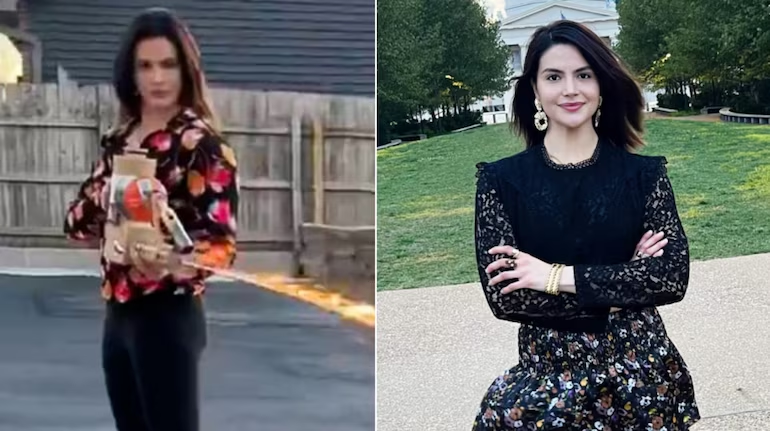
Reactions were swift and overwhelmingly negative from Muslim communities and civil rights advocates. The oldest Muslim community in the United States issued a statement condemning the act as a desecration of a holy book and a direct attack on religious freedom. Social media platforms buzzed with denunciations, with users calling out Gomez for hypocrisy as a self-described “Jesus lover” engaging in what they saw as hateful sacrilege.
The ADL specifically criticized the ad as “fueled by hate and anti-Muslim bigotry,” noting that burning sacred texts is a tactic historically associated with intolerance and violence. International media, including outlets like TRT World and NDTV, covered the story, highlighting the global backlash and educating viewers on the significance of the Quran in Islam.
In the U.S., the incident drew comparisons to past Quran burnings, such as those by pastor Terry Jones in 2010, which sparked international riots. Legal experts noted that while the act is protected under the First Amendment as free expression, it could incite violence or be investigated if linked to threats.
Gomez’s video also included calls that some interpreted as advocating for the elimination of Muslims, though she framed it as opposition to the religion itself. By August 28, 2025, the video had been flagged on multiple platforms, but Gomez defended it as an exercise in free speech, echoing sentiments that America upholds such rights unlike “doomed islands” with stricter laws.
The fallout extended to political circles, with opponents like Qasim Rashid, a Democratic candidate, publicly challenging Gomez in debates and videos, politely dismantling her arguments. Mainstream media outlets, including Instagram posts from WION News, described the event as sparking outrage and labeled Gomez a “far-right MAGA congressional candidate.” As of now, no formal charges have been filed, but the incident has intensified scrutiny on her campaign and raised concerns about escalating religious tensions in an election year.
Why Did She Do It?
Understanding why Valentina Gomez chose to burn the Quran requires examining her broader worldview, political strategy, and the cultural context of 2025 America. At its core, Gomez’s action appears rooted in a militant form of Christian nationalism, where she views Islam as incompatible with American values. In her video and past statements, she has repeatedly accused Islam of endorsing violence, oppression, and moral decay, claims that echo long-standing Islamophobic tropes. By burning the Quran, Gomez symbolically rejects these perceived threats, positioning herself as a warrior for Christianity and Western civilization.
Politically, the act serves as a calculated move to galvanize her base. Running in a competitive district, Gomez relies on shock tactics to differentiate herself from more establishment candidates. Her history of viral stunts— from burning LGBTQ+ books to crashing protests—suggests a pattern of using controversy to boost visibility and fundraising. In a media environment where outrage drives engagement, such actions can translate into donations and media coverage, even if they alienate moderates. Critics argue this is “clout chasing” at its extreme, with Gomez willing to desecrate a holy book for attention.
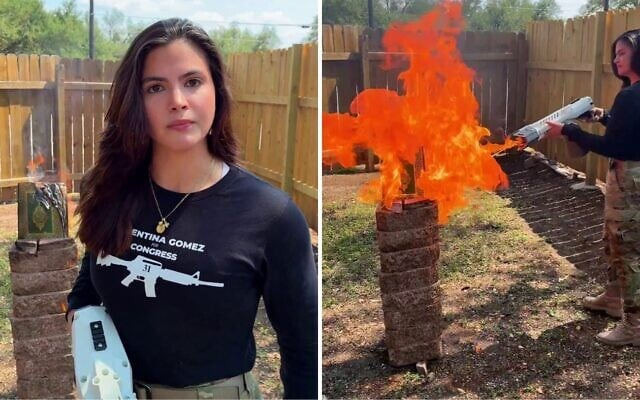
The timing also aligns with heightened anti-Muslim sentiment in some conservative circles amid ongoing global conflicts and domestic debates over immigration. In 2025, with tensions in the Middle East persisting and U.S. elections looming, figures like Gomez tap into fears of “Sharia law” infiltrating America, despite no evidence of such a threat. Her Colombian heritage may add a layer, as she often contrasts her immigrant success story with what she sees as problematic migration from Muslim countries.
Personally, Gomez’s motivations seem tied to her faith and experiences. She frames her actions as divinely inspired, protecting “the children of God” from various evils. However, detractors point to hypocrisy, noting that Christianity teaches love and respect, not destruction of others’ sacred texts. The incident may also stem from a desire for revenge or resilience, as she has cited past persecutions like attempts to bankrupt her or harm her pets.
In the larger context, this event highlights the challenges of religious pluralism in America. While free speech protects such acts, they erode social cohesion and can endanger minority communities. Gomez’s defenders celebrate her as a free expression champion, but the backlash underscores the fine line between protest and hate. As the 2026 midterms approach, whether this stunt helps or hinders her campaign remains to be seen, but it has undeniably amplified discussions on tolerance and extremism.
In conclusion, Valentina Gomez’s Quran burning is a stark reminder of the divisive forces at play in U.S. politics. While she justifies it as a stand against perceived dangers, the act has united diverse voices in condemnation, emphasizing the need for dialogue over destruction.