

In the bustling halls of the United Nations headquarters in New York City, a fresh voice cut through the diplomatic discourse on September 23, 2025. Violet Affleck, the 19-year-old daughter of Hollywood icons Ben Affleck and Jennifer Garner, delivered a riveting speech that has since exploded across social media and news outlets. Masked and unapologetic, Violet addressed the lingering shadows of the COVID-19 pandemic, focusing on its devastating impact on children through long COVID.
Her words—”our present is being stolen right in front of our eyes”—resonated deeply, sparking viral conversations about public health, youth advocacy, and the urgent need for clean air initiatives. As clips of her address rack up millions of views on platforms like X and TikTok, Violet Affleck has emerged not just as a celebrity offspring, but as a formidable activist.
The Rising Activist: Violet Affleck’s Journey from Hollywood to Global Stage
Violet Anne Affleck was born on December 1, 2005, in Los Angeles, California, the eldest of three children to Ben Affleck and Jennifer Garner. Growing up under the glare of paparazzi lights, she largely stayed out of the spotlight, a deliberate choice by her parents to shield their family from Hollywood’s relentless scrutiny. Ben and Jennifer, who divorced amicably in 2018 after 13 years of marriage, have long prioritized their kids’ privacy, often spotted together at school events or family outings without the drama that sometimes plagues celebrity splits.
Violet Affleck’s younger siblings, Seraphina (born 2009) and Samuel (born 2012), complete a tight-knit unit that has weathered high-profile parental relationships, including Ben’s brief marriage to Jennifer Lopez. Despite her famous lineage, Violet has carved a path defined by intellect and purpose. A freshman at Yale University, she is pursuing studies in global health and environmental policy, fields that align with her growing activism.
Her academic prowess shone early; she graduated high school with honors and dove straight into rigorous coursework at one of the Ivy League’s most prestigious institutions. But it’s her personal brush with illness that ignited her passion for public health. In 2019, at just 14, Violet Affleck contracted a post-viral condition following a seemingly minor infection. Though she recovered, the experience exposed her to the vulnerabilities in modern medicine. “I saw first-hand that medicine does not always have answers to the consequences of even minor viruses,” she later reflected in her UN address.
This ordeal wasn’t isolated. The COVID-19 pandemic hit her family hard, as it did millions worldwide. Living in Los Angeles during the height of lockdowns, Violet Affleck witnessed the chaos of wildfires exacerbating respiratory issues amid viral threats. These events inspired her first major public piece: an essay titled “A Chronically Ill Earth: COVID Organizing as a Model Climate Response in Los Angeles,” published in the Yale Global Health Review in May 2025.
In it, she drew parallels between pandemic mutual aid—mask distributions during blazes—and climate action, arguing for systemic changes like universal healthcare and paid sick leave. The piece wasn’t just academic; it was a call to arms, blending her experiences with broader societal failures. Violet’s activism extends beyond writing. She has volunteered with local mask blocs in LA, handing out free N95s to vulnerable communities during wildfire seasons. At Yale, she’s involved in student groups advocating for campus air filtration systems.
UN breaking news: Violet Affleck demands mask mandates.
— Scarlett Johnson (@scarlett4kids) September 24, 2025
Next week, Matt Damon’s nephew will lecture us on climate change.
While I can barely understand her through the mask, the virtue signal is loud and clear. pic.twitter.com/BrY68rHOXA
Her UN appearance marks a pinnacle, but it’s no nepotism-fueled fluke. Organizers from the inaugural “Healthy Indoor Air: A Global Call to Action” event selected her for her authentic voice as a young survivor and scholar. “I represent a generation that in many ways already knows how we’ve been failed,” she said, underscoring her evolution from a protected teen to a global advocate. As viral posts praise her poise, Violet Affleck embodies a new wave of Gen Z influencers who leverage privilege for progress, turning personal pain into public policy pushes.
Breaking Down the UN Speech: A Bold Call Against Long COVID’s Silent Toll
On a crisp autumn day in New York, Violet stepped to the podium at the UN’s Kenneth Hahn Hall, her N95 mask a stark symbol of her message. Flanked by global leaders, policymakers, and scientists, the Yale freshman spoke for under 10 minutes, yet her words packed the punch of a lifetime of observation. The event, focused on elevating indoor air quality to a human right, provided the perfect platform for her to dismantle the myth that COVID-19 is a relic of the past.
Violet Affleck opened with a generational indictment: “We are told by leaders across the board that we are the future. But when it comes to the ongoing pandemic, our present is being stolen right in front of our eyes.” She pivoted to science, educating the audience on SARS-CoV-2’s insidious nature. “It is airborne, floating and lingering in the air,” she explained. “One infection can result in disabling damage to almost every cell in the body, from the brain and heart to the nerves and blood vessels.” Citing data, she noted that one in 10 infections leads to long COVID—a neurological and cardiovascular scourge robbing people of their ability to work, move, or think clearly.
Read : He Should Die in Jail: Daughter of Frenchman Who Let Strangers Rape Wife
Her focus sharpened on children, a demographic often overlooked in pandemic discourse. According to a May 2025 JAMA Pediatrics study, long COVID affects 10% to 20% of infected kids, with symptoms persisting for months or years. Violet Affleck painted a harrowing picture: “I am terrified for the children who do not or soon will not know a world without debilitating pain and exhaustion, who cannot trust their bodies to play, explore, and imagine.” She lambasted leaders for “ignoring, downplaying, and concealing” the threat, pointing to inadequate school protections and the rollback of mask mandates.
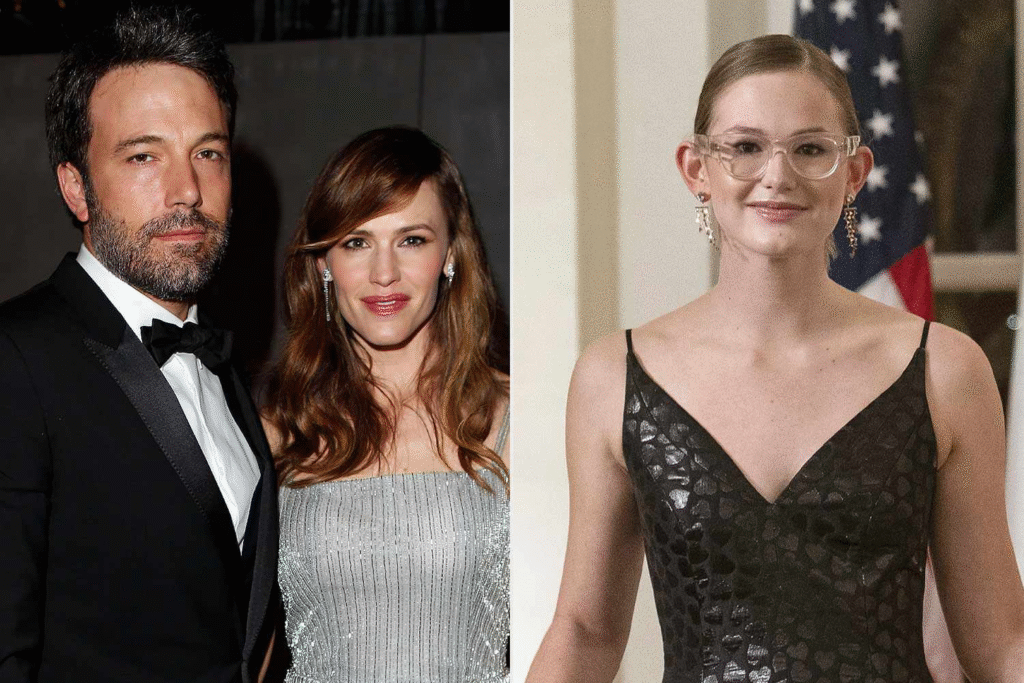
“Young people lacked both real choice in the matter and information about what was being chosen for us,” she charged, referencing the disjointed U.S. response that left kids exposed. Solutions flowed from her critique like a blueprint for action. Violet Affleck advocated for N95 masking in high-risk settings, employer-provided paid sick leave, and universal healthcare to support recovery.
But her boldest pitch was infrastructural: global standards for filtered indoor air, akin to water purification. “We can recognize filtered air as a human right as intuitively as we do filtered water,” she concluded, urging organized mask distribution and environmental safeguards. Her delivery—calm yet fierce, masked yet audible—amplified the urgency. Drawing from her 2019 illness and LA’s dual crises of virus and smoke, Violet wove personal narrative with hard data, making abstract epidemiology feel immediate and intimate.
The speech wasn’t without vulnerability. Violet admitted her fury: “I am furious on their behalf,” she said of afflicted children. This emotional core, paired with her command of facts—from WHO estimates that 6% of COVID cases yield post-viral conditions to reinfection risks—elevated it beyond rhetoric. In an era of pandemic fatigue, her address reignited debate, proving that at 19, she speaks with the authority of someone who’s lived the stakes. As the UN grapples with its Sustainable Development Goals, Violet’s intervention spotlights health equity as non-negotiable.
Viral Waves and Backlash: The Speech’s Echoes in Public Discourse
Within hours of its delivery, Violet Affleck’s speech went supernova. Clips shared on X amassed over 5 million views by September 25, with hashtags like #VioletAffleckUN and #LongCOVIDKids trending worldwide. Supporters hailed her as a “Gen Z hero,” praising her eloquence and evidence-based pleas. Public health experts, including epidemiologist Caitlin Rivers, amplified her calls for air filtration, while parent groups shared stories of kids sidelined by fatigue and brain fog. A Daily Mail poll on masking in medical facilities? Over 76% voted yes, a surprising win amid polarized debates.

Yet virality breeds controversy. Meghan McCain, daughter of the late Senator John McCain, fired off a scathing X post: “Everything about all of this is why everyone hates nepo babies so much.” Dismissing Violet Affleck’s platform as unearned privilege, McCain argued her parents wouldn’t have allowed such exposure at 19 without “background, training, or experience.” The “nepo baby” label—slang for nepotism-fueled success—stung, especially ironic from McCain, whose own media career owes to family ties. Defenders countered that Violet’s Yale publication and volunteer work constitute real credentials, not just celebrity cachet.
Media responses split along lines. Progressive outlets like The Cut and TODAY lauded her as a vital voice for the 10-20 million U.S. kids at risk. Conservative-leaning voices, per TMZ and Daily Mail, framed it as out-of-touch alarmism, questioning mask advocacy in 2025. Still, the backlash amplified reach; X threads dissected her points, with scientists debunking critics via wastewater data showing persistent SARS-CoV-2 circulation. Violet’s response? Silence so far, letting her words stand.
Broader implications loom. Her speech pressures policymakers amid rising long COVID cases—up 15% in schools per CDC reports. It ties pandemic response to climate justice, echoing her essay’s wildfire parallels. As the UN’s high-level week unfolds, Violet Affleck’s viral moment could catalyze commitments to air quality pacts. For a generation scarred by isolation and loss, she’s a beacon: proof that young voices, armed with truth, can demand a reclaimed present. In Hollywood’s shadow, Violet Affleck is stepping into the light, one masked breath at a time.
References:
Buying steroids online illegal
References:
http://85.214.41.219:49153/louellamatlock