
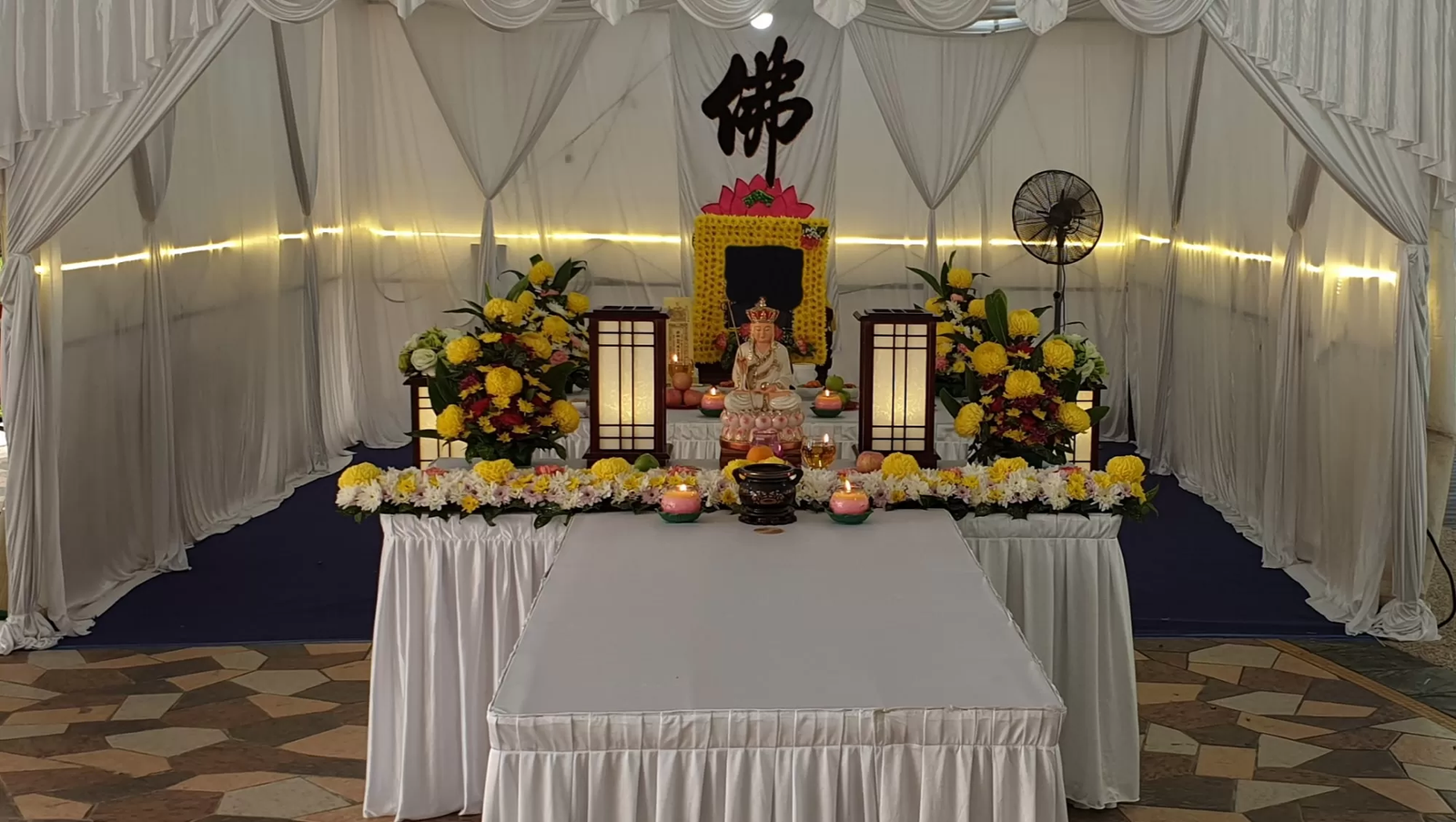
The revelation of a long-concealed betrayal often unfolds in the most unexpected ways, but few stories capture the depth of deceit and irony quite like that of a woman from eastern China who discovered her husband’s 16-year extramarital affair at his father’s funeral. The case, which has drawn widespread public attention and moral debate across Chinese social media, underscores the emotional devastation wrought by double lives and the serious legal ramifications of bigamy in China. What began as a solemn family event became the setting for a shocking revelation—one that would end a marriage, destroy trust, and lead to criminal punishment.
A Suspicious Stranger at a Solemn Farewell
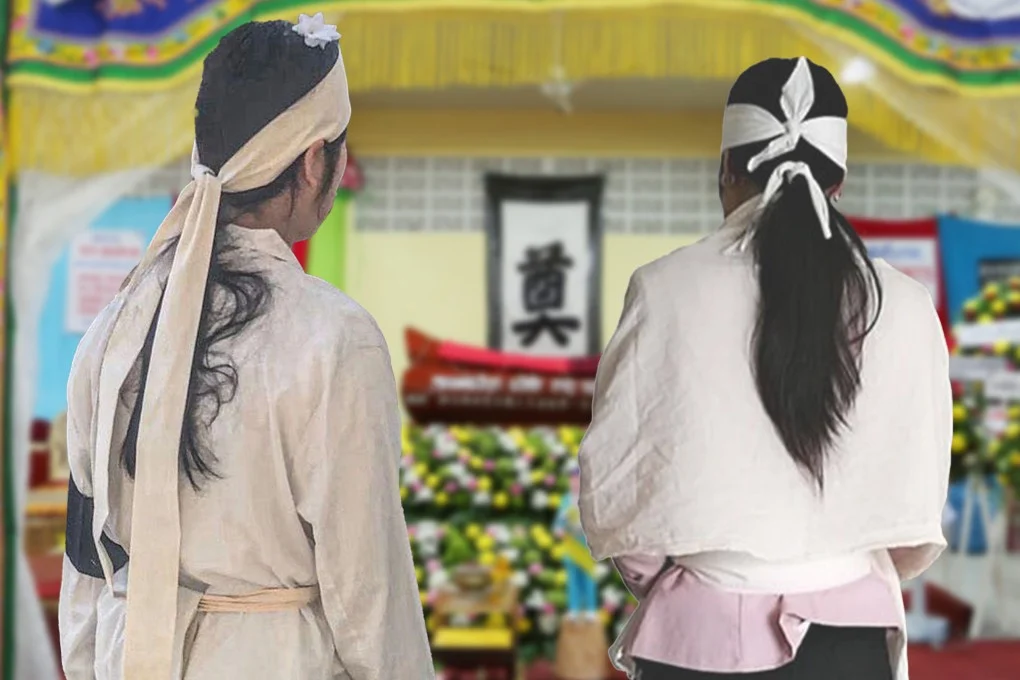
In June 2022, tragedy struck the family of Shang, a woman from Shandong province who had been married to her husband, Wang, for 19 years. When Wang’s father passed away, the couple gathered relatives and friends to pay their final respects. As mourners filled the hall to offer condolences, Shang’s attention was drawn to an unfamiliar woman standing near the coffin. The woman, later identified as Wen, was dressed in traditional mourning clothes and appeared deeply emotional—her tears flowing freely as if she were a bereaved family member.
Shang initially assumed Wen was a distant relative, perhaps a cousin or family acquaintance, given the close-knit nature of Chinese funerary customs. However, her suspicions were piqued when she overheard Wen introduce herself to others as the “daughter-in-law.” Such a title, in a traditional Chinese family hierarchy, carries clear implications—it is reserved exclusively for the wife of a son. The notion that another woman had publicly claimed her own role within the family struck Shang as both absurd and offensive.
Seeking clarity, Shang quietly questioned her husband after the ceremony. Instead of providing reassurance or an explanation, Wang grew defensive and evasive. His reluctance to address her concerns only deepened her unease. The incident might have been brushed aside as a misunderstanding, yet Wen’s familiarity with Wang’s relatives and her visible grief hinted at something more profound. In a moment of intuition, Shang realized that Wen’s presence was no accident—it was the manifestation of a hidden truth.
Read : Revealing China: A Voyage Through the Middle Kingdom
As the funeral concluded, Shang could not shake the image of the mysterious mourner weeping beside the coffin. What followed was a determined pursuit of answers that would ultimately expose a 16-year deception and a double life carefully maintained behind a façade of marital normalcy.
A Double Life Uncovered Through the Courts
The weeks following the funeral were filled with tension and silence. Wang’s evasive behavior and vague explanations did little to quell his wife’s suspicions. Refusing to accept uncertainty, Shang decided to take the matter to court. Her decision was not impulsive but borne from years of subtle inconsistencies—periods of unexplained absence, evasive communication, and the persistent sense that something was amiss.
When the case reached the judicial stage, the truth began to unravel. Court investigations revealed that Wang’s affair with Wen had begun approximately three years after his marriage to Shang. The two had met through Wang’s work and quickly developed an intimate relationship. Over time, the affair evolved into a second household, complete with a shared residence and a child born of the relationship.
Read : China Detains Pastor Ezra Jin Mingri of Zion Church Along with Dozens of Staff and Members
According to court documents cited by Henan Television and reported by the South China Morning Post, Wang had led a double life for more than a decade. He maintained his legal marriage with Shang in Shandong while secretly cohabiting with Wen in another city. To sustain the illusion, Wang fabricated stories about work commitments, claiming he was frequently on long-haul trucking assignments that required extended absences. These fabricated explanations allowed him to divide his time between two families without arousing immediate suspicion.
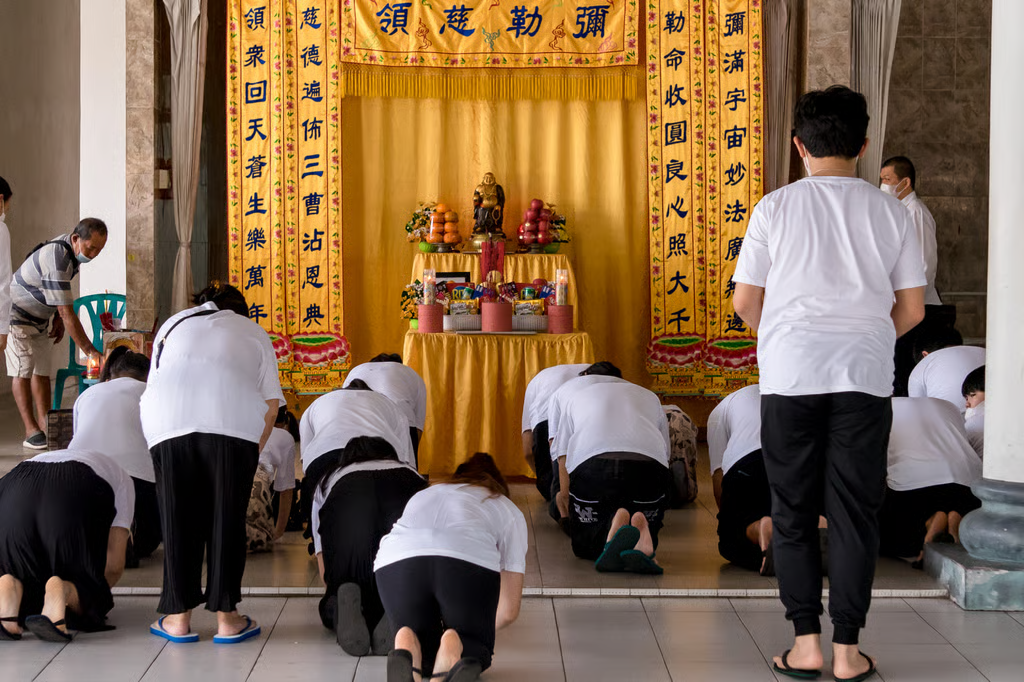
When Wen gave birth to their son, Wang continued to conceal the child’s existence from Shang. Neighbours and acquaintances of Wen later told investigators that Wang was a regular presence in Wen’s household and that the two presented themselves publicly as husband and wife. The illusion was so convincing that many believed they were legally married. On at least one occasion, when Wen was hospitalized for surgery, Wang signed her consent form as her spouse—a detail that would later become crucial in the court’s determination of bigamy.
During the legal proceedings, Wang attempted to downplay the nature of his relationship with Wen, describing it as one of “mutual support.” He insisted that they had never registered their marriage officially and argued that his actions did not constitute a criminal offense. However, the evidence presented painted a different picture. His sustained cohabitation, public representation as Wen’s husband, and shared parenting of a child together all met the criteria for a de facto marital relationship under Chinese law.
Bigamy, Betrayal, and the Legal Reckoning
Under Article 258 of China’s Criminal Law, bigamy is defined as either marrying another person while already legally married or living with another person as husband and wife in such a manner that it constitutes a quasi-marital relationship. The law seeks to preserve the sanctity of monogamous marriage and protect the rights of lawful spouses from deceit and emotional harm. While bigamy is not among the most heavily punished crimes, its recognition as a criminal act carries deep moral and social significance in Chinese society, where family integrity is highly valued.
In Wang’s case, the court determined that his 16-year cohabitation with Wen, coupled with their public presentation as a married couple, clearly violated the law. His dual existence was not a fleeting indiscretion but a sustained deception that undermined the legal and emotional foundation of his marriage to Shang. The court sentenced him to one year in prison—a punishment that, though modest in duration, represented a firm assertion of legal accountability.
When Wang appealed the verdict, the higher court rejected his arguments, upholding the original sentence. The rejection underscored the judiciary’s commitment to upholding marital integrity and discouraging long-term extramarital cohabitation disguised as legitimate partnership. Legal commentators in China noted that such cases, though relatively rare, have been increasing in visibility as more spouses turn to the courts to seek justice in the face of long-term infidelity.
For Shang, the court’s decision was both a vindication and a painful confirmation. She had not only been betrayed emotionally but deceived in every aspect of her marital life. The image of Wen at her father-in-law’s funeral—crying beside the coffin as if she were family—symbolized the extent of the deceit. Wang’s double life had blurred the boundaries between truth and pretense, leaving his wife to confront not only the end of a marriage but the erasure of trust itself.
The case resonated widely on Chinese social media, where thousands of users expressed empathy for Shang and condemnation for Wang’s actions. Commentators debated the psychological endurance required to sustain a secret life for over a decade, and many questioned how social and logistical realities could allow such deception to persist undetected. Some observers speculated that traditional gender roles and the tendency to trust husbands working away from home may have contributed to the concealment. Others highlighted the growing awareness among Chinese women of their legal rights within marriage, pointing to Shang’s decision to seek justice as emblematic of shifting social attitudes toward marital betrayal.
The broader implications of the case extend beyond personal morality to the evolving legal and cultural understanding of fidelity and responsibility in modern China. With increasing urban mobility and digital communication, opportunities for concealed relationships have expanded. Yet, as this case demonstrates, the emotional and legal costs of deception remain profound.
The exposure of Wang’s affair at his father’s funeral carries a stark irony: a moment meant to honor familial legacy became the scene of its disintegration. For Shang, what began as an inexplicable encounter with a stranger in mourning clothes ended in the unraveling of nearly two decades of shared life. For Wang, the mask of dual existence ultimately collapsed under the weight of its contradictions. And for society, the story serves as a sobering reminder that betrayal, no matter how carefully hidden, eventually comes to light.
The spectacle of the mistress appearing publicly in mourning—claiming the role of a “daughter-in-law” at a family funeral—revealed more than just personal scandal. It exposed the fragility of appearances in a culture where face, family honor, and social propriety carry immense weight. In the end, the funeral not only marked the passing of a father but also the burial of a marriage built on deception.
The legal conclusion may have brought formal closure, but the emotional scars left behind are immeasurable. Shang’s pursuit of justice reflects the growing empowerment of spouses confronting infidelity through legal means rather than silence. Her story, now shared widely across media platforms, has sparked renewed discussion about marital ethics, legal protections for betrayed spouses, and the boundaries between forgiveness and accountability.
In a society where personal honor and familial duty intertwine, the tale of a wife discovering her husband’s 16-year affair at a funeral stands as both cautionary and symbolic—a testament to how the truth, no matter how deeply buried, finds its way to the surface when least expected.