
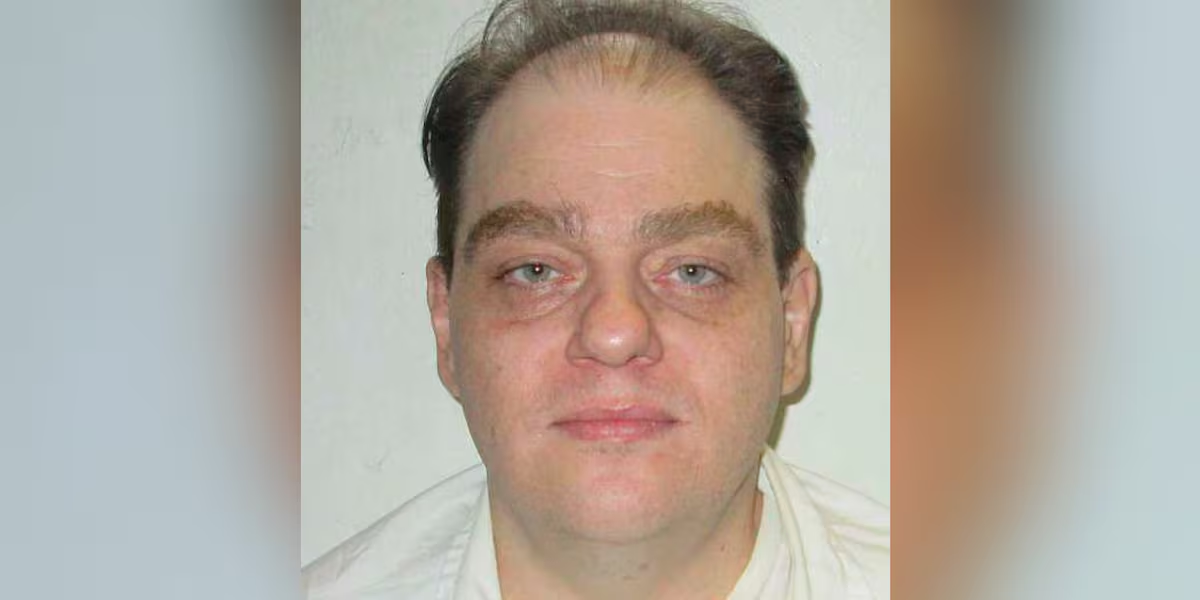
In a story that challenges the very foundations of justice and retribution, Will Berry, now 39 years old, has publicly forgiven Geoffrey West, the man convicted of murdering his mother nearly three decades ago. The incident unfolded on a fateful night in 1997 at a quiet gas station in Etowah County, Alabama, where a robbery turned deadly. Berry, who was just 11 at the time, has penned a heartfelt letter to Alabama Governor Kay Ivey, imploring her to commute West’s death sentence scheduled for September 25, 2025.
This plea comes not from bitterness but from a profound place of forgiveness, rooted in Berry’s Christian faith and a desire to break the cycle of violence. As the clock ticks toward what could be Alabama’s next execution by nitrogen hypoxia, Berry’s voice adds a deeply personal dimension to the ongoing national debate over capital punishment. His story reminds us that healing can emerge even from the darkest tragedies, and that mercy might hold more power than vengeance.
The Night That Shattered a Family
The events of March 28, 1997, remain etched in the collective memory of Etowah County as a stark reminder of how quickly ordinary lives can be upended by senseless crime. Margaret Parrish Berry, a 33-year-old mother of two young boys, was working the late shift at Harold’s Chevron, a modest gas station in Attalla, Alabama. Known to her community as a devoted parent and a woman of quiet strength, Margaret balanced her job with raising her sons, Will and his younger brother, providing them with stability in a working-class town.
That evening, around 10 p.m., two young men entered the store with robbery on their minds. Geoffrey West, then 21 years old, and an accomplice had been on a spree of petty thefts, but this night would escalate into horror. According to court records and prosecutorial accounts, the pair demanded money from the register. Margaret, complying out of fear, lay on the floor behind the counter as instructed. But West, in a chilling act to eliminate any witnesses, fired a single shot into her head at close range. She died instantly, leaving behind two boys who would grow up without their mother’s guiding hand.
The robbery netted a mere $300, a paltry sum that could never justify the devastation wrought. West and his accomplice fled, but their freedom was short-lived. Within days, law enforcement, tipped off by a witness who recognized the getaway vehicle, apprehended them. West confessed to the shooting during interrogation, later claiming in court that panic and poor judgment had driven his actions. A jury in Etowah County Circuit Court convicted him of capital murder in 1998, finding the killing occurred during a robbery—a charge that automatically qualified for the death penalty under Alabama law.
The trial was swift but emotionally charged. Prosecutors painted West as a cold-blooded killer who showed no remorse in the immediate aftermath, emphasizing the execution-style nature of the murder. Defense attorneys argued his youth and lack of prior violent record, but the evidence was overwhelming. In the sentencing phase, the jury deliberated for hours before recommending death by a vote of 10-2—a non-unanimous decision that was permissible under Alabama statutes at the time. Judge William H. Rhea III imposed the sentence, sealing West’s fate in the state’s correctional system.
Read : 33-Year-Old Man Dies After Falling from Hot Air Balloon in West Sussex
For the Berry family, the loss was incalculable. Will, a fifth-grader at the time, learned of his mother’s death from relatives in the early hours of the morning. The image of her lifeless body behind the counter haunted the community, and the funeral drew hundreds mourning a woman whose kindness extended to everyone she met.
Read : 52 Ways to Live Life Happily: A Year-long Journey to Joy
Raised thereafter by grandparents and aunts, Will navigated adolescence amid grief, channeling his pain into faith and personal growth. Margaret’s absence left a void, but it also instilled in her son a resilience that would later define his extraordinary act of forgiveness. This tragedy, born of greed and impulse, set the stage for a legal odyssey spanning nearly 28 years, marked by appeals, stays, and the inexorable march toward execution.
A Journey from Grief to Grace
Over the decades, Will Berry’s life unfolded far from the headlines of that 1997 night, yet the shadow of his mother’s murder never fully lifted. Growing up in Calhoun County, Alabama, Berry pursued education and work, eventually finding solace in his Christian beliefs. He married, started a family of his own, and became a father—milestones that evoked bittersweet memories of the nurturing Margaret could have provided. “My life has been very hard,” Berry reflected in a recent interview, acknowledging the ripple effects of trauma that included struggles with loss and identity.
It was in the summer of 2025, as West’s execution date loomed, that Berry’s path converged with his mother’s killer’s once more. Incarcerated on death row at Holman Correctional Facility, West had undergone a profound transformation. Now 49, he has spent years in spiritual reflection, expressing daily remorse for his actions. In letters exchanged through prison channels, West poured out apologies, describing the shooting as a regret that gnaws at him relentlessly. “I wish each day that I could take it back,” he wrote, detailing how faith had reshaped his understanding of accountability and redemption.
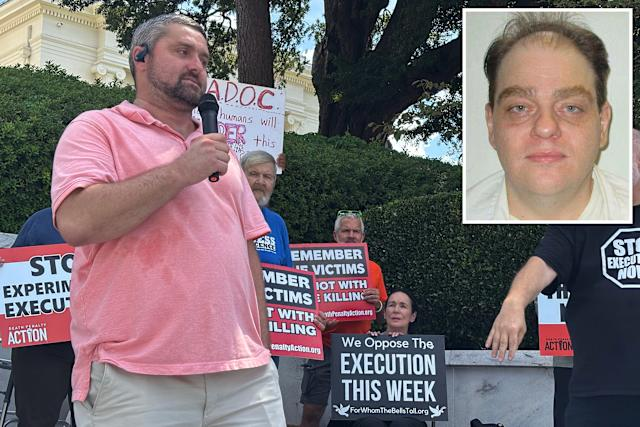
Berry’s response was nothing short of revelatory. Moved by West’s sincerity, he extended forgiveness, a gesture that surprised even those closest to him. “I forgive this guy, and I don’t want him to die,” Berry stated plainly in a phone interview. Drawing from the teachings of Jesus in Matthew 6:14-15—”For if you forgive other people when they sin against you, your heavenly Father will also forgive you”—Berry saw in this exchange an opportunity for mutual healing. He envisioned a future where life imprisonment without parole would suffice as justice, allowing both men to find peace in shared humanity.
The two men requested a face-to-face meeting to exchange final words of reconciliation, with Berry prepared to say, “I love you. God loves you. My mother would love you, because we forgive you.” Prison officials, however, denied the request, citing security protocols—a decision Berry decried as an infringement on their right to closure. Undeterred, he turned to advocacy, speaking out against the death penalty in media interviews and opinion pieces. Berry’s stance aligns with a growing chorus of victims’ families who reject execution as retribution, arguing it perpetuates pain rather than resolving it. In his words, “I don’t want the state to take revenge in my name or my family’s name for my mother.” This journey from a grieving child to a forgiving adult underscores the transformative potential of empathy, even in the face of unimaginable wrong.
Echoes of Mercy in the Shadow of the Gurney
As September 25 approaches, Berry’s plea has ignited national conversation, spotlighting Alabama’s aggressive use of capital punishment amid broader scrutiny. Governor Kay Ivey, a staunch supporter of the death penalty, received Berry’s letter outlining his forgiveness and opposition to the execution. In her reply dated September 11, 2025, Ivey expressed appreciation for his beliefs but affirmed her duty to uphold the law: “Alabama imposes a death sentence for the most egregious form of murder.” She noted the jury’s recommendation and the appeals process that had upheld the conviction, leaving little room for clemency.
Alabama, one of 27 states retaining the death penalty, has executed 69 individuals since resuming capital punishment in 1983, with nitrogen hypoxia—a method involving inhalation of pure nitrogen causing asphyxiation—becoming its primary protocol after legal challenges to lethal injection. West’s case draws parallels to another in 2022, where a domestic violence victim’s family unsuccessfully urged Ivey to opt for life imprisonment over execution. Critics decry the system’s delays—West’s appeals spanned over two decades—and the focus on inmate suffering, yet Berry’s voice cuts through, humanizing the debate.
For Berry, the stakes are personal: Watching West die would “weigh heavily on me, and it would not bring my mother back.” He seeks not to erase the past but to honor Margaret’s memory as a forgiving Christian, not a symbol of state vengeance. As advocates rally and the gurney awaits at Holman, Berry’s story challenges us to reconsider justice—not as an eye for an eye, but as a path to collective redemption. In forgiving Geoffrey West, Will Berry has already transcended the violence that tore his world apart, offering a beacon of grace in Alabama’s unyielding legal landscape.
I like this web site so much, saved to fav. “Nostalgia isn’t what it used to be.” by Peter De Vries.