

Asteroids have long fascinated and terrified humanity with their potential to cause cataclysmic destruction. Among the many celestial objects that orbit close to our planet, one asteroid has earned particular notoriety for its size, proximity, and dramatic nickname.
99942 Apophis, aptly named after the Egyptian god of chaos, has sparked widespread interest and concern since its discovery in 2004. With its immense size and projected close approach to Earth, questions about its potential impact linger in scientific and public discussions.
The Immensity of God of Destruction Asteroid
99942 Apophis is not an ordinary asteroid. Measuring approximately 1,100 feet in diameter, it dwarfs many iconic landmarks, including the Eiffel Tower and the Empire State Building. Its size alone qualifies it as a “city-killer” asteroid, capable of devastating entire urban areas if it were to collide with Earth.
Experts estimate that an impact by an object of this size would release energy comparable to multiple nuclear explosions, resulting in widespread destruction, fires, and atmospheric disturbances.
The asteroid’s designation as a “near-Earth object” (NEO) stems from its orbit’s proximity to our planet. NEOs are celestial objects that come within 1.3 astronomical units (AU) of Earth’s orbit. Apophis’s trajectory, combined with its size, made it particularly noteworthy in the scientific community.
Read : 16 Psyche: Asteroid Worth $10 Quadrillion That Can Make Everyone on Earth a Billionaire Discovered
Early calculations even suggested a 2.7 percent chance of a collision with Earth during its close approach in 2029. While those odds have since been recalculated to near zero, the asteroid remains categorized as “potentially hazardous” due to the long-term uncertainties surrounding its orbit.
Read : 60 Million-Year-Old Seeds Show Death of Dinosaurs Helped Grapes Spread Worldwide
Apophis is expected to pass within 19,000 miles of Earth on April 13, 2029—a remarkably close distance in astronomical terms. This flyby will place it within geostationary orbit, the region where many of our satellites reside. For perspective, this distance is closer than the Moon and several high-altitude satellites, making the event a rare and dramatic spectacle.
The Science Behind Close Flybys and “Astroquakes”
While the immediate risk of an impact in 2029 has been ruled out, scientists remain deeply interested in how Earth’s gravitational forces might affect Apophis during its close encounter.
When a massive asteroid like Apophis approaches a planet, gravitational interactions can lead to significant effects on its structure and trajectory. Researchers, including Ronald-Louis Ballouz from Johns Hopkins University, have examined how such forces could induce “astroquakes” or intense vibrations on the asteroid’s surface.
Astroquakes are akin to seismic tremors experienced on Earth but occur on celestial bodies with vastly different compositions and conditions.
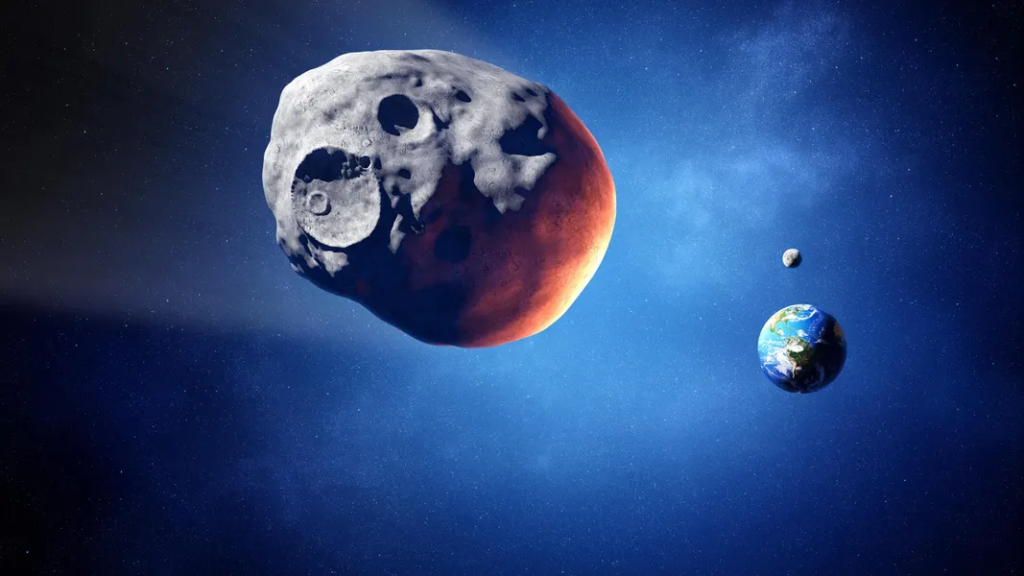
In Apophis’s case, the gravitational pull of Earth could generate stresses strong enough to alter its surface and internal structure. This phenomenon, in turn, could affect its future behavior, potentially shifting its orbital path or changing its rotation.
Even small changes in an asteroid’s orbit or structure can have long-term implications. A slightly altered trajectory could influence the asteroid’s interactions with other gravitational forces in the solar system, creating new potential risks for Earth in subsequent flybys.
Scientists closely monitor such possibilities using advanced models and simulations, ensuring that we remain vigilant about potential threats.
The Broader Implications of Apophis’s Approach
The 2029 flyby of Apophis represents more than a close brush with a “god of destruction” asteroid; it also offers a unique scientific opportunity. For astronomers and planetary scientists, the event will provide a wealth of data on asteroid behavior, structure, and gravitational interactions.
Ground-based telescopes and radar systems will track the asteroid in unprecedented detail, allowing researchers to refine their models and enhance our understanding of these celestial phenomena.
Beyond the scientific insights, Apophis’s approach serves as a stark reminder of the need for planetary defense strategies. Efforts such as NASA’s Double Asteroid Redirection Test (DART) aim to develop techniques for altering the trajectory of potentially hazardous asteroids.
DART’s recent successful mission to nudge the smaller asteroid Dimorphos demonstrated the feasibility of deflection strategies, laying the groundwork for future interventions if a true impact threat arises.
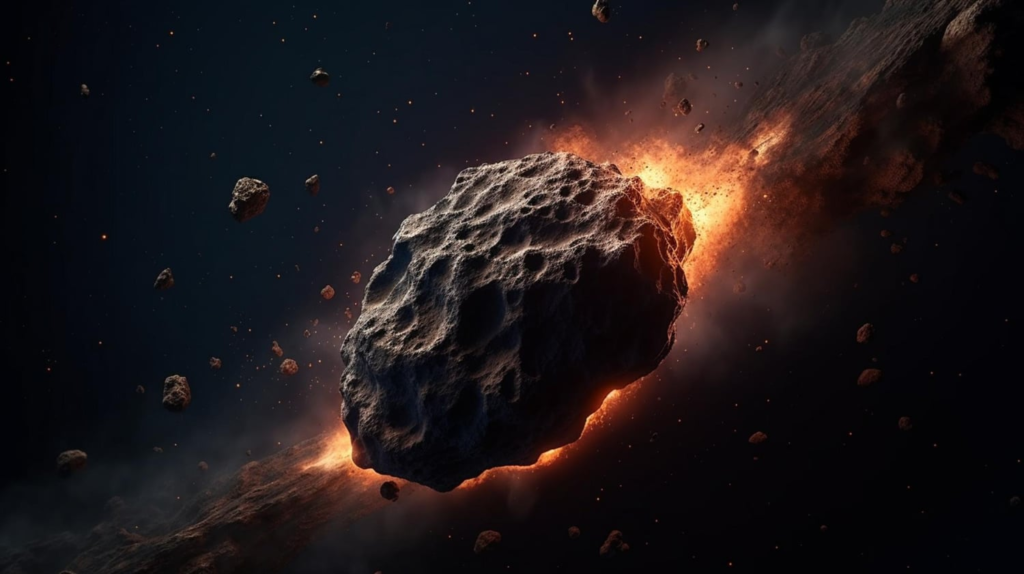
The attention surrounding Apophis also highlights the importance of continued investment in asteroid detection and monitoring programs. Organizations like NASA and international partners maintain vigilance through programs like the Near-Earth Object Observations (NEOO) Program, which tracks thousands of NEOs and assesses their potential risks.
Advancements in technology and international collaboration will be crucial in identifying and mitigating potential threats well before they pose a danger to Earth.
While 99942 Apophis may have earned its nickname as the “God of Destruction,” current scientific assessments indicate that Earth is safe from an impact during its close approach in 2029.
However, the asteroid’s immense size, proximity, and potential for gravitational interactions make it a focal point for research and public interest. The lessons learned from Apophis’s flyby will undoubtedly contribute to our understanding of asteroid dynamics and strengthen global efforts to protect our planet from celestial threats.