
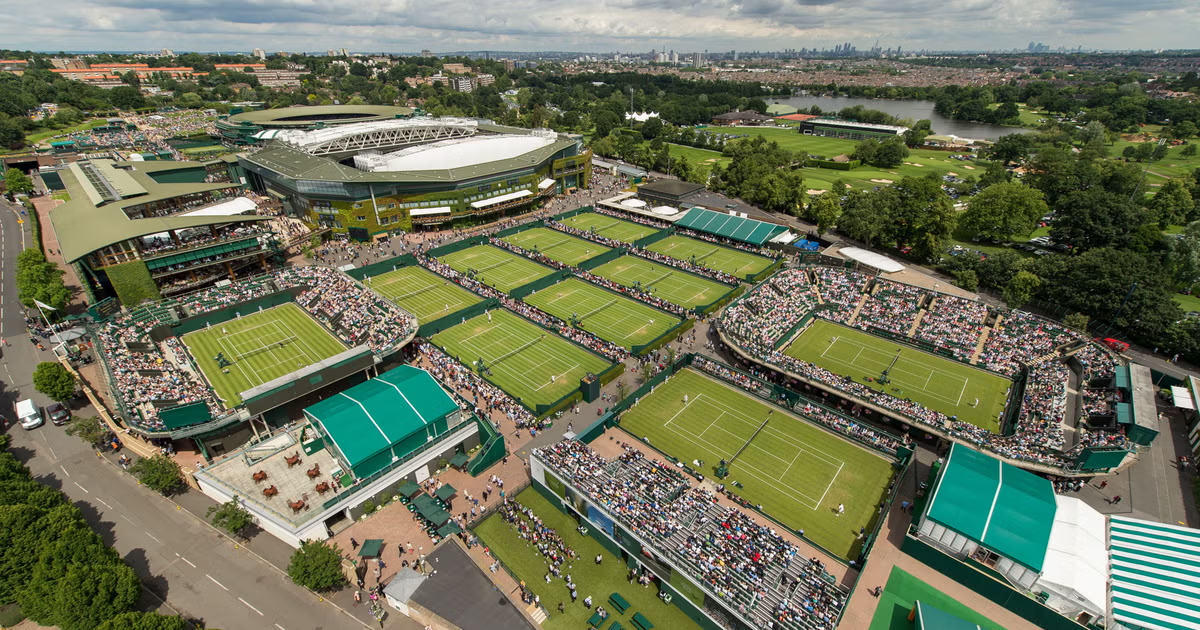
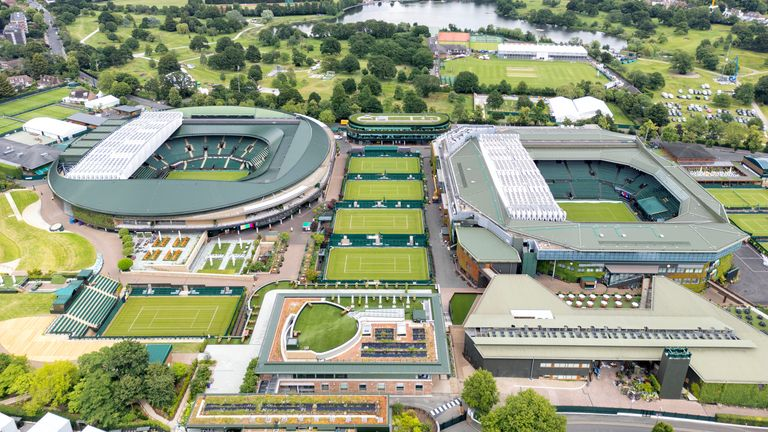
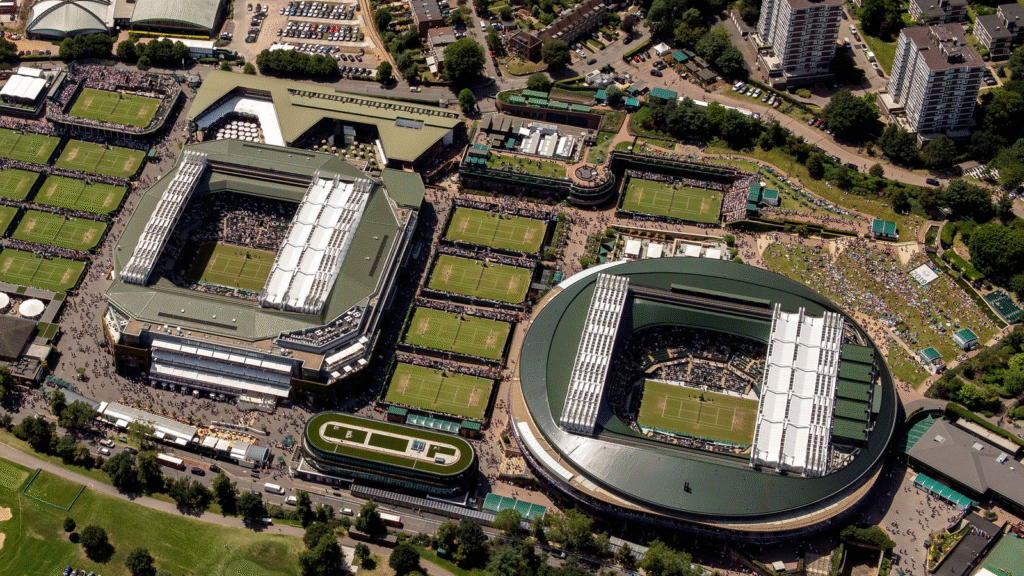
Plans to almost triple the size of the Wimbledon tennis site have taken a significant leap forward after a High Court judge dismissed a legal challenge brought by a local campaign group. The proposals, put forward by the All England Club, involve the transformation of the former Wimbledon Park Golf Club into a world-class extension of the current tennis grounds.
With an estimated cost of £200 million, this development is among the most ambitious projects in the history of the tournament, promising enhanced facilities and expanded access for players and fans alike. The expansion includes the construction of 38 new grass courts and an 8,000-seat show court stadium, allowing the prestigious Wimbledon qualifiers—currently held in Roehampton—to be staged on site for the first time.
This change will consolidate all tournament activities at a single location, aligning Wimbledon with other Grand Slam venues like Roland Garros and the US Open, which already host their qualifiers at their main grounds. In addition, the plans feature several maintenance buildings, new access routes, and improvements to Wimbledon Lake, including a boardwalk.
The Legal Challenge from Save Wimbledon Park
Despite the club’s ambitious vision, not everyone welcomed the proposals. A campaign group named Save Wimbledon Park (SWP) launched a legal battle against the Greater London Authority’s (GLA) decision to approve the plans. Their argument centered on the historic and environmental value of the land in question, which is part of Wimbledon Park—a Grade II*-listed heritage site originally designed in part by famed landscape architect Lancelot “Capability” Brown.
According to SWP, the site was protected by a statutory trust requiring it to be preserved for public recreation. They also pointed to restrictive covenants that they argued prohibited any development that would limit public appreciation of the land’s open character. In their legal submission, SWP’s barristers insisted that approving the All England Club’s plans was irrational and should be overturned.
Read : 17-Year-Old Girl’s Severe Abdominal Stomach Pain Turned Out To Be Tennis Ball Size Tumour
The matter was brought before the High Court, where arguments were heard earlier this month. Protesters gathered outside the Royal Courts of Justice to voice their opposition, highlighting widespread local concern about the potential loss of open green space and increased urban development in an already densely populated area.
Read : Gaming Giants: The Top 10 Most Played Games Worldwide
However, the defense argued that these covenants and restrictions, while acknowledged, were not “material considerations” in the context of planning permission. Mark Westmoreland Smith KC, representing the GLA, told the court that the decision to grant permission was based on “a planning judgment properly exercised and having regard to the appropriate and relevant factors.” Similarly, Russell Harris KC, representing the All England Club, emphasized that planning officers had reviewed the statutory trust and covenants but deemed them non-obstructive in legal planning terms.
Judgment Favors All England Club
On Monday, Justice Saini delivered the court’s ruling, dismissing the legal challenge. The judge concluded that the decision to grant planning permission was both rational and lawful. He stated: “The defendant’s decision on the relevance of deliverability, applying to both the statutory trust and the restrictive covenants, was a planning judgment rationally exercised and having regard to appropriate and relevant factors.”
This verdict effectively paves the way for the All England Club to proceed with its plans, bringing the long-debated expansion closer to fruition. The judge’s comments underscored the importance of balancing heritage preservation with broader community and sporting benefits.
London’s Deputy Mayor for Planning, Jules Pipe, who granted final approval after Wandsworth Council rejected the proposal and Merton Council supported it, stated that the development offered “very significant benefits” that “clearly outweigh the harm.” Mayor Sadiq Khan had previously voiced support for the project but recused himself from the final decision due to his prior public endorsements.
Transforming the Wimbledon Experience
Debbie Jevans, Chair of the All England Club, welcomed the court’s decision and reiterated the club’s commitment to delivering a project that benefits both tennis and the local community. According to Jevans, the expansion will include 27 acres of newly accessible parkland for public use, a key point the club has consistently highlighted as a community gain rather than a loss.
The expansion is designed not just to accommodate additional tennis courts, but also to create an integrated landscape that blends world-class sports infrastructure with sustainable, publicly accessible green space. One of the standout features of the plan is the work on Wimbledon Lake, which will be enhanced with a boardwalk to allow greater access and interaction with nature.
The All England Club has also underscored the environmental considerations built into the project. Though details remain under development, sustainability and ecological protection have been included in the early planning stages. This includes commitments to preserving existing habitats, creating new green zones, and ensuring minimal environmental disruption during construction.
Even with the court ruling in favor of the expansion, the debate around heritage, access, and environmental sustainability continues to stir public interest. SWP’s legal challenge may have been dismissed, but a separate High Court proceeding regarding the existence and enforceability of the statutory trust is still ongoing. If the court ultimately rules that such a trust is valid, it could introduce further legal complexities, despite the current planning approval.
The land in question holds deep historical value, both as a landscaped park influenced by Capability Brown and as a green oasis in a sprawling metropolis. This makes the development particularly sensitive. Opponents argue that even with public access components, transforming parkland into a professional sports venue disrupts the legacy and openness of the area.
Nonetheless, the All England Club maintains that its expansion respects the heritage of the site while securing the future of Wimbledon as a world-class tennis venue. They emphasize that the changes will allow Wimbledon to remain competitive with other Grand Slams, which have seen major upgrades in recent decades.
This court ruling sets a notable precedent for how historic or protected sites can be adapted for modern sporting needs. It illustrates how legal planning frameworks weigh the importance of cultural legacy against the potential benefits of infrastructural growth. In this case, the High Court clearly sided with the argument that planning policy, community benefits, and the stature of Wimbledon as an international tournament justified the expansion.
As construction timelines are finalized and work begins, public scrutiny will likely continue. Stakeholders on all sides—heritage groups, local councils, residents, and tennis fans—will be watching closely to see if the All England Club delivers on its promises. The successful integration of new facilities and expanded public space will be crucial in determining whether this ambitious project earns long-term support.
Ultimately, the High Court decision represents a major step forward for the AELTC. It marks the end of one chapter in a long and contentious process and opens the door to a new era for one of the world’s most celebrated sporting venues. As the physical landscape of Wimbledon changes, the broader debate over how cities balance progress with preservation will no doubt endure.