
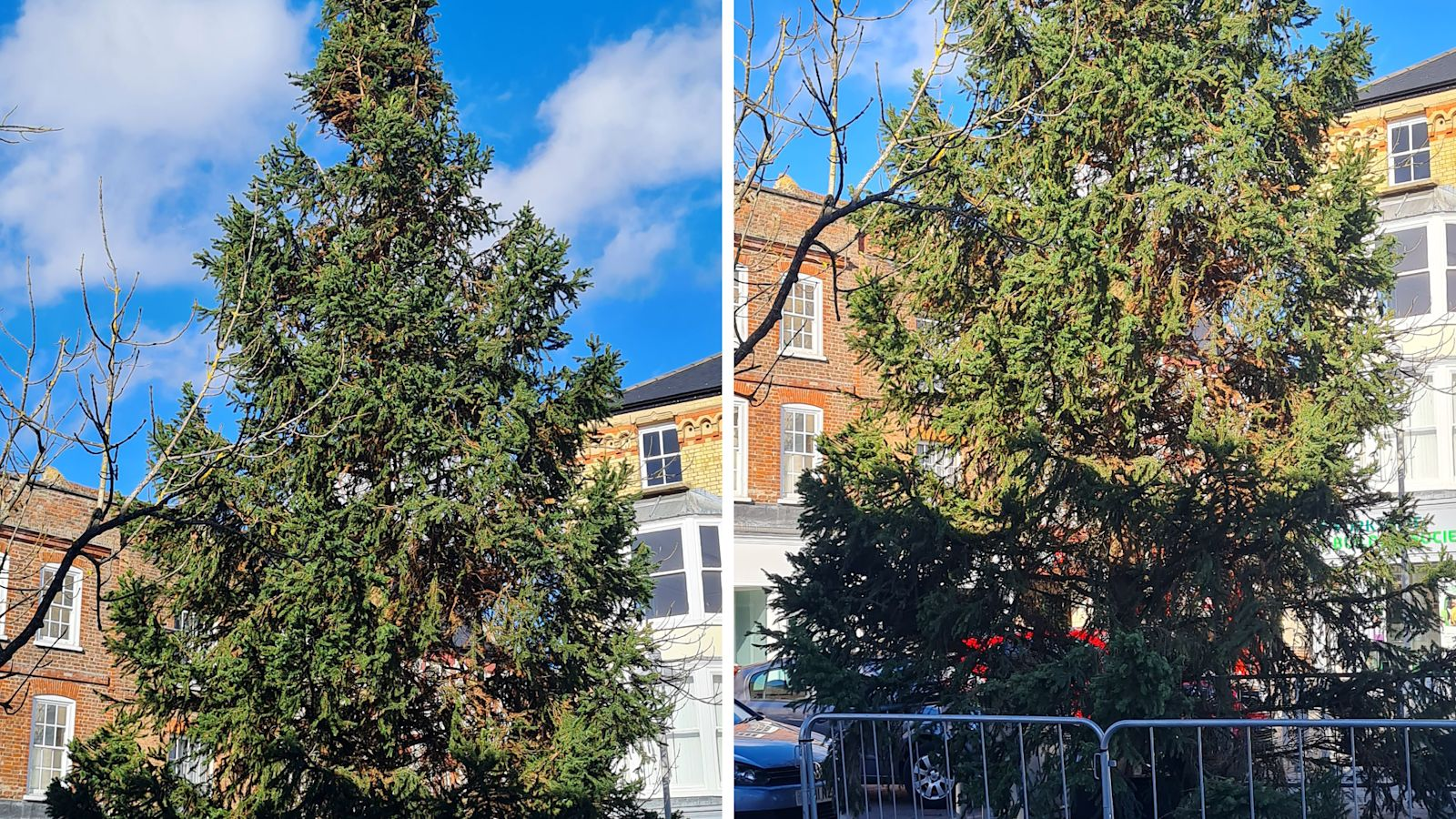
The arrival of a town’s Christmas tree marks the beginning of the festive season for many communities across the United Kingdom, symbolising shared celebration, continuity, and civic pride. In Wisbech, Cambridgeshire, that arrival initially brought anything but joy when residents and officials were confronted with what they described as a lifeless and disappointing tree. The reaction was swift and vocal, with Wisbech Town Council publicly acknowledging the concerns and taking immediate action to replace the “half-dead” display.
The situation not only prompted discussion about the standards expected of public decorations, but also touched on deeper issues regarding supply chains, extreme weather effects, and local reputation. The replacement of the tree has since restored the town’s preparations for Christmas, yet the episode remains a striking example of how a seemingly small matter can draw significant public attention.
The Arrival of a Tree That Sparked Disappointment
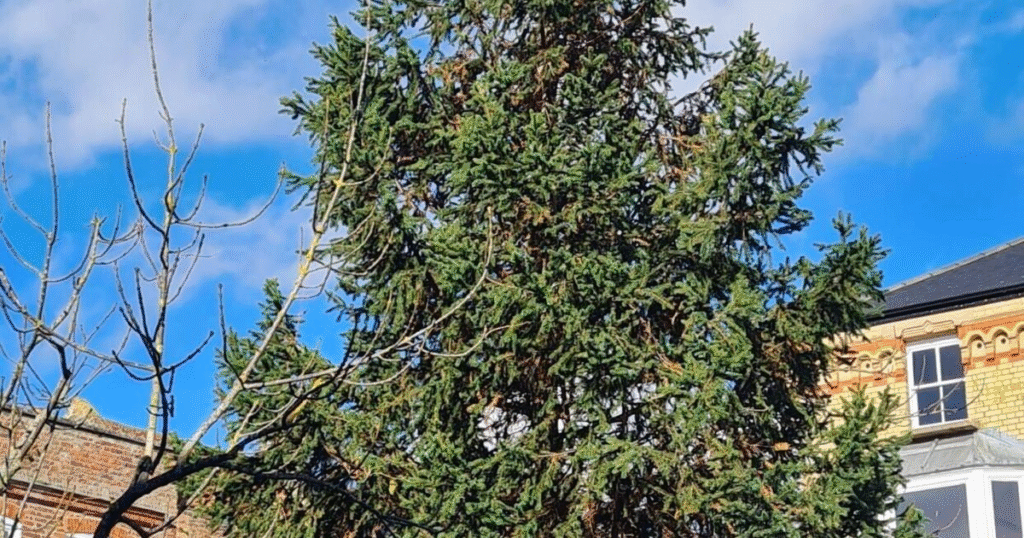
When the original Christmas tree was delivered to Wisbech for its seasonal display, it became evident almost immediately that something was amiss. The tree appeared sparse in multiple places, with noticeable gaps and branches that seemed to have dried out. Images shared online prompted wide criticism and disbelief, with many residents expressing concern that the tree did not reflect the festive spirit traditionally associated with the town’s celebrations. The council did not hesitate in responding to these reactions, posting publicly that it was “aware of the state of the real Christmas tree that has been delivered” and that it had already taken steps to resolve the issue.
The use of language in the council’s communication was unusually blunt, referring to the tree as appearing “half dead or dying” and describing it as “an absolute disgrace.” Such a tone reflected not only frustration but also the desire to assure the community that the matter was being handled. The council’s statement underscored that it viewed the tree not merely as an ornament, but as a representation of the town’s identity during the festive period.
According to the council clerk, Terry Jordan, the original tree, which measured around 35 feet, did not meet acceptable standards once inspected on arrival. This inspection revealed visible patches of dead branches, as well as inconsistencies in shape and foliage density. Given the public nature of the town centre installation, the council acted quickly to reject the tree and demand a replacement from the supplier.
People have described a Christmas tree put up in Wisbech town centre as "diabolical" and looking "a bit dead". 🌲
— BBC Cambridgeshire (@BBCCambs) November 6, 2025
More here ➡️ https://t.co/YYe5Jcdw9w pic.twitter.com/AmSZwl1pHR
The decision to remove the tree before its lighting ceremony was intended to prevent further public disappointment and to ensure the eventual display would better reflect Wisbech’s festive traditions. In doing so, the council demonstrated attentiveness to community expectations while acknowledging that the visual quality of such decorations matters significantly in shaping seasonal atmosphere and civic pride.
Weather Conditions and the Difficulties of Growing Large Trees
One of the most intriguing elements of the incident emerged from the supplier’s explanation regarding the tree’s condition. The supplier attributed the poor state of the original tree to the unusually hot and dry weather conditions experienced earlier in the year. Larger trees, particularly those intended for public displays, require long-term careful cultivation, and sustained periods of high temperatures can interfere with their nutrient and water absorption. This can lead to structural weaknesses, drying, or uneven growth—effects that may not be immediately visible until the tree is cut and transported.
The heatwaves and extended dry spells seen across parts of the United Kingdom in recent years have affected numerous agricultural and forestry sectors. Christmas tree growers, who rely on consistent seasonal patterns and stable moisture levels, have been particularly vulnerable. While smaller trees may survive difficult weather with less visible damage, larger specimens—such as the 35-foot tree originally ordered by the council—carry a higher risk of showing stress-related imperfections.
Read : Burcu Yesilyurt’s £150 Fine for Pouring Coffee Dregs Down Street Drain Revoked
The supplier’s explanation suggests that the challenge faced in Wisbech may reflect a broader issue impacting towns and cities across the country that source large real Christmas trees. The dependence on outdoor cultivation and long-term growth cycles makes these trees susceptible to climatic fluctuations. Extreme weather, once considered rare, is increasingly influencing not only crops but also decorative horticulture, potentially reshaping the expectations and availability of traditionally grown festive trees.
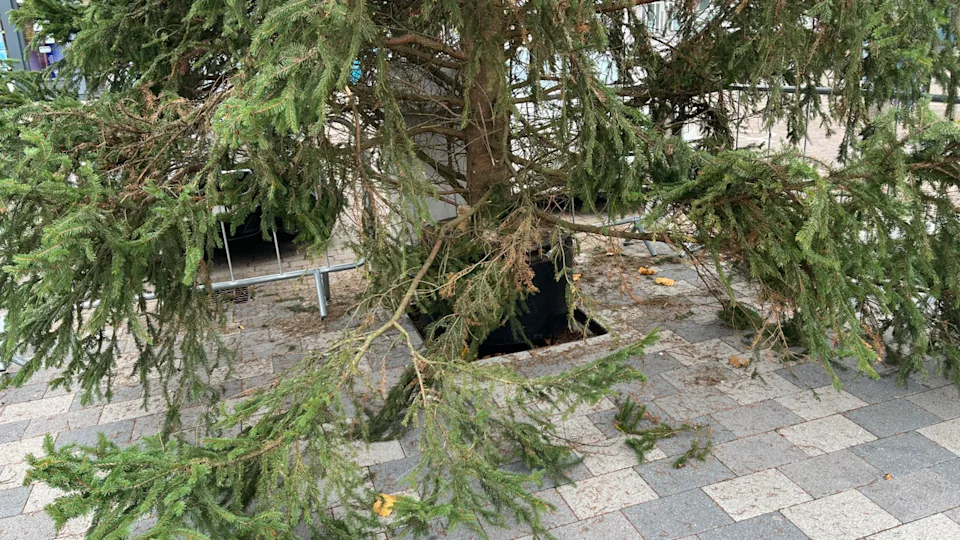
This year’s experience may prompt more councils and event organisers to consider alternative procurement strategies. These might include building stronger relationships with multiple suppliers, inspecting trees before transportation, or even exploring the use of more modestly sized trees that are less vulnerable to extreme conditions. However, such decisions may also involve balancing cost, aesthetics, environmental concerns, and public sentiment, all of which contribute to the significance of holiday displays.
The replacement tree ultimately supplied to Wisbech—standing at 28 feet, slightly shorter than the original—demonstrated a healthier and fuller appearance. The council clerk expressed satisfaction with the new tree, describing it as a “very good healthy specimen,” and installation proceeded without further issue. The tree’s placement and upcoming lighting ceremony are set to restore the festive atmosphere the community anticipated.
Public Memory and Local Reputation in Festive Displays
The reaction to the Christmas tree also reflects the growing prominence of community image in the digital age, where photos, comments, and criticisms circulate rapidly and widely. As Terry Jordan noted, this is not the first time a local Christmas tree in the surrounding region has become the subject of public discussion. In 2023, the nearby town of March gained national media attention due to its Christmas tree being described as “wonky,” prompting widespread commentary and humour online. The memory of that incident likely increased public attentiveness to Wisbech’s own display this year.
Events like these demonstrate the symbolic importance of festive decorations in shaping a community’s perception of itself, as well as the perceptions of others. A Christmas tree, though temporary, becomes a focal point of public gathering, photography, celebration, and shared experience. When that focal point appears lacklustre or poorly maintained, it can easily become associated with broader impressions of neglect or disorganisation.
Conversely, the swift replacement of the tree and the transparency shown by the council may strengthen the town’s civic reputation. By responding quickly and openly, the council demonstrated attentiveness to public concerns and a commitment to maintaining standards. The interaction between local authorities and residents around issues like this plays an important role in shaping trust and community cohesion.
In addition, the situation highlights how traditions endure not only through practice but through expectation. The annual Christmas tree, though replaced year after year, remains a consistent marker of seasonality and local identity. Its significance lies not simply in its appearance but in its role as a shared cultural reference point. The attention given to its condition demonstrates the continued value placed on community rituals, even as external circumstances such as climate change and economic pressures introduce new complexities.
As Wisbech now moves forward with its celebrations, the replaced tree stands as the centrepiece of the town’s festive season. Residents, visitors, and families will gather around it for lighting ceremonies, events, and photographs, establishing memories that will become part of the local cultural rhythm. The brief controversy serves as a reminder of how even small elements of public life can prompt wider reflection, conversation, and collective response.
**mitolyn**
Mitolyn is a carefully developed, plant-based formula created to help support metabolic efficiency and encourage healthy, lasting weight management.
References:
Mail slot cover
References:
https://de.kzen.dev/index.php/user/peanuttest4
References:
Injectable vs oral steroids
References:
https://srsbkn.eu.org/skyetost403207
References:
Gnc muscle stack reviews
References:
https://xn--41-4lcpj.xn--j1amh/user/collarparade3/
References:
Alice springs casino
References:
https://sub.elfejewelry.com:443/index.php?wormwiese339573
References:
European roulette
References:
https://youralareno.com/members/congashape2/activity/156645/
References:
How to get legal steroids
References:
https://wm01oaq9b.hier-im-netz.de/Blog;focus=TKOMSI_com_cm4all_wdn_Flatpress_23962032&path=&frame=TKOMSI_com_cm4all_wdn_Flatpress_23962032?x=entry:entry251005-144512%3Bcomments:1
References:
Best legal supplement
References:
https://www.amcsalach.de/index.php/;focus=STRATP_com_cm4all_wdn_Flatpress_12680217&path=?x=entry:entry190513-071159;comments:1
References:
Who uses steroids
References:
https://dev.kiramtech.com/marisakelson4
References:
Steroid tablets for bodybuilding
References:
http://106.15.235.242/rodericklhv114
References:
Steroids vs testosterone
References:
https://vydiio.com/@budchau2325273?page=about
References:
Where to buy legal steroids
References:
https://git.automathon.org/cornelius5010