
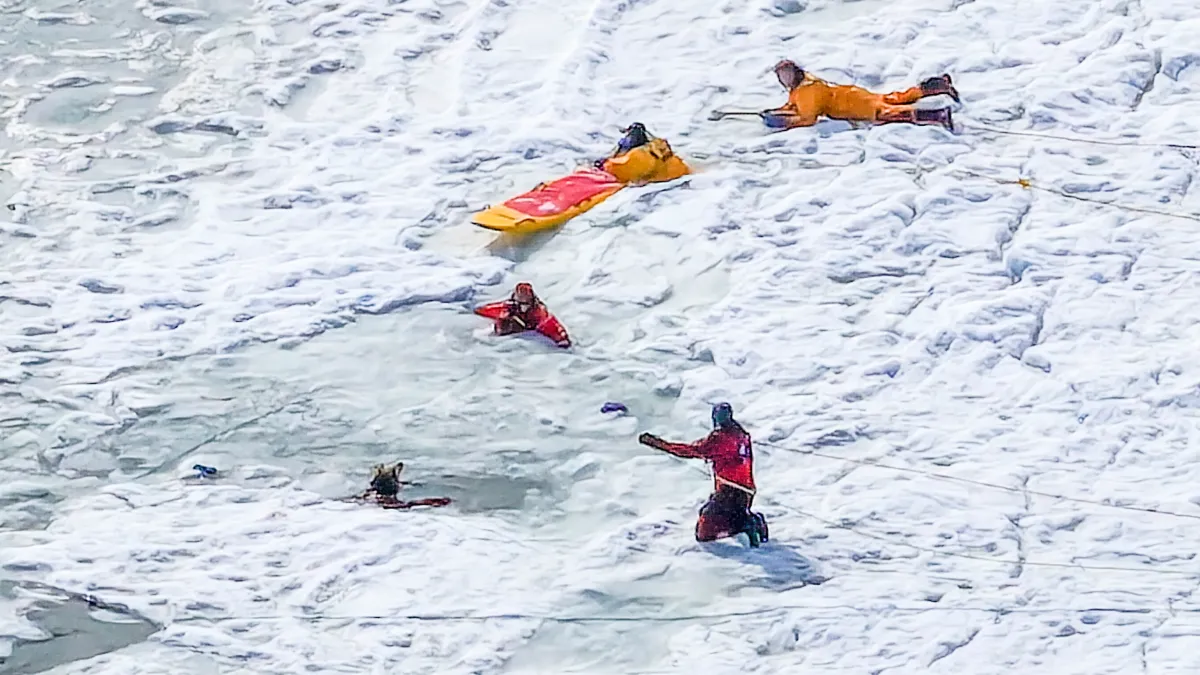
A quiet winter morning in the coastal town of Eastham, Massachusetts, turned into a devastating tragedy when a husband and wife are believed to have fallen through the frozen surface of Bee’s River while walking their dog. The incident, which unfolded on Cape Cod, left the woman dead and her husband missing, prompting an extensive emergency response and a wave of grief throughout the local community. Authorities say the couple had ventured out for what appeared to be a routine walk when unstable ice gave way beneath them, transforming an ordinary moment into a fatal emergency.
The alarming situation first came to the attention of police when a report was made about a loose dog wandering nearby. The animal was wet and appeared distressed, an unusual and troubling sight that suggested something had gone terribly wrong. Responding officers soon discovered a woman in the icy water, calling for help. What followed was a series of rescue attempts complicated by dangerously thin ice, frigid temperatures, and rapidly deteriorating conditions.
Emergency crews launched an intensive search effort that stretched over hours, employing divers, specialized equipment, and coordinated recovery operations. Despite their efforts, the woman was later found beneath the ice and pronounced dead at the scene. Her husband, believed to have fallen into the river before officers arrived, remains missing. Search operations have since been suspended until changing ice conditions make recovery attempts safer.
The incident has shaken the small beach town, where residents have begun gathering near the riverbank to leave tributes. What began as a routine outing has become a stark reminder of the hidden dangers posed by winter waterways and the unpredictable nature of frozen landscapes.
The Moment the Ice Gave Way
The sequence of events began with what authorities believe was a walk along the frozen river’s edge, an activity that can appear deceptively safe during winter months. Bee’s River, like many waterways in colder regions, often develops an icy surface that may look solid but can vary dramatically in thickness and strength. Subtle changes in temperature, water movement beneath the surface, or uneven freezing patterns can create dangerous weak points invisible to the eye.
When officers arrived at the scene, they encountered a woman trapped in the Bee’s River, shouting for assistance. One officer attempted to reach her across the ice, but the surface broke under his weight, plunging him into the freezing water. He became completely submerged before managing to resurface. A second officer attempted to assist but also encountered unstable ice, which collapsed again, leaving him waist-deep in the river. Both officers ultimately managed to return to shore and were transported to a nearby hospital for treatment.
Rescue crews then focused on locating the woman, who had disappeared beneath the surface. After a coordinated search effort, she was found under the ice. Emergency responders pronounced her dead at the scene, marking a tragic end to their initial rescue operation.
Investigators believe the woman’s husband may have fallen through the ice earlier, before police arrived. Items found in the couple’s vehicle, along with checks at their residence, suggested that both had been together at the river that morning. The distressed dog that prompted the emergency call was likely the only witness to the moment when the ice gave way.
Read : Liz O’Brien’s Dog Brutally Kicked by Amazon Delivery Driver Caught on Camera
What makes such incidents particularly dangerous is how quickly cold water incapacitates the human body. Even brief immersion in near-freezing water can lead to cold shock, loss of muscle control, and rapid exhaustion. Rescue becomes increasingly difficult within minutes, especially when victims are trapped beneath broken ice or unable to find a stable surface to climb onto.
Read : 17-Year-Old Chinese Badminton Player Dies of Cardiac Arrest During Championship Match: Watch
The conditions that led to the collapse of the ice remain under investigation, but authorities emphasize that frozen waterways can be unpredictable, even when they appear firm enough to support weight. The illusion of safety often masks the fragility beneath.
The Search for the Missing Husband
Following the recovery of the woman’s body, attention turned to locating her husband. Emergency teams launched an extensive search operation that lasted approximately six hours. The response included multiple dive teams working in extremely challenging conditions, as well as the use of an underwater remotely operated vehicle designed to navigate beneath the ice where visibility is limited and access is restricted.
As daylight faded, the search was temporarily halted due to safety concerns and poor visibility. The following morning, crews resumed efforts using additional resources, including aerial drones and on-foot search teams scanning the surrounding area. Despite these measures, no sign of the missing man was found.
Authorities later announced that search operations had been suspended. Officials stated that recovery efforts would resume when changes in ice conditions allow safer access for public safety personnel. Thin, unstable ice poses significant risks not only to victims but also to rescue workers, making prolonged operations hazardous.
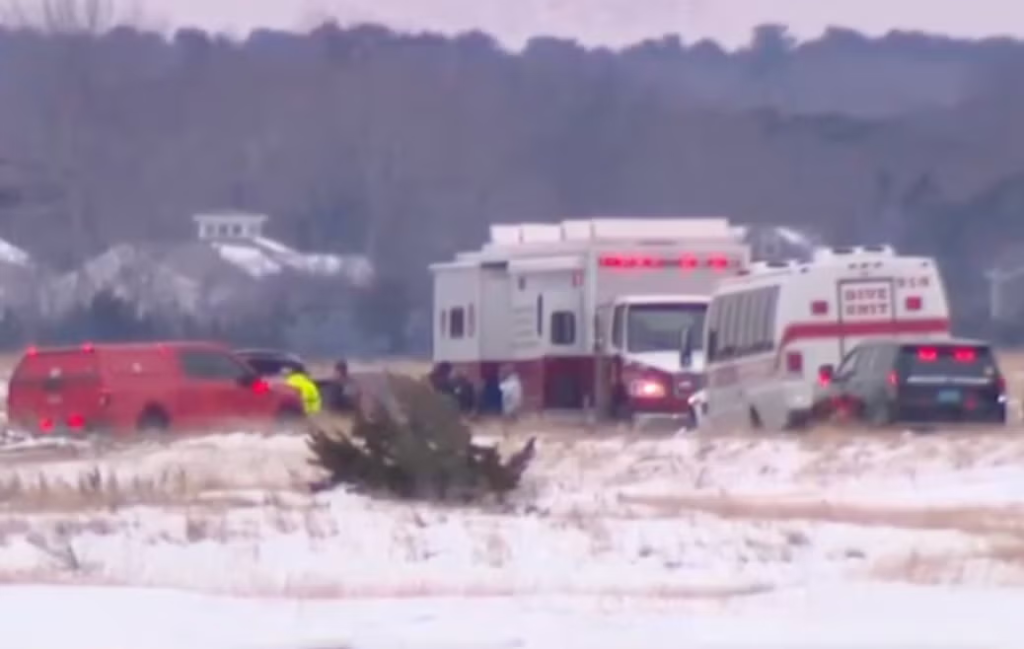
Suspending a search does not necessarily mark the end of an investigation or recovery effort. Instead, it reflects the balance emergency services must maintain between urgency and safety. Ice-covered waterways present some of the most dangerous environments for divers and responders, particularly when structural integrity cannot be guaranteed.
The uncertainty surrounding the husband’s fate has added another layer of sorrow to the tragedy. Without confirmation or recovery, families and communities often face prolonged emotional strain. The absence of closure can be as painful as the loss itself, leaving loved ones waiting for conditions to change so that search efforts can resume.
Authorities have not released the names of the couple at the request of their family, a decision that underscores the deeply personal nature of the tragedy. Protecting privacy during moments of profound grief remains standard practice, especially in close-knit communities where news spreads quickly and emotions run high.
A Community Responds to Loss
In the aftermath of the incident, the small Cape Cod community of Eastham has responded with visible compassion and solidarity. Residents have begun placing flowers, candles, and other tributes near Bee’s River, creating a growing memorial to honor the couple. The gathering site has become a place for quiet reflection, where neighbors pause to acknowledge the sudden loss and offer support to one another.
Read : Parents Sue DoorDash and Driver William Klingler Over Hit-and-Run Death of Daughter Elsa McGrain
For many residents, the tragedy has been difficult to process. The idea that a familiar local landscape could become the site of such a devastating accident has left people unsettled. Winter walks along frozen waterways are not uncommon in coastal towns, making the incident feel both shocking and deeply personal.
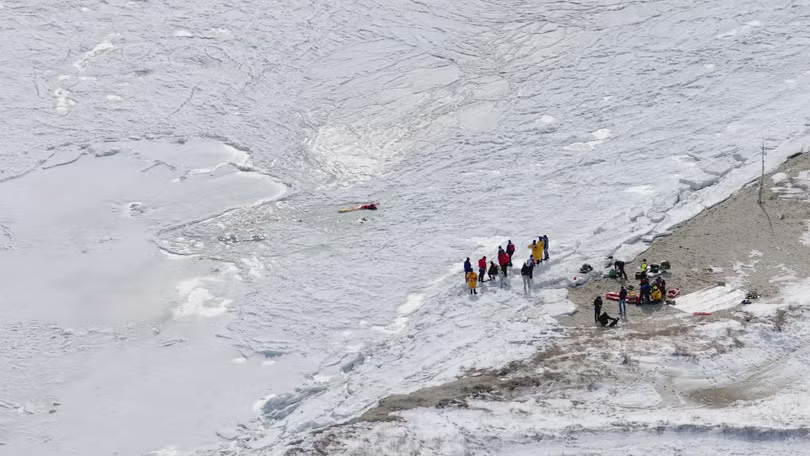
Community members have expressed sympathy for the family, emphasizing the collective sense of grief that has settled over the area. Residents have spoken about the emotional weight of knowing that a routine daily activity ended in catastrophe. The distressed dog that first drew attention to the scene has become a symbol of the event’s suddenness, a reminder of how quickly circumstances can change.
Public statements from local authorities have echoed the community’s sorrow, offering condolences and emphasizing ongoing support for the family. Officials have acknowledged both the emotional impact of the loss and the courage of the responders who risked their own safety attempting to save those trapped in the river.
Incidents involving frozen waterways often prompt renewed discussions about winter safety. While ice may appear solid, conditions can shift rapidly due to weather changes, underlying currents, and uneven freezing patterns. Safety experts frequently warn that no natural ice surface should be assumed safe without proper testing and verification. Even then, unpredictable structural weaknesses can remain.
The tragedy at Bee’s River serves as a powerful reminder of these risks. What may look like a stable winter landscape can conceal hazards capable of overwhelming even trained rescuers. The combination of freezing temperatures, unstable surfaces, and limited escape routes creates an environment where survival becomes difficult within minutes.
As the memorial near the river continues to grow, the community remains focused on supporting the family and awaiting the resumption of search efforts when conditions permit. The stillness of the frozen water now carries a different meaning for those who live nearby, marking the place where an ordinary morning walk turned into an irreversible loss.