

A strange and unsettling incident has emerged from Brazil, shocking both local communities and international observers. A 20-year-old woman tragically died of cardiac arrest on a bus traveling from Foz do Iguaçu to São Paulo.
What turned this unfortunate incident into a global headline was the startling discovery that the woman had 26 iPhones glued to body — a bizarre and dangerous act that authorities believe may have been an attempt to smuggle smartphones across the country. As Brazil grapples with a booming black market for electronics, this death serves as a grim reminder of the risks individuals take to participate in illegal trade operations.
The Shocking Discovery During a Routine Bus Journey
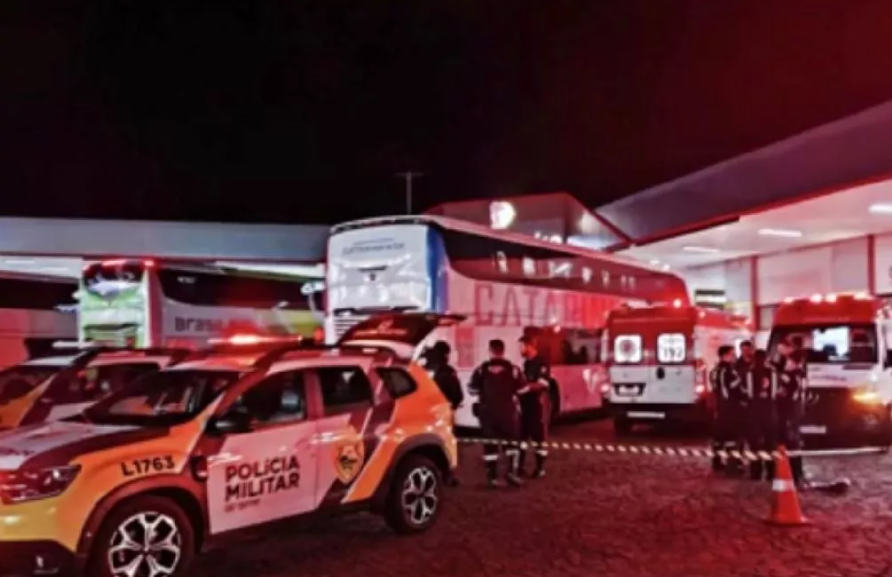
The incident occurred on July 29 as the long-distance bus made its way through the southern Brazilian state of Paraná. Passengers recalled that the young woman, traveling alone, seemed to be in physical distress during the trip. When the bus stopped for a scheduled rest break at a roadside restaurant in the city of Guarapuava, she began to complain of severe breathing difficulties.
Emergency services were called, and paramedics arrived on the scene shortly after. Despite their best efforts to stabilize her condition, she suffered a seizure. Medics attempted resuscitation for 45 minutes, but sadly, she was pronounced dead on site.
What was meant to be a routine medical emergency quickly turned into something far more disturbing. As medical personnel treated the woman, they discovered packages glued directly to her skin. Upon further examination, these packages were found to contain 26 Apple iPhones — a payload worth thousands of dollars. Each phone had been carefully concealed using adhesive to attach them to various parts of her body, a method often used by smugglers to bypass border inspections and tax regulations.
Read : In the lap of nature Exploring Brazil’s Top Ten Most Beautiful Villages
Alongside the iPhones, authorities also found bottles of liquor in her luggage. These findings led investigators to suspect that she was part of a larger smuggling operation, likely attempting to transport contraband goods into Brazil’s massive black market.
Investigations Underway
The Paraná Civil Police are now leading the investigation and have confirmed that forensic tests are being conducted to determine the exact cause of death. While initial reports point toward cardiac arrest likely triggered by respiratory failure, the additional strain caused by dozens of devices strapped to her body cannot be ignored. Authorities believe the physical burden — combined with potential anxiety and lack of ventilation to the skin — may have played a role in her sudden collapse.
In an official statement, the Paraná Civil Police noted: “The Paraná Civil Police are investigating the case and awaiting the conclusion of forensic reports to clarify the cause of death.” The confiscated iPhones have been turned over to Brazil’s Federal Revenue Service for further analysis, including tracing their serial numbers to determine their origins.
Read : 26-Year-Old Army Reservist Wildelis Rosa Dies After Undergoing Brazilian Butt Lift Surgery
Brazil has been grappling with a significant uptick in electronics smuggling, particularly smartphones. With exorbitant import taxes and limited domestic supply, many citizens and small businesses turn to the black market to acquire popular electronics at reduced prices. Smugglers frequently transport such goods from Paraguay — especially from Ciudad del Este, a border city notorious for its informal trade hubs.

According to a recent report, authorities have recorded a 25% increase in black market iPhone seizures between January and May of this year. An estimated 10,000 cellphones are smuggled into Brazil daily. The methods vary — from hidden compartments in vehicles to body-wrapping tactics like the one employed by the deceased woman.
Federal Revenue Service Deputy Delegate Claudio Marques explained, “(Cellphone smugglers) pass through in small quantities and distribute them to the rest of Brazil.” The goal is to avoid detection by blending into the stream of everyday travelers. Unfortunately, this strategy also leads to dangerous scenarios where individuals are forced — or volunteer — to carry risky loads under physically and medically unsafe conditions.
One recent seizure involved 196 smartphones discovered in a secret compartment of a truck crossing the Friendship Bridge between Paraguay and Brazil. This illustrates the scale and determination of smuggling networks that often stretch across borders, aided by sophisticated logistics and human couriers willing to take great personal risks.
Human Cost of the Black Market:
The tragic death of the 20-year-old woman casts a harsh light on the human cost of Brazil’s ongoing battle with illegal trade. While authorities have intensified efforts to clamp down on smuggling rings, enforcement remains a challenge in the face of pervasive demand and deeply entrenched black market structures. The woman’s case is particularly alarming because it highlights how individuals — often young and vulnerable — are used as carriers in high-risk schemes with potentially fatal consequences.
It is still unclear whether the woman was coerced into smuggling or was acting voluntarily. Regardless, the extreme method of transportation — gluing heavy electronics directly to her skin — reveals the desperate and often dangerous lengths people are going to in order to make quick money. Smuggling goods in this manner not only poses serious health risks such as skin infections, overheating, restricted blood flow, and respiratory complications, but also introduces a high chance of fatal accidents like the one witnessed on the bus.
Social media and public discourse in Brazil have responded with shock and sympathy. Many are calling for better public awareness of the risks involved in smuggling, as well as stronger economic policies to reduce the reliance on black market imports. Others are demanding more effective cross-border enforcement, especially at known smuggling routes like the Paraguay-Brazil corridor.
Human rights advocates have also raised questions about the underlying social and economic conditions that push individuals — particularly young women — into such hazardous roles. Poverty, lack of education, and limited job opportunities often leave people with few alternatives. In regions close to the borders, it’s not uncommon for entire families to become entangled in informal trade networks, often without fully understanding the legal or health ramifications.
As investigators await toxicology and autopsy results, the broader context of the incident cannot be overlooked. It is a symptom of a much larger crisis in Brazil — one that involves economic disparity, regulatory failure, and cross-border criminal networks operating with considerable reach and sophistication.
While much attention is being paid to the forensic details of this specific case, the underlying message it sends is grim and urgent: the human cost of smuggling is not just measured in financial losses or legal consequences, but also in lives prematurely lost.
The woman’s identity has not yet been publicly released, likely to protect her family’s privacy. But her story is already resonating across the country and beyond as a tragic example of what happens when desperation, criminal networks, and poor policy intersect.
Her death may lead to increased scrutiny of passengers on long-distance buses, more frequent roadside inspections, and intensified monitoring at known smuggling entry points. But experts warn that until deeper economic inequalities are addressed and legal access to consumer goods becomes more feasible, Brazil’s black market will continue to lure individuals into dangerous paths.
As Brazil mourns this senseless loss, the incident serves as a haunting reminder of the human price of illegal trade — a cautionary tale about a black market that thrives in the shadows and sometimes claims lives in the process.