
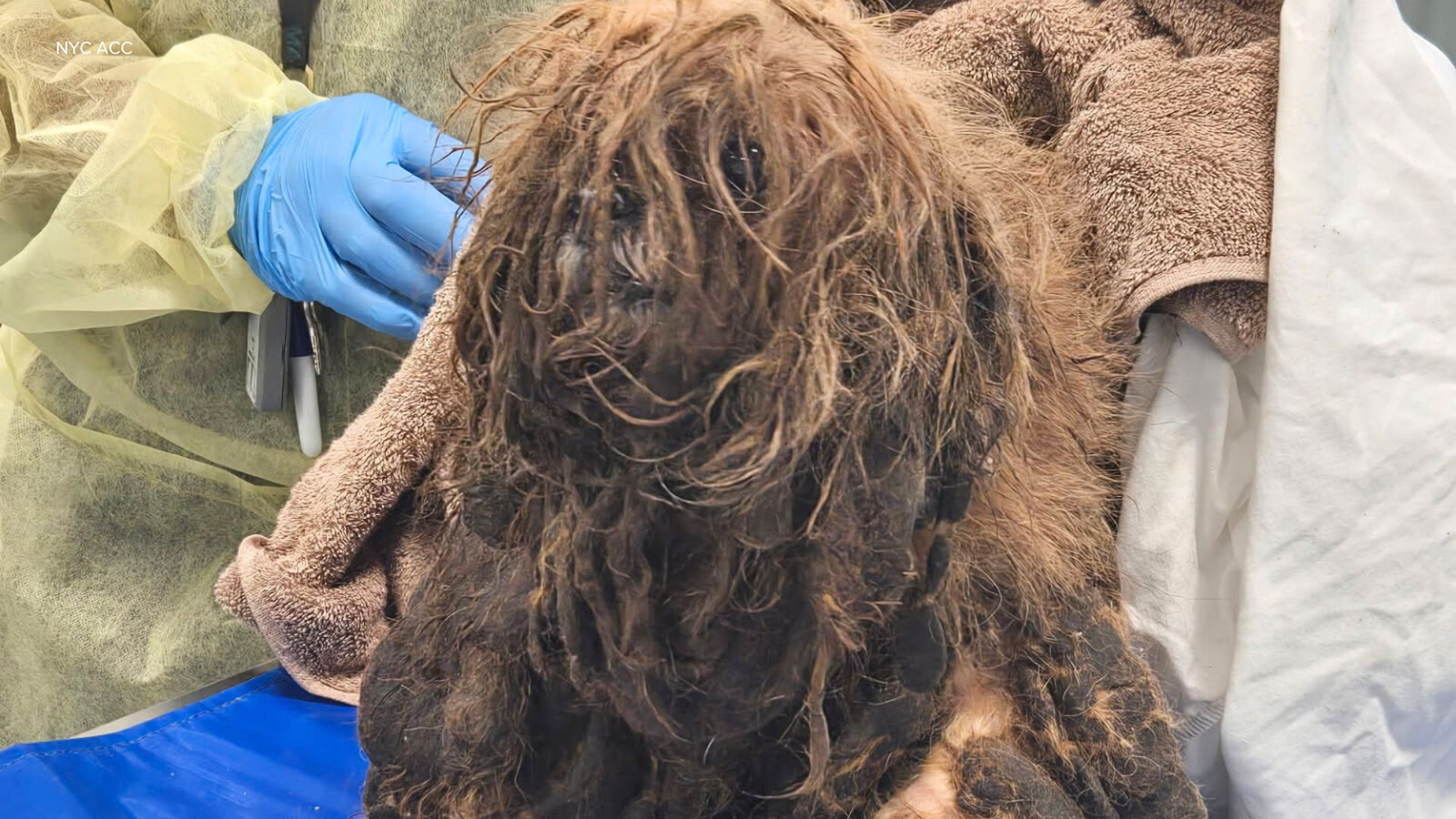
The tragic discovery of a 73-year-old woman found dead with over 80 neglected dogs around her has shocked the Brooklyn neighborhood of Mill Basin and raised serious concerns about animal welfare, elder neglect, and the limits of legal intervention in suspected hoarding cases.
Police responded to a 911 call on Thursday, only to walk into a harrowing scene of waist-high trash piles, the overpowering stench of decay and animals, and the heartbreaking sight of sickly, matted dogs — some of them puppies and one even giving birth. The deceased, one of two elderly sisters living in the deteriorating house, had been unseen by neighbors for some time.
Despite repeated concerns raised by the community and several prior visits by law enforcement, authorities were unable to intervene sooner due to the lack of legal authority to enter the premises without probable cause. By the time they could access the house, it was too late for the woman and nearly too late for the dozens of dogs living in unimaginable squalor.
Woman Found Dead with Over 80 Neglected Dogs Around
The property in question, located in Mill Basin, a relatively quiet residential area of Brooklyn, had been the subject of curiosity and concern among neighbors for years. Many believed the house to be abandoned due to its unkempt appearance, absence of lighting, and the overwhelming odor emanating from it. However, sporadic barking and the occasional flash of light from inside at night told a different story.
Neighbors reported that the sisters who lived there rarely came outside and were mostly reclusive. They apparently had no electricity and relied on flashlights to navigate the interior of their cluttered home. According to long-time neighbor Alex Zinger, “The cops used to come, they used to knock on the door, and they were not let in… They said they had no probable cause. And they were not able to kick the door in or anything like that.”
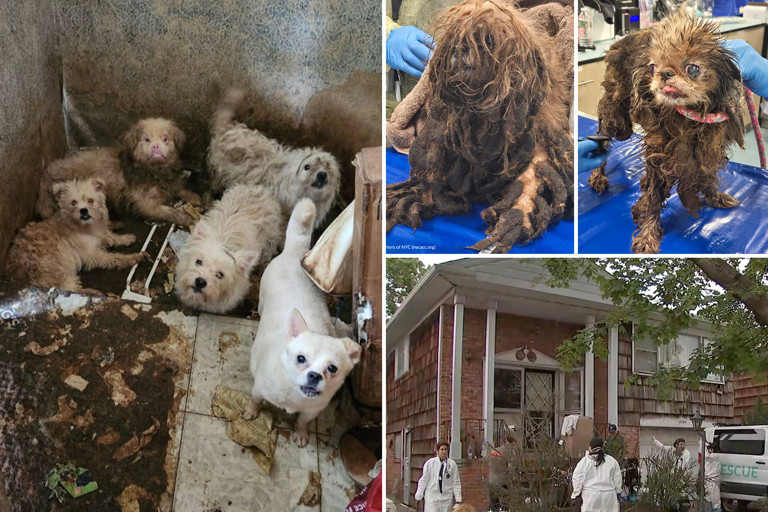
It was only when one of the sisters was found dead inside the home that police were finally able to enter, uncovering the horrific conditions in which both the women and the dogs had been living. Authorities were reportedly overwhelmed by the smell the moment they entered, a toxic mix of decay, dog waste, and rot. What they saw inside shocked even seasoned officers: a sea of filth, crates stacked on top of one another, and dogs in various stages of neglect.
The Rescue Operation and Community Response
Upon entering the house, officers discovered over 80 dogs — many of them small breeds — suffering from neglect. Some were covered in matted hair, others were visibly malnourished or sick. One dog was in the process of giving birth as rescuers entered the home, a chilling reflection of how uncontrolled breeding had likely compounded the problem over time.
The Animal Care Centers of NYC (ACC) and the American Society for the Prevention of Cruelty to Animals (ASPCA) were quickly called in to assist. Working under difficult and emotionally taxing conditions, the rescue teams managed to remove all of the animals safely. The dogs are now in the care of the ACC, where they are being treated, groomed, and eventually readied for adoption.
Over 80 dogs rescued from Brooklyn home where woman was found dead https://t.co/waFuI98jZQ pic.twitter.com/vwhd7R0kU5
— 1010 WINS on 92.3 FM (@1010WINS) June 27, 2025
The community’s response to the tragedy has been overwhelmingly supportive. In a social media post, the ACC thanked local shelters, fosters, rescue volunteers, groomers, and donors for their outpouring of help. “You’ve stepped up for these dogs in ways we’ll never forget,” the statement read.
Despite the horror, a sliver of hope shines through in the effort to rehabilitate these animals. While their condition was severe, many are expected to recover fully with proper care. Several community members have already expressed interest in fostering or adopting the dogs once they’re ready.
Legal Limitations and a System Failing the Vulnerable
This heartbreaking incident also highlights serious gaps in how the legal system handles suspected hoarding and animal cruelty, especially when it intersects with mental health and elder neglect. According to neighbors, there had been red flags for a long time.
Police had previously climbed a ladder to peer into the house through a window after knocking and getting no response. At that time, they reportedly saw dead dogs and puppies but were still unable to enter legally without a warrant or clear probable cause.
One neighbor, Adam Greenberg, noted that there seemed to be an ongoing struggle between respecting privacy and protecting life — both human and animal. “I thought originally that the house was abandoned, because it’s in bad shape… but then we heard the dogs barking,” he said. That barking, however, was not enough to justify forced entry under existing laws.
The surviving sister’s condition and whereabouts remain unclear, though neighbors hope she receives help. It’s unclear whether she understood the gravity of the situation or had any support. Cases like this often stem from complex mental health issues, including animal hoarding disorder — a condition where individuals collect animals compulsively and are unable to provide for their basic needs.
Meanwhile, the cause of the 73-year-old woman’s death has not yet been determined. Authorities are likely conducting autopsy and toxicology tests to determine whether the squalid conditions or untreated medical issues contributed to her demise. Her death, coupled with the inhumane treatment of so many animals, is forcing a reckoning in Brooklyn and beyond.
This devastating discovery in Brooklyn has left a community in shock and prompted vital conversations about elder care, mental health, and the ability of authorities to intervene in suspected hoarding cases before tragedy strikes. The sight of a woman found dead with over 80 neglected dogs around her is not only heartbreaking — it’s a clarion call for reform.
If anything, this case illustrates that more needs to be done — in terms of legislation, community outreach, and mental health services — to prevent such tragedies from happening again. Authorities, neighbors, and advocacy groups must work together to create systems that allow earlier intervention while respecting civil liberties. Only then can we protect both vulnerable humans and the animals who often suffer in silence with them.
Magnificent goods from you, man. I have understand your stuff previous to and you are just extremely magnificent. I actually like what you have acquired here, really like what you’re stating and the way in which you say it. You make it entertaining and you still care for to keep it smart. I can’t wait to read far more from you. This is actually a wonderful website.