
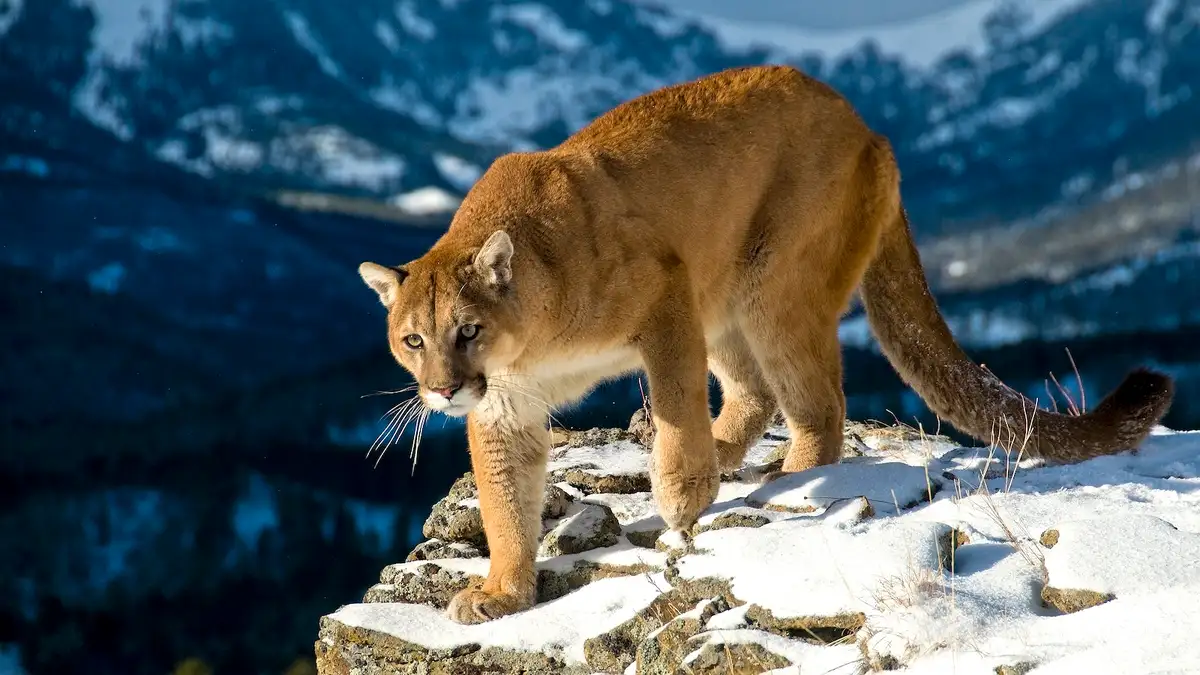
A rare and deeply troubling incident unfolded in northern Colorado on Thursday when an adult woman was found dead on a remote hiking trail in what officials believe may have been a mountain lion attack. The death occurred on the Crosier Mountain Trail in unincorporated Larimer County, an area known for its rugged terrain, dense woodland, and abundant wildlife. Colorado Parks and Wildlife has described the case as a suspected mountain lion attack, emphasizing both the unusual nature of such fatalities and the complexity of confirming the exact circumstances.
The incident has prompted a large-scale wildlife response, the euthanization of two mountain lions, and renewed attention on human safety in regions where recreational use overlaps with predator habitat. The woman was reportedly hiking alone when she was attacked, though officials have cautioned that many details remain under investigation.
Hikers in the area encountered a distressing scene when they observed a mountain lion near a person lying motionless on the ground some distance away. Their quick actions in driving the animal off and attempting to assist the victim were critical, but despite those efforts, the woman was pronounced dead at the scene. The case has since become the focus of coordinated efforts by wildlife officials, law enforcement, and medical examiners to determine what occurred and how similar tragedies can be prevented in the future.
Events Leading to the Discovery on Crosier Mountain Trail
According to Colorado Parks and Wildlife, the incident was reported shortly after midday, around 12:15 p.m., when hikers on the Crosier Mountain Trail noticed a mountain lion near a person lying on the ground approximately 100 yards away. Recognizing the danger, the hikers threw rocks to scare the animal, successfully driving it off before approaching the woman. One of the witnesses was a physician, who assessed the victim and determined that she did not have a pulse.
Emergency responders were immediately notified, and multiple agencies were dispatched to the scene. Colorado Parks and Wildlife officers, Larimer County Sheriff’s deputies, Estes Park police, and Glen Haven Area Volunteer Firefighters all took part in the response. The remote and heavily wooded nature of the trail presented logistical challenges, but authorities quickly secured the area and began assessing the threat to public safety.
Officials stated that there were signs at the scene consistent with a mountain lion attack, though they stressed that confirmation requires further forensic and medical examination. The Larimer County Coroner is responsible for formally determining the cause of death, and the victim’s identity has not yet been publicly released. While preliminary information suggests the woman was hiking alone, investigators continue to gather evidence to establish a clear timeline and sequence of events.
Read : Elevating Heights: Discovering the Top 10 Largest Mountains Across the Globe
The Crosier Mountain Trail lies within a region where human recreation and wildlife habitats intersect closely. The terrain includes narrow trails, dense vegetation, and limited visibility in some areas, all of which can increase the risk of unexpected wildlife encounters. While sightings of mountain lions in Larimer County are not uncommon, fatal attacks are exceedingly rare, making this incident particularly alarming for both residents and visitors.
Wildlife Response and Euthanization of Two Mountain Lions
In the hours following the discovery, Colorado Parks and Wildlife launched an extensive search for mountain lions in the area, prioritizing public safety and the identification of any animal involved in the suspected attack. The operation included ground teams, houndsmen with trained tracking dogs, and aerial support from a CPW biologist who happened to be conducting deer surveys in the county at the time.
During the search, officers located one mountain lion near the scene. When attempts were made to contain the animal, it fled after being shot. Wildlife officers tracked the lion, and it was later euthanized in accordance with agency policy. Shortly thereafter, a second mountain lion was found nearby and also euthanized. Colorado Parks and Wildlife policy mandates that wildlife suspected of involvement in attacks on humans must be euthanized to mitigate the risk of further incidents.

Authorities have stated that it is not yet known whether one or both of the euthanized mountain lions were involved in the woman’s death. To determine this, pathologists will conduct necropsies on the animals, examining them for abnormalities or neurological diseases such as rabies or avian influenza. The lions will also be tested for the presence of human DNA. If no evidence of human DNA is found, officials have indicated that the search for additional animals could continue.
The euthanization of wildlife following human attacks is a controversial but established practice rooted in public safety considerations. Officials emphasize that such actions are not punitive but preventive, aimed at reducing the likelihood of repeat encounters in areas heavily used by people. In this case, the decision reflects both the seriousness of the incident and the uncertainty surrounding how many animals may have been involved.
Rarity of Mountain Lion Attacks and Safety Considerations
Colorado Parks and Wildlife has repeatedly noted that mountain lion attacks on humans are rare. Since 1990, the agency has recorded 28 attacks statewide, with the last fatal incident occurring 27 years ago, in 1999. Given the extensive range of mountain lion habitat in Colorado and the high number of people who hike, run, and recreate outdoors each year, the statistical likelihood of such encounters remains very low.

However, officials also acknowledge that the potential for conflict increases in areas where mountain lions are common and where human activity encroaches into wildlife territory. Van Hoose described the Crosier Mountain area as remote and heavily wooded, with secluded trails that may limit visibility and increase the chance of surprise encounters. Mountain lions are particularly active in winter months, when they follow deer and elk to lower elevations, bringing them closer to populated and recreational areas along the Front Range and in Larimer County.
The agency has reiterated safety guidance for anyone spending time in mountain lion habitat. Hikers are advised to stay alert, make noise to avoid surprising wildlife, and travel in groups whenever possible. If a mountain lion is encountered, individuals should maintain eye contact, raise their arms or hold objects overhead to appear larger, and slowly back away without turning their backs or running. These measures are intended to discourage predatory behavior and reduce the risk of escalation.
This incident has also highlighted the importance of situational awareness and preparedness, even in regions where serious wildlife encounters are uncommon. While Colorado’s outdoor spaces are a major draw for residents and tourists alike, they remain shared environments where large predators play an essential ecological role. Balancing conservation, recreation, and public safety continues to be a central challenge for wildlife managers.
As investigations proceed, officials are urging the public to remain cautious but not alarmed. The death on Crosier Mountain Trail represents a tragic and rare event rather than a pattern of increasing danger. Nevertheless, it serves as a stark reminder that wildlife encounters can carry real risks and that understanding how to respond appropriately is a critical part of safely enjoying Colorado’s natural landscapes.
123winclub, hmm, name sounds promising! Gotta see if it lives up to the hype. Is it a cool group to hang around? Or is just another site that does the opposite? Let’s see what that Winclub vibe is about, find it here: 123winclub