

In a shocking incident that has captured national attention in China, an 82-year-old Woman Swallows 8 Live Frogs in a bid to alleviate chronic lower back pain. The unconventional approach, rooted in local superstitions, quickly backfired, leading to severe abdominal distress and a hospital admission in Hangzhou, Zhejiang province.
This case, reported by Hangzhou Daily and widely covered in early October 2025, underscores the perils of unverified traditional treatments amid an aging population’s vulnerability. Zhang’s story highlights how misinformation can escalate minor ailments into life-threatening emergencies, prompting urgent calls from medical experts for greater health literacy.
The episode unfolded in early September 2025, when Zhang, long plagued by a herniated disc, sought relief without consulting professionals. What began as a secretive act of desperation ended with her enduring excruciating pain that left her bedridden. As details emerged, the incident sparked debates on social media and in health forums about the blurred lines between cultural heritage and pseudoscience. Authorities and physicians have seized the opportunity to reiterate that evidence-based medicine remains the safest path, especially for the elderly.
The Desperate Act: Woman Swallows 8 Live Frogs
Zhang’s decision to swallow live frogs stemmed from persistent lower back pain attributed to a herniated disc, a common condition in older adults that causes radiating discomfort, numbness, and mobility issues. For years, she had managed the symptoms through routine measures, but as the pain intensified, an acquaintance suggested a bizarre local remedy: ingesting small, live frogs to “draw out” the ailment. This notion, passed down through oral traditions in parts of eastern China, posits that the amphibians’ supposed “cooling” properties could soothe inflammation and expel “toxins” from the spine.
Without disclosing her intentions, Zhang instructed her family to capture frogs from nearby areas. They obliged, unaware of the plan, collecting eight small specimens—each no larger than an adult’s palm. On the first day, she swallowed three whole, uncooked and wriggling, believing the live consumption maximized the remedy’s efficacy. The following day, she consumed the remaining five in a similar fashion. Initially, the act brought a fleeting sense of empowerment; Zhang reported only mild stomach discomfort, which she dismissed as temporary adjustment.
Read : Several Hospitalized with Disturbing Hallucinations after Eating Mushroom Gummies in Australia
This practice, while not widespread, echoes scattered folklore in rural China where animals like frogs or snakes are mythically linked to vitality and healing. Reports indicate such beliefs often circulate via word-of-mouth or unmoderated online anecdotes, preying on those disillusioned with modern healthcare’s costs or wait times. In Zhang’s case, her age and isolation likely amplified the appeal—no prior medical history of similar attempts was noted, but experts suggest economic barriers or cultural stigma around hospital visits play a role in such choices. By day’s end, the ingestion marked the start of a rapid decline, transforming a misguided hope into a medical crisis.
Medical Crisis Unfolds: From Mild Discomfort to Hospitalization
The repercussions surfaced swiftly. Within hours of the second day’s consumption, Zhang’s mild unease escalated into sharp abdominal cramps, nausea, and bloating. Over the next 48 hours, the pain became unrelenting, radiating from her midsection to her lower body and severely impairing her ability to stand or walk. Alarmed, her son rushed her to Zhejiang University’s No. 1 Affiliated Hospital in Hangzhou on September 5, 2025, where she was admitted in critical condition.
Read :Bizarre! 17-Year-Old Carson Ryan Shot Dead by Fellow Hunter After Being Mistaken for a Squirrel
Upon arrival, physicians conducted urgent diagnostics, including blood tests, ultrasounds, and endoscopies. The findings were alarming: the live frogs had ravaged her digestive tract, causing inflammation, perforations, and blockages. More alarmingly, stool and tissue samples revealed a parasitic infestation, including sparganum—a tapeworm larva notorious for migrating through human tissues and organs. This pathogen, often harbored by amphibians in contaminated waters, can lead to sparganosis, a rare but severe infection that invades the intestines, muscles, and even the nervous system if untreated.
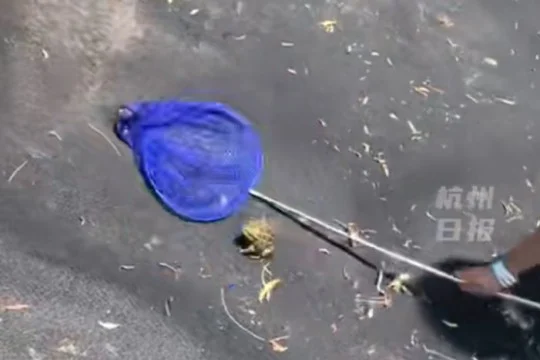
Doctors noted that the frogs’ ingestion bypassed natural barriers like stomach acid, allowing parasites to embed and multiply. “Swallowing frogs has damaged the patient’s digestive system and resulted in some parasites being present in her body, including sparganum,” a hospital spokesperson stated in a press briefing. Neurological symptoms emerged too, with Zhang experiencing dizziness and limb weakness, potentially from larval migration. Her son, in a poignant disclosure to staff, revealed the full story: “My mother ate eight live frogs. Now the sharp pain has made her unable to walk.” This confession unlocked the diagnostic puzzle, shifting treatment from generic pain management to targeted antiparasitic therapy.
The hospitalization lasted two weeks, involving intravenous antibiotics, deworming medications, and supportive care to repair gastrointestinal damage. Costs were not publicly detailed, but similar cases in China often strain families, especially for uninsured seniors. Zhang’s episode exemplifies how seemingly harmless traditions can precipitate systemic failures, with her vital signs stabilizing only after aggressive intervention.
Lessons from the Ward: Dangers of Pseudoscience and Paths Forward
Zhang’s discharge on September 19, 2025, brought relief but no full resolution—follow-up scans showed residual scarring in her intestines, and her back pain persists, now compounded by post-infection fatigue. The hospital’s senior physician, Dr. Wu Zhongwen, used the case to warn against “superstitious” remedies, noting, “Beyond swallowing frogs, some patients consume raw snake or fish gall, or even apply frog skin to their bodies.” He emphasized that most victims are elderly, often concealing attempts until crises hit, with similar incidents reported sporadically over the years.
Health authorities in Zhejiang province responded by launching awareness campaigns via local media and community centers, targeting seniors with messages on herniated disc management: physical therapy, anti-inflammatories, and epidural injections as proven alternatives. The incident fueled online discourse, with Hangzhou Daily’s coverage amassing millions of views, prompting netizens to share stories of dodged disasters through verified care. Nationally, it aligns with broader efforts to combat misinformation, as China’s National Health Commission ramps up digital literacy programs amid rising folk remedy trends post-pandemic.
For Zhang, recovery involves ongoing physiotherapy and psychological support to rebuild trust in conventional medicine. Her family’s vigilance has increased, with routine check-ups now mandatory. This saga serves as a stark reminder: while cultural practices enrich heritage, they must yield to science when health is at stake. As China grapples with an aging demographic—over 300 million seniors by 2025—cases like this demand proactive education to prevent folklore from turning fatal. Medical bodies urge consulting professionals for any persistent pain, ensuring remedies heal rather than harm.
60ue94