
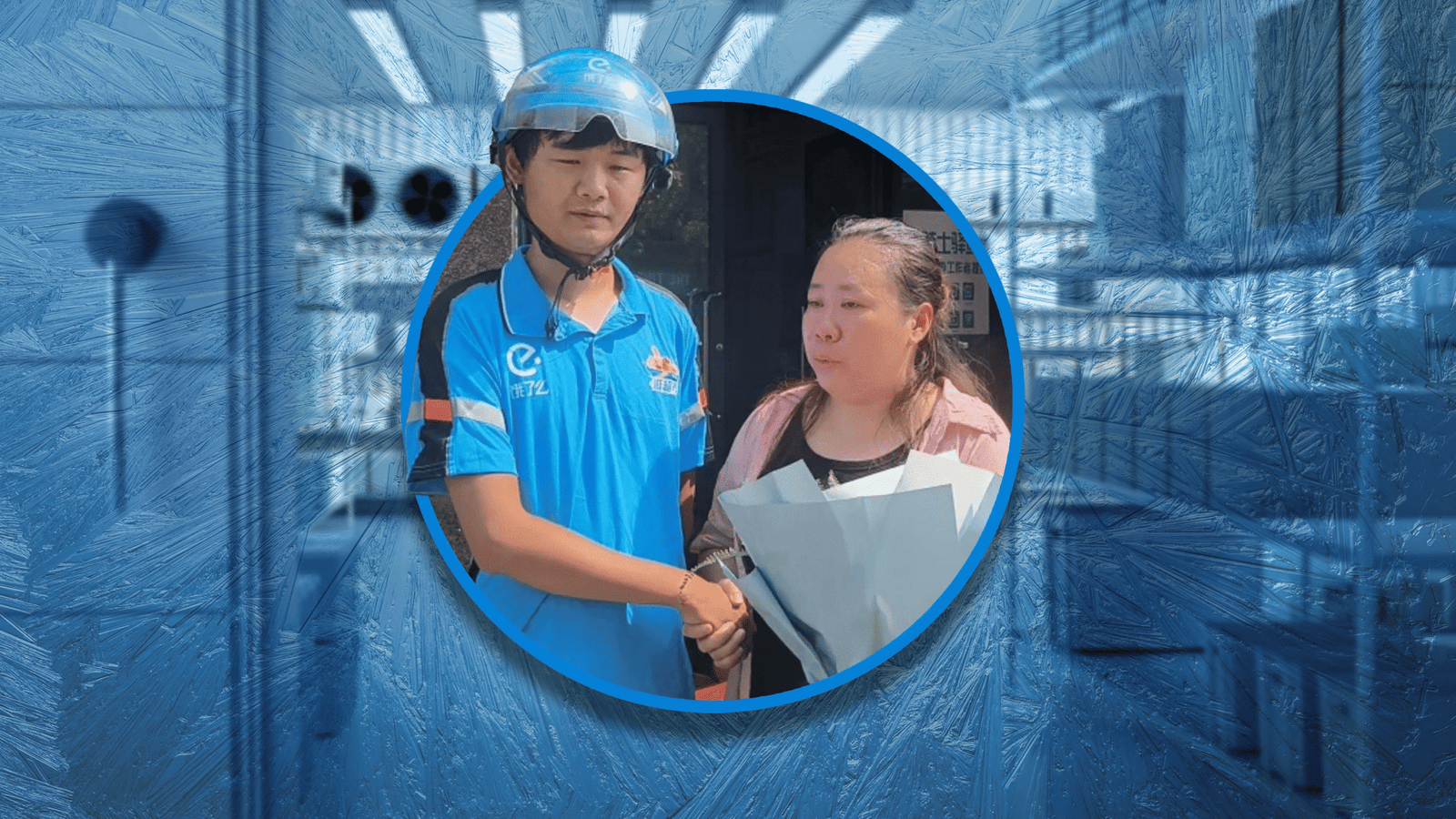
In a chilling incident that unfolded in central China’s Hunan province, a 39-year-old mother of two found herself trapped inside a commercial freezer maintained at a bone-numbing -20°C. The event, which occurred on the evening of August 31, 2025, could have ended in tragedy, but for the sharp instincts of a delivery rider who heard her desperate pleas for help. This real-life drama, reported widely across international media outlets, highlights the perils of workplace safety in cold storage facilities and the heroism of ordinary people in extraordinary circumstances.
Woman Trapped in -20°C Freezer
The story begins at a cold-chain logistics company in Hunan province, where the woman, identified only by her surname Chen to respect privacy norms in such reports, was performing routine duties. Chen, a dedicated employee and mother to a secondary school student and a five-year-old child, was sorting products in the company’s walk-in freezer on that fateful evening. The facility, designed for preserving perishable goods, spanned about 20 square meters and was equipped with heavy insulation to maintain the ultra-low temperature of -20°C, essential for items like frozen foods and medical supplies.
According to detailed accounts from South China Morning Post and other reliable sources, Chen deviated from standard safety protocols in an effort to work more efficiently. Company rules stipulated that goods should be moved through a smaller safety door built into the main entrance, requiring at least two people for safety. However, to expedite the task, Chen opted to fully open the main freezer door and enter alone. Once inside, she carefully closed the door behind her to shield the cardboard boxes from external moisture, which could compromise the products. What seemed like a minor shortcut quickly turned into a nightmare.
As Chen attempted to exit, the door refused to budge. The backup release switch, which should have allowed for an easy escape, was malfunctioning—unknown to her at the time due to prior unreported wear and tear. Dressed in light summer clothing unsuitable for such extreme cold, Chen was suddenly isolated in a soundproofed chamber where the freezing air assaulted her body immediately. The insulated walls, meant to preserve temperature, also muffled any cries for help, rendering her phone—left outside as per common practice in such environments—useless.
Panic set in as the minutes ticked by. Chen later recounted in interviews that her thoughts immediately turned to her children: “I thought of my children, one in secondary school and one only five.” The cold began to sap her strength rapidly; within moments, uncontrollable shivering gripped her, and she feared she would freeze to death. Desperation fueled her attempts to escape—she banged on the door with a heavy box, then resorted to using her slipper to create noise.
Read : Only Two Countries in the World Where Divorce is Illegal: The Philippines and Vatican City
Hypothermia loomed as a real threat; medical experts note that at -20°C, without proper protection, the body can lose heat at an alarming rate, leading to confusion, loss of coordination, and potentially fatal organ failure within 20-30 minutes. Chen’s remote location in the facility compounded the isolation; no colleagues were nearby to hear her faint knocks. For nearly 20 minutes, she endured what she described as an “endless” ordeal, her body temperature plummeting and numbness spreading through her limbs. This incident underscores the silent dangers in industrial settings, where routine tasks can spiral into life-threatening situations if safety measures are overlooked.
Read : 48-Year-Old Ryan Wardwell Trapped Behind Seven Teacups Waterfall for Two Days
The facility’s design, while efficient for business operations, exposed vulnerabilities. Cold storage units like this one are commonplace in China’s booming logistics sector, handling everything from e-commerce deliveries to food supply chains. Yet, as this event reveals, the lack of immediate communication tools or redundant safety features can turn a controlled environment into a deathtrap. Chen’s experience is a stark reminder of how quickly environmental hazards can overwhelm even the most prepared individuals, especially when protocols are bent under pressure.
The Life-Saving Intervention by Delivery Rider Liu Xu
Just as hope seemed to fade, salvation arrived in the form of Liu Xu, a delivery rider whose routine drop-off turned him into an unwitting hero. Liu, whose full name and background have been detailed in reports from The Times of India and NDTV, was making a scheduled delivery to the vicinity of the cold-chain facility around the time of the incident. Trained to be vigilant in his line of work—navigating urban and industrial areas while ensuring timely shipments—Liu’s attentiveness proved crucial.
As he approached the area, Liu heard unusual sounds: faint, repetitive knocking emanating from the freezer’s direction. Initially, he might have dismissed it as mechanical noise from the facility’s operations, but his instincts, honed by years on the job, told him otherwise. “I heard faint knocking and thought something wasn’t right,” Liu later recalled in statements to the media. Without hesitation, he followed the sound to the freezer door, where he discovered it sealed shut with Chen trapped inside.
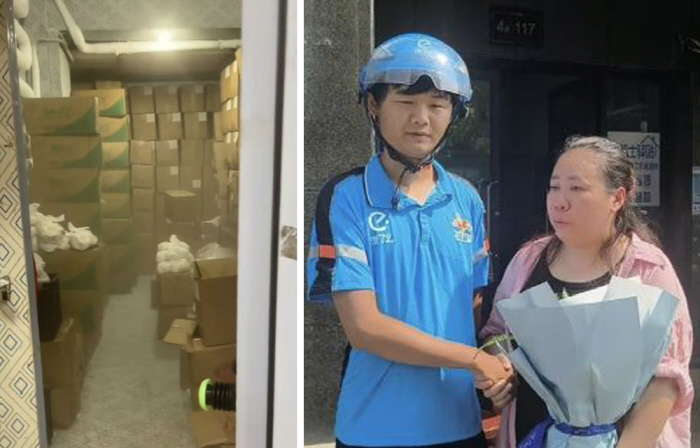
By this point, Chen had been inside for approximately 20 minutes, her condition deteriorating rapidly. She was barely able to stand, her body wracked by shivers and early signs of hypothermia. Liu acted swiftly, forcing open the door—likely using his strength or tools from his delivery gear—and pulled her to safety. The rescue was immediate and effective; Chen was extracted just in time to prevent irreversible damage. Paramedics were called, and it took her about two hours of warming treatments to fully recover from the shock of the cold exposure. Doctors confirmed no long-term injuries, attributing her survival to the brevity of the entrapment and Liu’s prompt action.
Liu Xu, a modest figure in this tale, embodies the archetype of the everyday hero. Delivery riders like him, often overlooked in the gig economy, face their own challenges—long hours, traffic hazards, and pressure to meet deadlines—yet in this moment, his alertness saved a life. Reports emphasize that Liu did not seek recognition initially; he simply did what felt right. His intervention highlights how interconnected modern workplaces are; a passing delivery could mean the difference between life and death in isolated industrial zones. This real event, far from any fictional narrative, showcases human resilience and the power of quick thinking in crisis situations.
Aftermath, Gratitude, and Lessons in Safety
In the wake of the rescue, the story took a heartwarming turn as Chen expressed profound gratitude to her savior. Overwhelmed by the near-miss, she presented Liu Xu with a series of tokens of appreciation rooted in Chinese cultural traditions. These included a red pennant—a symbolic banner of honor often awarded for heroic deeds—flowers, food, and even gift money. In a gesture that captured widespread attention, Chen offered Liu a share in her company, underscoring the depth of her thanks and perhaps a desire to forge a lasting bond with the man who preserved her future with her children.
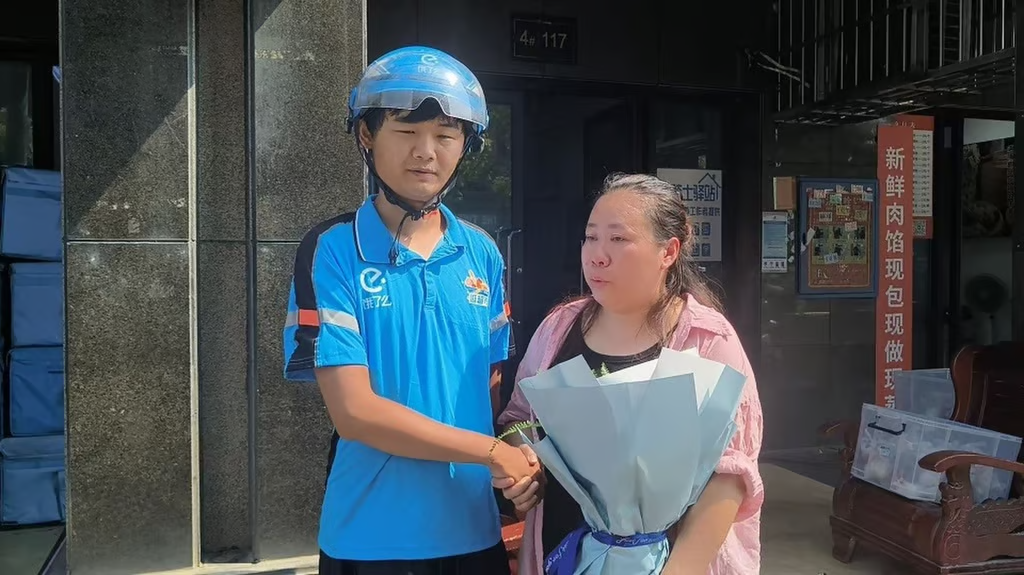
The incident also prompted Chen to reflect publicly on her error. She acknowledged violating safety rules by entering alone and pledged to advocate for better equipment inspections. “This didn’t just save me, but also protected my children’s future,” she said, echoing sentiments from online commentators who praised both her candor and Liu’s bravery. The company’s response was equally proactive; they committed to repairing the faulty backup switch and reinforcing training on protocols, such as the two-person rule for freezer access.
Broader implications have rippled through discussions on workplace safety in China’s logistics industry. Advocacy groups and netizens have called for mandatory upgrades, including internal alarm systems, functional emergency releases, and thermal protective gear for all employees in extreme environments. Statistics from occupational health reports indicate that cold-related incidents, though rare, are on the rise with the expansion of e-commerce and cold-chain demands. This event serves as a cautionary tale, urging businesses to prioritize maintenance and employee training to prevent similar scares.
Media coverage, from South China Morning Post to international outlets like The Indian Express, has amplified the story, turning it into a viral example of heroism and vulnerability. Online reactions have been overwhelmingly positive, with users lauding Liu’s “alertness” and Chen’s “heartfelt response.” One commenter noted, “Stories like this restore faith in humanity.” As of September 14, 2025, investigations into the facility’s compliance are ongoing, but no charges have been reported, focusing instead on preventive measures.
Chen’s full recovery allows her to return to her family, forever changed by the experience. Liu Xu continues his deliveries, perhaps with a newfound appreciation for the lives he touches indirectly. This accurate recounting of the incident reaffirms the importance of factual reporting in news blogs—sticking to verified details from credible sources ensures the story’s integrity while honoring the real individuals involved. In an era of misinformation, such precision not only informs but also inspires, reminding us that true heroes often emerge from the most unexpected places.