
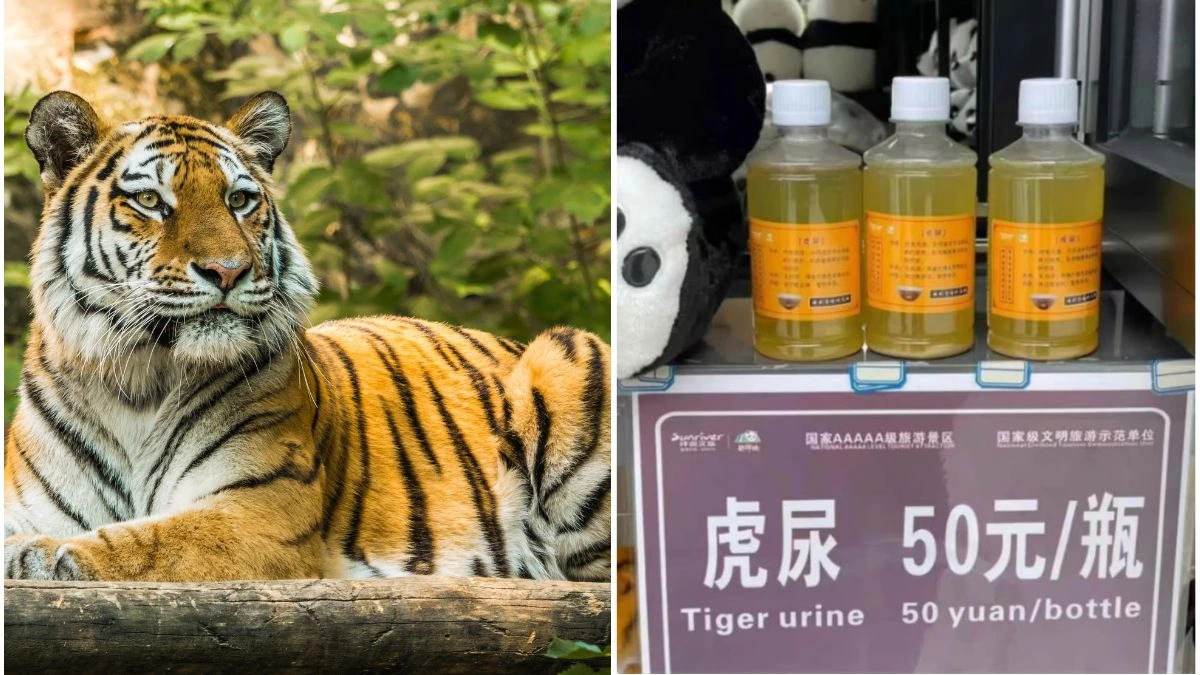
The Yaan Bifengxia Wildlife Zoo, nestled in China’s picturesque Sichuan province, has recently gained global attention for an unusual reason: selling bottled tiger urine as a medicinal product.
Marketed as a remedy for ailments like rheumatoid arthritis, sprains, and muscle pain, this unconventional practice has sparked widespread debate. While some are curious about its purported benefits, others are deeply concerned about the implications for health, ethics, and wildlife conservation.
The Unusual Remedy and Its Applications
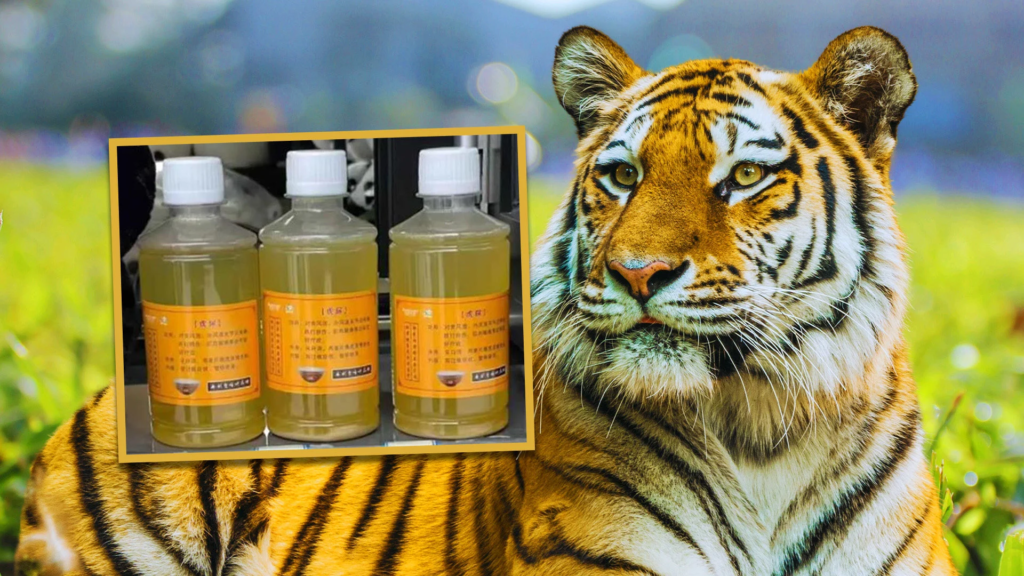
For 50 yuan (approximately Rs 596), visitors to the Yaan Bifengxia Wildlife Zoo can purchase a 250g bottle of what the zoo claims is “medicinal tiger urine.”
The zoo advises users to mix the urine with white wine and apply it to the affected area using slices of ginger. In a more surprising twist, the product’s instructions also suggest that it can be consumed orally, though they caution against continued use if allergic reactions occur.
The process of collecting the tiger urine is reportedly straightforward. According to zoo staff, the urine is gathered from a basin placed where the tiger urinates.
Read : Bizarre! Chinese Police Dog Fuzai Loses Year-End Bonus for Sleeping on the Job
However, the question of whether the urine undergoes any form of disinfection or processing before being bottled and sold remains unanswered. Despite this, sales figures for the product are relatively low, with only about two bottles sold each day.
Read : Bizarre Video of Chinese Car Getting Pregnant Goes Viral on the Internet: Watch Here
This is not the first time the zoo has made headlines with tiger urine. In 2014, the zoo allegedly awarded bottles of tiger urine as prizes to celebrity contestants on a reality TV show. The practice has since resurfaced, drawing attention and criticism from health professionals, traditional medicine practitioners, and conservationists alike.
Expert Opinions and Scientific Concerns
The claims surrounding tiger urine’s medicinal properties have been debunked by health experts and practitioners of traditional Chinese medicine. A pharmacist from the Hubei Provincial Traditional Chinese Medicine Hospital has categorically stated that tiger urine has no basis in traditional medicine.
The pharmacist emphasized that there is no scientific evidence to support the claims of its therapeutic effects. He warned that using unverified remedies like tiger urine could pose serious risks, potentially worsening health conditions rather than alleviating them.
Furthermore, the pharmacist expressed concerns about the potential harm to the image of traditional Chinese medicine. He argued that promoting tiger urine as a remedy misrepresents the discipline, which relies on rigorously tested and approved treatments.
The sale of such unconventional products, he noted, could also undermine ongoing efforts to conserve tiger populations. Tigers are an endangered species, and commercializing their byproducts, even urine, may contribute to unethical practices that threaten their survival.
Traditional Chinese medicine practitioners have raised additional questions about the zoo’s authority to sell medicinal products. They highlighted the stringent regulatory framework that governs the sale of medicines in China. All medicinal products must undergo extensive testing and receive approval from government regulators.
The sale of tiger urine, they argue, likely falls outside these guidelines, casting doubt on the zoo’s legitimacy in marketing it as a medicinal product. Although the zoo claims to have a valid business license, it is unclear whether this license explicitly permits the sale of such items.
Public Reaction and Broader Implications
The zoo’s unconventional offering has elicited strong reactions from visitors and internet users alike. Many are skeptical of the product’s efficacy and express discomfort with the idea of using tiger urine as a remedy.
One user shared their experience, saying, “I bought some for my dad out of curiosity, but have not seen any effect, so it is just sitting there.” Another commented on the potential health risks, asking, “Will the urine not spread bacteria? It is just gross to think about.”
The controversy surrounding the sale of tiger urine also raises ethical and conservation-related concerns. Tigers are an iconic species and a vital part of global biodiversity.
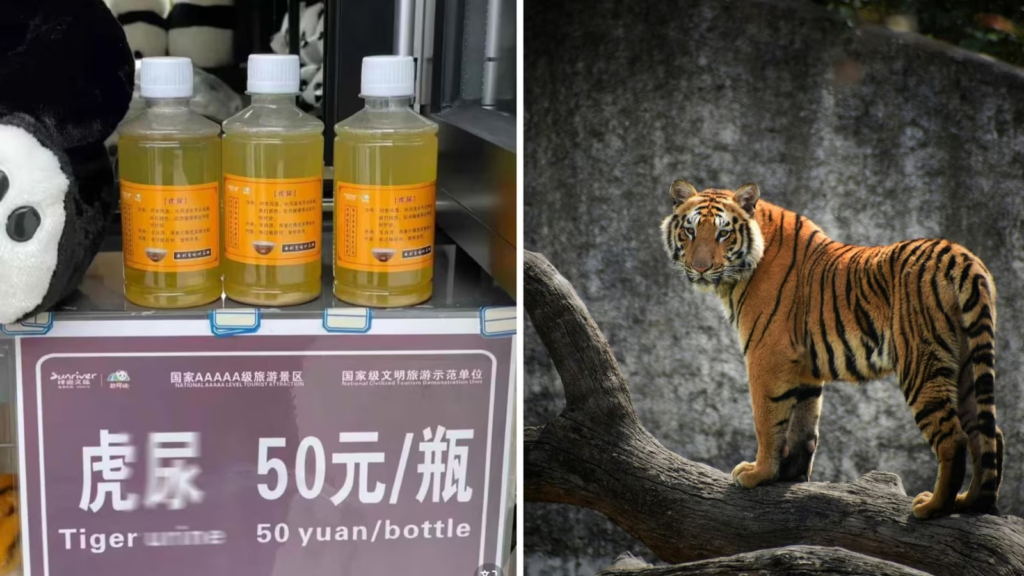
Conservationists worry that promoting the use of tiger byproducts could inadvertently encourage illegal wildlife trade, even if the zoo’s practices are technically legal. This could further endanger wild tiger populations, which are already under significant threat due to habitat loss and poaching.
The zoo’s actions also spotlight broader issues within the wildlife tourism and conservation industry. Critics argue that practices like these detract from the core mission of wildlife conservation and education. Instead of promoting awareness and respect for endangered species, such initiatives risk trivializing their plight and reducing them to commodities.
In addition to ethical and conservation concerns, the sale of tiger urine has implications for public health. Without proper processing or regulatory approval, the product may expose users to harmful bacteria or other contaminants. This underscores the importance of stringent oversight in the sale of medicinal products, particularly those derived from animals.
The Yaan Bifengxia Wildlife Zoo’s decision to sell tiger urine as a medicinal product is both unconventional and controversial. While it may attract curious tourists, it has drawn criticism from health professionals, traditional medicine practitioners, and conservationists.
The practice raises important questions about the ethics of using animal byproducts, the regulation of medicinal products, and the role of zoos in wildlife conservation. For now, the sale of tiger urine remains a bizarre chapter in the ongoing dialogue about health, ethics, and the environment.