
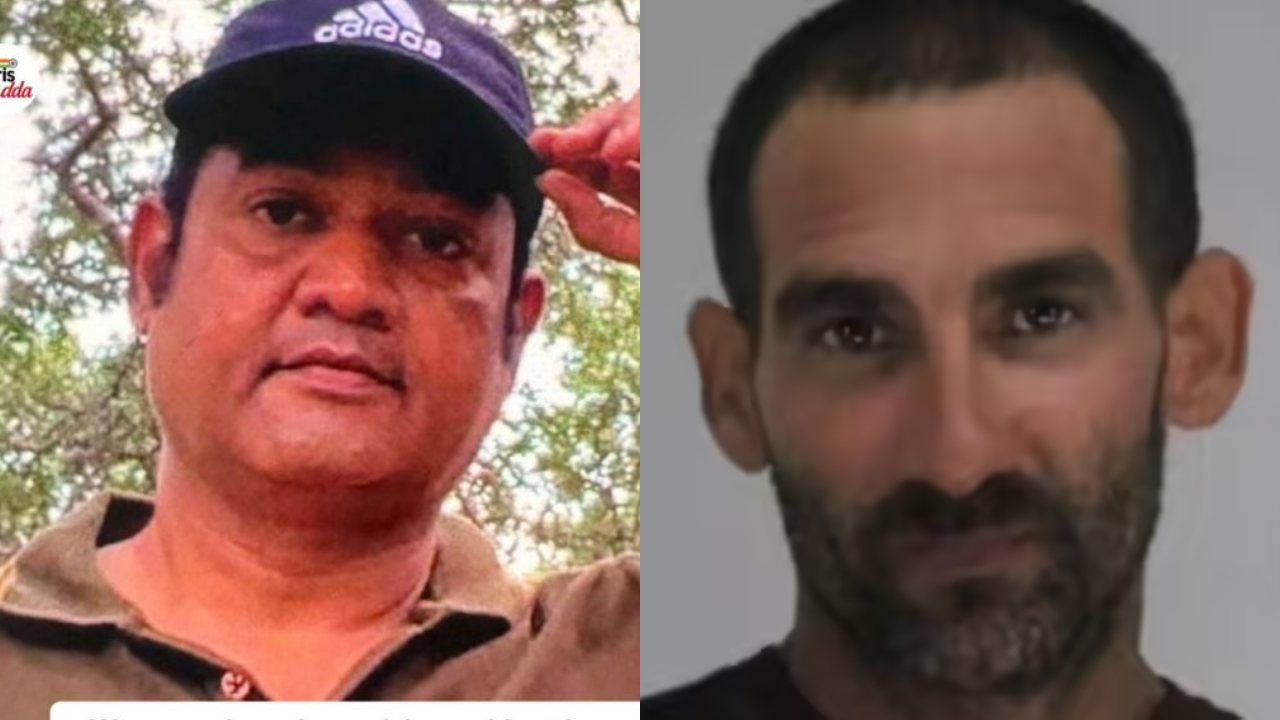
In a shocking and gruesome incident that has sent ripples of horror through the Dallas community and beyond, a 37-year-old Cuban national named Yordanis Cobos-Martinez has been arrested for the brutal beheading of 50-year-old Indian-origin motel manager Chandra Mouli Nagamallaiah. The attack, which unfolded on the morning of September 10, 2025, at the Downtown Suites motel on Samuell Boulevard, east of downtown Dallas, was witnessed by Nagamallaiah’s wife and his 18-year-old son.
What began as a seemingly mundane workplace dispute over a broken washing machine escalated into an unimaginable act of violence, leaving the victim’s family traumatized and sparking national debates on immigration, workplace safety, and criminal justice. Dallas police responded to reports of a stabbing around 9:30 a.m., only to discover a scene of carnage that included the victim’s decapitated body and severed head discarded in a nearby dumpster. Cobos-Martinez, who worked as a cleaner at the same motel, was apprehended shortly after, still armed with the machete used in the attack and covered in the victim’s blood.
The Downtown Suites motel, a modest establishment near Interstate 30 and the Tenison Golf Course, serves as temporary housing for many immigrant workers and travelers in one of Dallas’s more transient areas. Nagamallaiah, originally from Karnataka, India, had managed the property for two to three years, earning praise from the owners as a hardworking and reliable individual. He lived on-site with his family, including his wife and teenage son, who often assisted at the front office.
On that fateful Wednesday morning, the motel was going about its routine operations when tensions boiled over in room 108. According to an arrest affidavit filed by a Dallas Police Department detective, Cobos-Martinez and a female colleague, both employees tasked with cleaning duties, were using a washing machine to launder linens. Nagamallaiah approached them and instructed them not to use the appliance, as it was malfunctioning and could cause further damage or safety issues.
What should have been a simple directive turned volatile due to a language barrier. Nagamallaiah, who primarily spoke English and possibly some regional Indian languages, asked the female witness to translate his instructions to Cobos-Martinez, who reportedly had limited English proficiency. This indirect communication infuriated the suspect, who felt disrespected by not being addressed directly.
The affidavit details that Yordanis Cobos-Martinez became visibly agitated, arguing verbally with Nagamallaiah about the washing machine and the translation issue. Surveillance video from the motel captured the initial confrontation inside the room, showing the two men in a heated exchange. The female witness later told police that Cobos-Martinez stormed out of the room momentarily, only to return with a machete concealed on his person. Without warning, he began hacking at Nagamallaiah multiple times, inflicting severe wounds to his body.
As the attack intensified, Nagamallaiah fled the room, screaming for help while stumbling down the motel’s parking lot toward the front office. Yordanis Cobos-Martinez pursued him relentlessly, continuing to strike with the machete. Blood trailed behind the victim, marking a gruesome path across the asphalt. The chase ended near the office, where Nagamallaiah’s wife and 18-year-old son were working. The family members rushed outside upon hearing the screams, attempting desperately to intervene and protect the father and husband.
Read : Indian Motorcyclist Yogesh Alekar’s Dream Round-the-World Journey Halted After Bike Stolen in UK
However, Yordanis Cobos-Martinez pushed them aside and resumed the assault, striking Nagamallaiah repeatedly until he collapsed. In a final act of savagery, the suspect decapitated the victim right there in the open parking lot, in full view of his loved ones. Witnesses described the scene as “sick and disturbing,” with the affidavit noting that Cobos-Martinez then kicked the severed head across the lot like a soccer ball before picking it up and discarding it in a nearby dumpster. He also rifled through Nagamallaiah’s pockets, taking his cell phone and key card, possibly as trophies or to hinder any immediate response.
Read : “You Cannot Become a CEO in America If You Are Not Indian”: US Envoy Eric Garcetti
The immediate aftermath was chaos. Dallas Fire-Rescue units arrived just as Cobos-Martinez was walking away from the scene, still clutching the bloodied machete. Patrol officers from the Dallas Police Department quickly tracked him down nearby, taking him into custody without further incident. At the time of his arrest, the suspect was wearing a blood-soaked T-shirt and showed no signs of remorse, according to police reports. The victim’s body was found outside a ground-floor room, surrounded by a pool of blood, while the head was recovered from the trash bin.
Emergency responders pronounced Nagamallaiah dead at the scene due to massive trauma from the machete wounds. The female witness who had been cleaning with Cobos-Martinez provided crucial testimony, corroborating the video evidence and explaining the trigger of the argument. In a post-arrest interview, Cobos-Martinez admitted to the decapitation, reportedly telling authorities that he had acted out of anger over the perceived slight. This confession, combined with the irrefutable surveillance footage, has formed the backbone of the capital murder charge against him.
The Suspect’s Troubled Past and Immigration Status
Yordanis Cobos-Martinez, the 37-year-old perpetrator, is no stranger to the criminal justice system, with a history of violent offenses spanning multiple states. Born in Cuba, he entered the United States as an undocumented immigrant and quickly accumulated a rap sheet that includes convictions for child sex abuse, grand theft of a motor vehicle, false imprisonment, and carjacking. Public records link him to crimes in Houston, Texas; California; and Florida.
One particularly bizarre incident occurred in 2017 in South Lake Tahoe, California, where Cobos-Martinez allegedly carjacked a woman while naked, leading to his conviction in 2023 and a sentence of one and a half years in prison. He was also arrested in Florida for auto theft and in Houston for indecency with a child and assault charges. Despite this extensive record, Cobos-Martinez was released from Immigration and Customs Enforcement (ICE) custody at the Bluebonnet Detention Center in Dallas on January 13, 2025, under an order of supervision. ICE officials stated that Cuba refused to accept him back due to his criminal history, leaving him free in the U.S. pending deportation proceedings.
This release has become a flashpoint in broader political discussions. The Department of Homeland Security (DHS) issued a statement describing Cobos-Martinez as a “depraved criminal illegal alien from Cuba” and emphasizing that the beheading “could have been prevented” if stricter deportation policies had been in place. Assistant Secretary Tricia McLaughlin highlighted the incident as justification for the Trump administration’s efforts to deport undocumented individuals with criminal records to third countries, such as Uganda or South Sudan, even if they have no prior connections there.

ICE has lodged a detainer with the Dallas County Jail, ensuring that once local charges are resolved, federal authorities will seek his arrest and removal from the country. Jail records confirm that Cobos-Martinez is being held without bond on the capital murder charge, with his immigration status under hold. The suspect’s Cuban nationality and prior deportation order underscore the complexities of international repatriation, especially when home countries balk at receiving convicted felons.
Experts note that such cases strain U.S. immigration resources, often resulting in supervised releases that allow individuals like Cobos-Martinez to remain in communities where they pose potential risks. His employment at the Downtown Suites, where he lived and worked as a cleaner, was apparently obtained without thorough background checks, raising questions about hiring practices in low-wage sectors reliant on immigrant labor.
Furthermore, the affidavit reveals that Cobos-Martinez had been residing at the motel, possibly as part of his job arrangement, which allowed him easy access to the premises and tools like the machete. His admission to the killing during interrogation suggests a lack of denial but no clear motive beyond immediate rage. Psychological evaluations may follow in court, but for now, his past paints a picture of a volatile individual with a propensity for extreme violence. The integration of such offenders into society post-release remains a contentious issue, with this case serving as a stark example of the consequences when oversight lapses.
Victim’s Life, Family Impact, and Broader Repercussions
Chandra Mouli “Bob” Nagamallaiah was more than just a victim; he was a dedicated family man and pillar of his workplace community. Hailing from Karnataka, India, the 50-year-old had immigrated to the United States in pursuit of better opportunities, eventually settling in Dallas to manage the Downtown Suites. For the past two to three years, he oversaw daily operations, ensuring the motel’s upkeep and guest satisfaction. Motel owners described him to local media as “a good, hardworking person” who treated his staff fairly and contributed positively to the establishment.
Nagamallaiah lived on-site with his wife and 18-year-old son, who was on the cusp of college and relied on his father’s support for education and stability. The family had built a modest life in the U.S., with Nagamallaiah’s role providing them housing and income. Friends and colleagues remember him as approachable and diligent, often going the extra mile to resolve issues, as evidenced by his attempt to address the washing machine problem that day.
The impact on his family is devastating and profound. The wife and son witnessed the entire attack, including the beheading and the suspect’s callous handling of the severed head, an image that will haunt them indefinitely. The son, described as a teenager in various reports, tried to intervene but was overpowered, adding layers of trauma from helplessness and violence.

A fundraiser has been launched online to cover funeral expenses, daily living needs, and the son’s upcoming college tuition, reflecting the community’s outpouring of support. The Consulate General of India in Houston has expressed deep condolences, stating they are in touch with the family and offering all possible assistance, including repatriation arrangements if desired. Funeral services for Nagamallaiah were scheduled for Saturday, September 13, 2025, allowing loved ones to mourn. The loss extends beyond the immediate family; Indian diaspora groups in Dallas have rallied, holding vigils to honor Nagamallaiah and advocate for better protections for immigrant workers.
This tragedy has broader repercussions, igniting conversations on multiple fronts. Workplace safety in motels and similar low-profile establishments is under scrutiny, with calls for mandatory conflict resolution training, stricter security protocols, and comprehensive background checks for employees. The incident highlights vulnerabilities faced by immigrant managers and workers, who often deal with diverse staff amid language barriers and resource constraints.
Politically, it has fueled debates on immigration enforcement, with critics of previous administrations arguing that lax policies allowed dangerous individuals like Cobos-Martinez to roam free. Supporters of reform point to this as evidence for enhanced border security and faster deportations. In Dallas, local authorities are reviewing the case for any procedural lapses, while national media coverage has amplified the story, drawing parallels to other high-profile crimes involving undocumented immigrants.
As the legal proceedings unfold, with Cobos-Martinez facing capital murder—potentially carrying the death penalty in Texas—the focus remains on justice for Nagamallaiah and healing for his shattered family. This senseless loss serves as a grim reminder of how quickly everyday disputes can turn deadly, urging society to address underlying issues of anger management, cultural sensitivities, and systemic failures in immigration and employment.