

Cody Detwiler, widely recognized online as WhistlinDiesel, has built one of the most distinctive and disruptive identities in automotive content creation. Known for pushing vehicles to their physical limits—and often far beyond them—he has cultivated a massive audience attracted to his unapologetically extreme approach to machinery. With more than 10 million YouTube subscribers and millions more following his social media platforms, Detwiler’s influence extends across the digital automotive landscape.
His videos routinely feature high-value trucks, specialty equipment and exotic cars, many of which become the subjects of intentional destruction carried out in front of the camera. Over time, this niche style has sparked a blend of curiosity, criticism and fascination, establishing him as a polarizing yet unmistakable figure in the world of online entertainment.
Against this backdrop of notoriety and spectacle, Cody Detwiler’s recent arrest in Tennessee has amplified public attention. His detention on tax evasion charges marks a serious departure from the controlled chaos that typically defines his content. Although legal issues are not unfamiliar territory for high-visibility creators, this case stands out because it intersects with both his personal business operations and the expensive, unmistakable vehicles that formed the basis of the allegations.
The situation has drawn substantial interest among fans and observers who are eager to understand how a creator accustomed to navigating controversy became the subject of a formal indictment. The complexity of the charges—and the fact that they relate to a high-profile exotic car featured in his videos—has added new layers to his already complicated public persona.
Detwiler’s Rise as an Automotive Content Creator
WhistlinDiesel’s ascent began with straightforward demonstrations of vehicle durability, rural equipment handling and large-scale mechanical tests that appealed to audiences interested in outdoor and automotive activities. Over time, his production style shifted toward increasingly ambitious stunts.
Pickup trucks were subjected to extreme load tests, construction equipment was pushed well beyond basic operating limits and high-end sports cars became props for experimentation and destruction. This combination of shock value, engineering curiosity and the allure of watching expensive assets undergo unconventional treatment solidified his reputation as a boundary-testing entertainer.
What differentiated Cody Detwiler from other automotive YouTubers was not simply the vehicles he featured but the defiant tone underpinning his videos. Rather than preserving high-value items, he transformed them into consumables, challenging conventional automotive culture that prizes restoration, care and mechanical longevity. This unorthodox approach earned him millions of views per upload, lucrative partnerships and a deeply loyal audience fascinated by his disregard for tradition.
Using a $400,000 Ferrari, WhistlinDiesel tested how durable his car bubble really is.
— Viral Vibes (@x_viral_vibes) November 16, 2025
📹@whistlindiesel pic.twitter.com/4SoHLOFfaF
Yet it also drew criticism from those who viewed the destruction as wasteful or irresponsible. The blend of enthusiasm and disapproval helped fuel his visibility, ensuring that each new stunt generated strong engagement. His rapid rise meant constant acquisition of vehicles—both commercial-grade equipment and luxury brands. Many of these purchases were showcased online, including the 2020 Ferrari F8 Tributo that would later become central to the tax investigation.
Detwiler’s ownership of such an exotic model was entirely in character for his content: high-performance vehicles often appeared in videos designed to test speed, durability or sheer spectacle. As a result, his audience became accustomed to seeing rare and expensive cars play unconventional roles in his productions. This established pattern is part of what made the recent case particularly notable, as a featured vehicle shifted from being a dramatic prop to the subject of a legal dispute.
The Tax Evasion Charges and Details of the Arrest
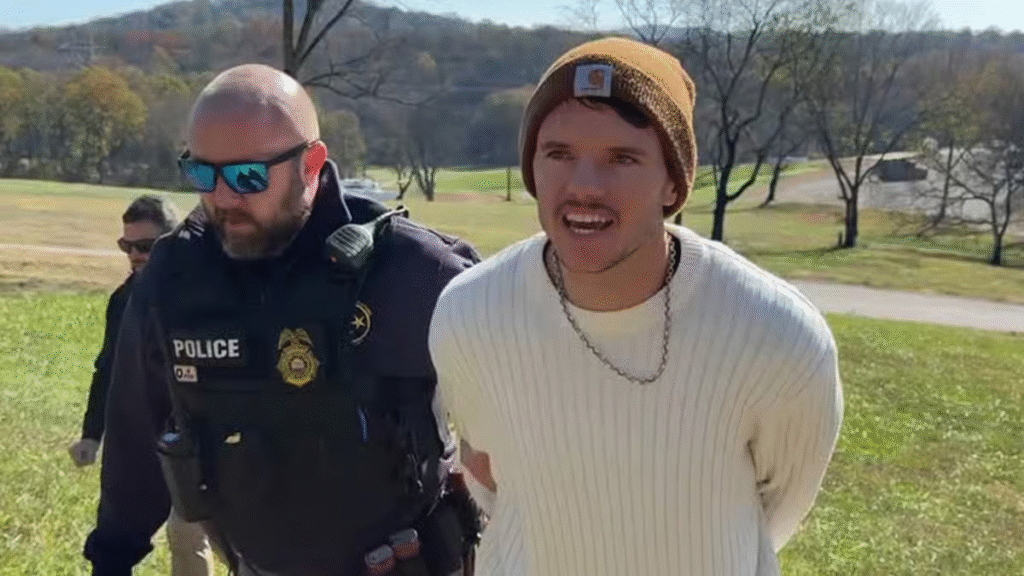
The events leading to Detwiler’s arrest unfolded in early November after a Williamson County Grand Jury returned an indictment alleging two counts of tax evasion. According to the Tennessee District Attorneys General Conference, the charges stemmed from a January 2023 transaction involving the purchase of the 2020 Ferrari F8 Tributo. Prosecutors asserted that Detwiler knowingly attempted to avoid paying state sales tax of $500 or more—a threshold used under Tennessee law to establish criminal intent in tax-related offenses.
While the amount referenced in the indictment was relatively modest compared with the value of the vehicle itself, the legal significance rested not on the dollar figure but on the allegation of willful tax avoidance. Cody Detwiler was taken into custody on Wednesday following the filing of the indictment. Officials reported that he was arrested without incident and transported for booking, after which he was released on a $20,000 bond.
YouTuber WhistlinDiesel (Cody Detwiler) was arrested for tax evasion on Nov. 12. He has since been released on a $2 million bond pic.twitter.com/nELxmrFn7T
— Breaking911 (@Breaking911) November 16, 2025
For someone with a highly visible public presence, the immediate aftermath unfolded in real time across his social media platforms. He posted images and video clips on Instagram showing deputies arriving at a residence, his handcuffs, booking documents and his mug shot. His caption asserted that he had done nothing wrong and implied that the charges were linked to perceptions of his financial success rather than any intentional misconduct.
Read : In-N-Out Burger Sues YouTuber Bryan Arnett Over Lewd Remarks to Customers in a Prank Video
The public release of this footage allowed followers to witness his arrest from his perspective, reinforcing the connection between his unpredictable online persona and the real-world consequences he now faced. Detwiler’s forthcoming arraignment, scheduled for November 19 in Williamson County, is expected to offer a more formal overview of the allegations and provide an initial courtroom opportunity for his legal team to respond.
Authorities have not disclosed additional details regarding the broader scope of the investigation, leaving open questions about whether further inquiries are ongoing or if additional charges might emerge. The nature of tax-related cases often hinges on documentation, intent and procedural requirements associated with major purchases. High-value vehicles like the Ferrari F8 Tributo typically require meticulous registration and tax compliance, especially in states that maintain strict oversight of luxury goods transactions.
For a figure with a public history of acquiring expensive assets for content creation, prosecutors may be scrutinizing whether the January 2023 purchase met these obligations. While the state’s legal filings outline only the basic structure of the allegations, the case’s prominence has prompted significant attention because it sits at the intersection of public celebrity, financial transactions and state tax regulation.
Impact on His Public Persona and What Comes Next
For a creator whose brand thrives on unpredictability and the deliberate destruction of valuable property, legal complications introduce a new dimension to the narrative surrounding WhistlinDiesel. His public persona has long blended bravado with spectacle, and his stunts often generated controversy that fueled his popularity. However, criminal charges—especially those tied to personal financial conduct rather than content-related disputes—carry different implications for public perception. Fans who admire his style may interpret the charges as an extension of the challenges that come with visibility, while critics may view them as evidence of poor judgment off camera.
The Ferrari at the center of the case symbolizes both the allure and complexity of Detwiler’s approach to content creation. To his followers, vehicles like the F8 Tributo can appear as props within a larger entertainment ecosystem. To regulatory authorities, they remain assets that require compliance with state tax laws. The friction created by these contrasting perspectives underscores how online fame can collide with legal structures that operate independently of public sentiment.
In terms of his career, the arrest has drawn widespread discussion across social platforms and online automotive communities. Some see it as a temporary legal challenge that may have minimal effect on his content pipeline, while others speculate that the case could influence how he manages future vehicle acquisitions or business operations. Because the charges are focused on a specific transaction rather than a broader pattern of alleged misconduct, the legal outcome will likely depend on documentation, procedural evidence and arguments presented during the court process.
Regardless of the eventual resolution, the incident has added a complex chapter to Detwiler’s public identity. He continues to maintain a highly visible role in automotive entertainment, and his audience remains engaged with both his content and the unfolding legal proceedings. His arraignment on November 19 will mark the next significant development, offering a clearer sense of how the case will move forward and what it may mean for one of YouTube’s most unconventional automotive personalities.
I enjoyed reading this article. Thanks for sharing your insights.