

Born in 2017, Zarwa Kakar arrived into the world appearing healthy, with no immediate signs that her life would soon be defined by prolonged hospital stays, complex surgeries, and a diagnosis so rare that only just over 30 people worldwide are known to have it. Her early months followed a familiar pattern for many new families, but subtle health issues soon began to emerge, setting in motion a journey that would reshape the lives of Zarwa, her parents Fahima and Waris, and her younger brother Mehran.
Living in London, the Kakar family has spent years navigating specialist care at some of the UK’s leading hospitals, most notably Great Ormond Street Hospital (GOSH). What began as repeated chest infections ultimately led to the discovery of geleophysic dysplasia, a rare genetic condition that causes abnormal growth, stiff joints, heart complications, and critically, a dangerously narrow airway. Zarwa Kakar’s story highlights the complexity of diagnosing rare conditions, the emotional toll on families, and the vital role of specialist children’s hospitals and charitable support in sustaining families through years of uncertainty.
From Recurrent Chest Infections to a Life-Altering Diagnosis
Zarwa Kakar’s health concerns first became apparent when she was only a few months old. She began suffering from frequent chest infections and bronchiolitis, a common lung infection in infants, but the frequency and severity of her symptoms stood out. According to her mother, Zarwa was experiencing chest infections once or even twice a month, often accompanied by breathing difficulties that required repeated medical attention.
In May 2018, during yet another hospital visit for a chest infection at Chelsea and Westminster Hospital, doctors detected a heart murmur. This discovery marked a critical turning point. Zarwa Kakar was referred to the Royal Brompton Hospital, where specialists identified a narrowing of one of her heart valves. Her condition was serious enough that her first Christmas as a family was spent in a local hospital, an early indication that hospital care would become a recurring part of their lives.
As her medical needs grew increasingly complex, Zarwa Kakar was eventually referred to Great Ormond Street Hospital. There, specialists undertook extensive investigations to understand the underlying causes of her repeated infections, breathing difficulties, and heart problems. Zarwa underwent surgery to replace her heart valve and, over the next five years, required balloon dilation procedures every three months to widen her airway. These interventions were essential to help her breathe, but they also meant frequent hospital admissions, recovery periods, and ongoing vulnerability to infection.
Despite intensive treatment, Zarwa Kakar continued to struggle with breathing difficulties even when she was not undergoing planned procedures. The COVID-19 pandemic added another layer of difficulty, complicating hospital visits and increasing the risks associated with respiratory illness. Through it all, her parents balanced vigilance with resilience, navigating medical systems while trying to preserve as much normalcy as possible for their daughter.
Eventually, further genetic testing revealed the underlying cause of Zarwa’s condition: geleophysic dysplasia. This extremely rare form of dwarfism affects connective tissue and organ development, often leading to heart valve disease, joint stiffness, and airway narrowing. For Zarwa Kakar, the diagnosis explained years of unexplained symptoms, but it also confirmed that her condition was progressive and without a curative treatment.
Life at Great Ormond Street Hospital and the Reality of Long-Term Care
Since 2020, Great Ormond Street Hospital has been a central part of Zarwa Kakar’s life. For her family, GOSH has become more than a place of treatment; it has become a second home. Zarwa has spent most of her Christmases on the hospital wards, a reality that reflects the severity and persistence of her condition.
One of the most significant challenges posed by geleophysic dysplasia is Zarwa Kakar’s severely narrow airway. Surgeons performed a long and high-risk operation to reconstruct her airway, followed by another heart valve operation in October of the following year. While these procedures offered temporary relief, they could not halt the progression of the disease. Over time, Zarwa began to develop worsening symptoms, including increased breathlessness and stiffness in her fingers, signalling further limitations in what medicine could offer.
Read : Riverdale Star Lili Reinhart Diagnosed with Endometriosis After Doctors Dismissed Her Pain
Her mother has spoken candidly about the moment doctors explained that no further curative treatments were available and that Zarwa Kakar would be referred to a palliative care team. Initially misunderstood as end-of-life care, palliative support was explained as a means of improving comfort, managing symptoms, and supporting the family through complex decision-making. For Fahima, this marked an emotional reckoning with the limits of medical intervention and the painful reality of watching her child endure ongoing discomfort.

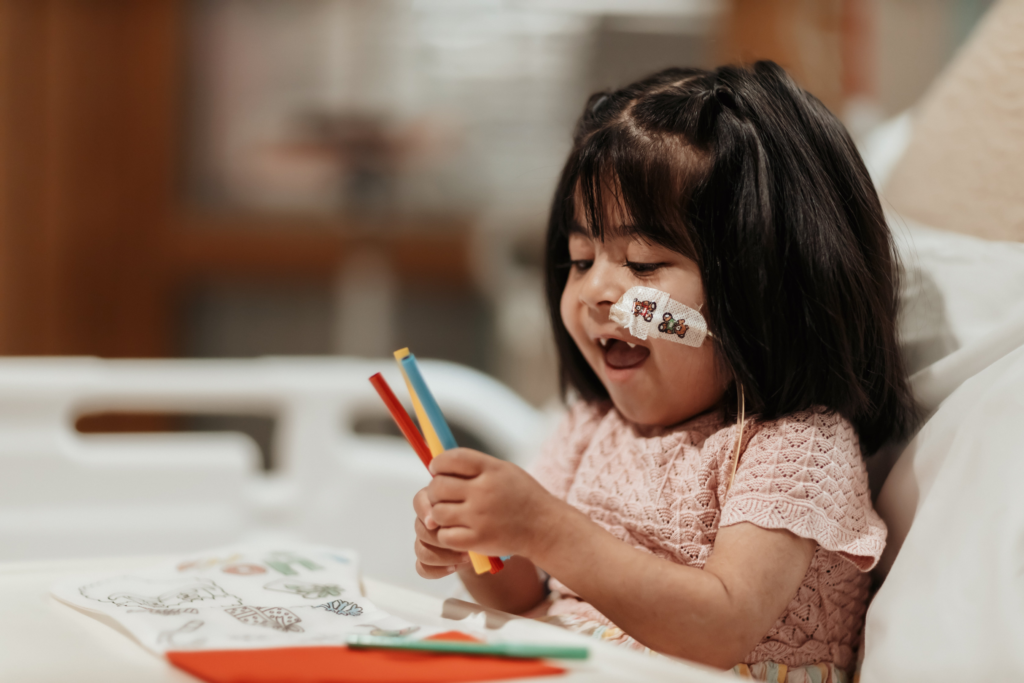
Despite these challenges, life at GOSH has been characterised by compassion, creativity, and moments of joy. The hospital’s charity-funded play teams, decorations, and festive events have helped transform clinical spaces into environments where children can still experience wonder. One Christmas, Zarwa woke up to a ward filled with twinkling lights, decorations, and a stocking full of gifts. She took part in arts and crafts, met Santa, and even encountered the Grinch, a character she adored after watching the film countless times.
Zarwa also appeared in a GOSH Christmas television advert, featuring real-life footage of families spending the festive season on the wards. These moments, while not erasing the hardship of hospital life, have provided meaningful memories that her family treasures. According to her mother, the hospital’s atmosphere during Christmas is warm and inclusive, with staff making a concerted effort to involve every child and family.
The charity’s support extends beyond celebrations. Accommodation funded by GOSH Charity allows parents to stay close to their children during long admissions, ensuring families can remain together through extended periods of treatment. Spiritual support, play therapy, and practical assistance all contribute to easing the burden faced by families dealing with serious childhood illness.
Family, Faith, and Finding Joy Amid Uncertainty
At home, Zarwa Kakar is described as lively, expressive, and full of personality. She is “very sassy, very loud,” and loves singing, dancing, arts and crafts, and Disney films. Her favourite character is Stitch, and despite her health challenges, she embraces creativity and music with enthusiasm. These glimpses of normal childhood joy stand in contrast to the medical complexities that dominate much of her life.
Read : Shattering! Mother Britney McRae and 4-Year-Old Son Diagnosed with Cancer on the Same Day
The Kakar family relies heavily on one another for support. Zarwa’s younger brother Mehran, aged four, is an integral part of the family dynamic, and her parents work together to maintain stability and positivity where possible. Fahima has reflected on the emotional conflict parents face when caring for a seriously ill child, acknowledging the instinctive desire to hold on to their child’s presence even while recognising the suffering involved.
Faith has become an important source of comfort for the family. Fahima has spoken about placing trust in God’s plan, finding solace in the belief that some things are beyond human control. This perspective helps the family navigate daily life, focusing on providing Zarwa with enjoyment and comfort rather than dwelling solely on uncertainty.
Planning for the future remains difficult. Fahima avoids making firm plans, particularly around holidays, knowing that Zarwa’s health can change rapidly. When Zarwa is at home, the family makes the most of each day, often completing celebrations early in case a sudden illness requires hospitalisation. Christmas mornings are cherished, marked by a special breakfast and gift exchanges whenever circumstances allow.
Zarwa has expressed simple but heartfelt wishes. For Christmas, she asked for an iPad, and she looks forward to celebrating her birthday on December 22. She also decorated a bauble for the Christmas tree at London’s St Pancras Station as part of a GOSH Charity initiative highlighting the hopes of seriously ill children. Her aspiration to become a nurse or teacher reflects both innocence and empathy, shaped by years spent in medical environments.
Great Ormond Street Hospital Charity continues to emphasise that no child should have to spend Christmas in hospital, but when they do, every effort is made to create a sense of home. Supporting hundreds of seriously ill children daily across dozens of clinical specialties, the charity plays a crucial role in enhancing care, funding research, and providing emotional and practical support to families like the Kakars.
Zarwa Kakar’s story is one of resilience shaped by medical rarity, family strength, and the enduring impact of compassionate care. While her condition affects only a handful of people globally, the challenges she faces resonate widely, underscoring the importance of specialised paediatric healthcare, sustained charitable support, and recognition of the lived experiences of families confronting rare and complex childhood illnesses.
Sun City is where the serious players hang out. The bonuses are solid, and the whole experience is top-notch. Highly recommended! Tap in here: sun city.