
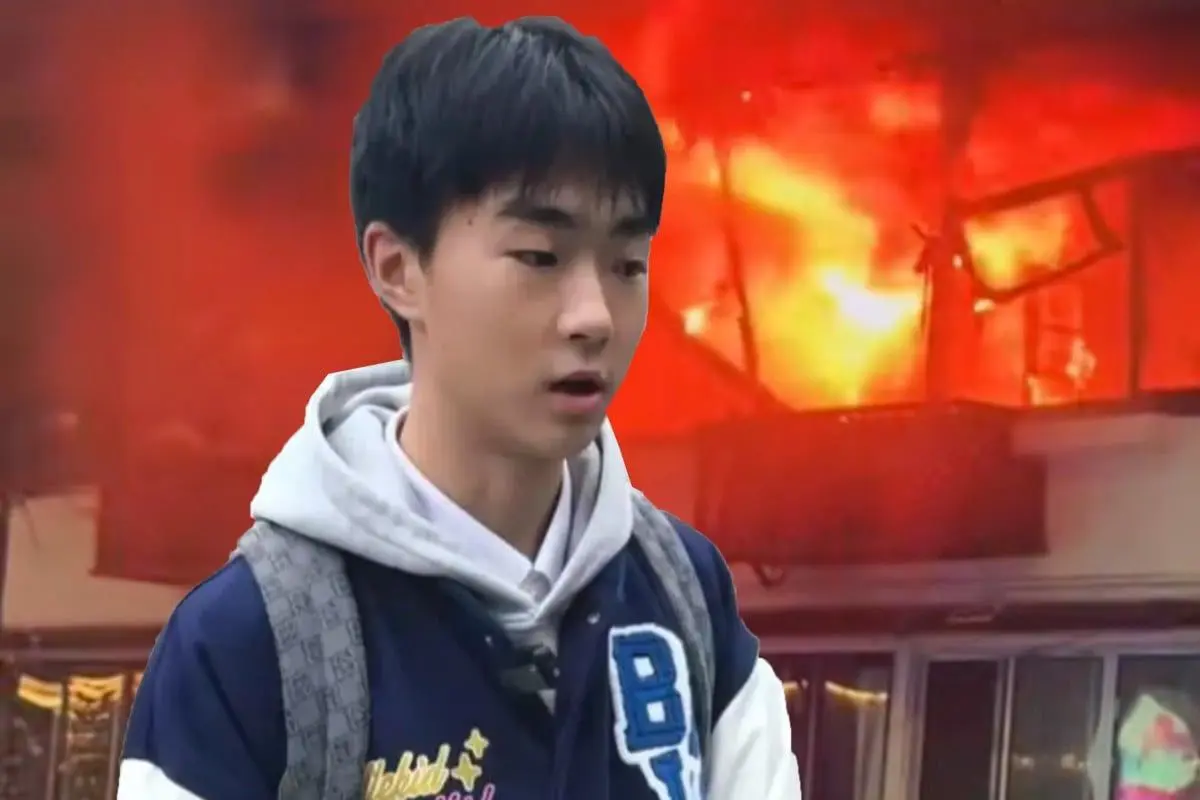
An 18-year-old student from Chongqing has been widely praised after rushing into a burning apartment to save an elderly couple, acting with remarkable composure and courage. The incident, which unfolded on the evening of October 16, has drawn national attention not only for the dramatic rescue itself but also for the humility and quiet responsibility shown by the young rescuer, Zhu Ye. His response, driven by instinct and supported by basic emergency training, stands in notable contrast to the intense danger of the situation he entered.
The story has since circulated widely across Chinese social media platforms, where Zhu Ye has been nicknamed “Underpants Man” due to the fact that he acted while wearing only his briefs at the time of the emergency. Although this nickname may seem humorous at first, the deeper narrative behind it reflects preparedness, altruism, and the lasting value of safety education. The incident also offers insight into the strong sense of community responsibility that can still be found in densely populated urban environments, where close proximity does not always guarantee strong neighbourly bonds.
The fire began when the battery of an electric wheelchair suddenly exploded inside the elderly couple’s apartment. Fires caused by lithium batteries have become a growing concern in several cities, as electric mobility devices become increasingly common in residential spaces. When Zhu Ye noticed the flames and heard distress from inside the flat next door, he did not take time to fully dress or consider hesitation.
Instead, he took action immediately, entering the burning apartment and assisting both elderly residents to safety. The man, dependent on the electric wheelchair, and his wife, who had not yet realised that her clothing had caught fire, were both in urgent need of assistance. Zhu Ye’s quick observation allowed him to guide them out of the danger zone before the fire spread further. His intervention prevented what could have easily escalated into a fatal situation.
A Sudden Emergency and a Rapid Response
Reports indicate that the fire erupted swiftly after the wheelchair battery malfunctioned, causing flames to spread rapidly in the confined space of the apartment. Such fires produce thick smoke and can quickly disorient or overwhelm individuals, especially older adults who may have limited mobility. Zhu Ye, who was at home at the time, heard signs of trouble and reacted immediately, entering the flat without protective clothing.
According to his account, fear was present, but the urgency of the situation and his awareness of basic safety procedures helped him remain focused. One critical detail was his recognition of the need to first get the victims to safety and then work on containing the fire, rather than attempting to extinguish it before ensuring the couple could escape. This prioritisation reflects the practical emergency guidance many schools in China emphasize during regular safety drills.
Once the couple was safely removed from the burning interior, Zhu Ye unplugged the power source attached to the wheelchair battery. He then brought buckets of water from his home to help contain the flames until building security arrived. His actions not only helped prevent injury or loss of life but also contained property damage that could have impacted neighbouring units. The woman whose legs had caught fire had not initially noticed the danger she was in, and Zhu’s intervention likely prevented severe burns.
Read : 31-Year-Old Hiker Hong Falls to Death From China’s Mount Nama After Untying Safety Rope for Selfie
The rapid decision-making shown here points to the importance of familiarity with emergency protocols even among young individuals who may never expect to use such training in real life. After the fire was under control, the couple initially chose not to inform their daughter, fearing that news of the accident might cause her distress. However, building security staff notified her the following day, believing that such an event should not be concealed given its seriousness. Upon learning what had occurred, the daughter, surnamed Jiang, visited Zhu Ye’s school to personally thank him.
Read : 70-Year-Old Flamingo Said to Be “Unlucky in Love” Lays First Egg in the US
She brought fruit and milk as gestures of gratitude and expressed emotional relief and appreciation for the young man who had safeguarded her parents during a moment of severe vulnerability. While speaking to teachers, she remarked that Zhu Ye’s character left a strong impression on her, saying that if she had a daughter, she would hope someone with his qualities might someday join their family. The comment, made partly in affectionate admiration, underscores how community bonds can form and strengthen in unexpected circumstances.
Community Recognition and Personal Character
Zhu Ye’s teachers and classmates were not surprised to learn of his behaviour. According to his homeroom teacher, Zhu has consistently demonstrated a helpful personality, taking initiative in group activities and supporting his peers when needed. Further, he is known in the school for his athletic achievements, having won the district badminton championship two years in a row. His athletic training may have contributed to his swift physical response; however, his willingness to act appears to stem more from a deeply ingrained sense of responsibility.
The teacher noted that the rescue was consistent with Zhu Ye’s everyday manner, describing him as respectful, calm, and self-motivated. Although the public focus has leaned toward the dramatic elements of the situation, Zhu himself has spoken about the incident modestly. In his own words, he felt fear during the rescue, but he prioritised the need to act effectively rather than lose time. He attributed this ability in part to lessons he received in school regarding emergency preparedness, which included instruction on safe evacuation, fire behaviour awareness, and the dangers of smoke inhalation.
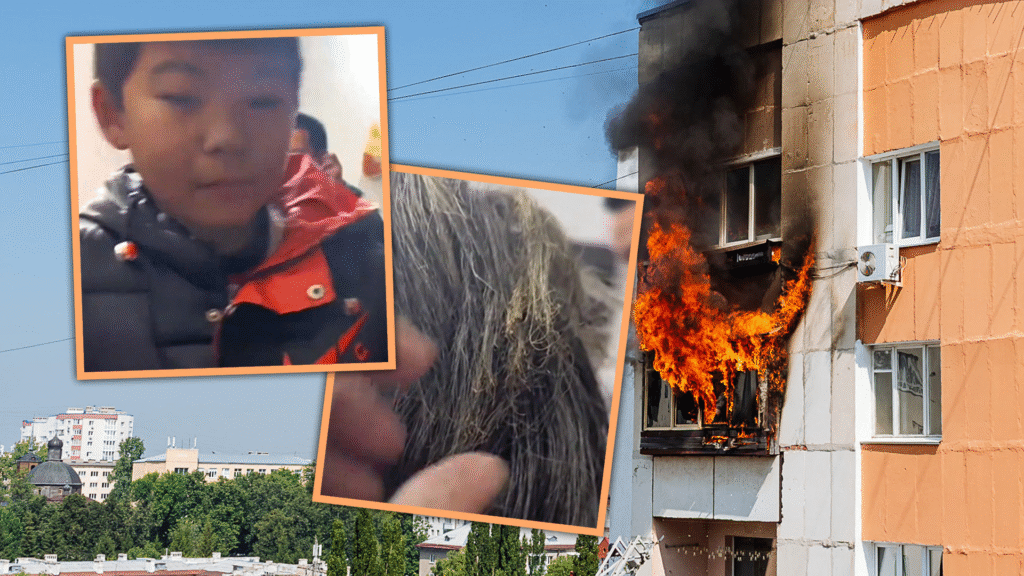
These details highlight the practical relevance of school safety education, a subject sometimes treated as routine or unremarkable until circumstances demand it. Zhu’s case provides a compelling example of how such learning can have tangible, life-saving applications. The nickname “Underpants Man,” while widely circulated, has been used in a generally affectionate tone by the public. Images and descriptions of Zhu Ye moving quickly while barely dressed have been shared online, but the tone of commentary emphasises admiration rather than ridicule.
Many individuals praised him for acting without hesitation or concern for his appearance, suggesting that the nickname functions more as a symbol of his unfiltered courage than as a trivialising label. The incident has also prompted discussions about the importance of accessible fire safety knowledge within families, residential buildings, and schools. Some commentators have tied the event to broader considerations of community preparedness, pointing out that rapid response by neighbours is often crucial before emergency services can arrive in time.
Lasting Impressions and Broader Implications
Stories of individual heroism often hold cultural resonance, and Zhu Ye’s actions have drawn significant attention because they combine instinct, practical problem-solving, and sincere altruism. His rescue effort highlights several themes: the role of community in urban residential life, the value of youth leadership, and the impact of emergency education. In many large cities, neighbours may live in close quarters yet remain relatively unfamiliar with each other, and social distance can be common even when physical distance is minimal.
In this case, Zhu Ye’s awareness of his neighbours and his willingness to intervene demonstrate how everyday connections can remain vital in times of crisis. The elderly couple, particularly vulnerable due to physical limitations, benefited from a presence nearby who recognized danger immediately and acted without delay. The incident also brings renewed attention to the increasing use of electric mobility devices within residential environments. While these devices improve independence for many elderly or disabled individuals, the batteries they rely upon can pose risks if they malfunction or are improperly maintained.
Fires caused by lithium-ion batteries have been documented with growing frequency in various countries, leading to calls for clearer safety guidelines, improved consumer education, and more consistent building-level regulations. Zhu Ye’s quick decision to unplug the wheelchair battery before continuing to manage the fire reflects practical awareness of the risks associated with electrical ignition sources. His actions reduced the likelihood of further sparks or electrical complications, which could have caused the fire to reignite before help arrived.
The emotional response from the elderly couple’s daughter highlights another aspect of the story: the emotional vulnerability of families who live apart from ageing relatives. Urban work settings and geographically dispersed households mean many adult children cannot supervise or support their parents as closely as they may wish. When emergencies occur, reliance on neighbourly awareness and building community structures becomes especially important.
Zhu Ye’s readiness to step in provided reassurance not only in the immediate aftermath but also in reinforcing the idea that supportive networks do exist even in rapidly modernizing urban regions. For Zhu himself, the experience may shape his future in ways still unfolding. His actions have already influenced how his peers and younger students see emergency preparedness, creating a visible example of how calm thinking and quick response can have life-preserving outcomes.
Teachers have suggested that Zhu has the qualities of someone who may take on leadership responsibilities later in life, whether in education, public service, or community organizing. Although Zhu has not expressed any long-term personal reflections beyond modest gratitude and relief that the couple survived, the attention surrounding the event ensures that the story will remain part of his community identity for years to come. This rescue event, though centered on a brief moment of crisis, reflects broader themes of readiness, communal responsibility, and the quiet strength of character.
888slot link được biết đến là đối tác chiến lược của nhiều nhà phát hành game danh tiếng toàn cầu, đảm bảo tính minh bạch trong mọi kết quả. Chúng tôi không chỉ cung cấp dịch vụ giải trí mà còn xây dựng một cộng đồng cá cược văn minh, nơi mọi quyền lợi của người chơi được ưu tiên hàng đầu. TONY01-06S
Không cần lo lắng về việc bị chặn truy cập! asia slot365 login đã thiết lập hệ thống đại lý chính thức tại Việt Nam, cung cấp đường link vào ổn định, an toàn và luôn hoạt động 24/7 – bạn chỉ cần click là vào được ngay. TONY01-06S
Tỷ lệ RTP (Return to Player) trung bình tại SLOT đạt mức 96.5% – cao hơn đáng kể so với mặt bằng chung. Điều này đồng nghĩa với việc bạn có cơ hội giữ lại vốn lâu hơn và tăng khả năng thắng lớn. TONY03-25