
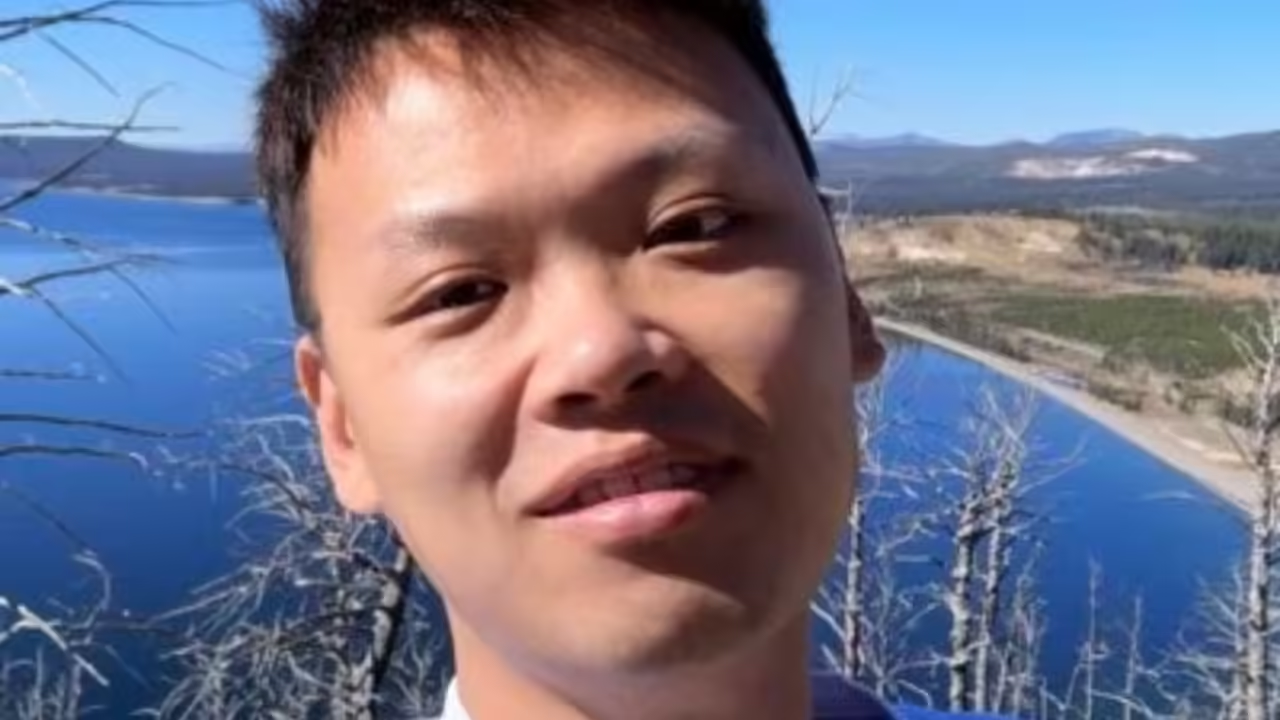
Zifan Wang is a research scientist at Meta whose abrupt relocation from San Francisco to London has drawn attention to the fragility of global talent mobility in the current geopolitical climate. After seven years of studying and working legally in the United States, Wang was denied re-entry following a personal visit to China, despite holding an O-1 visa reserved for individuals of extraordinary ability.
The decision, which Wang described publicly as “unexpected and crazy,” forced an immediate change in his professional and personal trajectory. His case resonated widely across technology and academic communities, not because of its rarity alone, but because it underscores the increasingly complex intersection of immigration policy, national security scrutiny, and the global competition for artificial intelligence expertise.
As Zifan Wang continues his work from London, his experience has become a reference point in broader discussions about where the world’s most advanced AI research will be conducted and who will be able to participate in it.
Academic Background and Career at Meta
Zifan Wang’s professional standing is rooted in a strong academic foundation and years of research experience in the United States. He earned a PhD from Carnegie Mellon University, one of the world’s most prominent institutions in computer science and artificial intelligence. CMU has long been a pipeline for top-tier AI researchers into industry and academia, and Wang’s trajectory followed a well-established path for highly specialized talent.
His doctoral training placed him within a research culture that emphasizes both theoretical rigor and real-world impact, preparing graduates for leadership roles in advanced technology development. After completing his studies, Zifan Wang continued to live and work in the United States under the O-1 visa category. This visa is granted to individuals who can demonstrate extraordinary ability in fields such as science, education, or business, typically supported by peer recognition, published research, and significant professional achievements.
Remaining in the US for approximately seven years, Zifan Wang built his career during a period when American technology companies were aggressively recruiting global AI talent to sustain leadership in machine learning, large-scale data systems, and AI safety research. At Meta, Wang worked as a research scientist, a role that generally involves developing and evaluating new AI models, publishing research, and contributing to long-term strategic initiatives.
Meta has positioned itself as a central player in artificial intelligence, investing heavily in foundational models, open research, and safety frameworks. While specific details of Wang’s projects have not been publicly enumerated, his own statements indicate a strong interest in AI safety alongside broader AI research. AI safety has become an increasingly important focus area as companies deploy more capable models with wide-ranging societal implications.
I am moving from SF to London! Looking forward to chatting with people here working on AI and AI safety 😏.
— Zifan (Sail) Wang (@_zifan_wang) January 27, 2026
When I visited my family and friends in China last month, my O1 visa stamp for re-entrance was denied so it is not possible for me to return US immediately after my trip,…
Within this context, Zifan Wang was not a transient employee or short-term visitor. His seven-year presence in the US encompassed graduate study, professional research, and ongoing contributions to a major American technology firm. That continuity made the denial of re-entry particularly jarring, both for him personally and for observers who view such visas as mechanisms designed to retain exactly this type of expertise.
The O-1 Visa Denial and Its Immediate Consequences
The pivotal event in Zifan Wang’s story occurred after a visit to China to see family and friends. According to his own account, his O-1 visa stamp for re-entry into the United States was denied, making it impossible for him to return immediately after the trip. The O-1 visa, while allowing long-term residence and employment in the US, still requires valid visa stamping for international travel. Denial at this stage does not necessarily negate prior lawful status, but it can effectively strand individuals outside the country, unable to resume their work or personal lives as planned.
Read : Sabrina Bazzo’s Dog Targeted with Poison-Laced Meat Containing Metal Hooks in Her Own Backyard
Zifan Wang characterized the denial as unexpected, a reaction that reflects the assumption many long-term visa holders develop after years of uninterrupted legal residence and employment. For researchers in highly specialized fields, international travel for family reasons, conferences, or collaborations is common and often essential. The sudden loss of re-entry permission can therefore have disproportionate consequences, severing access to ongoing projects, colleagues, and professional infrastructure.
In practical terms, the denial meant Zifan Wang could not return to San Francisco, where he had been based. Rather than pausing his career or waiting indefinitely for a resolution, he opted to relocate to London. In a social media post announcing the move, Wang expressed optimism about engaging with AI and AI safety researchers in the UK, signaling a determination to continue his work without interruption. The decision highlights a reality for elite global talent: when barriers arise in one jurisdiction, alternatives exist elsewhere, particularly in cities with strong research ecosystems.
The lack of detailed public explanation for the denial has fueled speculation, but Zifan Wang himself has not attributed it to a specific cause beyond noting the visit to China. In recent years, US immigration scrutiny involving travel to or ties with China has intensified, particularly in sensitive technology sectors. While no public allegation or finding has been made in Wang’s case, the broader policy environment forms the backdrop against which such decisions are often interpreted.
The immediate consequence for the United States is the loss of an active AI researcher embedded in a major technology firm. For Zifan Wang, the consequence was an abrupt geographic and professional shift, requiring adaptation to a new regulatory, cultural, and research environment. The speed with which he announced his move suggests both resilience and the portability of high-level AI expertise.
Global Reactions and the Broader Talent Competition
Wang’s announcement quickly gained traction on social media, where it was framed by many users as a symbolic example of talent migration driven by immigration barriers. Comments welcoming him to London emphasized the city’s cultural life, research community, and quality of living, while others expressed regret that he could not immediately return to the United States. The tone of these reactions reflects a broader awareness that competition for AI expertise is not only about salaries or infrastructure, but also about immigration systems that enable or restrict mobility.
London has positioned itself as a major AI hub, supported by universities, research institutes, and a growing network of technology companies. The UK government has publicly emphasized its ambition to attract global science and technology talent, including through visa pathways designed to be more predictable for researchers. For someone like Wang, London offers continuity: access to collaborators, proximity to European research networks, and a regulatory environment actively seeking to expand its AI footprint.
From a policy perspective, Wang’s case illustrates how individual immigration decisions can have cumulative strategic effects. AI research is deeply international, and leading researchers often have multiple options for where to live and work. When barriers arise, relocation can occur quickly, shifting not only individual careers but also the flow of ideas, mentorship, and innovation. This dynamic has become more pronounced as AI capabilities are increasingly viewed through the lens of national competitiveness.
Within Meta, Wang’s relocation also reflects the multinational nature of large technology companies. Firms with offices and research centers across continents can sometimes reassign talent when visa issues arise, reducing disruption to ongoing work. However, such flexibility does not negate the broader implications for national ecosystems that lose resident expertise. Each departure can have ripple effects, from fewer publications and patents to diminished informal knowledge exchange within local research communities.
Wang’s expressed intention to continue working on AI and AI safety suggests that his professional focus remains unchanged, even as his location does not. AI safety, in particular, is an area where international collaboration is often emphasized, given the global impact of advanced systems. His move to London may therefore place him at the center of transatlantic discussions on governance, ethics, and technical safeguards, reinforcing the idea that AI research leadership is no longer geographically fixed.
The phrase “America’s loss,” echoed by many online, captures a sentiment rather than a formal assessment. It reflects concern that restrictive or unpredictable immigration outcomes may undermine long-term efforts to maintain leadership in critical technologies. For the UK, Wang’s arrival is framed as a gain, both symbolically and substantively, reinforcing London’s status as a destination for displaced or mobile global talent.
Zifan Wang’s experience does not resolve the broader questions it raises, but it crystallizes them in human terms. A researcher trained in the US, contributing to an American technology giant, found his path redirected by a single immigration decision. His rapid transition to London demonstrates both the vulnerability and the adaptability of global AI talent, as well as the increasingly competitive landscape in which nations vie to host the people shaping the future of artificial intelligence.