
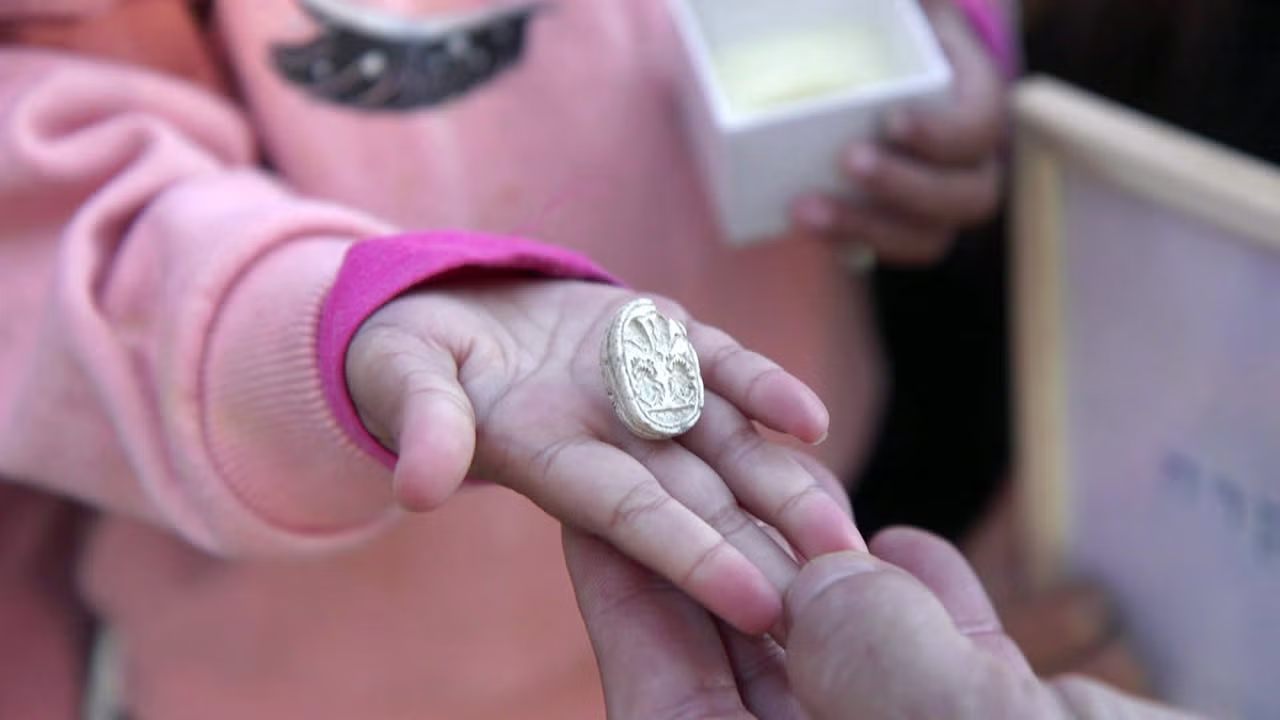
Archaeology often requires meticulous planning, detailed excavation, and years of patient research to uncover historical artifacts. However, sometimes remarkable discoveries happen by sheer luck. Such was the case for 3-year-old Ziv Nitzan, who stumbled upon an extraordinary piece of history while on a casual stroll with her family.
The young child picked up what seemed like a simple stone, only for it to be identified as a 3,800-year-old Bronze Age scarab amulet. This incredible discovery has captured the attention of archaeologists, historians, and the public alike, shedding new light on ancient Canaanite culture and its connections with Egypt.
The Remarkable Discovery of Bronze Age Scarab Amulet
The astonishing find took place in Tel Azekah, a historical site in Israel known for its archaeological significance. Ziv Nitzan, accompanied by her family, was walking along a dirt path when she spotted a stone among thousands of others.
Unlike the rest, this particular stone caught her attention. As she brushed off the sand, intricate details began to emerge, revealing that the object was far from ordinary. Her older sister, Omer Nitzan, later recounted the moment in a translated video.
She explained how Ziv’s curiosity led her to inspect the stone closely, and upon realizing its uniqueness, the family quickly contacted the Israel Antiquities Authority. Experts soon confirmed that the object was, in fact, a scarab amulet dating back to the Middle Bronze Age, a period spanning from roughly 2000 to 1550 BCE.
Only in Israel!
— ((🆆3⃣🅱🆂🜃🅶3⃣)) 🇮🇱 I Stand with Israel! 🇮🇱 (@w3bsag3) April 1, 2025
Three-year-old girl finds Canaanite seal where Bible says David battled Goliath
Ziv Nitzan was hiking with her family near Tel Azeka when she picked up a small stone that her sisters later realized was shaped like a scarab, revealing 3,800 year-old finding pic.twitter.com/DK2dexZF4f
Scarab amulets were a significant part of ancient Canaanite and Egyptian culture. Crafted in the shape of dung beetles, they were commonly used as seals, protective charms, and symbols of rebirth. The discovery of such an artifact in Tel Azekah suggests deep cultural and trade connections between the Canaanites and the Egyptians during the Bronze Age.
Understanding the Importance of Scarab Amulets
The significance of scarab amulets extends far beyond their aesthetic appeal. In ancient Egypt, these beetle-shaped objects held profound religious and symbolic meanings. The dung beetle’s habit of rolling balls of dung was associated with the Sun god Ra, who was believed to roll the solar disk across the sky. This connection led to the beetle becoming a symbol of creation, renewal, and eternal life.
In Canaanite culture, scarabs were equally revered. These amulets were often inscribed with hieroglyphs, images of deities, or protective symbols and were used in both life and death. Many scarabs have been unearthed in burial sites, indicating their role in funerary rituals. They were also employed as personal seals, pressed into clay or wax to authenticate documents and mark possessions.
Read : Thieves Steal Four Priceless Ancient Artifacts from Drents Museum of Netherlands
The discovery of the scarab in Tel Azekah highlights the strong influence of Egyptian customs on Canaanite society. During the Middle Bronze Age, Canaan was a vital region for trade, diplomacy, and cultural exchange with Egypt. The presence of such artifacts underscores the deep ties between these civilizations and provides valuable insights into their interactions.
Archaeological Significance of Tel Azekah
Tel Azekah is one of Israel’s most fascinating archaeological sites, with a history dating back thousands of years. Located in the Judean lowlands, it has been the focus of excavations for over 15 years.
Archaeologists have uncovered numerous relics that paint a vivid picture of life in the ancient city, including remnants of city walls, agricultural structures, and objects reflecting daily life.
The site was once a crucial Canaanite city and later played an important role in the Kingdom of Judah. Excavation findings suggest that during the Middle and Late Bronze Ages, Tel Azekah was a thriving urban center with strong Egyptian influences.
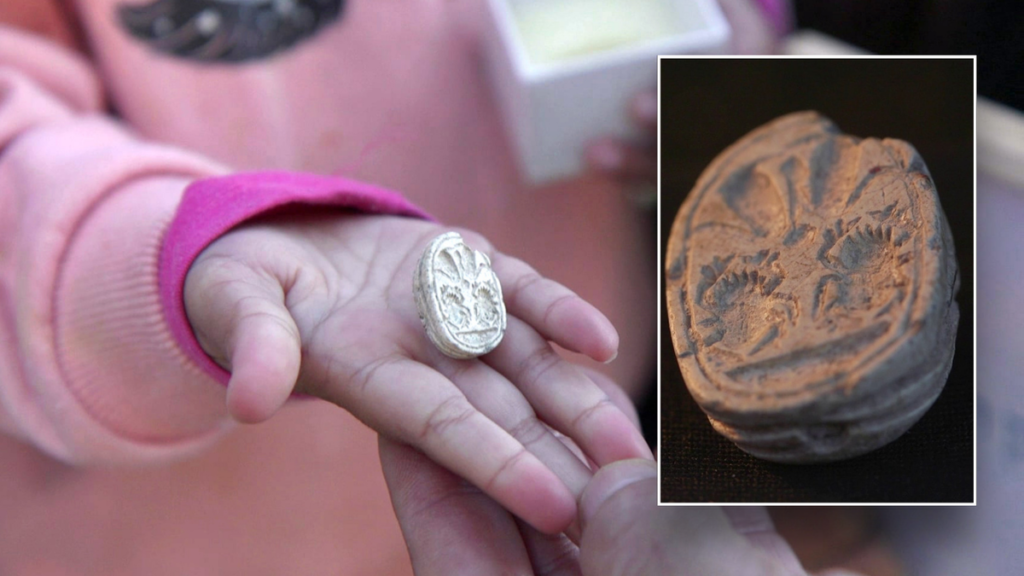
The discovery of Ziv Nitzan’s scarab adds another layer of historical significance to the site, offering further evidence of the cultural and political connections between the Canaanites and the Egyptians. Beyond its Bronze Age history, Tel Azekah is also mentioned in biblical texts. It was reportedly one of the cities fortified by King Rehoboam of Judah and played a strategic role in various military campaigns.
The city is famously associated with the biblical battle between David and Goliath, as it overlooks the Elah Valley, where the legendary encounter is said to have taken place.
The ongoing excavations at Tel Azekah continue to yield valuable discoveries, helping scholars piece together the region’s complex history. The scarab found by Ziv joins a growing collection of artifacts that illustrate the city’s past and its connections with neighboring civilizations.
The story of 3-year-old Ziv Nitzan’s discovery is a testament to the unpredictable nature of archaeology. What began as an innocent stroll turned into a momentous event that brought a forgotten piece of history back to light.
The 3,800-year-old scarab amulet is more than just an artifact; it is a symbol of the enduring legacy of ancient civilizations and their interconnected histories.
As archaeologists continue their work at Tel Azekah, there is no telling what other secrets lie beneath the surface, waiting to be uncovered. The site remains a crucial link to understanding the past, and discoveries like this reinforce the importance of preserving and studying our shared heritage.
Thanks to Ziv’s keen eye and natural curiosity, a small yet significant piece of history has been brought back to the present, offering new insights into the world of the ancient Canaanites and their ties to Egypt.