
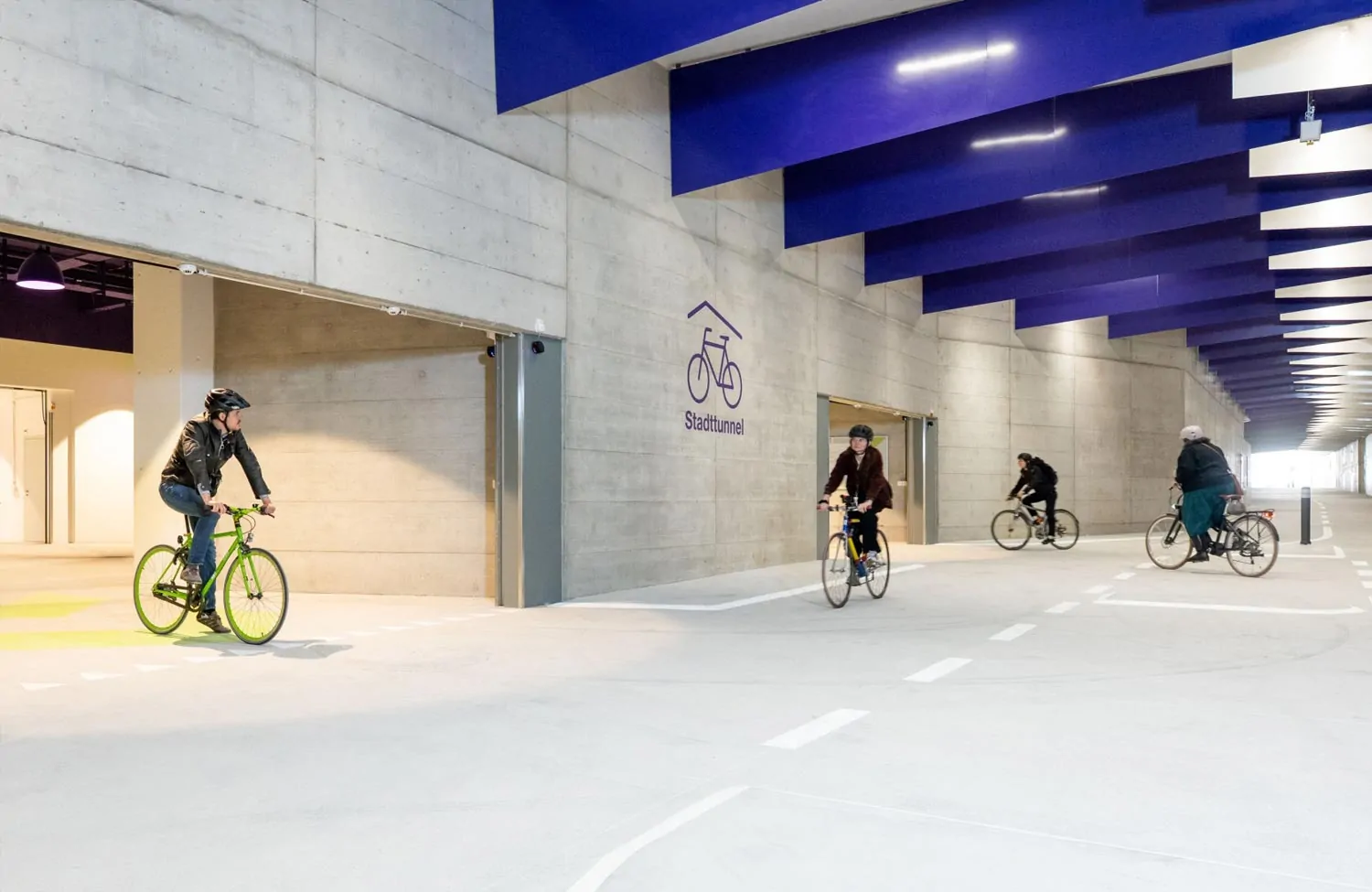
As urban centres across the globe grapple with traffic congestion and environmental challenges, Switzerland’s largest city has taken a bold step toward sustainable transportation. Zurich has officially inaugurated its first-ever Bicycle Only Tunnel beneath its bustling main train station.
This landmark development, launched during the city’s Cycle Week celebrations held from May 22 to 28, stands as a clear testament to Zurich’s ongoing commitment to clean, eco-conscious infrastructure. The tunnel, running from Kasernenstrasse to Sihlquai and connecting districts 4 and 5, isn’t just a new piece of urban design—it’s a declaration that the future of city travel is changing.
First-Ever Bicycle Only Tunnel
The tunnel project, spanning approximately 440 metres in length and up to six metres in width, carries a fascinating history. Originally designed to accommodate car traffic, it has now been transformed by city planners to serve the growing population of cyclists in Zurich. With an investment of 38.6 million Swiss francs, this conversion exemplifies how older, vehicle-oriented urban spaces can be reimagined to suit modern sustainability needs.
In a city where narrow streets and a lack of sufficient bike lanes have historically limited safe cycling, this tunnel brings a refreshing change. It is exclusively reserved for cyclists and a range of other low-emission vehicles. Pedestrian access is restricted to ensure optimal flow and safety for riders. The design allows entry for all types of bicycles, including modern e-bikes, e-mopeds, light electric motorcycles, and other small vehicles, as long as they do not exceed the 20 km/h speed limit.
Zürih'te yeni hizmete giren bisiklet tüneli.pic.twitter.com/CQttzYY9sP
— Onedio (@onediocom) May 26, 2025
Beyond its functional purpose, the tunnel reflects a broader philosophy of integrating cycling into the daily rhythm of city life. By situating this infrastructure beneath the main train station, Zurich strategically ensures accessibility at a vital transportation hub, encouraging mixed commuting practices—cyclists can now easily transition between trains and their bikes in one connected space.
A Hub for Cyclists: Design, Parking, and Technology
One of the standout features of Zurich’s new tunnel is its thoughtfully designed amenities that reflect the needs of modern cyclists. The tunnel houses an impressive 1,240 free bicycle parking spaces. This addition is expected to significantly ease the burden on the city’s limited above-ground parking options and to encourage more residents to take up biking as a daily mode of transport.
The space itself is equipped with modern security features, including video surveillance and efficient lighting throughout the length of the tunnel. These enhancements provide a sense of safety and comfort, especially for commuters cycling early in the morning or late at night. Clear signage has also been installed to direct riders efficiently and ensure traffic within the tunnel remains well-regulated and calm.
Read : Suicide Pod Advocate Dr Florian Willet Dies by Assisted Suicide
Crucially, the tunnel’s width of up to six meters allows for smooth two-way traffic, reducing the chances of bottlenecks or accidents. The speed limit of 20 km/h further ensures that while movement is efficient, it remains within a safe range for all users.

This kind of infrastructure not only promotes sustainability but also acknowledges that urban biking is evolving. Riders today may use e-mopeds, electric cargo bikes, and other micro-mobility devices that require broader lanes, secure parking, and enhanced safety protocols. Zurich’s tunnel answers this shift in demand with precision.
Urban Transformation and the Road Ahead
The opening of this dedicated bicycle tunnel is more than just a convenience for Zurich’s cycling community—it signals a growing momentum in cities around the world to reprioritize how public space is used. Zurich, known for its cleanliness, efficiency, and quality of life, is already seen as a model European city. With this new development, it reinforces that reputation by demonstrating how cities can turn legacy infrastructure into forward-thinking solutions.
For many local residents and cycling enthusiasts, this tunnel is a long-awaited response to years of advocacy. Zurich’s dense layout, charming as it may be, has historically struggled to provide enough room for safe and widespread cycling. By placing significant resources into this underground corridor, the city acknowledges and supports the role that cyclists play in reducing congestion, pollution, and reliance on fossil fuels.

Moreover, the project could serve as a blueprint for other cities with similar urban challenges. Tunnels, underpasses, and car-centric infrastructure from past decades often lie underutilized or in need of renovation. Repurposing them in this way offers an efficient and cost-effective strategy to reshape urban mobility. The Zurich model is not just about a tunnel—it’s about a philosophy of adapting city life to meet 21st-century expectations of sustainability and livability.
This transformation aligns with a growing European movement that prioritizes green transportation. Governments and municipalities are increasingly investing in bike-friendly measures, from protected lanes to rental schemes, and now, even dedicated tunnels. By creating an interconnected system of bike routes—some underground, others on the surface—cities aim to encourage their residents to adopt healthier and more environmentally friendly commuting habits.
The success of Zurich’s tunnel may inspire not just other Swiss cities like Basel or Geneva, but international metropolises looking for practical and symbolic projects that represent a commitment to clean transportation.
Zurich’s bike tunnel is not merely a passage through the city—it’s a gateway to a different kind of urban future, one that places people, sustainability, and intelligent design at its heart. As the world faces increasing environmental challenges, this project offers a powerful reminder that bold infrastructure changes, rooted in local needs and global ideals, are not just possible—they are necessary.