

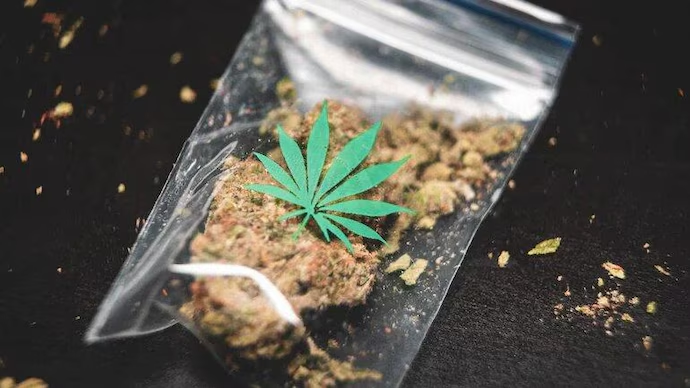
A shocking drug bust at Mauritius’ Sir Seewoosagur Ramgoolam International Airport has revealed a disturbing use of a child in an international smuggling attempt. A six-year-old British boy was among seven individuals—six adults and the child—detained by Mauritian authorities after 161kg of Cannabis Found concealed in their luggage.
The operation, valued at approximately £1.6 million on the local market, has not only shocked law enforcement but also raised serious questions about the exploitation of minors in drug trafficking networks.
The group, which included five British women, one British man, and a Romanian male national, arrived in Mauritius last Sunday on a British Airways flight from London Gatwick. What was supposed to be an ordinary holiday arrival quickly turned into a high-profile arrest after customs and police, working in a joint anti-trafficking operation, intercepted the suspects and flagged their suspicious luggage for further examination.
161kg of Cannabis Found in Luggage
The most disturbing aspect of this bust was the discovery of 14 kilograms of cannabis hidden inside the child’s luggage. Authorities were left stunned when the boy’s suitcase was found to contain 24 individual packages of the drug. It was a cruel and calculated act, allegedly orchestrated by the adults accompanying him. The child’s 35-year-old mother reportedly had 29 packages in her possession, and her Romanian partner was carrying 32 more. The sophisticated concealment methods and the calculated use of a minor to deflect suspicion underscored the depths to which traffickers are willing to go.
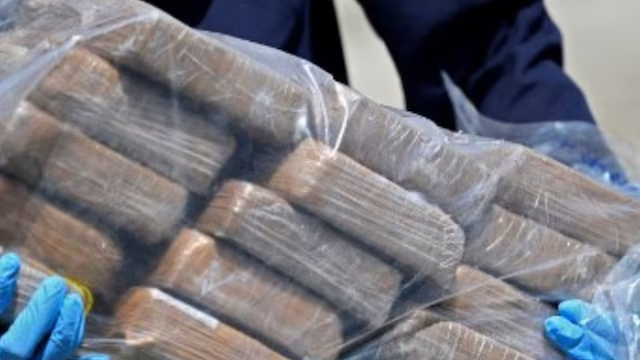
The group’s baggage, upon passing through an X-ray scanner, raised immediate concerns for airport security personnel. What followed was a coordinated search that revealed the sheer scale of the attempted smuggling. Authorities confirmed that the total haul amounted to 161 kilograms—one of the largest drug seizures at the Mauritian airport in recent years.
Read : Germany Approves Limited Cannabis Use Before Driving
Customs officials were quick to act, arresting all six adults on the spot. They were promptly taken into custody and brought before a magistrate in Mahebourg. The suspects have been provisionally charged with drug-related offences, and their bail applications were denied. According to reports from Mauritian media outlet Defi Media, the police strongly opposed any form of conditional release, citing the serious nature of the crime and flight risk of the foreign nationals.
Child’s Return to the United Kingdom
While legal proceedings against the six adults are expected to take time, the immediate concern for authorities—both local and international—was the welfare of the child. The British High Commission in Mauritius was contacted as soon as the child’s involvement came to light. Working closely with local authorities and child protection services, arrangements were made to ensure the boy’s safe return to the UK.
Read : Bizarre! Cat Found Smuggling Drugs on Its Back Into Pococí Penitentiary Prison of Costa Rica
He was flown back to Britain on Wednesday, just three days after his detention. Upon arrival, he was received at the airport by his father. Conflicting reports suggest the child may be either six or seven years old, but what remains clear is that he was placed at the center of a highly dangerous and illegal activity by those who should have protected him.
British authorities are now expected to follow up on the case with their counterparts in Mauritius, especially in relation to the child’s well-being and potential legal outcomes for those involved. A spokesperson from the UK Foreign Office stated: “We are supporting several British nationals who are detained in Mauritius and are in contact with the local authorities.”
The quick and careful handling of the child’s return suggests that diplomatic coordination was prompt, prioritizing the immediate extraction of the minor from a complex international crime scene. Authorities in the UK may also initiate their own investigation into how and why the child was used in the smuggling attempt.
Condemnation and Investigation into Organized Trafficking
Mauritian officials have strongly condemned what they described as an “inhumane” and “morally outrageous” act of involving a minor in such a serious crime. Customs and police said they had been monitoring the group since their disembarkation, and their suspicions were confirmed when the X-ray scans of their luggage revealed irregularities.
More disturbing still was the discovery of Apple AirTags attached to the drug packages. Authorities believe this indicates a high level of coordination and technological sophistication behind the smuggling operation. The use of GPS tracking devices may have been intended to monitor the location of the narcotics at all times, pointing toward a larger international network rather than an isolated group of couriers.
Mauritian law enforcement is now collaborating with international agencies to probe deeper into the possible connections and origins of the drug shipment. The involvement of both British and Romanian nationals is raising questions about organized criminal rings operating across Europe and Africa. Investigators are trying to determine whether the suspects were merely couriers or part of a more deeply entrenched network.
The Mauritian government has reiterated its zero-tolerance stance on drug trafficking, especially when it comes to the exploitation of children. Officials stated that the use of a child in this context is not only criminal but a violation of basic human rights and international child protection norms.
Back in the UK, child welfare groups have reacted with anger and sadness. Many are calling for stricter scrutiny at international departure points, particularly when children are travelling with adults who are not clearly verified as guardians. There is also a growing call for the UK government to thoroughly investigate any systemic failures that allowed the situation to escalate to the point of a child being used in a drug smuggling scheme.
The case is expected to generate political and diplomatic discussions between the UK and Mauritius, especially as more information emerges from the ongoing investigation. British MPs are likely to raise questions regarding airport security, foreign surveillance cooperation, and the role of organized crime in exploiting minors for trafficking purposes.
For now, the six adults remain in custody in Mauritius, facing serious charges that could lead to long-term imprisonment. The child, thankfully out of immediate harm’s way, now returns to a life that will likely be marked by trauma, confusion, and legal proceedings involving his family.
In the aftermath of this troubling case, both nations are being pushed to consider deeper reforms—Mauritius, in strengthening border surveillance and child protection during foreign arrivals; and the UK, in preventing citizens from becoming part of such global trafficking schemes in the first place. The use of a child in such a heinous manner is a grim reminder that drug traffickers will go to any lengths to evade detection, and that vigilance must begin long before a suitcase is packed.
Ultimately, this case exposes the darkest intersections of crime, innocence, and international failure to shield children from exploitation. It is a wake-up call for governments, law enforcement, and civil societies to respond not just with arrests and charges, but with sustainable, coordinated policies that ensure such a tragedy does not happen again.