

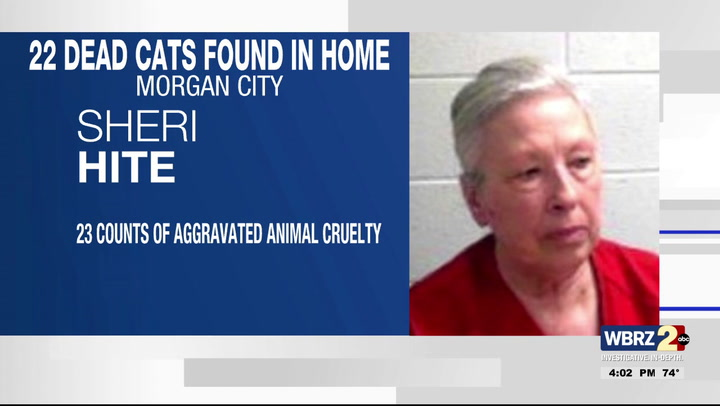
The disturbing discovery in Morgan City, Louisiana, has shocked the local community after 22 Dead Cats Found inside the home of 71-year-old Shere Hite.
The case, which has led to multiple charges of animal cruelty, highlights the grim realities of animal hoarding and neglect. As investigators continue their inquiry, questions arise about how such a situation could have developed and gone unnoticed for so long.
The Discovery of a Disturbing Scene
On the afternoon of March 14, police in Morgan City responded to a welfare concern regarding an elderly resident, Shere Hite. When officers approached the entrance of her home on McDermott Drive, they were immediately met with a strong odor and the sight of a dead cat inside the residence.
Recognizing the severity of the situation, officers entered the home with Shere Hite’s permission and encountered an unbearable stench that permeated the entire property. Upon further investigation, police discovered a total of 22 dead cats. Eight were found scattered throughout different rooms, while a shocking 14 cats had been placed inside a freezer.
The only living animal in the house was a single cat, which was immediately turned over to animal rescue services. Authorities secured a search warrant and conducted a thorough sweep of the residence to document the full extent of the neglect.
Read : Cats Outnumber Humans in Tashirojima Island of Japan
Shere Hite informed the police that she had recently taken in cats from the Baton Rouge area with the intention of caring for them. She also claimed that the frozen cats were stored for later disposal.
Read : Choosing Between a Pet Animal and a Pet Bird: What’s Best for You?
However, given the sheer number of deceased animals and the conditions inside the home, law enforcement officials charged her with 23 counts of aggravated cruelty to animals.
Animal Hoarding and the Psychological Aspect
Animal hoarding is a serious issue that often stems from underlying mental health conditions. While the exact circumstances surrounding Hite’s situation remain unclear, cases of animal hoarding are frequently linked to disorders such as obsessive-compulsive disorder (OCD), depression, and anxiety. People who hoard animals may believe they are rescuing them, even as they fail to provide proper care.
In many instances, animal hoarders start with good intentions but gradually become overwhelmed by the number of animals they accumulate.
Over time, they lose the ability to maintain a safe and sanitary environment, leading to severe neglect and suffering. This behavior is often reinforced by isolation, making it difficult for outside parties to recognize the problem until it reaches a critical point.
The conditions found in Shere Hite’s home—where officers reported an unbearable stench and widespread animal remains—mirror classic cases of animal hoarding.
The presence of dead cats in various rooms and inside the freezer suggests an extreme level of detachment from reality. Whether Hite was aware of the extent of harm she was causing remains a question for investigators and mental health professionals.
Legal and Community Response
Following her arrest, Hite was taken into custody at the Morgan County Jail, where she awaits further legal proceedings. The charges of aggravated cruelty to animals carry serious consequences, as Louisiana law considers intentional mistreatment, neglect, or malicious killing of animals a felony offense.
Animal cruelty laws are designed to protect defenseless creatures from unnecessary suffering, and cases like this often provoke strong reactions from the community.
In response to the news, local animal welfare organizations and rescue groups have called for stricter monitoring and reporting of suspected animal hoarding situations. They emphasize the importance of community vigilance in identifying warning signs before conditions deteriorate to such an extreme level.
Public outrage over the case has sparked discussions about how to prevent similar incidents in the future. Some animal advocates argue for stronger regulations on pet ownership, including mandatory welfare checks for individuals who adopt large numbers of animals.
Others stress the need for mental health support for individuals exhibiting hoarding behavior, as early intervention could prevent suffering for both the hoarder and the animals involved.
Animal welfare experts also point out that cases like Hite’s are not isolated incidents. Across the United States, thousands of animals suffer in hoarding situations every year. While some cases involve unintentional neglect, others reveal deliberate mistreatment. Regardless of intent, the end result is tragic for the animals involved.
The arrest of Shere Hite in Morgan City, Louisiana, has brought to light yet another heartbreaking case of animal cruelty. The discovery of 22 dead cats inside her home, including 14 stored in a freezer, is a shocking reminder of the devastating consequences of animal hoarding.
As legal proceedings move forward, the case serves as a call to action for greater awareness, intervention, and prevention of similar incidents.
Authorities continue to investigate the full extent of the case, and Hite faces serious legal consequences for her actions. Meanwhile, local animal welfare organizations are urging residents to report any suspected cases of animal hoarding or neglect.
By fostering a more proactive approach, communities can help prevent future cases of suffering and ensure that animals receive the care and respect they deserve.