
A devastating tragedy unfolded in Brooklyn, New York, when a solar panel torn loose by powerful nor’easter winds fatally struck 76-year-old Lyudmila Braun on Sunday morning. The incident, which occurred near the Ocean Parkway subway station in Coney Island, has raised serious concerns about safety standards for rooftop and parking lot solar installations in densely populated urban areas during extreme weather events.
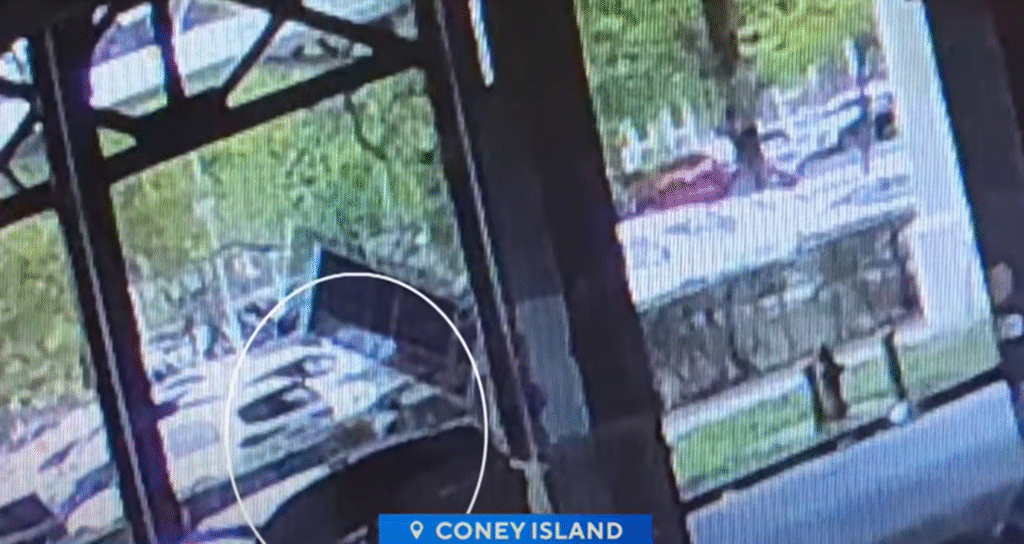
Around 10:30 a.m. on Sunday, as heavy rain and gusting winds from the first nor’easter of the season swept across New York City, Lyudmila Braun was walking near the entrance of the Ocean Parkway subway station. Without warning, a 7-foot-tall solar panel detached from its mounting above a nearby outdoor parking lot and was hurled through the air by the storm’s force. The panel traveled roughly 20 feet before striking Lyudmila Braun in the head, rendering her unresponsive on the spot.
A Routine Morning Turns Tragic in Coney Island
Emergency responders arrived swiftly, but the injuries she sustained proved catastrophic. She was transported to NYU Langone Hospital–Brooklyn (formerly Lutheran Hospital), where she was later pronounced dead. Authorities confirmed that the solar panel was part of a steel carport structure covering the parking area adjacent to the subway station. City inspectors from the Department of Buildings (DOB) found that the 41-by-87-inch panel had completely separated from its metal frame, carried by wind speeds consistent with those recorded during the nor’easter.
The suddenness and violence of the event have shocked both local residents and safety officials. Surveillance video obtained by CBS News captured the moment the solar panel became airborne before striking the unsuspecting Lyudmila Braun. The footage, though not publicly released in full, has been described as chilling in its clarity—a stark visual reminder of how lethal airborne debris can become during powerful coastal storms.
Lyudmila’s husband, speaking through tears to CBS News, expressed his heartbreak and disbelief. “We just hope that it doesn’t happen to anybody else again. That’s the most important thing. Safety first,” he said. “We’re destroyed right now. We’re at a loss for words.” His statement echoed the grief and confusion felt by neighbors and family friends who described the couple as kind and close-knit, longtime residents of the area.
Read : Global Adventures: Discovering the Most Enchanting Destinations on Earth
Police cordoned off the walkway where the incident occurred, and investigators spent hours examining the remnants of the detached panel and its supporting structure. The Department of Buildings confirmed that it was working closely with the Metropolitan Transportation Authority (MTA), which operates the adjacent subway station, to ensure that no further hazards remained. “Our inspectors observed that a 41” x 87” solar panel had become disconnected from the steel carport structure which is standing overhead the outdoor parking lot,” the DOB said in a statement. “The detached panel was taken by the wind and blown approximately 20 feet away where it fatally struck a pedestrian at an adjacent walkway.”
Storm Damage and Citywide Impact of the Nor’easter
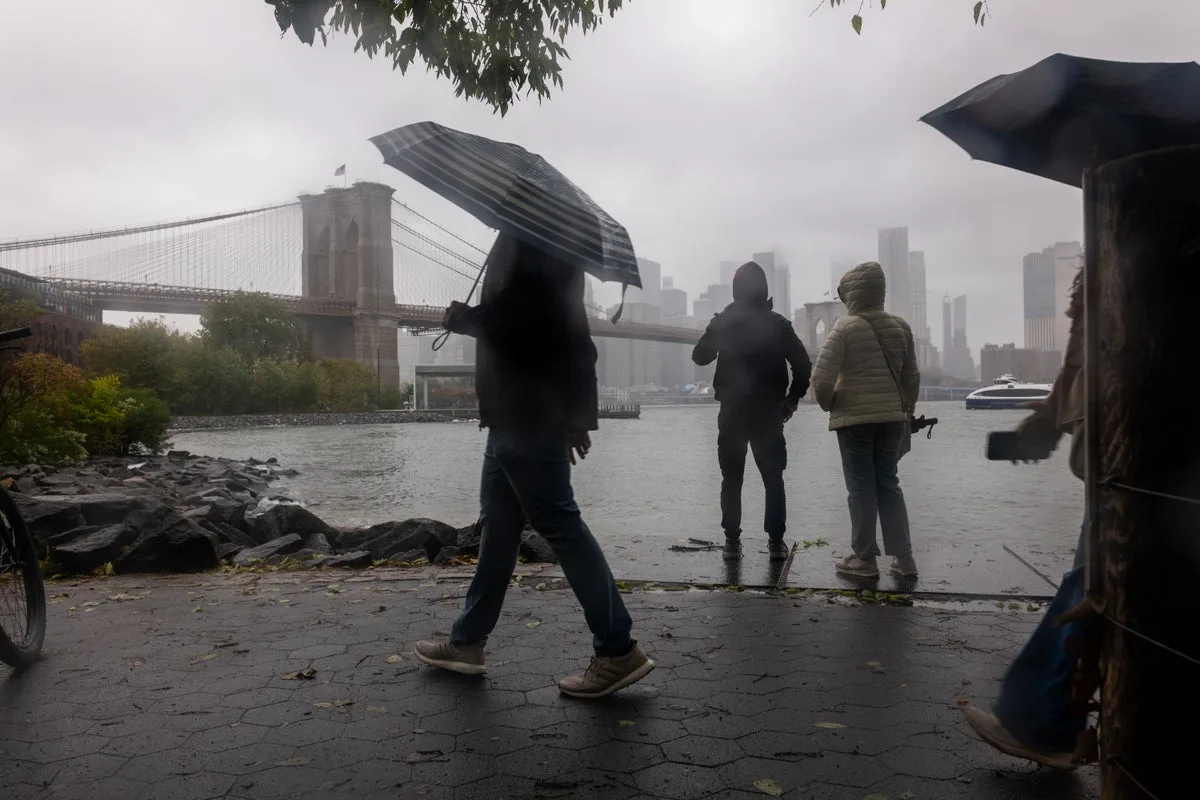
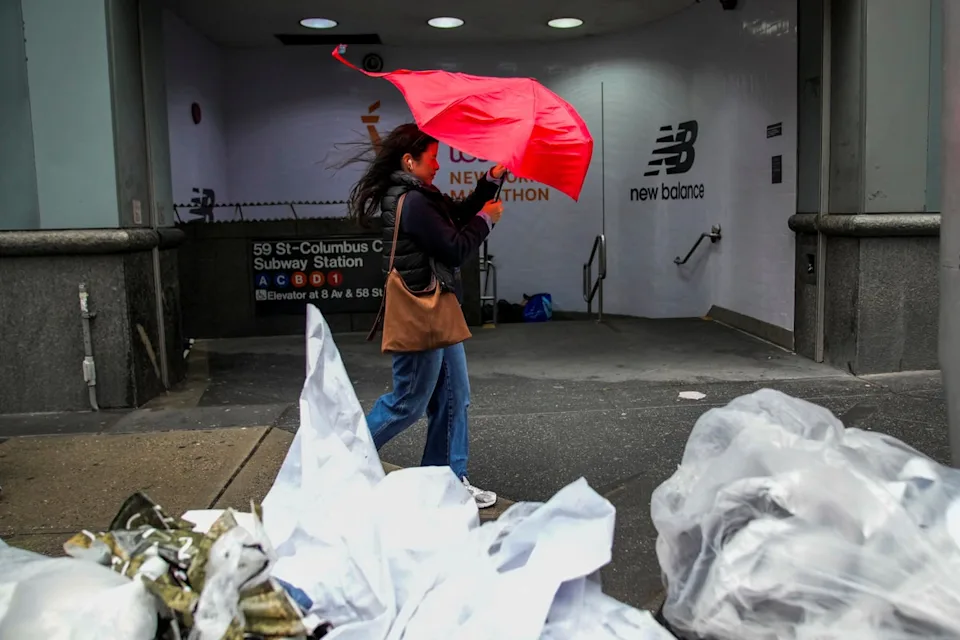
The deadly incident occurred amid widespread weather chaos across the Northeast as the powerful nor’easter battered coastal areas from Virginia to Maine. In New York City, the National Weather Service (NWS) had issued a wind advisory warning of gusts reaching 50 to 60 miles per hour, along with coastal flood alerts and heavy rainfall predictions. The city’s Parks Department received at least 265 reports of downed trees by Sunday afternoon, and the Fire Department responded to dozens of calls involving damaged structures, broken windows, and falling debris.
The storm’s effects were not limited to New York. Across the East Coast, transportation networks were disrupted as high winds and torrential rain caused more than 600 flight cancellations and thousands of delays. Power outages were reported in multiple states, including New York, Connecticut, New Jersey, Massachusetts, and North Carolina, affecting more than 40,000 customers. In Brooklyn, several neighborhoods experienced partial blackouts as power lines came down, and emergency crews were dispatched throughout the day to clear fallen branches and debris.
Read : 73-Year-Old Woman Found Dead with Over 80 Neglected Dogs Around in Brooklyn Home
Meteorologists noted that this nor’easter was the first major storm of the fall season and warned that it could be a preview of an active winter storm cycle ahead. The system’s strength was intensified by the warm Atlantic waters off the coast, which fueled the storm’s low-pressure core and produced stronger-than-expected wind gusts. For residents in coastal areas like Coney Island, these weather conditions pose heightened risks because of the neighborhood’s open exposure to ocean winds and its mixture of older infrastructure with newer developments such as solar installations, parking canopies, and rooftop arrays.
The city’s emergency management officials urged residents to remain indoors during the worst of the storm, but many commuters and pedestrians were still out during the morning hours when conditions rapidly deteriorated. In the aftermath of the incident, city agencies reviewed inspection and permitting records for the solar structure involved. Preliminary findings suggested that the installation met code requirements when built but that ongoing maintenance responsibilities may not have been adequately enforced or documented.
The Department of Buildings stated that engineers would assess whether the solar carport structure had been properly secured and maintained in accordance with safety standards for wind resistance. These standards, updated in recent years to accommodate the growing use of renewable energy systems, require that panels and frames be able to withstand high wind loads typical of coastal storms. However, enforcement of maintenance and inspection schedules for private or semi-private structures remains inconsistent.
Safety, Accountability, and the Challenge of Urban Renewable Energy
The death of Lyudmila Braun has sparked a broader discussion about safety oversight in the expanding field of urban solar energy infrastructure. New York City, which has committed to ambitious climate goals under its “OneNYC” sustainability plan, has seen a rapid rise in solar installations across rooftops, parking lots, and transit hubs. These renewable systems are critical to reducing carbon emissions, but experts say that they also introduce new engineering challenges—especially when installed in environments subject to powerful storms and fluctuating weather extremes.
Solar carports, such as the one involved in Sunday’s tragedy, are typically designed to function as both parking shelters and energy generators. Panels are mounted on steel frames above vehicles, providing shade while producing electricity that can power nearby facilities or feed back into the grid. When properly constructed and maintained, these systems can endure severe weather. However, any structural failure—such as loose bolts, corrosion, or improper mounting—can turn panels into large, windborne projectiles during storms.
Following the incident, the Department of Buildings ordered an immediate inspection of similar installations across the city. Officials emphasized that while such accidents are rare, they serve as critical reminders that even green technologies must be subject to rigorous safety checks. “This was an absolutely heartbreaking and preventable event,” said a city engineering source familiar with the case. “We have to ensure that every structure with large panels or attachments is secured to withstand the types of storms that are becoming more frequent with climate change.”
Meteorological experts have linked the increasing intensity of nor’easters to shifting climate patterns in the North Atlantic. Warmer sea-surface temperatures provide more energy for these storm systems, while changes in jet stream behavior can cause them to stall over coastal regions, amplifying wind and rain impacts. For a city like New York—with its dense population and complex infrastructure—each storm season brings mounting risks.
The MTA and Department of Buildings have jointly launched a review of construction and safety procedures for solar installations located near transit facilities. These sites often feature unique structural designs, including elevated canopies and mixed-use spaces, which can make inspection and maintenance more complicated. The goal, officials said, is to identify potential vulnerabilities before another catastrophic failure occurs.
Lyudmila Braun’s death has also prompted calls for improved public awareness regarding storm safety. Officials urge residents to avoid open areas, construction zones, and parking lots during severe wind advisories, even if the storm appears to be tapering off. Debris, unsecured signage, and large panels from construction or renewable installations can become deadly hazards within seconds.
In addition to official investigations, the incident has reignited debate about the adequacy of New York City’s building codes in the era of climate adaptation. While the city has some of the most stringent construction regulations in the country, many of these standards were written decades ago, long before renewable energy structures became common. Engineers now face the dual challenge of retrofitting older designs to modern standards and ensuring that new installations reflect the realities of stronger, more frequent storms.
Local residents placed flowers and candles near the Ocean Parkway subway entrance in memory of Lyudmila Braun, whose quiet presence in the community was well known. Neighbors described her as gentle and devoted, often seen walking in the area with her husband or greeting familiar faces on their daily routines. “It’s just so sad,” one local shopkeeper said. “She was a lovely woman, always smiling. To think that something like this could happen—it’s terrifying.”
The broader emotional impact of the tragedy extends beyond Coney Island. For many New Yorkers, the image of a solar panel—an emblem of clean energy and progress—turning into a deadly projectile underscores the fragile balance between innovation and safety in a rapidly changing cityscape. As the investigation continues, questions about accountability will likely focus on the ownership and maintenance of the parking structure, the integrity of the panel’s attachment, and whether the city’s inspection regime adequately monitors aging or exposed renewable systems.
Authorities have not yet released information about potential citations or enforcement actions, pending the outcome of the engineering assessment. Meanwhile, meteorologists warn that additional storms are expected in the coming weeks, urging continued vigilance. For the Braun family, however, no policy reform or safety measure can undo the devastating loss.
The image of Lyudmila Braun—a 76-year-old woman going about her day, struck down in a freak accident during a storm—has become a sobering reminder of how unpredictable and dangerous extreme weather can be, even in the heart of a modern city. Her husband’s simple plea—“Safety first”—resonates as both a personal wish and a public imperative. The city, in its grief and reflection, faces the urgent task of ensuring that such a tragedy never happens again.