
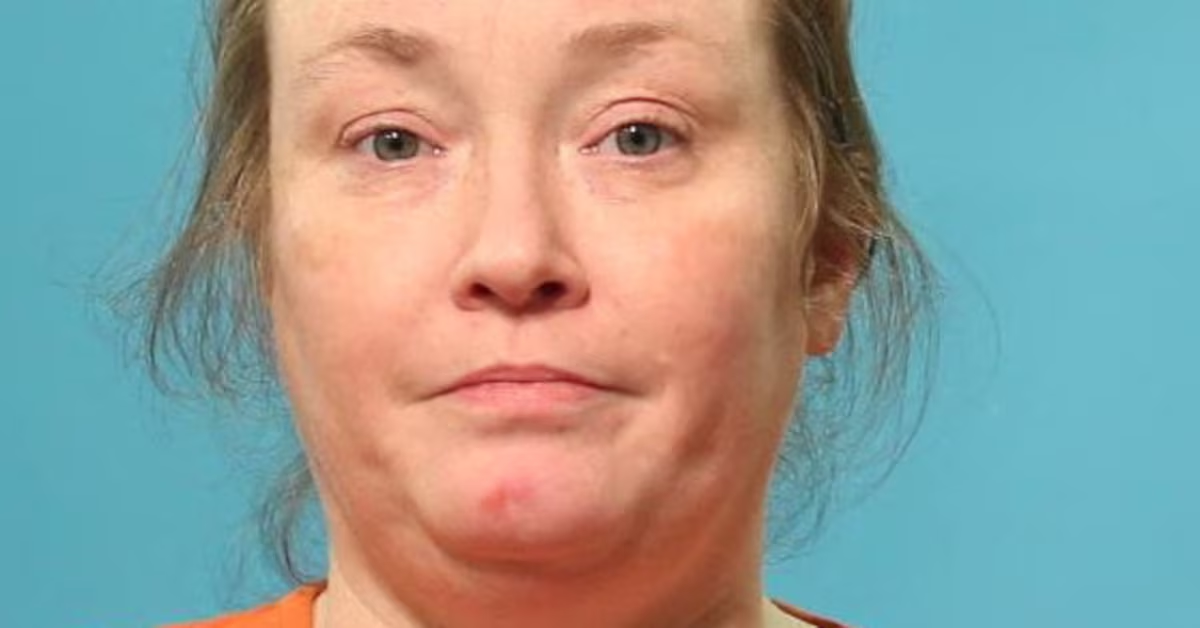
Abigail Jo Shry, a 45-year-old woman from Alvin, Texas, has been sentenced to 27 months in federal prison for leaving a violent and racist voicemail threatening U.S. District Judge Tanya Chutkan, who oversaw the criminal election subversion case against former President Donald Trump. The sentencing marks a significant moment in the broader national conversation about threats to public officials and the limits of free speech in politically charged times.
Abigail Jo Shry’s case, which drew national attention due to its connection with one of the most high-profile legal proceedings in American history, underscores the judiciary’s growing concern about harassment and intimidation directed at those involved in Trump-related prosecutions. Judge Keith Ellison handed down the sentence in a Houston federal courtroom, noting the seriousness of Shry’s words and the wider implications of threats against judicial officers.
The court heard that Abigail Jo Shry had admitted to making the call in August 2023, just days after Special Counsel Jack Smith unveiled his federal indictment against Trump for alleged attempts to overturn the 2020 presidential election results. Prosecutors emphasized that her message was more than a political statement—it was a direct threat intended to intimidate a sitting federal judge and other public figures.
A Threat Made Amid Political Turbulence
The voicemail left by Abigail Jo Shry was laced with violence, racial hostility, and political fervor. Addressed to Judge Tanya Chutkan, an appointee of former President Barack Obama and the presiding judge in Trump’s election interference case, the message warned of violent retribution if Trump were not returned to power. Prosecutors quoted the message verbatim in court filings: “If Trump doesn’t get elected in 2024, we are coming to kill you, so tread lightly, bitch.”
The statement, both explicit and menacing, reflected the intensifying hostility toward judicial officers handling politically sensitive cases involving Trump and his associates. According to the Justice Department, Abigail Jo Shry’s call on August 5, 2023, came just days after the special counsel’s office unsealed a four-count indictment accusing Trump of conspiring to obstruct the certification of the 2020 election results.
The charges focused on efforts to interfere with the collection and validation of electoral votes, culminating in the January 6, 2021, attack on the U.S. Capitol. Abigail Jo Shry’s threat coincided with an uptick in online vitriol targeting Judge Chutkan, who had previously issued stern rulings against January 6 defendants and was seen by Trump supporters as emblematic of the system arrayed against him.
In her voicemail, Abigail Jo Shry also invoked the names of other political figures, including then-U.S. Representative Sheila Jackson Lee, a longtime Democratic congresswoman from Houston who passed away in July 2024. She threatened to kill Lee, other Democrats, and members of the LGBTQ community, expressing a violent form of political allegiance intertwined with bigotry. Prosecutors argued that the message went beyond political hyperbole and amounted to a deliberate act of intimidation against federal officials performing their lawful duties.
During sentencing, the prosecution presented evidence showing that Abigail Jo Shry had a history of making politically charged statements online and had previously been warned about her behavior. Though she did not possess weapons or make concrete plans to act on her words, the content and timing of her call were deemed sufficiently severe to warrant a felony conviction.
The Legal Boundaries of Free Speech and Threats
At the center of the case was the tension between First Amendment protections and criminal statutes prohibiting threats against public officials. Abigail Jo Shry’s defense argued that she believed her voicemail, however inflammatory, fell under her constitutional right to free speech. In court, she admitted to making the call but maintained that she never intended to carry out any violent act. Her lawyer emphasized that she had acted out of “political frustration” and “emotional instability,” rather than premeditated intent to harm.
Federal prosecutors rejected this defense, contending that true threats—statements intended to instill fear or disrupt public duties—are not protected under the Constitution. Citing precedents from the U.S. Supreme Court, they argued that the test for such cases hinges on whether a reasonable person would interpret the communication as a serious expression of intent to commit violence. Judge Ellison agreed, ruling that Abigail Jo Shry’s words were not political speech but a criminal threat aimed at undermining judicial independence.
Read : Bizarre Video of Chinese Car Getting Pregnant Goes Viral on the Internet: Watch Here
The court also noted the broader context in which the threat was made. By August 2023, the political climate surrounding Trump’s legal challenges was increasingly volatile. Public officials, prosecutors, and judges associated with Trump-related cases were subjected to online harassment and doxxing. Judge Chutkan herself had been targeted multiple times, including an incident in January 2024 when a false emergency call—a “swatting” attempt—led police to her home under the mistaken belief that a shooting had occurred. Authorities later confirmed the call was a hoax designed to intimidate her.
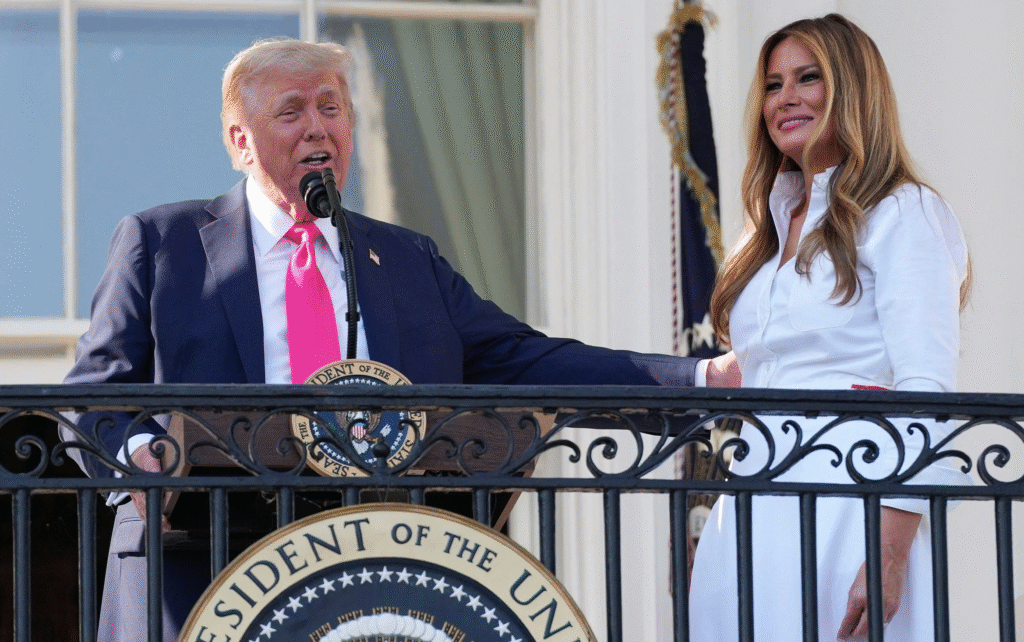
The Justice Department has repeatedly warned that such actions endanger both individuals and the democratic system. Officials have pointed to a surge in violent rhetoric against judges and prosecutors, often amplified by social media, as a growing threat to the rule of law. In that context, Abigail Jo Shry’s voicemail was not an isolated episode but part of a troubling national trend. Her prosecution, according to federal authorities, sends a message that threats against the judiciary will not be tolerated, regardless of political motivation.
Abigail Jo Shry ultimately pleaded guilty to one count of transmitting an interstate threat, a felony offense under federal law. As part of her plea agreement, she admitted to using racially charged language and targeting multiple individuals. Judge Ellison sentenced her to 27 months in prison, followed by supervised release, noting that her actions represented a “clear and dangerous assault on the institutions of justice.”
The Aftermath and Broader Implications
The sentencing of Abigail Jo Shry comes at a politically delicate moment, following Trump’s reelection in November 2024 and the subsequent dismissal of several criminal cases against him. In December 2024, the Justice Department formally requested that Judge Chutkan dismiss the election subversion case, citing a longstanding policy that bars the prosecution of a sitting president. Chutkan, adhering to that policy, granted the motion and vacated the charges. Her decision closed one of the most contentious chapters in Trump’s legal saga, but the fallout from the case—and the atmosphere of hostility surrounding it—has continued to reverberate.
Read : Who is Fedora Man, the 15-Year-Old French Teen Who Went Viral in the Louvre Heist Photo?
For federal authorities, Shry’s sentencing highlights both the dangers faced by judges and the importance of maintaining judicial independence amid political polarization. The U.S. Marshals Service, which provides security for federal judges, has reported a marked increase in threats and suspicious incidents since 2020. Officials have called for stronger protective measures and public condemnation of intimidation tactics aimed at undermining court proceedings.
Legal analysts have noted that cases like Shry’s serve as reminders of the fine line between passionate political expression and criminal behavior. The First Amendment guarantees robust debate and criticism of public officials, but it does not shield speech that incites violence or conveys genuine threats. In recent years, courts have been forced to navigate these boundaries more frequently as heated political rhetoric spills into violent or threatening conduct.
Shry’s defense team expressed remorse on her behalf during the sentencing hearing, saying she had “allowed herself to be swept up in an atmosphere of political anger and conspiracy.” They claimed that alcohol use and personal struggles had contributed to her behavior. Nonetheless, Judge Ellison said the nature of her words—particularly their racial and violent undertones—required a serious response. “Threatening a judge is not speech,” he said from the bench. “It is an attack on the rule of law itself.”
Beyond the courtroom, the case has sparked renewed debate about the role of political rhetoric in inciting hostility toward government officials. Advocates for judicial safety have urged social media companies and political leaders to take stronger action against incitement and misinformation. Meanwhile, civil liberties groups caution that the government must tread carefully to avoid criminalizing dissent or emotional outbursts, emphasizing that context and intent remain critical in evaluating such cases.
Abigail Jo Shry’s 27-month sentence represents not just a punishment for a single individual but also a symbolic reaffirmation of judicial authority in a divided nation. Her case illustrates how inflammatory speech—especially when directed at those administering justice—can cross into criminal territory with serious consequences.
It also reflects the enduring challenges faced by the U.S. justice system in protecting its officials while preserving the freedoms that define democratic life. As the courts continue to handle politically charged cases in the post-Trump era, the balance between free expression and accountability will remain one of the nation’s most delicate and defining legal tests.
**mitolyn official**
Mitolyn is a carefully developed, plant-based formula created to help support metabolic efficiency and encourage healthy, lasting weight management.