
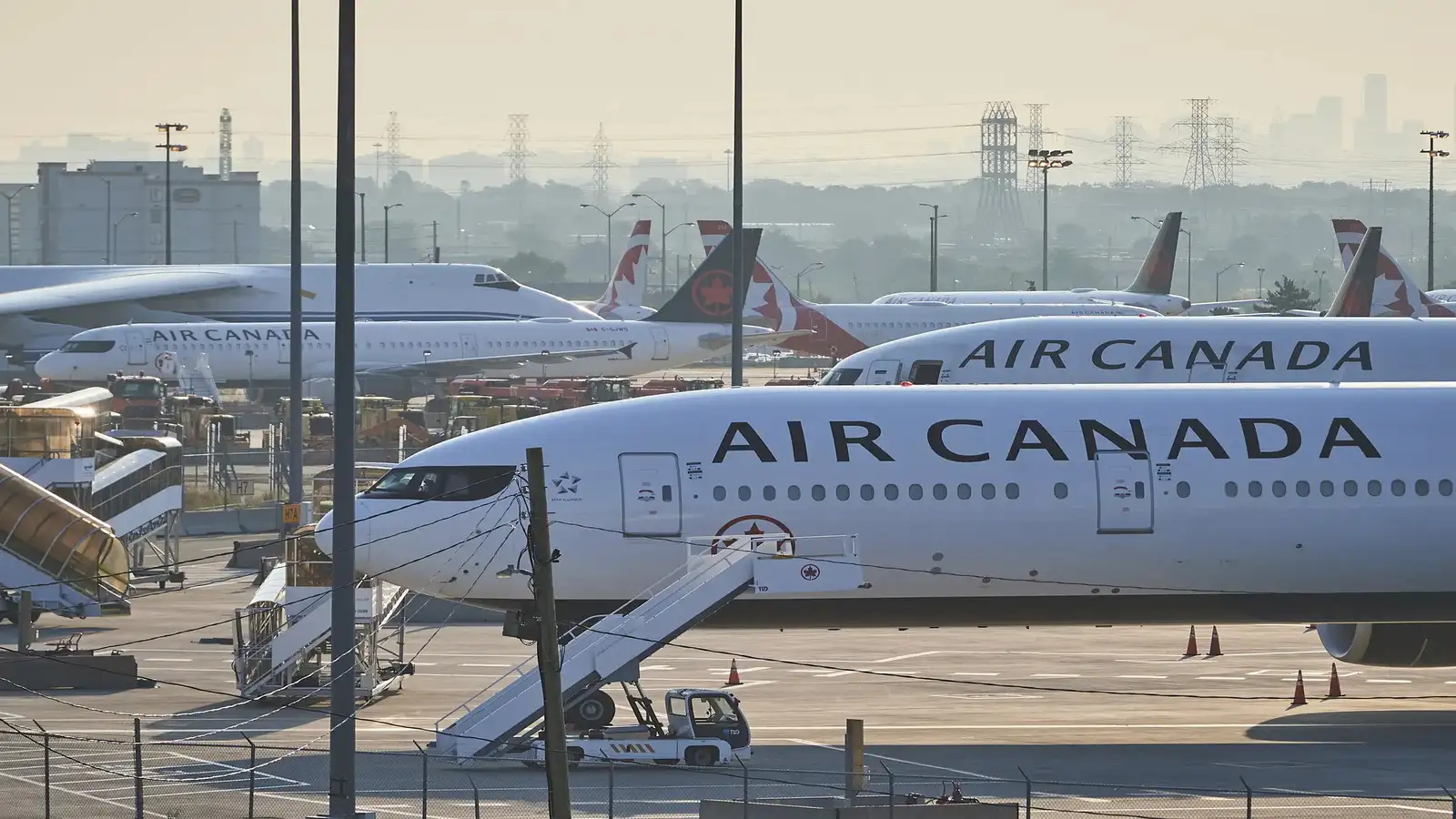
The aviation sector in Canada has been thrown into turmoil after Air Canada’s 10,000 unionised flight attendants went on strike, grounding hundreds of flights and disrupting travel plans for more than 100,000 passengers. The strike, called by the Canadian Union of Public Employees (CUPE), marks the first major work stoppage by Air Canada cabin crew since 1985 and has created a massive impact not only on travelers but also on the country’s already strained economic supply chains.
The Reasons Behind the Strike
The strike was triggered after negotiations between Air Canada and CUPE collapsed over wage increases and working conditions. According to CUPE, Air Canada’s wage proposals were far from meeting the rising cost of living, describing them as “below inflation and below market value.” The airline had most recently offered a package under which a senior flight attendant would, on average, earn CAN$87,000 (about $65,000 USD) annually by 2027.
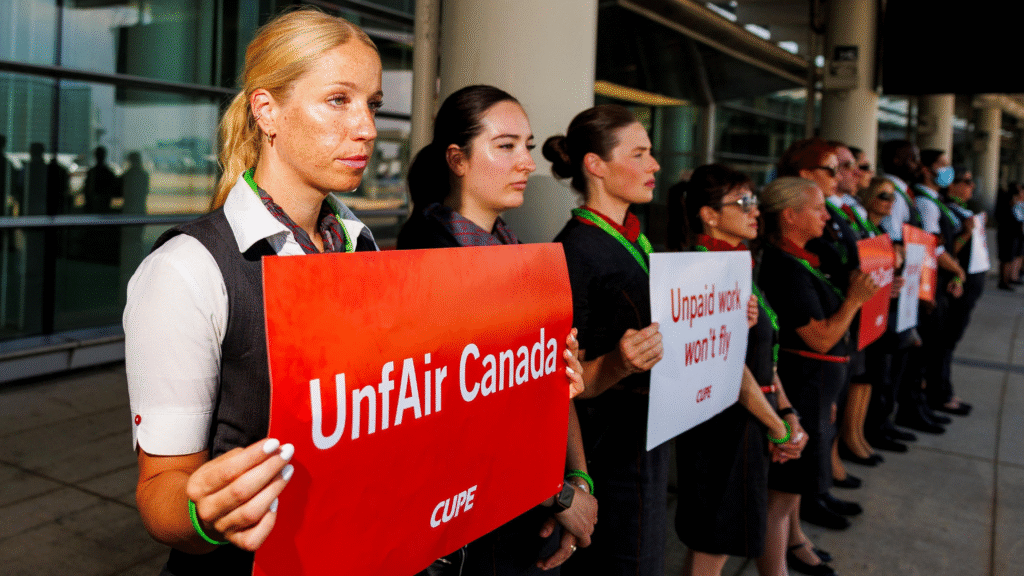
However, the union argued this was insufficient, particularly given inflation pressures and comparable industry wages. Another major sticking point has been uncompensated ground work. Flight attendants have long raised concerns about not being paid for critical duties performed during the boarding process, such as assisting passengers, managing overhead bins, and ensuring compliance with safety regulations.
Currently, most airlines—including Air Canada—pay attendants based only on flight time, meaning the time on the ground before departure and after arrival often goes unpaid. CUPE has highlighted this as an issue of fairness, emphasizing that passengers often see attendants working during these periods and assume they are compensated, when in reality they are not.
This issue of ground time pay has resonated strongly with the public. Experts like Rafael Gomez, head of the University of Toronto’s Centre for Industrial Relations, noted that CUPE has run an effective communication campaign that frames the issue as a clear injustice.
After Government of Canada ordered striking Air Canada flight attendants back to work, the picket line at @TorontoPearson erupted with chants: “We Just Start To Strike, Hands Off Our Rights!” and “Hell No! We Won’t Go!” pic.twitter.com/LUoxZjtDca
— RealityDocu (@realitydocu) August 16, 2025
Many passengers, seeing attendants working before takeoff, are surprised to learn they are technically unpaid during those hours. For CUPE, this not only highlights inequity but also strengthens its bargaining position, making the strike a broader symbol of labor rights in aviation.
The Disruption to Passengers and the Economy
The strike has caused widespread chaos for travelers across Canada and beyond. Air Canada and its low-cost subsidiary Air Canada Rouge have suspended all flights, affecting an estimated 130,000 passengers per day. Regional services, such as Air Canada Jazz and PAL Airlines, continue to operate, but the sheer scale of cancellations has left airports crowded with stranded passengers, many scrambling to rebook flights on other carriers.
At Toronto’s Pearson International Airport, Canada’s busiest hub, travelers reported confusion and frustration as flights were cancelled with little notice. Some described repeated gate changes, delays, and sudden cancellations that left them with no alternative but to seek new bookings. Freddy Ramos, a 24-year-old passenger, shared how his flight was first delayed, then cancelled minutes before boarding, forcing him into last-minute rebooking chaos.
Read : Delta Air Lines Jet Flipped Upside Down Upon Landing at Canada’s Toronto Pearson Airport
The disruptions go beyond individual travelers. The Business Council of Canada has warned that the strike could exacerbate ongoing economic challenges, particularly given current trade tensions with the United States and global supply chain pressures. Air Canada is not only the largest carrier in the country but also the busiest foreign airline serving the U.S. by scheduled flights. Any prolonged disruption could harm both passenger travel and cargo transport, affecting businesses across multiple sectors.
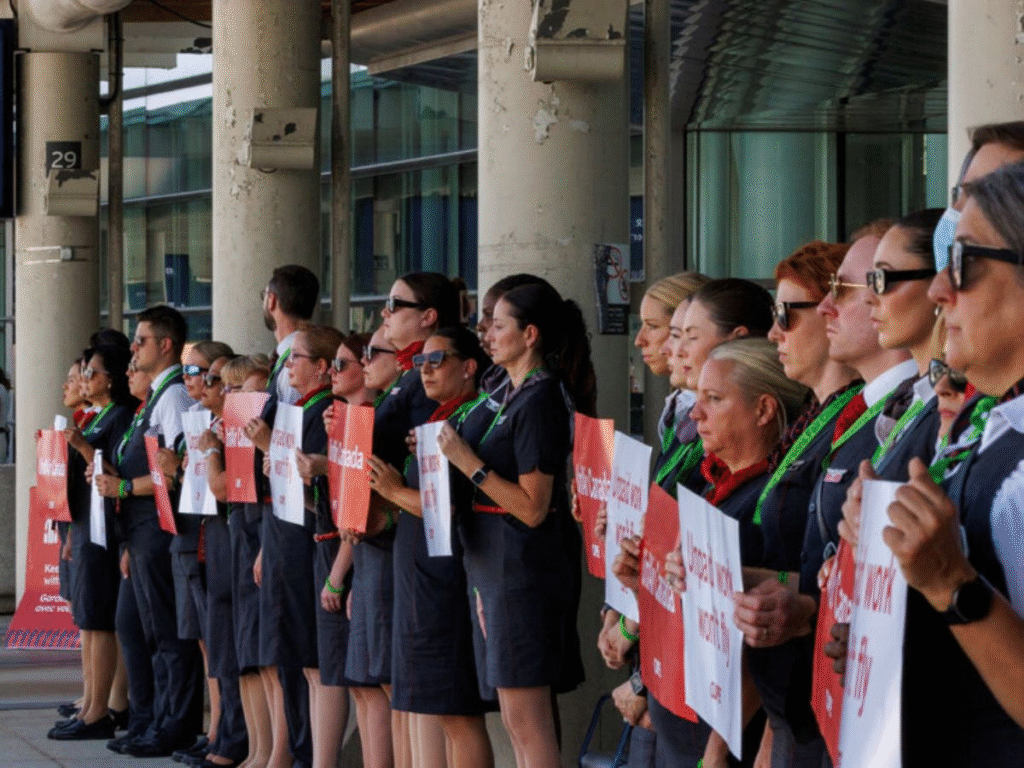
This mounting pressure has led some Canadian businesses to call on the federal government to impose binding arbitration to resolve the dispute. They argue that halting the strike is necessary to avoid broader economic damage. However, CUPE has strongly opposed this, insisting that arbitration would sideline workers’ voices and fail to address the underlying issues of fair pay and recognition for ground duties.
The Broader Implications for Labor and Aviation
The Air Canada strike is more than a fight over wages—it is a test case for labor rights within the airline industry. If CUPE succeeds in securing higher pay and compensation for ground duties, it could set a precedent that ripples across Canada’s aviation sector and potentially beyond. Other airlines may face renewed demands from unions to reevaluate compensation structures that have long been considered industry standard.
Globally, flight attendants often face similar conditions where pay starts only when the plane departs, leaving ground work effectively unpaid. CUPE’s decision to center its campaign on this issue has drawn attention not only from passengers but also from other labor unions watching closely. Gains at Air Canada could empower similar movements among workers at other airlines, especially as inflation and cost-of-living pressures remain a central issue in many countries.
From a political perspective, the strike also poses challenges for Prime Minister Mark Carney’s minority Liberal government. Air Canada has urged Ottawa to order both sides into binding arbitration, but doing so risks alienating labor unions at a time when worker rights have gained public sympathy. Balancing economic stability with respect for union negotiations will be a delicate act for the government, particularly if the strike drags on and disruptions deepen.
At the airports, striking flight attendants have begun picketing, drawing both support and frustration from passengers. While many travelers expressed sympathy for the workers’ demands, others have voiced anger over being stranded or forced to spend significantly more money rebooking flights. The strike has, in many ways, revealed the fragile balance between worker rights and the reliance of modern societies on seamless travel and transport networks.
Looking ahead, the outcome of this strike could shape the future of labor negotiations not just in aviation but in other industries where unpaid preparatory or transition work is common. As CUPE highlights the fairness issue of working without pay during boarding, it taps into a broader cultural moment where workers in many fields are questioning long-standing norms about compensation and respect in the workplace.
For now, the strike has grounded Air Canada’s operations, leaving travelers uncertain and the government under pressure to act. Whether the dispute ends with arbitration, compromise, or prolonged standoff, its impact will be felt well beyond the terminals of Canada’s airports.