
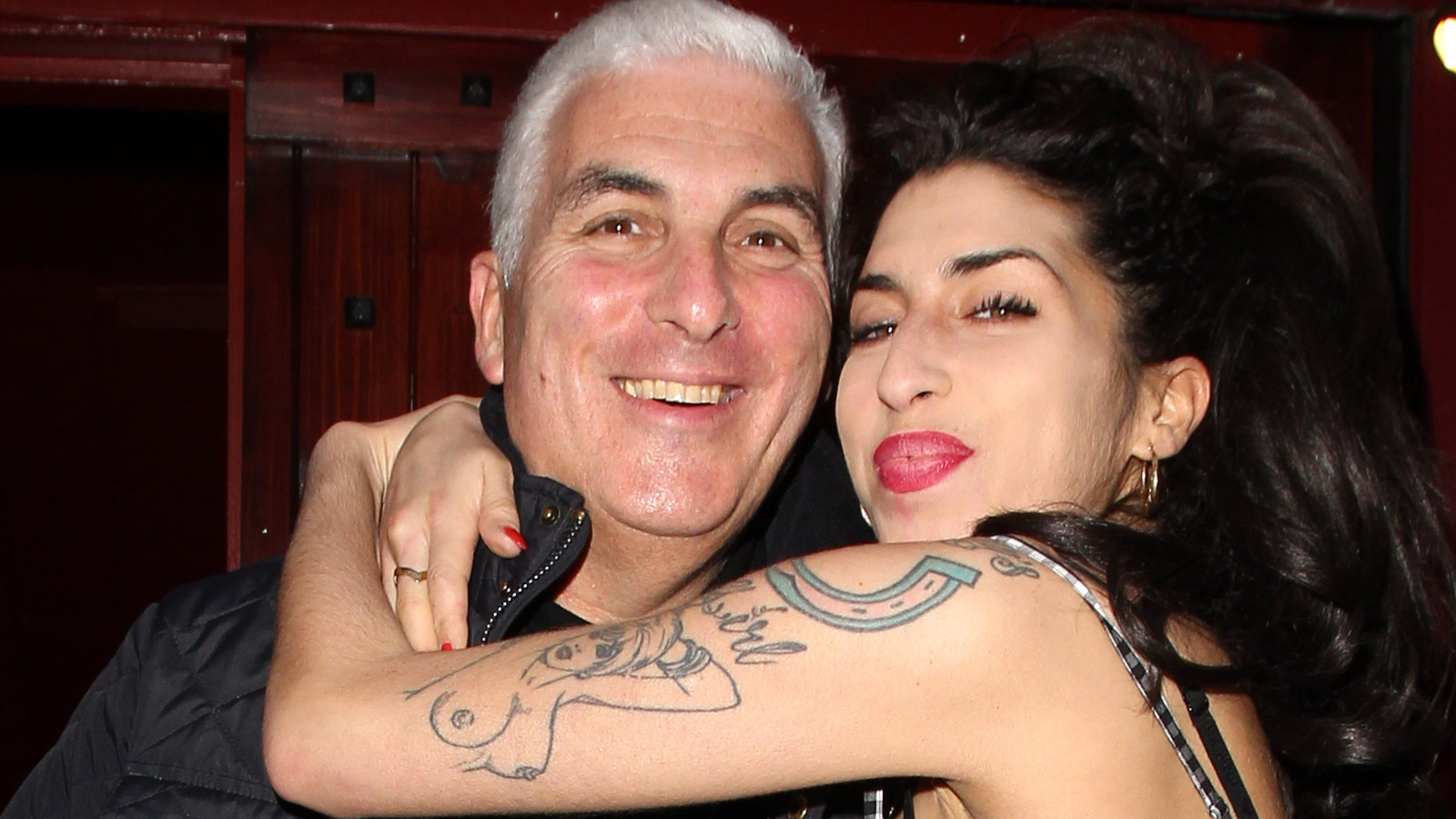
The legal dispute between Mitch Winehouse and two of his late daughter’s closest friends has opened a complex and emotionally charged chapter in the aftermath of Amy Winehouse’s death. More than a decade after the singer passed away in 2011, her father has brought a High Court claim against stylist Naomi Parry and longtime friend Catriona Gourlay, alleging that both women profited from selling large quantities of Amy’s belongings without notifying him or securing the estate’s approval.
The case, which centres on hundreds of items auctioned in the United States in 2021 and 2023, raises difficult questions about ownership, consent, memory, and trust among those who were once closest to the performer. With both sides presenting sharply conflicting narratives about how the possessions were obtained, the proceedings have drawn considerable public attention as they revisit the legacy Amy Winehouse left behind and the lingering disputes over her personal history.
Claims Over Concealed Auctions and Disputed Ownership
At the heart of the case is Mitch Winehouse’s allegation that Parry and Gourlay deliberately hid their involvement in major auctions of Amy’s personal effects, thereby preventing the estate from knowing which items were being sold or who claimed ownership. Represented by barrister Henry Legge KC, the estate argues that the pair consigned more than 150 items to the 2021 auction alone, despite Mitch believing that every one of the 834 catalogued items belonged to the estate.
Among the pieces sold was the silk mini-dress Amy wore during her final performance in Belgrade, Serbia, which Parry auctioned for 243,200 US dollars. Parry and Gourlay’s combined sales from that event reportedly totalled more than 1.2 million dollars across all disputed items, a sum Mitch says should have been subject to estate control. According to written submissions, Parry and Gourlay did not inform Mitch Winehouse of their plans to sell the items or clarify that they considered them their own property.
Instead, the estate alleges they intentionally exploited Mitch’s misunderstanding that all lots in the auction were part of the estate’s official offering. This impression was reinforced by Darren Julien of Julien’s Auctions, who had first approached the Winehouse family in 2014 about an auction of Amy’s belongings. Although Mitch declined that proposal at the time, the auction house later worked with Parry and Gourlay individually when they expressed willingness to sell their private collections in 2018 and 2019.
Read : Devastating! Jourdan Feasby Loses All 3 Children in Fire at Their Father’s Apartment on Thanksgiving
In 2021, Mitch ultimately agreed to auction a selection of estate items, generating around 1.4 million dollars, with 30% of proceeds directed to the Amy Winehouse Foundation. What he says he did not know was that Parry and Gourlay had consigned their own items within the same event.
Read : Father Makes 3-Year-Old Daughter Fill Bowl with Tears for Watching Excess TV in China
After the auction, Julien reportedly texted Parry that Mitch would “go a little nuts” when he realised the most valuable pieces belonged to her collection. This message, disclosed in court, has become a point of contention, with the estate citing it as evidence the women knowingly concealed their actions. Mitch Winehouse maintains that while Amy may have given friends occasional items over the years, the sheer number of pieces claimed by Parry and Gourlay defies belief.
Defence Arguments: Gifts, Shared Possession, and Amy’s Intentions
In response, both defendants assert that the items they sold were either gifted to them by Amy Winehouse during her lifetime or had always been their own property. Their legal teams argue that the estate’s assumptions about ownership fail to reflect the reality of Amy’s relationships, her generosity, and the way she interacted with those close to her. According to their accounts, the culture of sharing, borrowing, and gifting was deeply embedded in Winehouse’s personal life.
Parry, who became Amy’s stylist in 2006 and often lived at her Camden home, claims that many items were in her possession long before the singer’s death. These included clothes, accessories, and other personal effects that she says Amy either gave to her or loaned without expectation of return. Gourlay, who met Amy in 2002 and lived with her from 2004 to 2005, similarly describes a period in which the two women frequently exchanged belongings.

After Amy’s career accelerated following the release of Back to Black in 2006, Gourlay says the singer became increasingly generous, regularly giving away items to friends as spontaneous acts of kindness. Counsel for Gourlay, Ted Loveday, also argues that the sales reflected what Amy herself would have wanted, suggesting that she would not object to personal items being shared, sold, or passed along by those she cared about.
He contends that the estate’s claim has been “cobbled together” without sufficient attention to the complex personal histories involved, and asserts that Mitch Winehouse’s motivations stem more from perceived slights and reputational concerns than from clear legal ownership. According to submissions, the estate initially challenged 156 items but has since abandoned claims to a portion of them, a development the defence uses to underline the uncertainty surrounding the issue of rightful ownership.
The defence further emphasises that both women categorically reject any suggestion of concealment. Instead, they argue that the auction setting, communications with Julien’s Auctions, and their long history with Amy were transparent and well known to industry insiders. From their perspective, the items were theirs to sell, and the auctions were organised openly through a professional auction house with no intention to deceive. They maintain that they acted within their rights and that the estate’s accusations reflect a misunderstanding of Amy’s personal habits rather than any wrongdoing on their part.
Emotional Stakes and Legal Questions Surrounding Amy’s Legacy
Beyond the legal complexities, the case carries significant emotional weight for all parties involved. For Mitch Winehouse, the dispute touches on the broader responsibilities of safeguarding his daughter’s legacy as administrator of her estate. His lawyers describe the lawsuit as his “only means of obtaining answers” about how so many items left Amy’s possession and how they came to be sold without his knowledge.
Read : Father of Missing 7-Month-Old Emmanuel Haro Sentenced to 25 Years for Murder
The estate’s concerns stem not only from financial implications but also from the symbolic meaning attached to Amy’s personal objects, many of which represent key moments in her career. On the other hand, Parry and Gourlay argue that their relationship with Amy was long-standing, mutually intimate, and rooted in deep personal trust. They describe a social environment in which clothes, memorabilia, and personal objects freely circulated among friends, especially during the years when Amy’s lifestyle was defined by spontaneity and shared living spaces.

They suggest that for those who knew Amy best, the boundaries between her property and that of her close companions were often fluid. Their stance highlights the difficulty of applying rigid legal frameworks to the informal, emotionally driven exchanges that defined much of their lives with the late singer.
The court must now determine where ownership truly lies in this ambiguous space between legal possession and personal memory. Questions of oral gifting, long-term possession, informal loans, and the nature of Amy’s personal relationships complicate what might otherwise be a straightforward estate matter. The auction records and personal testimonies create competing narratives: one emphasising concealment and improper profit, the other highlighting shared living arrangements and Amy Winehouse’s generosity.
The proceedings also raise broader considerations about how personal effects of public figures are handled after their deaths. For artists like Amy Winehouse, whose belongings carry both sentimental and commercial value, disputes can emerge not only among family members but also among friends, collaborators, and caretakers who may hold nuanced memories of how those items were used or exchanged. The legal system is often left to interpret these memories within the confines of property law, even when personal relationships defy simple categorisation.
The trial, presided over by Sarah Clarke KC, is set to conclude this week, though any ruling may not immediately resolve the tensions underlying the dispute. Regardless of the outcome, the case reflects how deeply Amy Winehouse’s legacy continues to resonate—and how the objects she left behind continue to carry emotional significance for those who loved her.
Iwinvvip… sounds fancy, right? Well, it’s got the VIP treatment I expected. Smooth gameplay, decent rewards. Sign up and see what you think! Right here at iwinvvip