
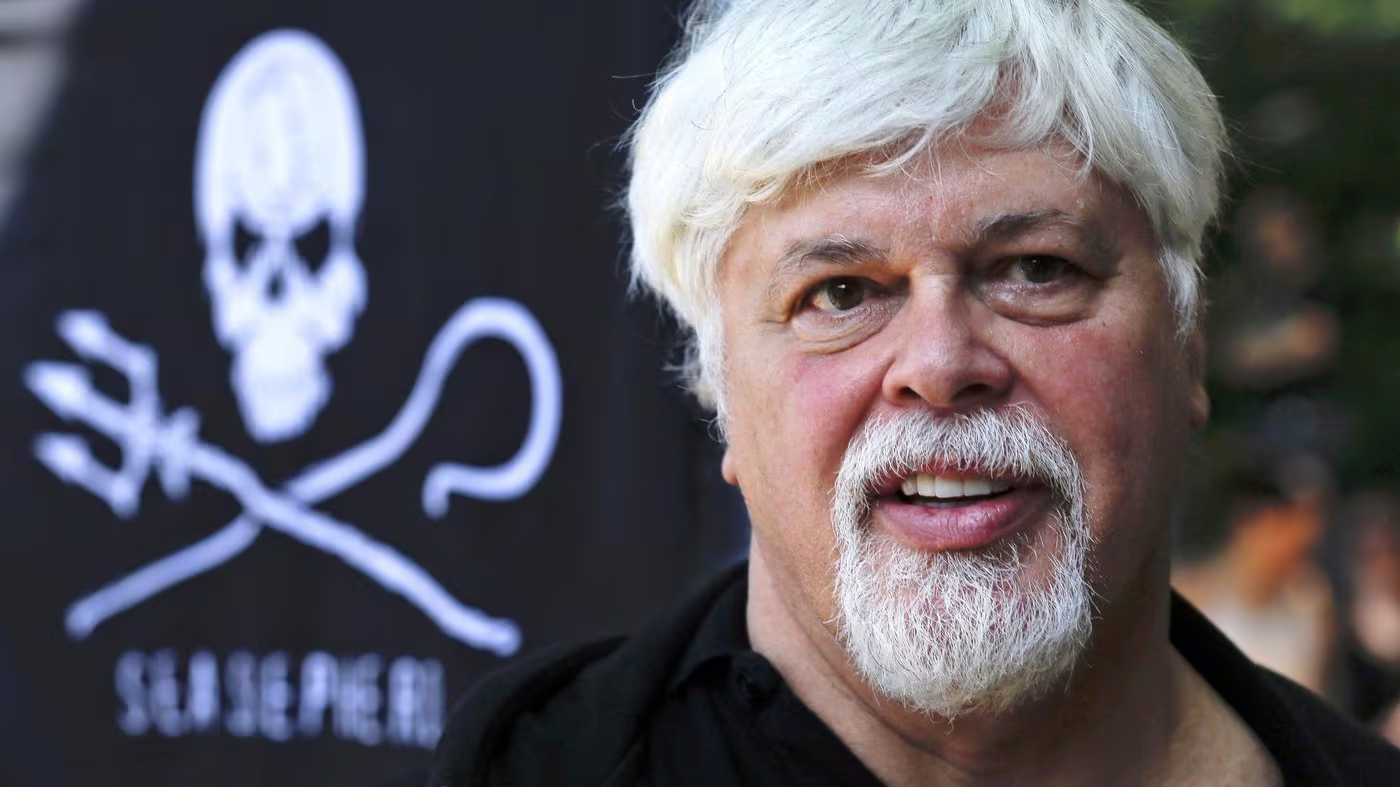
Paul Watson, the renowned marine conservationist and founder of the Sea Shepherd Conservation Society, has been removed from Interpol’s red notice list after more than a decade of legal and political entanglements. The decision marks a significant turn in the long-standing case against the 74-year-old activist, who has spent much of his life on the frontlines of environmental activism, particularly in defense of whales against commercial whaling operations.
While Watson sees this as a personal vindication and a win for the oceans he has fought to protect, the implications of Interpol’s decision stretch beyond individual relief, reflecting broader concerns about politically influenced legal maneuvers and the ongoing controversy surrounding Japanese whaling practices.
The red notice, issued by Interpol in 2012 at Japan’s request, was based on Watson’s alleged involvement in an incident that took place in 2010 in the Southern Ocean. During this encounter, Watson and his crew were accused of throwing butyric acid, a rancid-smelling substance, at a Japanese whaling research ship in an effort to obstruct its operations.
The Japanese government claimed that the action endangered the lives of the whaling ship’s crew and constituted a criminal offense. Watson has consistently denied any wrongdoing, arguing that his actions were part of a non-violent protest against what he considers illegal whaling activities conducted under the guise of scientific research.
Despite the red notice, which is essentially a request for international law enforcement to locate and provisionally arrest a suspect, Watson continued to travel and lead Sea Shepherd missions. However, his arrest in Greenland in 2023 changed the trajectory of the case. Although Denmark declined Japan’s request for extradition, Watson was detained for five months.
Upon his release, the Danish Justice Ministry cited concerns over Japan’s unwillingness to provide assurances that the time he had already served would be credited against any potential sentence. This lack of guarantee was a critical factor in Denmark’s refusal to cooperate, highlighting how legal proceedings can be hindered by international diplomatic and human rights considerations.
The Long Fight Against Whaling and Legal Persecution
Paul Watson’s activism began in the 1970s, and his confrontational tactics quickly set him apart in the environmental movement. He co-founded Greenpeace but later split from the organization, feeling it was not taking a strong enough stand. In 1977, he founded the Sea Shepherd Conservation Society, which became known for its aggressive yet non-lethal confrontations with whaling vessels.
Sea Shepherd’s missions in the Southern Ocean, particularly its clashes with Japanese whalers, garnered global attention and were chronicled in the popular TV series Whale Wars. These operations were often risky and controversial, but they succeeded in drawing international scrutiny to Japan’s whaling practices.
Watson’s methods earned him admiration from many environmentalists and celebrities who viewed his actions as necessary in the face of continued whale slaughter. However, they also invited criticism from governments and industry stakeholders who accused him of vigilantism. Japan, in particular, has remained steadfast in its characterization of Sea Shepherd’s operations as criminal interference. The 2010 incident, which lies at the heart of the red notice, became a flashpoint in this ongoing conflict.
Read : Who Is Greta Thunberg Who Dares to Deliver Gaza Aid and Gets Seized in Israel?
Watson has long argued that Japanese whaling in the Southern Ocean Whale Sanctuary is illegal under international law. The sanctuary, established by the International Whaling Commission (IWC), is intended to protect whales from commercial hunting. Japan, however, exploited a loophole in the IWC’s regulations that allows for lethal research, a practice widely viewed as a front for commercial whaling.
Le Japon dénonce la levée de la notice rouge d’Interpol visant le militant écologiste Paul Watson, prononcée mardi, et maintient sa demande d’extradition.
— 20 Minutes (@20Minutes) July 23, 2025
➡️ https://t.co/xMSohNRD8p pic.twitter.com/4ECu5h3YvQ
In 2014, the International Court of Justice ruled that Japan’s Antarctic whaling program was not scientific and ordered it to be halted. Although Japan temporarily suspended the program, it later resumed whaling under a revised plan and eventually withdrew from the IWC in 2019 to resume commercial whaling in its territorial waters.
The removal of the red notice does not mean the Japanese arrest warrant has been invalidated. It merely indicates that Interpol, after a thorough review, found the red notice to be inconsistent with its internal rules, particularly those concerning political neutrality.
According to Interpol, the decision was made by its independent Commission for the Control of Interpol’s Files, which reviewed submissions from both Watson’s legal team and Japanese authorities. The commission acknowledged that the long passage of time and Denmark’s refusal to extradite Watson suggested political elements were at play. Consequently, Watson’s data has been purged from Interpol’s global databases.
Freedom Still in Limbo Despite Interpol Decision
Although Watson is no longer listed on Interpol’s red notice system, the legal threat from Japan persists. Lamya Essemlali, president of Sea Shepherd France, welcomed the removal of the red notice but warned that the Japanese arrest warrant remains active. This means Watson could still be detained in countries willing to honor Japan’s request. His freedom of movement remains restricted, limiting his ability to participate fully in environmental campaigns abroad.
Watson’s lawyer, William Julie, emphasized that the Interpol decision recognized the “disproportionate nature” of the charges and the considerable time that has passed since the alleged offense. In a phone interview, Julie said that Watson was “relieved” and “happy we won,” but acknowledged that the battle is not yet entirely over. The removal from the red notice list is a major legal and symbolic victory, but Watson still faces uncertainties every time he travels internationally.

For Watson, however, the decision is deeply personal. In a statement released by Sea Shepherd France, he described it as the end of “14 years of politically motivated persecution” and a victory for the whales he has devoted his life to protecting. Watson’s commitment to marine conservation has never wavered, even in the face of imprisonment, legal action, and ongoing threats to his freedom. His resolve and that of his supporters reflect a broader struggle between environmental justice and state-driven economic interests.
It’s worth noting that the legal drama surrounding Watson has also highlighted the limitations and potential politicization of international policing mechanisms like Interpol. Human rights groups have long criticized the red notice system, claiming it can be abused by countries to pursue political dissidents and activists under the guise of criminal charges. Watson’s case is emblematic of this concern. The involvement of multiple countries refusing to extradite him further supports the notion that his prosecution may be driven more by politics than justice.
A Symbolic Victory in the Ongoing Battle for the Oceans
As the dust settles on the Interpol red notice, Paul Watson’s legacy as an environmental crusader appears more secure than ever. His resilience in the face of legal and political adversity has cemented his status as a symbol of grassroots environmental activism. For Watson, the fight was never just about whales or a single legal battle—it was about challenging the systems that allow environmental destruction to persist under legal pretenses.
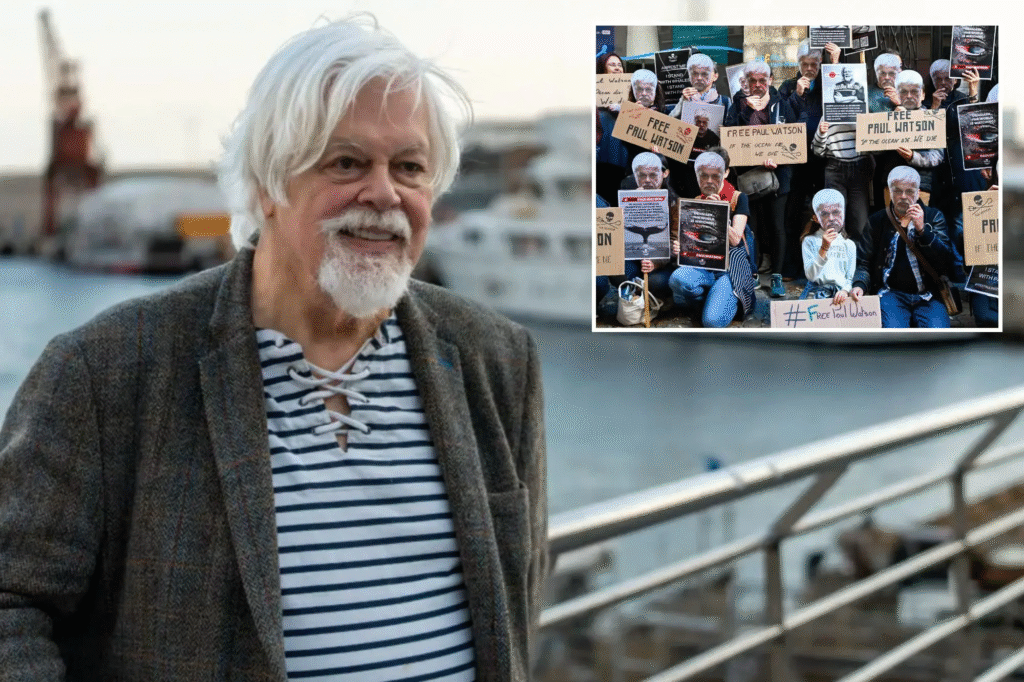
The broader implications of the decision also touch on the evolving role of international law enforcement in a politically complex world. Interpol’s move to erase Watson’s data from its database can be seen as an institutional acknowledgment of the need to uphold fairness and avoid entanglement in political disputes. While not a judgment on the substance of the case itself, it sends a strong message about the importance of due process and the potential misuse of global policing tools.
Watson now continues his work with renewed focus and a sense of vindication. In recent years, he has handed over the reins of Sea Shepherd USA to new leadership while remaining an influential figure in the global conservation movement. He has also launched a new organization, the Captain Paul Watson Foundation, to carry on his mission of marine protection.
As Watson moves forward, his experience serves as a cautionary tale and a rallying cry. Environmental activism often comes with high personal costs, especially when it challenges powerful economic interests. Yet, as this latest development shows, persistence and principle can sometimes triumph, even in the face of long odds.
The red notice may be gone, but the mission to protect marine life is far from over. With threats like climate change, illegal fishing, and ocean pollution looming larger than ever, the world needs determined advocates like Paul Watson—people who are willing to sail into the storm to protect what cannot speak for itself.