

A recent incident of Assaults Indian-Origin Man at Toronto McDonald’s has sparked growing concern over the rise of xenophobic behavior and racially charged confrontations faced by immigrants in Canada. The video, widely circulated online, depicts an Indian-origin man being physically assaulted by an intoxicated individual wearing Toronto Blue Jays apparel. While the matter is still under review by authorities and the full identities of those involved are yet to be confirmed, the visual evidence and reactions shared across social media have fueled discussions about the safety, dignity, and treatment of racial minorities in public spaces across the country.
The episode seems to reflect a troubling trend of harassment targeting visible minorities, especially South Asian immigrants who now form one of the largest demographic groups in Canada. The calm and restrained response of the Indian-origin man, juxtaposed against the aggressor’s hostility, has only intensified public debate on how such incidents should be handled both socially and legally. The incident reportedly occurred on November 1, inside a Toronto McDonald’s near the pick-up counter for mobile orders. The video shows a white Canadian man approaching the Indian man without any provocation.
After forcefully pushing him and knocking his phone to the ground, the aggressor continued to intimidate him, accusing him of “acting superior.” While the victim attempted to de-escalate the situation, the aggressor remained confrontational until a staff member intervened. Even then, the hostility continued, and the assailant had to be escorted out of the premises. No injuries were immediately reported, and authorities have not yet issued any official statement regarding the event.
This incident follows a series of similar occurrences that highlight concerns over the experiences of immigrants, including the recent assault of 55-year-old Canadian-Indian businessman Arvi Singh Sagoo in Edmonton. In Sagoo’s case, what started as an attempt to stop inappropriate behavior escalated into a deadly act of violence. Taken together, these events bring renewed attention to ongoing discussions around cultural integration, racial prejudice, and the need for more proactive measures to ensure safety for immigrant communities.
Assaults Indian-Origin Man at Toronto McDonald’s
Canada has long been celebrated for its multiculturalism, democratic values, and welcoming attitude toward newcomers. The nation has presented itself as a destination where diversity is respected and cultural coexistence is embraced. However, the recent rise in racially motivated confrontations and public harassment tells a more complicated story. For many immigrants, particularly those of South Asian, Middle Eastern, and African backgrounds, daily life sometimes involves navigating subtle or overt discrimination.
In the Toronto McDonald’s incident, the aggressor’s accusation that the Indian man was “acting superior” underscores a pattern commonly reported by immigrants who face resentment from individuals who perceive newcomers as threats—whether to employment, cultural identity, or social superiority. The expression of such hostility frequently has little to do with the victim’s behavior and more to do with the attacker’s internal biases and insecurities. Alcohol intoxication, as suggested in the video, may have lowered the aggressor’s inhibitions, making these underlying prejudices more overt and aggressive.
Moreover, the location of the incident—a fast-food restaurant—highlights the public nature of such confrontations. Many racial minorities report facing harassment in shared spaces such as transit stations, shopping centers, and casual dining establishments. These are settings where people expect to feel safe, relaxed, and socially equal. When violence occurs in such environments, it amplifies the emotional and psychological impact, making it more difficult for targeted individuals to feel secure even in everyday surroundings.
Drunk Canadian “Tough Guy” Thinks it’s OK to Bully and Assault an Indian Man in Toronto McDonalds
— RT_India (@RT_India_news) November 4, 2025
The slurring Blue Jays fan seemed to take offence to the Indian man standing in the queue, attacking him and asking, “Do you think you’re better than me?”
They say alcohol brings… pic.twitter.com/qyu3Sf8Zb5
The hesitation of bystanders, often seen in these videos, is also a critical concern. In many cases, witnesses may be unsure how to intervene safely, or they may fear escalation. Yet the reluctance to step in sometimes reflects a broader societal discomfort with confronting racism directly. Without proactive support and solidarity from the public, victims often find themselves isolated in moments where collective action could have made a decisive difference.
Safety, Accountability, and the Role of Law Enforcement
Despite the wide circulation of the Toronto McDonald’s video, police have yet to release a formal statement. This silence leaves many unanswered questions about the accountability process for such acts. Although verbal harassment, pushing, and grabbing are all recognized forms of assault under Canadian law, enforcement outcomes often depend on whether victims choose to press charges, whether witnesses support their claims, and whether video evidence is clear enough for legal proceedings.
In incidents involving racial hostility, there is also the question of whether hate crime enhancements should be applied. Canadian law does allow for harsher penalties if a crime is proven to be motivated by bias or prejudice. However, establishing racial motive requires explicit evidence—such as direct references to race, ethnicity, or cultural identity—during the confrontation.
Read : Truth Behind Viral Video of Indian Man Stranded in Saudi Desert Pleading for PM Modi’s Help
In this instance, the aggressor’s accusation of the Indian man “acting superior” may suggest a resentment tied to cultural or social dynamics, but such language alone may not meet the legal threshold for hate crime classification. Nevertheless, many observers argue that the cumulative context—body language, tone, and cultural positioning—demonstrates a deeper issue of racialized aggression.

The responsibility of institutions, such as restaurant chains and customer service establishments, also comes into question. McDonald’s, as a multinational corporation, has guidelines for handling conflicts on its premises, but these are often dependent on the training and preparedness of staff. The individual who intervened in the video likely did what they could in the moment, yet the broader system of training employees to identify and respond effectively to racially charged harassment requires consistent reinforcement.
Community organizations and immigrant support networks have emphasized the importance of providing legal support, counseling services, and safe reporting mechanisms for those who have experienced racial harassment. Without accessible support systems, many cases go unreported, allowing patterns of discrimination to persist unchallenged.
Implications for Immigrant Communities and Social Cohesion
The Indian diaspora has grown rapidly in Canada over the past decade, contributing significantly to the workforce, academia, healthcare, and entrepreneurial sectors. With this increasing presence has come greater cultural diversity, but also heightened exposure to racialized tensions. For many Indian and South Asian immigrants, such incidents are not isolated experiences but rather reminders of an ongoing negotiation of identity in a foreign land.
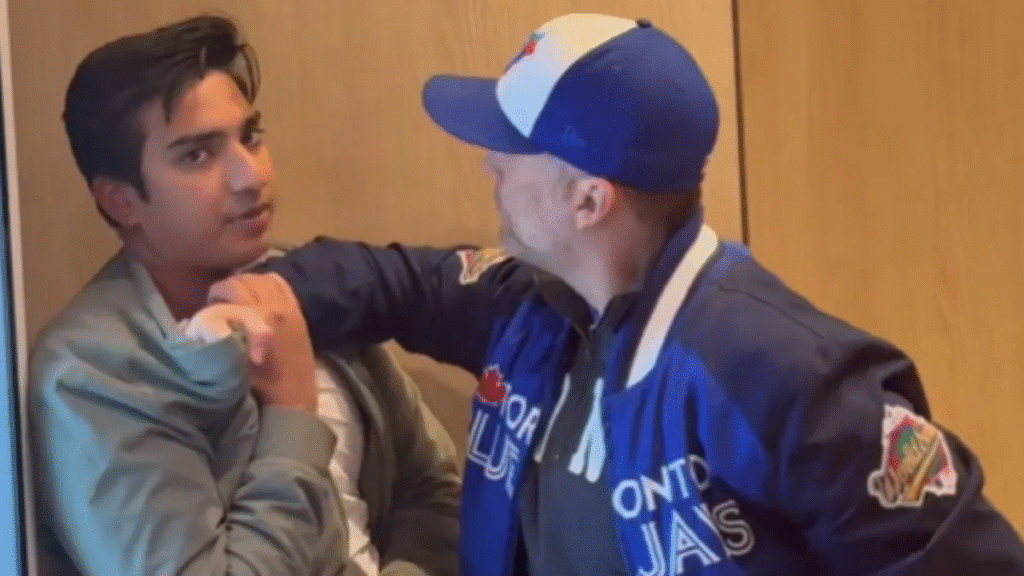
The video of the McDonald’s confrontation has resonated strongly within immigrant communities, not only because of the physical aggression but because the victim’s calm response reflects the restraint many minorities feel obligated to show in potentially dangerous situations. Reacting defensively or forcefully could result in legal consequences, escalation of violence, or further misinterpretation of their actions. This emotional burden—remaining composed while being targeted—adds another layer of stress to the immigrant experience.
The death of Arvi Singh Sagoo in Edmonton further intensifies emotional reactions to the Toronto incident. While the circumstances are different, both cases highlight how quickly confrontations can escalate and how vulnerable racial minorities may be when facing aggression alone. Community leaders and advocacy groups have since renewed calls for improved public awareness campaigns, stronger legal consequences for racial harassment, and the development of community-based safety strategies.
Canada’s identity as a multicultural nation remains fundamentally rooted in inclusion and shared respect. However, this identity must be actively upheld. As society continues to diversify, education and dialogue about cultural respect, racial equality, and mutual understanding become essential. Schools, workplaces, media institutions, and local communities all play a role in reinforcing norms that reject discrimination. Fostering empathy, challenging biases, and holding individuals accountable for harmful behavior are key to maintaining social cohesion.
Ultimately, incidents like the one at the Toronto McDonald’s remind Canadians and immigrants alike that the promise of multicultural harmony requires continuous effort. The path to a more respectful, safe, and inclusive society involves recognizing the reality of racial prejudice, supporting those who experience it, and standing firmly against intolerance in all its forms.
References:
Banned bodybuilding supplements for sale 2018
References:
https://illinoisbay.com/index.php?page=user&action=pub_profile&id=2532
References:
Blackjack practice
References:
https://platform.joinus4health.eu/forums/users/babyiris93/
References:
Steroids legal in canada
References:
https://www.servus-nachbar.at/Neuigkeiten/index.php/;focus=W4YPRD_com_cm4all_wdn_Flatpress_7491266&frame=W4YPRD_com_cm4all_wdn_Flatpress_7491266?x=entry:entry251210-113314;comments:1