

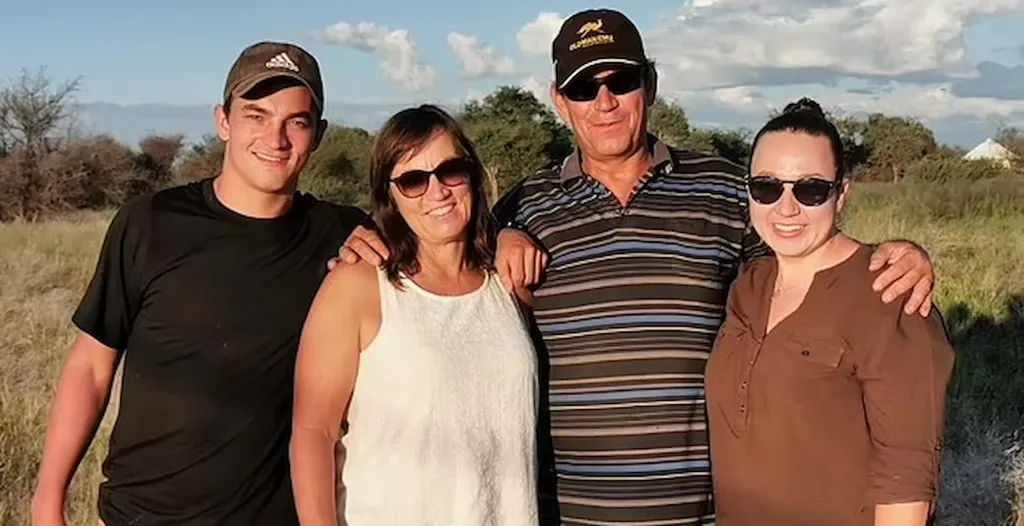
Bernd Kebbel, a well-known businessman and wildlife conservation supporter, was killed in a shocking and tragic incident at a luxury camp in Namibia’s remote Sesfontein area. The incident occurred in the early hours of Friday, May 30, while he was on holiday with his wife and friends near the Hoanib Skeleton Coast Camp.
Known for its rugged beauty and isolated wilderness, this region of Namibia is famous for its rare desert-adapted lions and stunning landscapes. What was meant to be a peaceful night under the stars turned into a terrifying and fatal encounter with one of Africa’s most iconic predators.
According to Ndeshipanda Hamunyela, a spokesperson for Namibia’s environment ministry, Mr. Kebbel had stepped out of his tent during the night to use the toilet when a lion pounced on him. The attack was swift and fatal. Despite attempts by other campers to drive the animal away, he had already succumbed to his injuries by the time help arrived.
The scene was described as chaotic and horrifying, a night that will leave lasting trauma for those who witnessed it. Namibian police were called to the scene and immediately began compiling a detailed report of the event.
Police spokesperson Elifas Kuwinga confirmed that authorities were investigating the circumstances surrounding the attack and would publish a comprehensive report in due course. However, preliminary assessments confirmed that the lion involved was a real and persistent threat to human life, prompting officials to track and put the animal down two days later, on Sunday, June 1.
A Life Dedicated to Conservation and the Wild
The irony of Bernd Kebbel’s death lies in his lifelong commitment to wildlife and conservation. He was not just another tourist unfamiliar with the risks of the African wilderness. He was a respected figure who once owned Off-Road-Centre, a business specializing in accessories for safari vehicles, and he had long championed the cause of conservation and ethical tourism in Namibia.
Friends and colleagues describe him as a man passionate about nature and devoted to preserving the continent’s wild beauty for future generations. His philanthropic work also included supporting various wildlife protection projects across southern Africa.
Read : Namibia Plans to Kill Elephants for Meat Amid Crippling Drought: Report
He had a reputation for encouraging responsible and sustainable tourism practices, often speaking about the delicate balance between wildlife conservation and human activity. That he would meet such an end in a place he so deeply loved is a tragic reminder of the unpredictable nature of the wilderness and the very real dangers that can accompany encounters with wildlife, even in managed and seemingly safe environments.
Read : India’s Unique Wildlife: Exploring the Animals Found Nowhere Else
Mr. Kebbel’s death has left a deep void not only in his family but also in Namibia’s conservation and tourism community. Those who knew him personally have expressed their sorrow and shared stories of his dedication and generosity. His loss is not just a personal tragedy—it’s one that has shaken the entire network of people working to promote and protect Namibia’s extraordinary natural heritage.
The Challenge of Human-Wildlife Conflict in Namibia
The incident has once again brought to light the ongoing struggle with human-wildlife conflict in Namibia, particularly in regions like the Skeleton Coast and Damaraland, where desert-adapted lions roam freely. These lions, uniquely evolved to survive in the arid climate of northwestern Namibia, are rare and critically important to the country’s ecological balance and tourism appeal.
According to 2023 figures, approximately 60 adult lions and over a dozen cubs were recorded in the region. However, recent environmental changes, especially drought-induced reductions in prey populations, have increased the risk of conflict between these predators and human beings.
In such regions, where both livestock and tourism often intersect with wildlife habitats, the challenge of ensuring the safety of local communities and travelers while preserving the lion population is growing. With shrinking food sources, lions are more frequently venturing closer to human settlements, and in some cases, into camps and lodges. The risk of encounters has escalated, particularly during nighttime hours when visibility is low and the sense of security inside tents can be misleading.
Authorities have responded to this growing risk by increasing patrols, reinforcing guidelines for tourists, and investing in more secure infrastructure at popular safari destinations. Still, fatal attacks, although rare, serve as grim reminders that the wilderness cannot be completely tamed. Even the most luxurious of safari experiences comes with an element of danger that must be respected.
In this case, it was determined that the lion posed an ongoing threat to public safety and had become habituated to human presence, a condition which wildlife experts consider especially dangerous. The decision to euthanize the animal was not taken lightly but was considered necessary to prevent further incidents.
A Broader Context: Earthquakes, Wildlife, and Unpredictable Nature
Coincidentally, the same weekend that Mr. Kebbel lost his life in Namibia, a strong earthquake struck western Turkey and the nearby Greek islands, highlighting the ever-present unpredictability and power of nature. The magnitude 5.8 quake occurred shortly after 2 a.m. on Tuesday morning and caused widespread panic, particularly in the Turkish resort town of Marmaris, which was near the epicenter.
According to the European Mediterranean Seismological Centre (EMSC), the quake had a depth of 68 kilometers and was felt strongly in nearby islands such as Rhodes. Tragically, a 14-year-old boy died in Fethiye, Turkey, and at least 69 people were injured while trying to flee their homes.
The disaster emphasized how both natural and wildlife-related events can have sudden and deadly consequences, even in tourist-heavy and seemingly well-developed regions. Whether it’s a lion in Namibia or an earthquake in Turkey, the forces of nature remain beyond human control, reminding us of the fragile position we hold on this planet.

The earthquake did not trigger a tsunami warning, but it caused enough structural damage and injury to disrupt the lives of dozens of locals and tourists alike. Emergency teams were dispatched, and Turkish authorities began assessing the damage, just as Namibia’s police and wildlife officers did in response to the lion attack. Both incidents underscore a global truth: whether it’s the trembling of the earth or the stealthy approach of a predator, nature often acts without warning.
Reflections and the Road Ahead
The death of Bernd Kebbel is a sobering moment for Namibia and for anyone who cherishes the African wilderness. It brings to the forefront the duality of nature—its beauty and its danger. Campsites that offer once-in-a-lifetime views and the chance to connect with nature also carry risks that must never be underestimated, no matter how well-prepared or experienced one might be.
For conservationists, the incident is also a call to reevaluate safety protocols, both for guests and for the animals themselves. There is a delicate line between offering an authentic wildlife experience and ensuring the safety of human lives. Technology, awareness, and stricter safety guidelines can help reduce the risk, but the essence of the wild can never be fully controlled.
Mr. Kebbel’s legacy will likely endure in the conservation efforts he supported and in the many people he inspired through his life and work. As authorities investigate the events of that tragic night and communities mourn his loss, there will also be efforts to learn from this incident and improve safety for future travelers. Tourism and wildlife conservation must continue to coexist, but this requires ongoing vigilance, mutual respect between humans and animals, and a renewed appreciation for the power of the natural world.
While the lion that attacked Mr. Kebbel has been put down to prevent further danger, the broader issue of how humans interact with and respect wild habitats remains unresolved. For now, the world mourns a man who gave so much to the cause of protecting nature—only to be claimed by it in the most devastating way.