
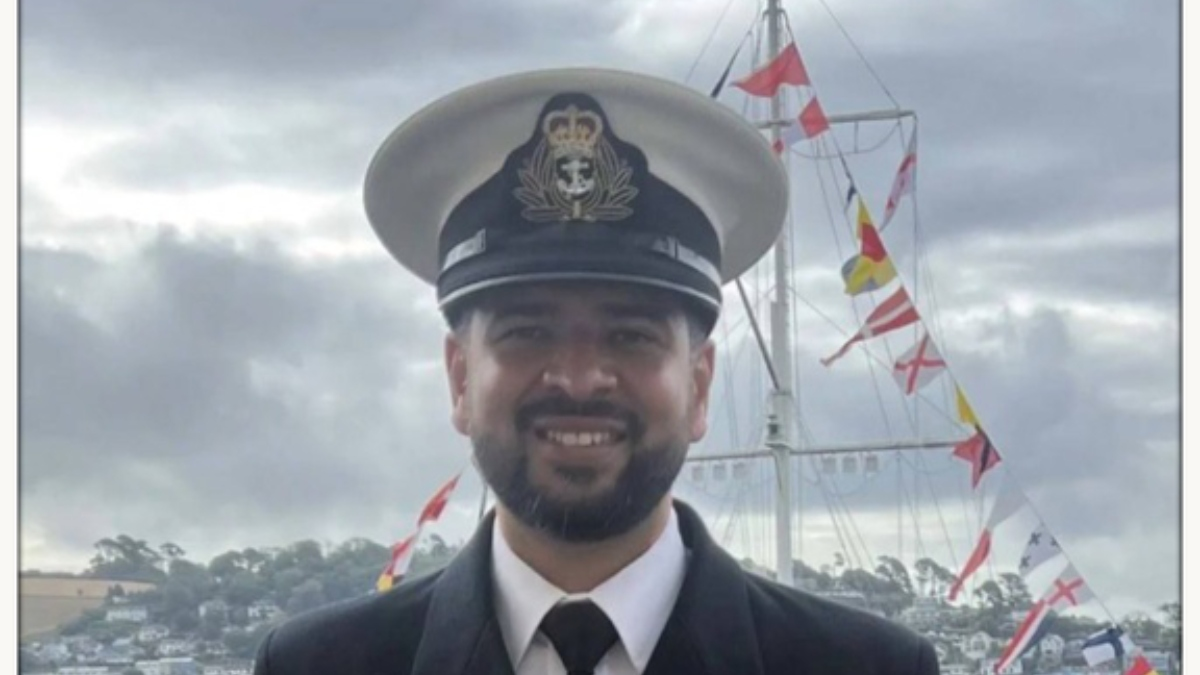
In a groundbreaking moment for religious diversity in the British armed forces, Bhanu Attri has been appointed as the first-ever Hindu chaplain in the UK Royal Navy. This historic appointment not only marks the first time a non-Christian has taken on such a role in the Navy but also highlights the evolving inclusivity within one of the world’s oldest naval institutions.
At 39 years old, Attri brings a rich background rooted in Indian heritage and decades of spiritual leadership to his new position, where he will provide pastoral care and guidance to sailors and officers from all walks of life. His journey from the hills of Himachal Pradesh to the decks of Royal Navy vessels is a testament to personal resilience, cultural integration, and the Navy’s commitment to reflecting the multicultural fabric of modern Britain.
As the Navy continues to adapt to a diverse workforce, Bhanu Attri’s role is poised to inspire greater participation from minority communities, particularly Hindus, who number over 1,550 across the UK military, with around 40 serving full-time in the Royal Navy and 30 in the Maritime Reserves.
Early Life and Background
Bhanu Attri was born and raised in Himachal Pradesh, a northern Indian state known for its serene landscapes and deep spiritual traditions. Specifically hailing from Garhkhal in the Solan district, Attri grew up immersed in Hindu philosophy and practices, which laid the foundation for his lifelong commitment to faith and service. From a young age, he was influenced by generations of family values centered on faith, resilience, and community support—elements that he later described as the grounding force behind his achievements.
His family, still connected to their roots in India, has expressed immense pride in his accomplishments, viewing them as a continuation of ancestral legacies of devotion and duty. Attri’s educational journey reflected his early inclination toward spiritual studies. He pursued learning equivalent to a postgraduate degree in Sanskrit scriptures, equipping him with a profound understanding of Hindu texts, rituals, and ethics.
This academic background was not merely theoretical; it translated into practical experience as he became a dedicated Hindu priest. After relocating to the United Kingdom, Attri settled in Essex, where he balanced his spiritual calling with integration into British society. For decades, he led a temple in London, serving as a spiritual guide for the local Hindu community. His work involved conducting ceremonies, offering counseling, and fostering interfaith dialogues, skills that would prove invaluable in his military role.
Living in Essex provided Attri with a bridge between his Indian heritage and his adopted homeland. He honed his ability to navigate cultural nuances, becoming fluent in English and actively engaging in community outreach. This period of his life was marked by a principled approach to faith, emphasizing reflection, pastoral care, and inclusivity—qualities that aligned perfectly with the criteria set by the Hindu Council UK (HCUK) for recommending candidates to the Ministry of Defence.
Attri’s personal fitness, both physical and mental, was also a key factor; he maintained a disciplined lifestyle that prepared him for the rigors of military training. His leadership experience in the temple extended to building relationships across faiths, promoting harmony in a diverse urban setting like London.
Read : Britain’s First Transgender Judge Dr Victoria McCloud Takes UK to European Court of Human Rights
What stands out in Attri’s early narrative is his seamless blend of tradition and adaptation. Growing up in Himachal Pradesh, a region steeped in Hindu mythology and pilgrimage sites, instilled in him a sense of karmabhoomi—the idea of the land where one performs their duties. As Anil Bhanot, the HCUK’s advisor to the Ministry of Defence, noted, while India remains the spiritual bhoomi (land) for many Hindus, the United Kingdom has become their karmabhoomi, with the armed forces serving as a protective arm.
Read : Where is Rakesh Sharma, the First Indian to Go to Space, and What is He Doing Now?
Bhanu Attri embodied this philosophy, viewing his move to the UK not as a departure from his roots but as an expansion of his service. His family’s support was unwavering; they saw his path as a fulfillment of generational aspirations, blending pride in their cultural heritage with excitement for his contributions to British institutions.
This foundation of early life experiences—rooted in education, priesthood, and cultural integration—set the stage for Bhanu Attri’s unexpected yet fitting transition into the military sphere. It was his reputation as a reflective and compassionate leader that caught the attention of the HCUK, leading to his nomination for the chaplaincy role. Attri’s background is a compelling story of how personal devotion can evolve into public service, breaking barriers in traditionally uniform environments like the Royal Navy.
Path to the Royal Navy Chaplaincy
Bhanu Attri’s journey to becoming the Royal Navy’s first Hindu chaplain was neither straightforward nor easy; it involved rigorous selection, intensive training, and a deep commitment to bridging faith with military discipline. The process began when the Hindu Council UK identified the need for greater Hindu representation in the UK armed forces’ chaplaincy services.
They proposed Bhanu Attri as a candidate, evaluating him against stringent criteria that included physical and mental fitness, a principled grounding in Hindu philosophy, pastoral and reflective qualities, leadership experience, spirituality, interfaith relations, cultural integration into British society, and strong communication skills in English. His decades as a priest in London made him an ideal fit, as he had already demonstrated the ability to provide guidance in diverse settings.
Once selected, Bhanu Attri embarked on a demanding training regimen designed to transform civilians into naval officers. He joined 148 new recruits, including warfare specialists, engineers, and other cadets, at the Britannia Royal Naval College (BRNC) in Dartmouth, southwest England.
The program spanned 29 weeks of Initial Officer Training, covering essential skills such as leadership, naval history, seafaring, survival techniques, and teamwork. This was no light undertaking; the curriculum included practical exercises on Dartmoor, where trainees honed their endurance and problem-solving abilities in challenging terrains.
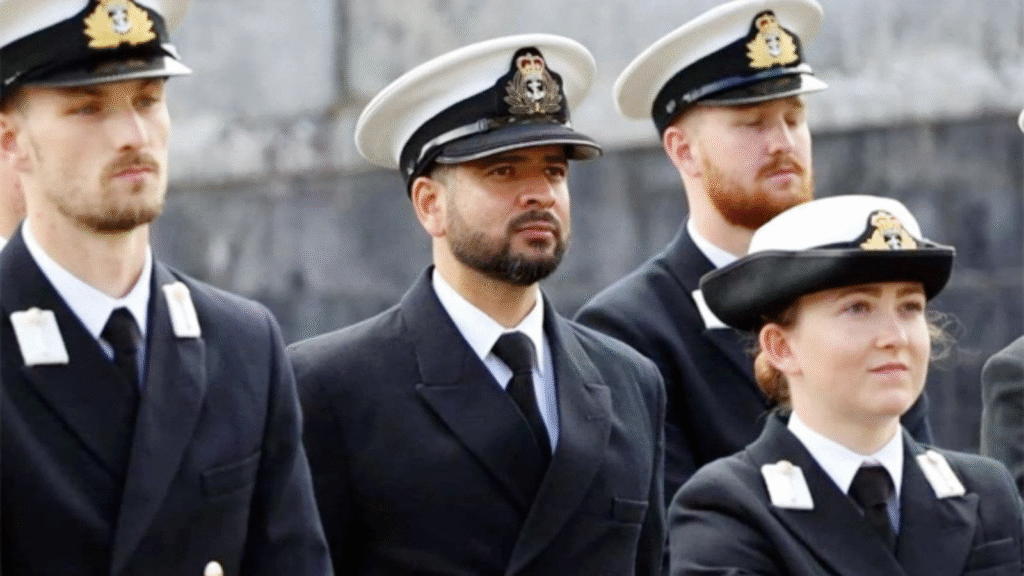
A significant portion of Bhanu Attri’s training focused on adapting to naval life. He completed six weeks of officer instruction, which encompassed the Royal Navy’s global role, its current missions, and critical survival skills for scenarios like sinking ships. This was followed by four weeks at sea aboard the warship HMS Iron Duke, where he experienced firsthand the demands of maritime operations.
The training culminated in three weeks dedicated specifically to the duties of a military chaplain, emphasizing how to provide moral and spiritual support in high-pressure environments. Attri also participated in specialized activities, such as operating Vahana boats on the River Dart and in the English Channel, which tested his adaptability and seamanship.
The arduous nature of this training cannot be overstated. Chaplains must be prepared for 24/7 duty at short notice, requiring not just intellectual readiness but also peak physical condition. Attri’s prior fitness from his priestly discipline helped him navigate these challenges, but the program pushed him to new limits. He formally passed out of BRNC in a ceremonial parade last week, standing alongside his peers as a symbol of the Navy’s evolving inclusivity.
In his own words, passing out from BRNC was “a profound honour,” allowing him to represent diverse religions and underscore the Navy’s dedication to spiritual care for all. Support from key figures bolstered Bhanu Attri’s path. Himachal Pradesh Chief Minister Sukhvinder Singh Sukhu publicly congratulated him, calling the appointment a source of pride for the state and India as a whole. Anil Bhanot praised Attri’s qualifications and highlighted the potential for this role to inspire more Hindu youth to join the military.
Navy leaders, including Vice-Admiral Andrew Burns and Captain Andy Bray of BRNC, emphasized the importance of such appointments in fostering leadership and service. Bhanu Attri’s transition from temple leadership to naval chaplaincy illustrates a remarkable adaptation, blending ancient spiritual wisdom with modern military requirements.
Role, Impact, and Future Prospects
In his new capacity as chaplain, Bhanu Attri is stationed at HMS Drake, where he serves personnel at Devonport Naval Base, both ashore and at sea. His responsibilities extend beyond Hindu-specific duties; as a chaplain, he offers religious guidance, pastoral care, welfare support, and moral advice to any member of the naval service, irrespective of their faith or background. This universal approach aligns with the chaplaincy’s ethos of inclusivity. For Hindu personnel, Bhanu Attri will conduct prayer ceremonies and rituals, addressing the spiritual needs of a growing minority within the forces.
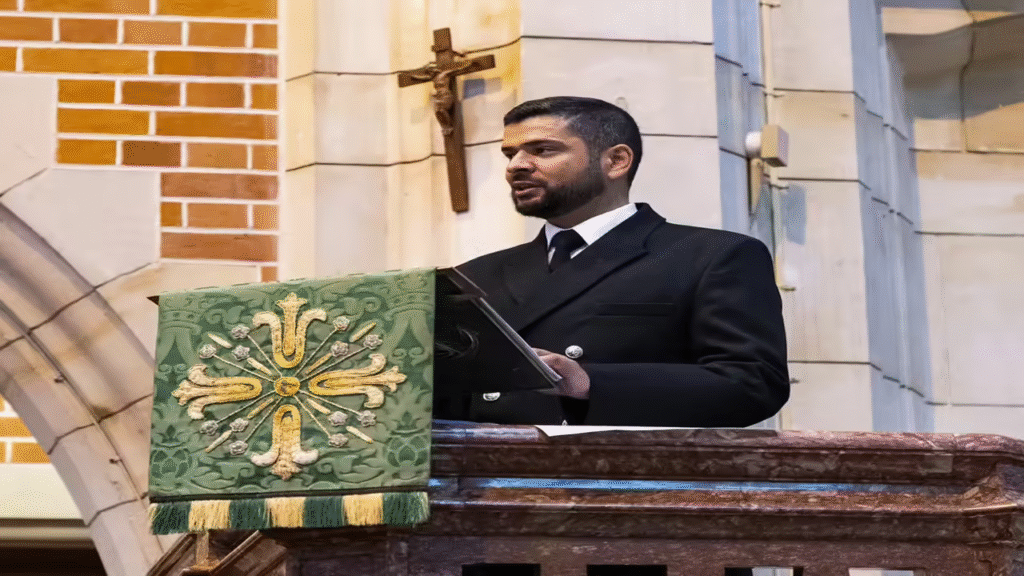
The impact of Attri’s appointment reverberates far beyond the Royal Navy. It represents a pivotal step toward greater diversity and inclusion in the UK military, challenging historical norms where chaplaincy was predominantly Christian. By becoming the first non-Christian in this role, Bhanu Attri paves the way for broader representation, potentially encouraging recruitment from underrepresented communities.
Anil Bhanot expressed hope that this milestone would motivate young British Hindus to consider careers in the Ministry of Defence, viewing it as an extension of their karmabhoomi. Attri himself sees his position as a platform for meaningful representation, stating that it reflects the Navy’s commitment to spiritual care for all and brings pride rooted in generations of faith and resilience.
Looking ahead, Bhanu Attri’s future prospects are promising. His role could expand to influence policy on religious accommodations in the military, fostering interfaith harmony amid global tensions. As the Navy deploys worldwide, Attri’s presence on ships and submarines will provide a cultural bridge, enhancing morale and cohesion among diverse crews. His success may inspire similar appointments in other branches, like the army, where most Hindu service members are concentrated.
Bhanu Attri’s story is one of inspiration, demonstrating how individual journeys can drive institutional change. From his humble beginnings in Himachal Pradesh to making history in the Royal Navy, he embodies the power of diversity. As Britain continues to embrace multiculturalism, figures like Attri ensure that the armed forces remain reflective of the society they protect, promoting unity through shared service and spiritual support.