
The world of mountaineering has always been defined by extreme challenges, where physical endurance meets mental resilience in some of the harshest environments on Earth. Among these challenges, climbing the highest volcanic peaks across different continents stands as one of the most demanding feats, requiring not only technical expertise but also meticulous planning and unwavering determination.
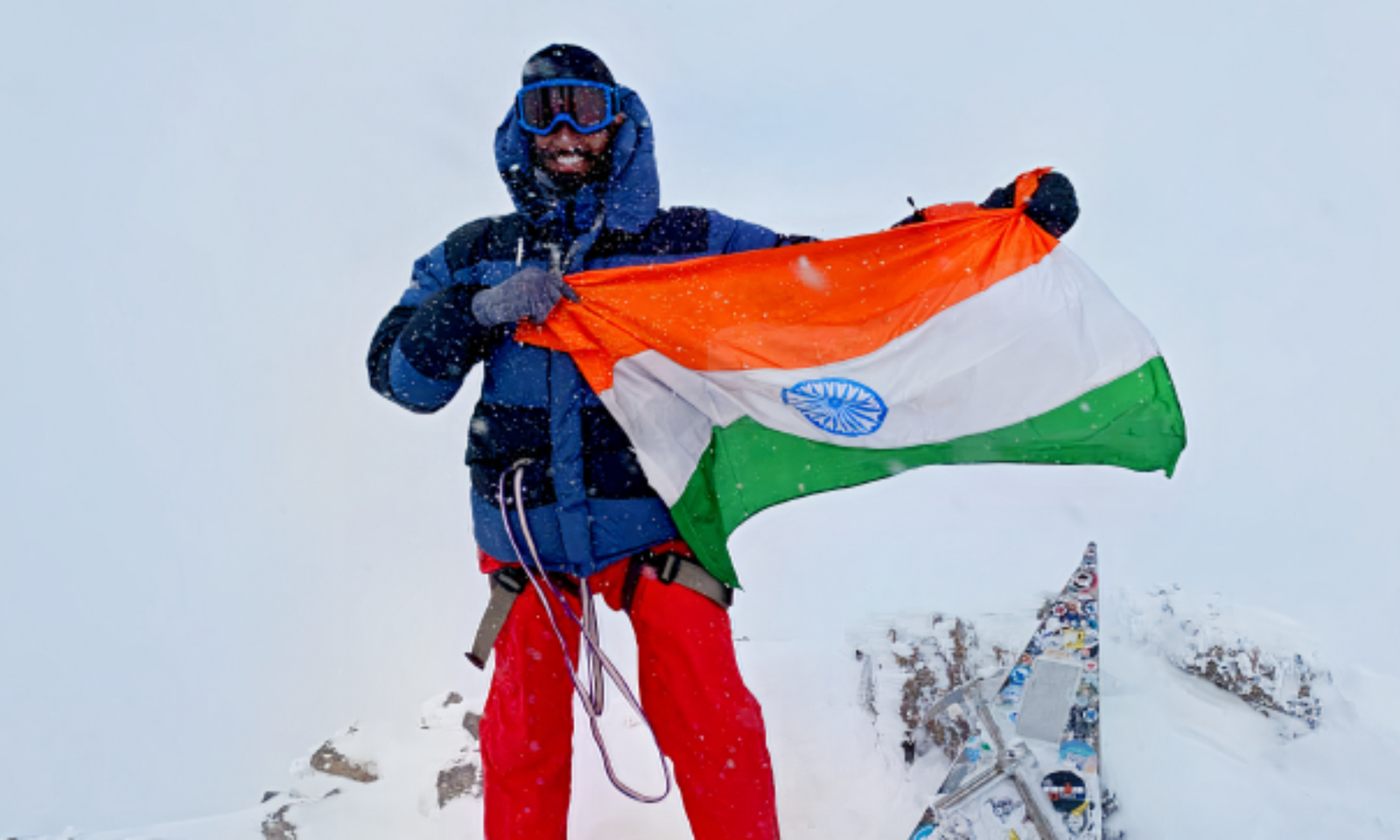
In a remarkable achievement that has drawn global attention, Indian mountaineer Bhupathiraju Anmish Varma has set a new world record by completing the Seven Volcanic Summits in just 92 days, 4 hours, and 45 minutes. His accomplishment reflects a rare combination of discipline, courage, and perseverance, placing him among an elite group of adventurers who have tested the limits of human capability.
This extraordinary journey was not merely a test of climbing ability but a comprehensive challenge involving rapid travel, adaptation to varying climates, and overcoming logistical obstacles across multiple continents. Beginning his expedition in October 2024 and completing it in January 2025, Anmish’s record-breaking ascent showcases the evolving standards of modern mountaineering, where speed and precision are as critical as strength and skill.
Understanding the Seven Volcanic Summits Challenge
The Seven Volcanic Summits represent the highest volcanoes on each continent, forming a unique mountaineering challenge distinct from the traditional Seven Summits. Unlike the tallest peaks, these volcanic mountains present a different set of difficulties, often combining high altitudes with unstable terrain, unpredictable weather patterns, and remote accessibility. Climbers attempting this challenge must be prepared to face glaciers, ash-covered slopes, and thin air, all within a compressed timeframe if aiming for a speed record.
The peaks included in this challenge span across diverse geographical regions. From the icy conditions of Mount Elbrus in Russia to the extreme remoteness of Mount Sidley in Antarctica, each summit demands a different approach. Ojos del Salado in South America, one of the driest and highest volcanoes in the world, presents altitude-related challenges, while Pico de Orizaba in Mexico requires technical climbing skills due to its glaciated terrain.
In Africa, Mount Kilimanjaro, though less technical, tests endurance with its long ascent routes and varying climatic zones. Mount Damavand in Iran adds another layer of complexity with its sulfuric fumes and volcanic features, while the peak in Papua New Guinea introduces dense tropical conditions that contrast sharply with the icy landscapes of other summits.
Read : Abseil: The Word That Made Indian-Origin Boy Spelling Bee Winner
Completing all these climbs is a significant achievement in itself, but doing so within a span of just over three months elevates the challenge to an entirely different level. The climber must maintain peak physical condition throughout, manage fatigue, and navigate international travel logistics efficiently. Each transition between continents involves not only physical recovery but also rapid acclimatization to drastically different environments, which can be both physically and mentally taxing.
The Record-Breaking Expedition
Bhupathiraju Anmish Varma’s journey began on October 23, 2024, with his ascent of Mount Elbrus. Starting in the cold, high-altitude conditions of Russia, he set the pace for what would become a meticulously planned expedition. From there, he moved swiftly across continents, tackling each volcanic summit with precision and focus. His ability to maintain momentum throughout the journey was a key factor in achieving the record.
Read : List of 70 Unclaimed Titles Revealed by Guinness World Records To Mark 70th Anniversary
One of the most notable aspects of his expedition was the balance between speed and safety. In high-altitude mountaineering, rushing can often lead to severe consequences, including altitude sickness or accidents. However, Anmish managed to optimize his schedule without compromising on necessary acclimatization and preparation. This required careful coordination with local guides, weather monitoring, and efficient use of resources.

The final leg of his journey took him to Antarctica, one of the most inhospitable regions on the planet. Reaching Mount Sidley is a challenge in itself due to its isolation, limited accessibility, and extreme weather conditions. Completing the expedition on January 23, 2025, Anmish successfully concluded his climb, marking the end of an intense and demanding journey that spanned multiple continents and climates.
Achieving the Seven Volcanic Summits in 92 days, 4 hours, and 45 minutes demonstrates not only physical endurance but also strategic planning. Every aspect of the expedition, from travel arrangements to climbing schedules, had to be executed with precision. Delays due to weather, logistical issues, or health concerns could have significantly impacted the timeline, making his success all the more impressive.
Recognition and Impact of the Achievement
The significance of Bhupathiraju Anmish Varma’s accomplishment extends beyond the record itself. Officially recognized in February 2026, his achievement highlights the growing presence of Indian mountaineers on the global stage. It serves as an inspiration for aspiring climbers, demonstrating that with dedication and proper preparation, it is possible to compete at the highest levels of adventure sports.
In recent years, mountaineering has evolved with advancements in gear, training techniques, and expedition planning. However, records such as this continue to rely heavily on individual determination and resilience. Anmish’s success underscores the importance of mental strength, adaptability, and the ability to perform under pressure in unpredictable environments. Furthermore, his journey brings attention to the Seven Volcanic Summits challenge, which, while less widely known than other mountaineering goals, offers a unique and demanding test for climbers.
By setting a new benchmark, he has raised the standard for future attempts, encouraging others to push the boundaries of what is possible. The achievement also reflects the broader spirit of exploration and adventure that defines mountaineering. It is not just about reaching the top of a mountain but about the journey, the obstacles overcome, and the lessons learned along the way.
Each summit represents a milestone, and completing all seven in such a short period is a testament to exceptional dedication. Bhupathiraju Anmish Varma’s record stands as a remarkable example of human endurance and ambition. His accomplishment will likely inspire future generations of climbers to take on new challenges, explore uncharted territories, and strive for excellence in the face of adversity.