
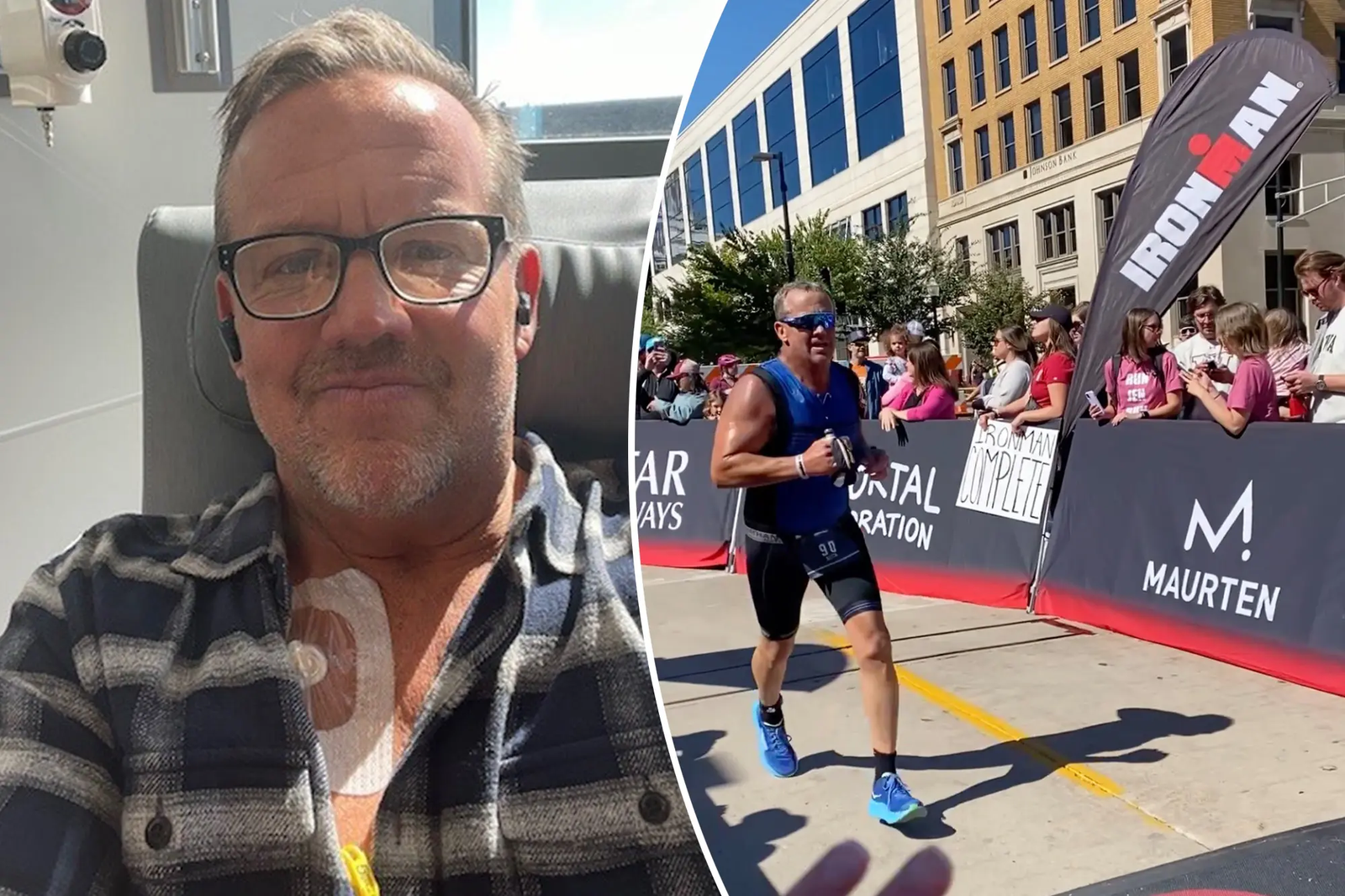
When 56-year-old Keith Giffney first noticed something unusual on his tongue in November 2023, it wasn’t painful or alarming. It felt more like something simply rubbing against his tongue, not even irritating enough to warrant immediate concern. But his intuition nudged him to get it checked out.
That decision likely saved his life — or at the very least, gave him the clarity and courage to fight one of the biggest battles anyone could face. By January 2024, Keith received the shocking diagnosis: stage 4 cancer, already spread to the lymph nodes in his neck and upper chest.
The news could have shattered even the strongest among us. But Keith wasn’t like most people. His reaction wasn’t despair or panic — it was peace. “I had this weird peacefulness about me,” he said. “I just felt like, you know what, I got this. God’s got this. I’m gonna fight this.” From that moment on, Keith’s story wasn’t just about surviving cancer — it became about reclaiming life, inspiring others, and showing the world how to face adversity with grace and grit.
Faith, Family, and the Will to Endure
Instead of spiraling into hopelessness, Keith Giffney leaned on three pillars that would become his foundation: his faith, his family, and his trust in his medical team at Northwestern Medicine. He credited the doctors and nurses for delivering care that felt almost otherworldly — “on a different level,” as he described it. But more importantly, he turned inward, relying on the strength he’d built over years of personal transformation.
Keith wasn’t a stranger to conquering demons. He had been sober for four years, having overcome alcohol addiction that had once strained his relationship with his son. He also made the bold decision to finally quit chewing tobacco — something he had struggled with for years.
“The funny thing was — January 2023 — my New Year’s resolution was to quit,” Keith recalled. “Well, I think I waited 360 days into that year to finally quit.” Though doctors told him his cancer was linked to the HPV virus and not tobacco use, he knew it was time to let go of every unhealthy habit. Quitting was a symbolic gesture — one of reclaiming control.
At the same time, Keith Giffney had already set a goal for himself: to participate in a Half Ironman triathlon. The challenge was monumental for anyone — 1.2 miles of swimming, 56 miles of cycling, and a 13.1-mile run. For someone battling stage 4 cancer, it was almost unimaginable.
Read : Large Number of Lung Cancer Patients in India Never Smoked: Lancet Study
Yet Keith never backed down. He adjusted his training schedule, even as he went through 12 rounds of chemotherapy and 35 rounds of radiation. Most people would have been confined to a bed or limited to light activity. Not Keith. He trained five to six days a week, replicating mini triathlons in Lake Geneva, Illinois — swimming a couple miles daily, biking hundreds of miles, and running whenever possible.
Pushing Through Pain to Triumph
Keith Giffney’s training wasn’t easy. Chemotherapy left him drained, and radiation took an even greater toll. “I lost all the taste buds, I couldn’t swallow,” he said. His salivary glands had been damaged by treatment, making it nearly impossible to eat or drink during the final weeks of radiation.
While running, he would choke instead of swallowing. But instead of viewing these challenges as roadblocks, Keith Giffney found a way to turn them into motivation. “I needed to lose a few pounds when I was going into it to be lighter running, right?” he joked. That ability to maintain humor and optimism became one of his strongest tools.
Keith Giffney kept detailed track of his progress. By the end of his training, he had swum over 131 miles, biked more than 700 miles, and run over 55 miles. “I did over 131 miles of swimming. I biked over 700 miles and I ran over 55,” he said. And he didn’t train alone.
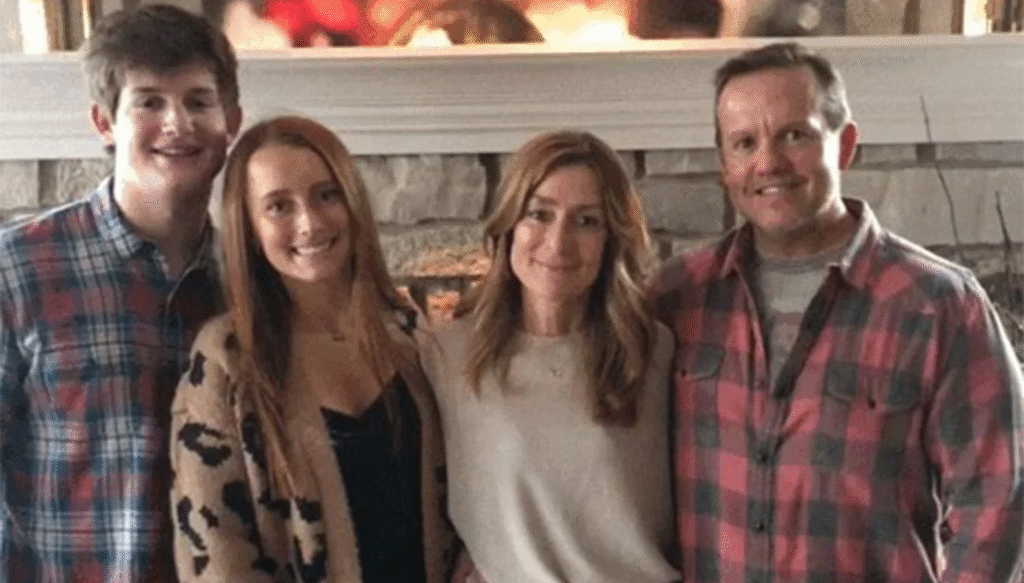
His 22-year-old son, who was preparing for a full Ironman, joined him in the journey. Together, they not only rebuilt their relationship but also forged a new bond based on mutual commitment and shared strength. “It was part of us doing things and getting back and building that trust together with him and working with him, training with him,” Keith Giffney said.
Finally, in early September 2024, just weeks after doctors declared his cancer in remission and removed his chemotherapy port, Keith Giffney stood at the starting line of the Half Ironman in Madison, Wisconsin. He felt calm, collected, and focused. “I was like, I’m not looking to beat anybody other than myself here,” he said.
Victory Beyond the Finish Line
The race itself was anything but smooth. Keith Giffney described feeling disoriented after finishing the swimming portion. As he transitioned to the biking leg, his leg cramped up badly. “It wasn’t just my legs. I couldn’t even breathe,” he said. But something incredible happened — the pain vanished, as suddenly as it had come. It was as if his body recognized what his mind had already decided: he wasn’t going to quit.
Crossing the finish line, cheered on by his friends and family — especially his kids — was a moment of pure triumph. Keith Giffney didn’t just complete a triathlon; he redefined what it means to be a survivor. His message was clear: adversity doesn’t define us — our response does. “My whole goal was showing them how to handle adversity,” he said. “I wanted to be a good role model for them.”
Today, Keith Giffney’s story continues to unfold. He’s in remission and preparing for two more triathlons — the Door County Triathlon in July 2025 and the Chicago Triathlon in August 2025. But for Keith, it’s never been just about athletic achievement. It’s about mindset. “To me, it’s always been about having a positive mental attitude,” he said. “Go at it with an outlook that everything’s going to be great.”
In a world full of uncertainty and fear, Keith Giffney’s story reminds us that the human spirit is far stronger than we often give it credit for. Whether it’s a painless boil or a life-threatening diagnosis, what matters most is how we choose to face it. Keith chose to fight — with hope, with faith, and with the belief that the finish line is just another beginning.