

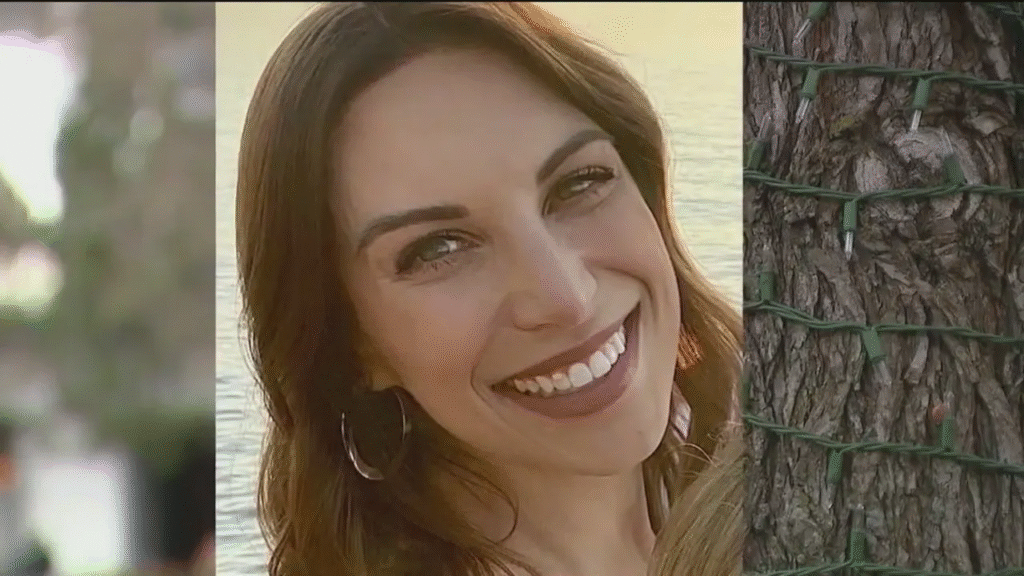
The tragic death of Caitlin Tracey, a 36-year-old Chicago tech executive, has left her family searching for justice and the public demanding answers. On October 27, 2024, Caitlin’s body was discovered at the bottom of a stairwell in her upscale South Loop condominium building.
Her injuries were so severe that her body was described by attorneys representing her family as “pulverized,” and horrifyingly, one of her feet was missing. Despite the shocking condition in which she was found, no charges have been filed in connection with her death, and the cause remains a chilling mystery.
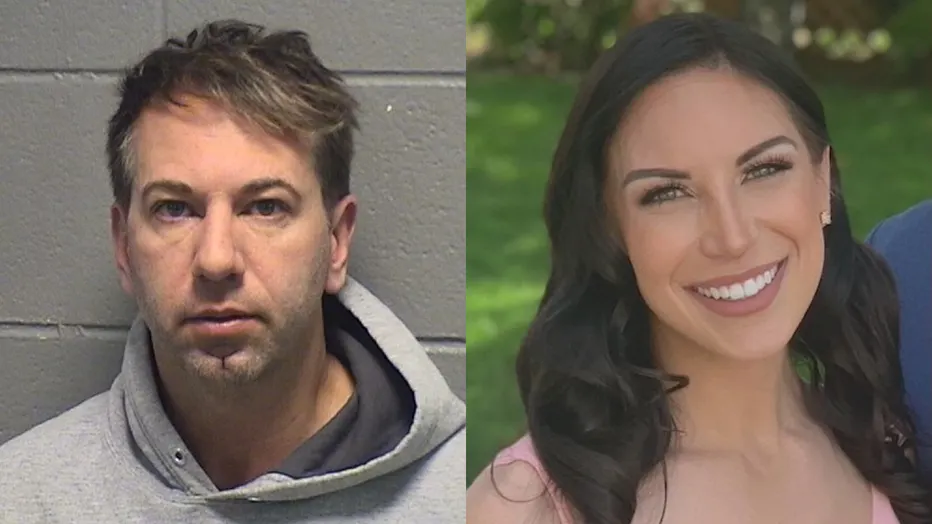
Tracey, who was reportedly a rising figure in Chicago’s tech community, had been living in the luxury residence with her husband, Adam Beckerink, a 46-year-old tax attorney. Just hours before her body was discovered, Beckerink had filed a missing persons report.
He was subsequently detained and questioned by the Chicago Police Department but was released without charges. The Cook County Medical Examiner later ruled the death as resulting from multiple injuries due to a fall from a great height but left the manner of death as “undetermined.” This ambiguity has only fueled speculation and deepened the family’s grief.
A Troubled Marriage and Prior Allegations
What makes this case particularly unsettling is the history of alleged abuse leading up to Caitlin Tracey’s death. Beckerink, who was a prominent partner at the corporate law firm Duane Morris, was terminated after reports emerged of multiple domestic violence incidents involving Tracey.
In fact, Beckerink had been formally charged in Michigan just weeks before Caitlin’s death for separate incidents of domestic violence that occurred in January and August 2024 in her New Buffalo home.
According to court documents, police were called to Caitlin’s Michigan residence in January, where they found her with visible injuries, including cuts on her lips and red markings on her body. Tracey told authorities that Beckerink had assaulted her and stolen some of her belongings.
The responding officers noted that Beckerink allegedly pressured her into saying the 911 call was “accidental.” Then in August, Beckerink was again accused of violence against Tracey, resulting in four felony charges, including interfering with electronic communications and resisting arrest.
Even before these Michigan incidents, Caitlin had taken legal steps to protect herself. In November 2023, she obtained a protective order against Beckerink in Chicago following several reports of domestic battery.
Read : India Second Biggest Threat to Canada After China: Canadian Panel Report
Yet, she later dropped the order in December after Beckerink reportedly threatened to sue her for defamation. Her family believes these threats, combined with fear and emotional manipulation, played a role in her decision to withdraw the complaint.
Legal Battles and Family’s Fight for Justice
In the wake of Caitlin’s tragic death, her family has not only been grieving but also battling legally for answers and justice. One of the first obstacles they faced was the handling of Caitlin’s remains. Beckerink, as her legal spouse, initially claimed the right to make decisions regarding her body.
This led to a court dispute between Beckerink and Tracey’s parents, who were desperate to reclaim their daughter and bring her back to Michigan for a proper burial. After a legal struggle, the court granted custody of the remains to her parents, a small but significant victory amid their immense sorrow.
Tracey’s loved ones have made it clear that they believe foul play was involved and that her death was not a simple accident. They have hired their own legal team to ensure the case remains in the public eye and that it is thoroughly investigated.
Their attorneys have been vocal in their demand for justice, calling the condition of her body suspicious and urging law enforcement to reexamine the evidence. The family argues that a fall, even from 20 stories, should not result in the kind of trauma and dismemberment that was found.
Despite this, the investigation by Chicago police appears to have stalled. Beckerink, although previously detained and questioned, has not been charged in connection with Caitlin’s death. He has maintained his innocence through his legal team, stating that he had no involvement in what happened.
His lawyer publicly declared that Beckerink “had nothing to do with his wife’s death,” and that all matters would be addressed in court. Yet, to Caitlin’s family, the silence and lack of accountability remain deeply painful.
Unanswered Questions and a Community in Mourning
The broader Chicago community has been left shaken by Caitlin Tracey’s death. Her story is not just one of personal tragedy, but also a stark reminder of the dangers faced by women in abusive relationships—even those who appear outwardly successful and secure.
The juxtaposition of her high-profile career and the hidden turmoil in her personal life has resonated deeply with many. Community organizations and domestic violence advocacy groups have expressed concern that her death may be part of a wider pattern of systemic failure to protect vulnerable individuals from domestic abuse.
At the center of the public’s growing frustration are the many unanswered questions: Why was the stairwell where her body was found not checked sooner? Why was her death classified as undetermined despite clear indications of trauma? And most troubling, why has no one been held accountable? These are the questions her family continues to raise, demanding that the investigation not be allowed to fade into obscurity.
As the case continues to unfold, pressure is mounting on the Chicago Police Department and other authorities involved. There is also renewed scrutiny on how domestic violence cases are handled in both Illinois and Michigan, especially when the victim has sought help but is unable to find lasting protection. Caitlin Tracey’s case is a grim illustration of how the legal system sometimes falls short, even when warning signs are clear and documented.
The situation is made even more painful by the fact that Caitlin appeared to be trying to distance herself from her husband in the months leading up to her death. She had continued living part-time in her Michigan home, possibly as a way to escape the abusive environment.
Her brief six-month marriage to Beckerink was marred by legal disputes, protective orders, and repeated police intervention. That a woman could suffer such trauma and still be found dead in this manner, with no resolution, underscores a heartbreaking failure on multiple levels.
For now, her family clings to hope that renewed public interest will lead to further investigation. They have vowed not to let Caitlin’s case be forgotten or go unresolved. Their determination is fueled not only by love and grief but also by a commitment to justice—for Caitlin, and for all women who suffer in silence.
Until the full truth comes to light, Caitlin Tracey’s death remains one of Chicago’s most haunting recent mysteries. A successful woman with a bright future, destroyed under suspicious circumstances, and still waiting for justice.