
In a strange twist that sounds more like a scene from a crime-comedy movie than real life, Costa Rican prison guards intercepted an unexpected case last week—a Cat Found Smuggling Drugs.
Caught red-pawed climbing a fence into the Pococí Penitentiary, this feline was carrying a cargo far heavier than its slight frame would suggest: nearly 236 grams of marijuana and 68 grams of heroin.
The incredible event has left authorities and the public stunned, prompting serious questions about the evolving and increasingly inventive tactics of drug trafficking inside prison systems.
Cat Found Smuggling Drugs
While drug smuggling methods are constantly adapting to outsmart law enforcement, using a live animal—particularly a cat—is an unusual and unprecedented tactic in Costa Rica. On the night in question, prison officers at the Pococí Penitentiary noticed a cat climbing over a chain-link fence topped with barbed wire.
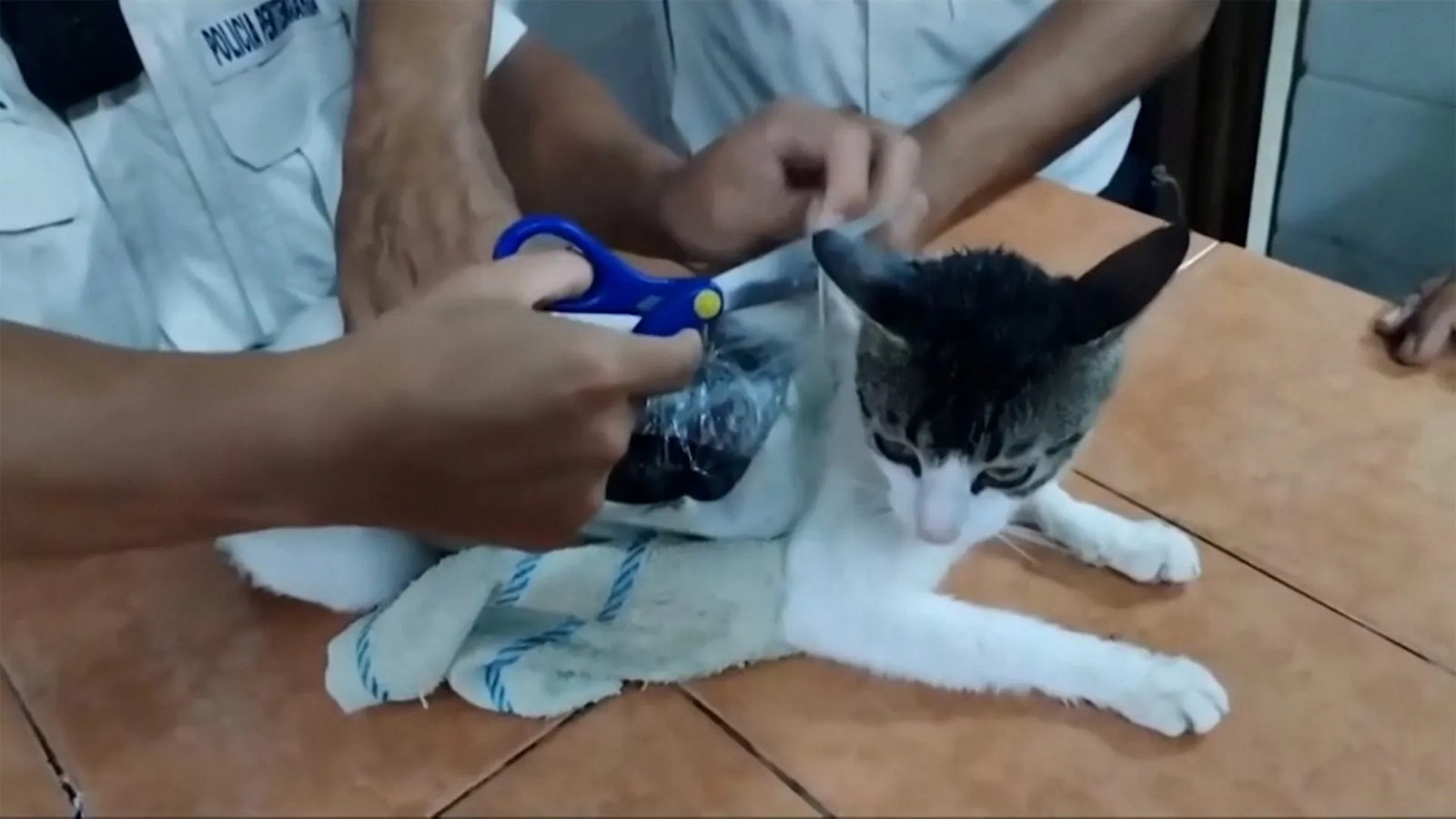
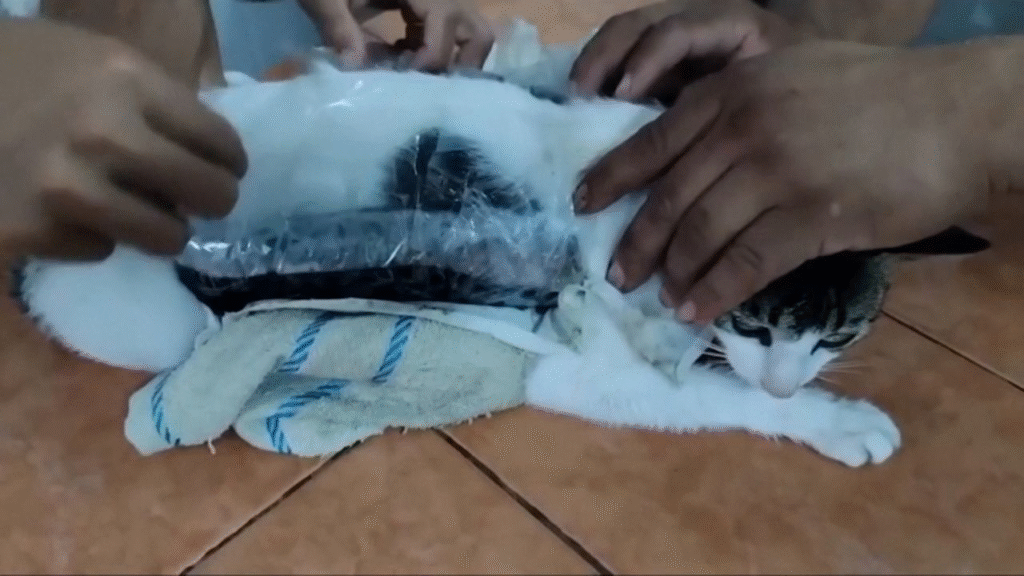
Suspicious of the animal’s behavior, a guard stationed at one of the facility’s forts raised the alarm. The feline was quickly apprehended before it could reach the prison grounds. Upon closer inspection, officers found two suspicious packages strapped to the cat’s back.
The contents turned out to be significant: nearly 236 grams of marijuana, about 68 grams of heroin, and sheets of paper commonly used to wrap drugs. Authorities acted quickly, using scissors to carefully cut the packages away from the cat’s fur. The entire bizarre operation was captured on video and shared publicly by Costa Rica’s Ministry of Justice and Peace, drawing widespread attention both locally and internationally.
Read : Trump Orders Reopening of Notorious Alcatraz Prison, Closed Since 1963
Although it might sound comical, the implications are anything but funny. The use of a cat for smuggling highlights the extent to which drug traffickers are willing to go in order to bypass security. Officials believe the animal was deliberately deployed as part of a coordinated effort to deliver drugs to inmates within the prison—a worrying evolution in contraband delivery methods.
Security Concerns and Criminal Innovation Behind Bars
While prisons worldwide are accustomed to dealing with a variety of smuggling tactics—ranging from drones to hollowed-out shoes—the use of animals in drug trafficking is a less common, though not unheard-of, method.
In previous years, authorities in other parts of the world have reported pigeons and even dogs being used to transport drugs. However, the sophistication involved in this particular case—the attachment of substantial drug quantities to a stealthy animal—marks a notable escalation.
Costa Rica’s Ministry of Justice has confirmed that the cat was turned over to the National Animal Health Service for a full medical evaluation. Despite the stress it must have endured, the cat appeared to be in stable condition. There is currently no indication of whether the animal was trained for the task or simply coerced into the operation by criminal elements.
🐈🚨👮♀️ A not-so-purr-fect crime! Watch as a "#Narcocat" gets caught trying to smuggle drugs into #CostaRica prison 👀 pic.twitter.com/RH52qmoIhM
— FRANCE 24 English (@France24_en) May 20, 2025
Meanwhile, prison authorities are combing through security footage in hopes of uncovering who was behind this peculiar smuggling attempt. The footage may reveal where the cat entered the facility, its potential handlers, and whether it had made similar trips before. Investigators are also analyzing the packages for fingerprints or other forensic evidence that could point to the people responsible for using an animal as an unwitting drug mule.
This incident raises broader questions about prison security in Costa Rica and across the region. If animals are now being used to bypass fences, guards, and surveillance systems, prison officials will need to rethink how they secure the perimeter. The incident has prompted an urgent review of security protocols at the Pococí Penitentiary, and experts believe more stringent checks will be implemented to prevent future occurrences.
Public Reaction and the Ethics of Animal Involvement in Crime
The bizarre nature of the case has captured public attention both in Costa Rica and abroad, with many expressing shock and disbelief. Social media lit up with memes, jokes, and commentary as users reacted to the strange but true story. While some took a lighthearted view of the incident, others voiced concern over the ethical dimensions of involving animals in criminal activities.
Animal rights advocates have condemned the use of a cat for such a dangerous task, highlighting the risks posed to the animal’s life and well-being. Being forced to scale fences with barbed wire while carrying potentially toxic substances is not only cruel but illegal in many countries. Though the cat in this instance survived, experts warn that other animals used in similar ways may not be so lucky.
The case also underscores the need for closer cooperation between law enforcement and animal welfare organizations. As trafficking methods evolve, these groups must work together to ensure that animals are not exploited in criminal schemes. Additionally, education campaigns can help raise awareness among the public about the signs of animal abuse linked to drug trafficking and how to report it.
The Costa Rican Ministry of Justice has not yet released details about what will happen to the cat after its recovery. Given the global attention the animal has garnered, there is speculation that it may be adopted by a local shelter or animal rights group. Others have suggested it could become a symbol of resilience and vigilance, perhaps even serving as a mascot for anti-smuggling efforts.
Regardless of the cat’s future, this case has made a significant impact on the conversation around prison security and drug trafficking methods. It has exposed the creative lengths criminals are willing to go to distribute narcotics and the vulnerabilities in prison systems that must be addressed.
As authorities continue their investigation, the incident serves as a surreal yet sobering reminder of the ever-evolving nature of crime and the importance of remaining vigilant—even when the perpetrator appears to be an ordinary housecat.