
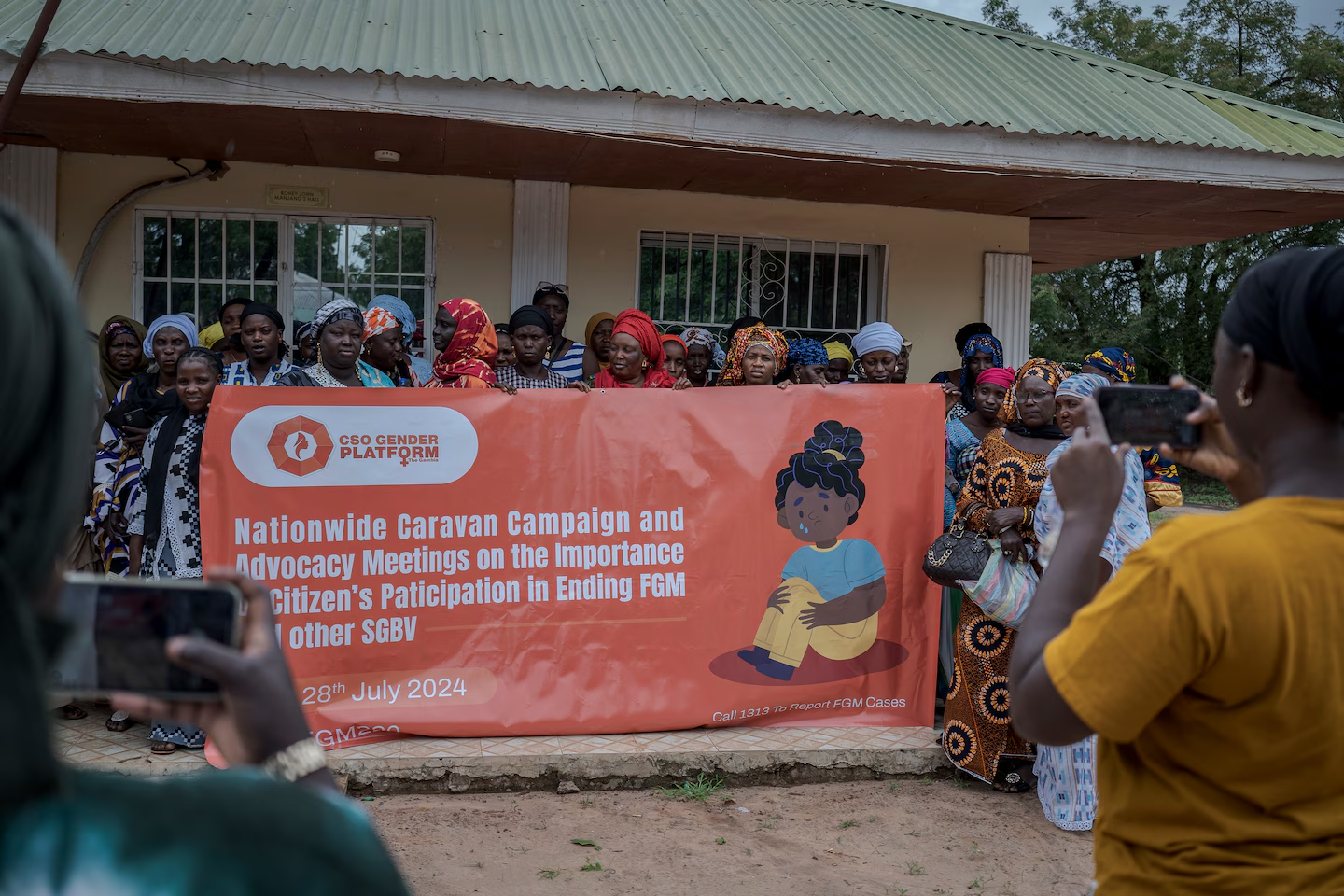
The death of a one-month-old girl in Gambia has drawn international attention to the ongoing issue of female genital mutilation (FGM) in the country. Authorities have charged three women in connection with the infant’s death, marking a pivotal moment in the fight against a practice that has persisted despite legal bans and widespread condemnation.
The tragedy has sparked debates around cultural traditions, religious beliefs, and the enforcement of human rights, highlighting the challenges faced by nations seeking to eradicate harmful practices deeply rooted in society.
The Incident and Legal Action
The infant girl, only one month old, was allegedly subjected to female genital mutilation, leading to severe bleeding and her subsequent death. According to the Gambian police, the child was rushed to Bundung Maternal and Child Health Hospital but was pronounced dead on arrival. Preliminary findings indicate that the procedure, carried out by traditional practitioners, directly contributed to her death.
This incident represents the first such case since Gambia narrowly upheld its ban on female genital cutting last year. The Women’s (Amendment) Act 2015, which criminalizes FGM, provides severe penalties for those found guilty. In this case, one woman faces life imprisonment, while the other two are charged as accomplices. These charges serve as a significant step toward enforcing the law and sending a clear message about the consequences of violating it.
Gambia initially banned FGM in 2015, but the law has faced resistance due to cultural and religious arguments. In 2023, debates intensified after the first prosecutions of female cutters, thrusting the practice into public scrutiny. Despite the legal prohibition, experts believe FGM continues in secrecy, often hidden within communities where tradition and faith are deeply intertwined.
Cultural and Religious Context
Female genital mutilation has existed in Gambia for decades, with the United Nations estimating that approximately 75 percent of Gambian women have undergone the procedure as young girls. The practice involves partial or complete removal of a girl’s external genitalia and is often performed by older women or traditional practitioners using rudimentary tools such as razor blades. FGM can lead to severe complications, including life-threatening bleeding, infections, and long-term reproductive health issues.
Read : Gambia: The Smiling Coast of Africa
Supporters of FGM often defend the practice as a cultural or religious tradition. Some claim it is rooted in Gambia’s local customs and cite teachings of the Prophet Muhammad, describing the procedure as a virtue within Islam. Advocates argue that FGM preserves chastity and upholds family honor, asserting that it forms an essential part of the social and religious fabric of Gambian society.
We’ve issued a press statement in reaction to the charges and prosecution of three women in connection to the alleged tragic death of a 1 month old baby girl linked to FGM in The Gambia.
— Women In Liberation and Leadership-WILL (@WomenInLiberat1) August 13, 2025
Read our full statement and stand with us to end FGM pic.twitter.com/f0xhBsdGSL
However, global health authorities, including the World Health Organization, classify FGM as a form of torture and a violation of human rights. It is recognized as a dangerous practice with no medical benefits. Survivors often face lifelong physical and psychological trauma, and in some cases, as in the recent tragedy, it results in death. The international community has called for stronger enforcement of laws against FGM, emphasizing that cultural traditions cannot justify practices that endanger the lives of women and girls.
Global and Local Implications
The recent charges in Gambia carry significant implications both nationally and internationally. Civil society groups and human rights organizations have expressed sorrow and outrage over the death of the infant, calling for justice and stricter law enforcement. Emmanuel Daniel Joof, chair of the National Human Rights Commission, described the case as “a national wake-up call” and urged the government to fully and fairly enforce the law without fear or favor.
Organizations such as the Banjul-based Edward Francis Small Centre for Rights and Justice emphasized that justice must not only be done but also be perceived to be done. They argue that visible enforcement of the law is essential to protect the rights and lives of girls, sending a message that FGM is unacceptable and will not be tolerated. These groups stress that the government has a moral and legal responsibility to shield vulnerable populations from harmful traditional practices.
Conversely, some local groups have criticized the authorities for targeting traditional circumcisers rather than addressing the broader cultural context. The Concerned Citizens collective, for example, argued that many Gambians oppose the ban and that government actions against practitioners may provoke tension within communities. They contend that legislative measures must be paired with public education and dialogue to effectively eradicate the practice while respecting cultural sensitivities.
Globally, FGM remains a pressing human rights issue. The United Nations estimates that over 200 million women and girls worldwide have undergone FGM, with the majority residing in sub-Saharan Africa. UNICEF reported that approximately 30 million girls have been subjected to the procedure over the past eight years, highlighting the ongoing prevalence and urgency of the problem. FGM is not confined to Africa; cases have been reported in Asia and the Middle East, and immigrant communities in Europe and North America have also grappled with the practice.

The Gambian case underscores the importance of international cooperation, public awareness, and community engagement in eradicating FGM. Legal measures alone are insufficient if cultural beliefs continue to perpetuate the practice in secrecy. Programs that educate families about the health risks, human rights implications, and ethical considerations of FGM are crucial. Empowering women and girls to speak out against harmful practices is equally essential, as survivors’ voices often serve as powerful catalysts for change.
In addition to enforcement and education, addressing the socio-economic and religious factors that sustain FGM is vital. Many practitioners perform the procedure as a source of income, and social pressure within communities encourages conformity to traditional norms. Efforts to provide alternative livelihoods and foster dialogue around religious interpretations that oppose harm can help reduce the prevalence of FGM while preserving community cohesion.
The tragic death of the infant in Gambia serves as a reminder that FGM is more than a cultural or religious debate—it is a life-threatening practice with devastating consequences. Holding perpetrators accountable, educating communities, and supporting survivors are critical steps toward ending the cycle of violence and safeguarding the rights of girls.
As the world watches, Gambia has an opportunity to demonstrate that the protection of human rights can prevail over harmful traditions, setting a precedent for other countries facing similar challenges. The case against the three women in Gambia highlights the ongoing struggle to eliminate female genital mutilation and protect the lives of young girls. While cultural and religious traditions are deeply rooted, the legal framework exists to safeguard human rights and ensure justice for victims.
The international community, civil society organizations, and Gambian authorities must work together to address both the legal and cultural dimensions of FGM. This tragic incident can serve as a turning point, prompting renewed commitment to ending female genital mutilation and reinforcing the principle that the safety, dignity, and rights of girls cannot be compromised.
Gambia now stands at a crossroads, where decisive action, community engagement, and sustained advocacy can transform a society long challenged by harmful practices. The death of a single child may serve as a stark warning, but it also presents an opportunity for the nation to reaffirm its commitment to protecting its most vulnerable citizens and ensuring that no girl faces the same fate in the future.