
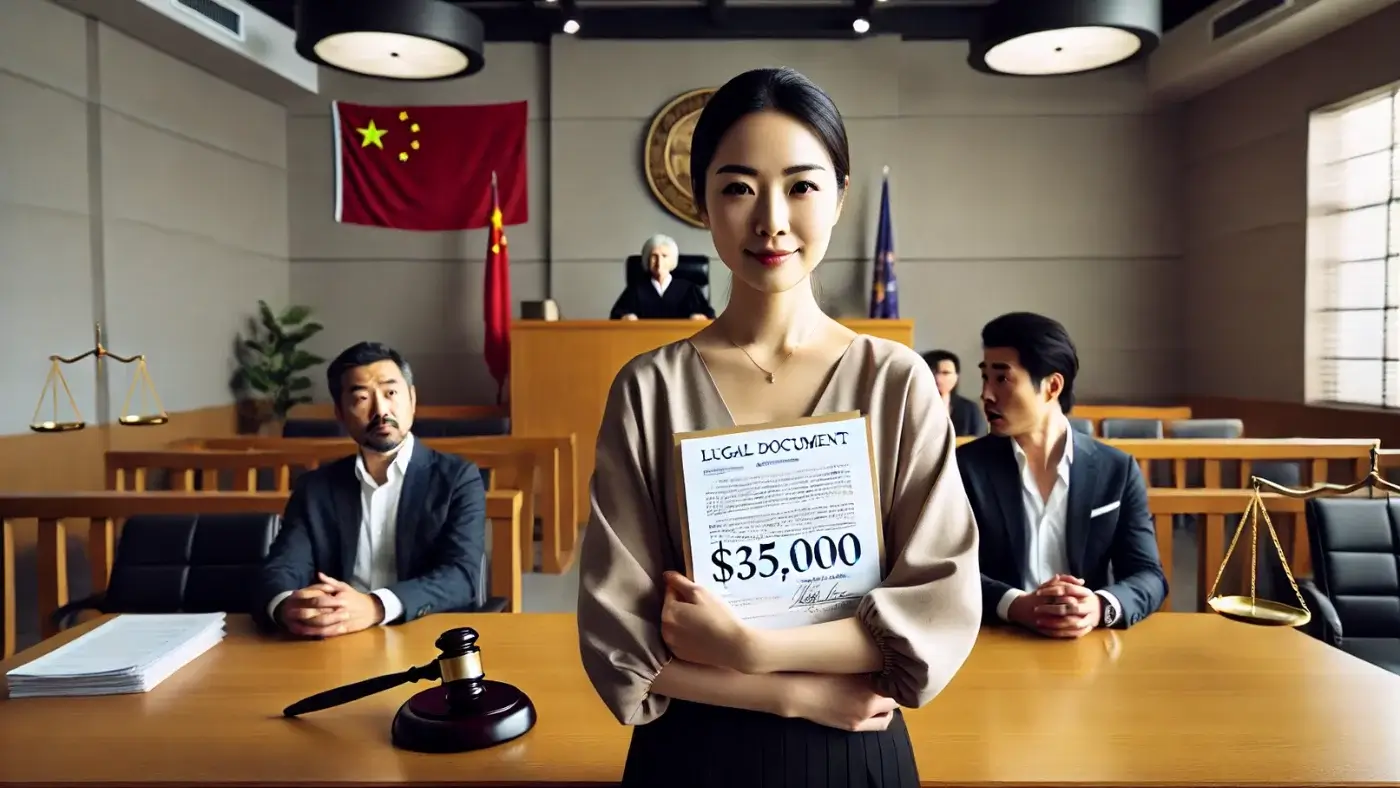
In the bustling city of Chongqing, southwestern China, a tale of romance, betrayal, and courtroom drama has captivated the nation. A successful businesswoman, identified only by her surname Zhu, found herself entangled in a whirlwind affair with a younger subordinate at her company. What began as a passionate office romance quickly escalated into a high-stakes intervention in his personal life.
Zhu, determined to build a future together, transferred a staggering three million yuan—equivalent to about US$420,000—to her lover’s wife to facilitate his divorce. The money was intended as compensation for the dissolution of the marriage and support for their young child. Yet, just a year into their cohabitation, the relationship soured. Zhu demanded the funds back, leading to a contentious legal battle that has sparked widespread debate on social media and beyond.
This story, reported extensively in Chinese media outlets like the South China Morning Post and Huashang Daily, highlights the blurred lines between love, power dynamics in the workplace, and financial entanglements. As details emerge from the court proceedings, it serves as a cautionary reminder of how emotions can lead to irreversible decisions. The case, which unfolded in a Chongqing court, pits Zhu against her former lover, surnamed He, and his ex-wife, Chen. What unfolds is not just a personal saga but a reflection on modern relationships in China’s fast-paced corporate world, where ambition and affection often collide.
The Spark of Forbidden Romance and the Price of Commitment
Zhu’s company, though specifics about its industry remain undisclosed, operates in the competitive landscape of Chongqing, a metropolis known for its steep hills and booming economy. It was here, amid boardroom meetings and late-night deadlines, that Zhu first noticed He. A married man with a young child, He was a dedicated employee whose charm and diligence caught the eye of his boss. What started as professional admiration blossomed into something deeper—a secret affair that Zhu was unwilling to keep hidden forever.
According to court documents and media reports, Zhu and He decided to pursue a life together, which meant He had to end his existing marriage. Facing resistance from Chen, who was understandably reluctant to dissolve her family, Zhu stepped in decisively. In a move that stunned those involved, she directly transferred three million yuan to Chen’s bank account. This substantial sum was explicitly earmarked for divorce compensation and to ensure the child’s financial well-being post-separation. The transaction was not a mere gift; it was a calculated investment in their shared future, as Zhu saw it.
Read : Bizarre! 50-Year-Old Sister Xin Marries Her Son’s Russian Classmate with a 20-Year Age Gap
The divorce proceeded smoothly after the payment. He and Chen parted ways, with the funds providing Chen a safety net to rebuild her life. For a brief, euphoric period, Zhu and He cohabited, envisioning a partnership free from the shadows of his past. Zhu, as the breadwinner and architect of this new beginning, poured not just money but emotional resources into the relationship. Friends and colleagues whispered about the power imbalance—Zhu, the established entrepreneur, and He, the subordinate who had traded stability for passion. Yet, in the glow of newfound freedom, such concerns seemed distant.
Read : Viral Video of Woman Struck and Killed by Train in Mexico While Taking a Selfie
This phase of the story underscores a common trope in contemporary Chinese society: the allure of cross-class romances fueled by economic disparity. With China’s divorce rates climbing—reaching over 3.1 million cases in 2022 alone, according to official statistics—such interventions are not unheard of. However, Zhu’s lavish payout set her case apart, transforming a private matter into a public spectacle. As the couple settled into domesticity, few could have predicted the cracks that would soon appear.
A Bitter Breakup and the Demand for Restitution
One year into their shared life, the fairy tale unraveled. Reports describe irreconcilable differences—perhaps the realities of daily life clashing with idealized expectations, or the weight of the sacrifices made. Zhu realized they were “incompatible,” a phrase that now echoes through legal filings and online discussions. Feeling exploited and heartbroken, she turned her attention to the three million yuan she had so generously provided. In her view, the money had been conditional on a lasting union; with the relationship over, it should be returned.
Zhu approached He and Chen, demanding the full amount back from both. He, now her ex, refused, arguing the funds were rightfully his divorce settlement. Chen, who had already integrated the money into her life for childcare and personal stability, was equally adamant. What followed was a descent into acrimony, with accusations flying on both sides. Zhu accused He of using her financially, while he countered that the payment was his to claim as marital compensation.

Undeterred, Zhu filed a lawsuit in a Chongqing district court, seeking repayment from the couple. In her complaint, she portrayed the transfer as a loan or conditional gift, not an unconditional bequest. The first trial, held earlier this year, sided with her. The judge ordered He and Chen to repay the three million yuan, viewing the transaction as tied to the now-failed relationship. Jubilation was short-lived for Zhu, however. The couple appealed to a higher court, arguing that the money was unequivocally divorce compensation, not subject to reversal based on Zhu’s subsequent regrets.
The appellate proceedings delved deeper into the evidence. Zhu presented bank records of the transfer but struggled to prove any explicit agreement that repayment hinged on the romance’s success. Witnesses, including company colleagues, testified to the affair’s intensity but offered little on the financial strings attached. Chen, in particular, emphasized how the funds had been used for their child’s education and her own resettlement—practical necessities that could not be undone. He echoed this, framing the money as his legal right under Chinese divorce laws, which often award significant alimony in cases involving children.
This legal tug-of-war lasted months, drawing in family members and even mediators. As the case progressed, it exposed the vulnerabilities in informal financial arrangements during emotional turmoil. Chinese law, under the Civil Code effective since 2021, treats such transfers as potential gifts unless proven otherwise, complicating Zhu’s claim. The higher court’s scrutiny highlighted a key flaw: no written contract existed, leaving interpretations open to debate.
Courtroom Verdict and the Echoes of Public Outrage
In a ruling that made headlines across China, the appellate court overturned the initial decision. Delivered recently, the judgment classified the three million yuan as He’s personal payment to Chen for divorce and child support, not a reimbursable advance from Zhu. The judges criticized Zhu for lacking “integrity” in pursuing the refund after the divorce had been finalized and the couple had acted in good faith. “The funds were provided on behalf of the appellant [He] and cannot be reclaimed post-dissolution,” the order stated, emphasizing that romantic failures do not void familial obligations.
Zhu’s legal team expressed disappointment, hinting at further appeals, but for now, the matter rests. Chen retains the money, a lifeline that has allowed her to focus on single parenthood without financial strain. He, meanwhile, has distanced himself from the drama, reportedly still employed but under a cloud of gossip at the company. Zhu, the once-unscathed businesswoman, faces not just a monetary loss but reputational damage in Chongqing’s tight-knit business circles.

The verdict has ignited a firestorm on platforms like Weibo, where netizens have dissected the ethics at play. One viral comment read, “It’s unreasonable for her to disrupt another person’s marriage and then demand the money back after the divorce.” Another quipped, “One must secure a handsome husband; who knows, maybe one day he’ll catch the attention of a wealthy woman, and you could become rich overnight.” Critics lambasted Zhu for meddling in a marriage, with hashtags like #DivorceMeddler trending briefly. Supporters, fewer in number, sympathized with her sense of betrayal, arguing that consent in such deals should include exit clauses.
This case echoes a similar 2022 incident where a mistress paid 1.2 million yuan to her lover’s wife for a divorce, only to sue for a refund when the wife refused to proceed. That too ended unfavorably for the payer, underscoring a judicial trend against retroactive claims in emotional-financial hybrids. Broader implications ripple through China’s evolving social fabric. With women like Zhu rising in corporate ranks—female entrepreneurs now comprising over 25% of new business owners, per recent data—the story spotlights gender dynamics, power imbalances, and the perils of mixing boardrooms with bedrooms.
As Chongqing’s skyline gleams under evening lights, this saga leaves lingering questions. Can love truly be bought, and at what cost? For Zhu, the answer is a painful three million yuan lighter. For society, it’s a mirror reflecting the complexities of commitment in an era where wealth and whimsy intersect so perilously.